I Saved the Disabled Villain by Pretending to be Pitiful - Reviews

I Saved the Disabled Villain by Pretending to be Pitiful
+Add to Custom List
Sort
Add review
... Read More
I literally gasped when Rong Xu walked into that private room. Like, full-on shock. The way Chi Han blurted out his name—complete instinct, no filter—that moment told me everything about their relationship. What I love about this scene is how the plot layers on so efficiently. You've got the surface level: an arranged blind date that Chi Han clearly doesn't want. Then there's the family politics underneath—Father Chi desperate to align with the Zhou family for business leverage. And then CRASH, Rong Xu enters and suddenly the entire power dynamic flips. The Zhou family's reaction was chef's kiss. One second Father Zhou is being icy and distant with the Chis, the next he's practically rolling out a red carpet for Rong Xu. That contrast told me SO much without any exposition dump. Father Zhou's company is failing, core team members are leaving, and suddenly this guy in a wheelchair looks like his savior. The stakes just elevated dramatically. And Chi Han's father? Classic toxic parent move. Slapping the table, barking orders, completely disregarding his own son's boundaries. Meanwhile Chi Han's already going cold, ready to refuse the whole arrangement. I could feel his restraint snapping. The pacing here is tight too. We go from quiet tension at the dinner table to outright confrontation in moments, then Rong Xu drops that line—"I came to see what exactly was holding you back"—and suddenly everything shifts. It's like watching dominoes fall. Also, can we talk about Zhou Ling? She agreed to reject the marriage with Chi Han, but when she walked back into that room? She told her mother she wanted to continue getting to know him. Betrayal or desperation? I need answers.
... Read More
Song Yao's internal monologue after Rong Xu threatens her with packing food to go: "Dog of a man! Ptui!" — this is gold. The author has such a knack for giving each character a distinct voice. Song Yao's dialogue has this effortless warmth to her, completely different from Rong Xu's icy precision. When she says "Rong Xu, you two are something else. Treating this place like an all-you-can-eat buffet?" it's instantly recognizable as her personality — teasing, comfortable, unbothered. And then there's Uncle Song who can't even say a proper sentence without almost bringing up dead people. "If your mother were still here…" and immediately realizes he misspoke and presses his lips together. The awkwardness is so human and so well-rendered. Chi Han's internal confusion about Rong Xu's complete attitude shift from 'there's nothing that can't be said' to 'it's good for him to get to know more people. Go on, I'll wait here for you' — the triple question marks in his head are so accurately capturing that moment of pure bewilderment. Every character sounds like themselves. No one blends into a generic narrator voice.
... Read More
I need to be honest with everyone here — the black-bone chicken congee scene is the most emotionally complex moment in recent chapters and nobody's talking about it enough. Rong Xu walks in locked, sets down the tray, and starts feeding Chi Han one spoonful at a time. No words. Just the sound of steam rising, Chi Han starving, and this man who saw a message from another person and decided to communicate through food instead of shouting. There's something so achingly tender about a guy who can tie you to a bedframe but will still blow on your porridge before feeding it to you. And then the moment Chi Han reaches out to hold Rong Xu's hand and asks "still mad?" — that's the pivot. He's not just physically trapped, he's emotionally hanging by a thread there. The way Rong Xu responds by licking a grain of rice off his lip? That's not romance-novel heat, that's a man saying "I'm still furious but I can't stay mad at you, can I?" "I really didn't do it on purpose. Didn't I say it already? Xu Ting mistook me for you." The repetition matters. Chi Han has said this before and Rong Xu still needed to hear it again. They both do.
... Read More
The stakes in this chapter are deceptively simple on the surface—young men going home for New Year—but the internal conflict is where everything explodes. Rong Xu is fighting this war inside his own head and he's losing. We know from earlier chapters that he's been playing a role, building an image of being gentle and warm specifically for Chi Han. But that performance has a cost, and the cost is that now he genuinely doesn't know who he is without Chi Han needing him. When he sees the empty house, the text says 'A dull pain struck Rong Xu's chest. The darkness and gloom that had always been buried deep in his bones surged wildly.' This isn't just jealousy or possessiveness. This is someone whose entire psychological foundation is cracking. He's terrified not just of losing Chi Han but of being exposed as the 'sinister villain' underneath the nice guy act. And Chi Han's conflict is equally compelling. He moved out to protect his own mental health—'just being here every day made his heart ache unbearably.' But he's also clearly still attached, otherwise why come back for New Year? Why sit on Rong Xu's lap? The push-pull between self-preservation and desire is agonizing to watch. The physical stakes escalate perfectly too—from the door pinning to the bleeding lip to the straddling position. Every physical escalation mirrors the emotional escalation. By the end of this chapter, both characters have crossed a line they can't uncross, and neither of them seems to care enough to try. That's the real tension here: not whether they'll end up together, but what it's going to cost them when they do.
... Read More
The sensory details in this scene are incredible. Let me talk about the classroom environment first—the headmaster bursting in with excitement, the whispers like 'buzzing flies,' the transfer chaos where people pack Chi Han's things while he's gone. It creates this suffocating atmosphere of a school that treats students like commodities. But then the real magic happens when we get to the small desk behind where Chi Han and Rong Xu squeeze together. The text describes how 'the cramped space forced him to fold his legs, bringing his legs very close to Rong Xu's'—you can practically feel the body heat transmission through clothes. The visual of Rong Xu's fingers tightening and loosening around a pen, the way his dark gaze follows Chi Han's well-defined fingers, the contrast between the academic setting (macroeconomics textbook!) and these intimate physical moments. And that final image of Rong Xu's eyes curling up like a 'blooming snow lotus' while holding Chi Han's wrist... cinematic. The author makes you feel every touch, every breath, every shifted inch of space in that cramped classroom corner.
... Read More
There are so many objects doing so much emotional work in these chapters and I'm obsessed. Let me just lay out what I'm seeing because this is clearly a book about things left unsaid. The student ID. It's supposed to be an official document — government-issued, photo-verified, a symbol of institutional identity. But Rong Xu has stuffed his behind it is a personal note, a fragment of self that he couldn't say out loud. The birthday date hidden on the last line, discovered only because Chi Han was looking. Everything important about this character is buried beneath the surface of something mundane. Then the crumpled paper. Tap. Just rolls across the desk. A note that couldn't survive direct delivery, so it travels by paper aircraft during a class neither of them is really paying attention to. The medium IS the message here — Rong Xu cannot speak these things directly, so he finds circuitous routes. And the snacks. A bag of assorted treats left silently at someone's feet with a deliberately cruel pretext — "if you don't want them, throw them away." Which is the exact opposite of what he meant. Pride as both armor and barrier. Even the wheelchair functions symbolically — it's the thing everyone focuses on first, the visible difference, while the real mobility here is emotional. Chi Han moves toward Rong Xu physically (pulling the table closer, sitting down, initiating contact) while Rong Xu's movements are always indirect: throwing books from a distance, leaving gifts without presence, writing names on paper he hopes to hide.
... Read More
So I've been thinking about this chapter more than I should have, and there are some symbols that keep coming back to me. Let's talk about hair first. Chi Han changes his hair from half-dyed red to black—not just an aesthetic choice but a symbolic one. He's erasing the old identity, the teenage rebellion phase, the person who chose something tacky and loud. Black hair = a fresh start, a clean slate, becoming someone new. But here's the thing—he's already new. He's not even the original owner of this body. The hair transformation mirrors his internal transformation. Now let's talk about HANDS. Chi Han extends his hands to help Rong Xu, and Rong Xu pushes them away. Hands as connection versus hands as rejection. And then the blanket—lotus flowers embroidered on black velvet. Lotus is such a loaded symbol, right? Growing out of mud, staying pure. Rong Xu is surrounded by mud (literal and figurative) but there's something untouched about him despite everything. His spine stays erect even on the floor. These aren't random details. The author is building a language of symbols here and I'm addicted to decoding it. What do the lotus flowers mean for Rong Xu specifically? Is he the flower growing through the mud? Or is Chi Han?
... Read More
There's a recurring animal metaphor running through these chapters that I can't stop thinking about, and it's layered in ways that go way beyond surface-level insults. Chi Han is called a "lapdog" repeatedly — not just by his own past self's reputation, but by the narrative itself. Fang Jingluo's father is clearly keeping him on a leash through financial dependency, Jiang Yaoning refers to Chi Han as his "little lover," and the broader society treats him as property to be used and discarded. But here's the thing: lapdogs are domesticated animals, yes, but they were once wolves. And Chi Han? He's not just any transmigrator — he's the "top street fighter in the city," a man whose hands know violence even when his new body is too frail to deliver it effectively. The imagery of the toilet paper is also worth sitting with. Chi Han waking up mid-bodily function, still holding the evidence, is almost comically humble — a reminder that no matter how powerful or important someone becomes, they're still human, still vulnerable, still subject to their own bodies. In a story about power dynamics, social hierarchies, and dominance, that opening image is a quiet assertion of mortality. Everyone pees. Everyone dies. Fang Jingluo's threats about making the Chi family disappear are impressive in their cruelty, but they can't undo the basic fact that these are all just people, fragile and temporary. Then there's the glass of alcohol offered to Chi Han at the very beginning — "several glasses, each emitting strange and alluring colors, with bubbles rising inside. The exact composition of the liquids within the glasses was a mystery." This is such a perfect symbol for Chi Han's situation: he's being handed something intoxicating and dangerous, something that promises pleasure but might poison him, and he doesn't even know what he's drinking. Life itself, in a way. You take the glass because refusing might be worse. And Fang Jingluo's famous line — "Are you insane? Only a dog would like him" — works on multiple levels. It's cruelty, yes, but it's also revelation. In a world where everyone performs roles, where everyone is either a master or a servant, a predator or prey, the only thing that's authentic is the raw, unfiltered hatred between these two men. Everything else is costume. Everything else is performance. The dog metaphor isn't just about submission — it's about the wild things that exist beneath civilization, waiting to be unleashed.
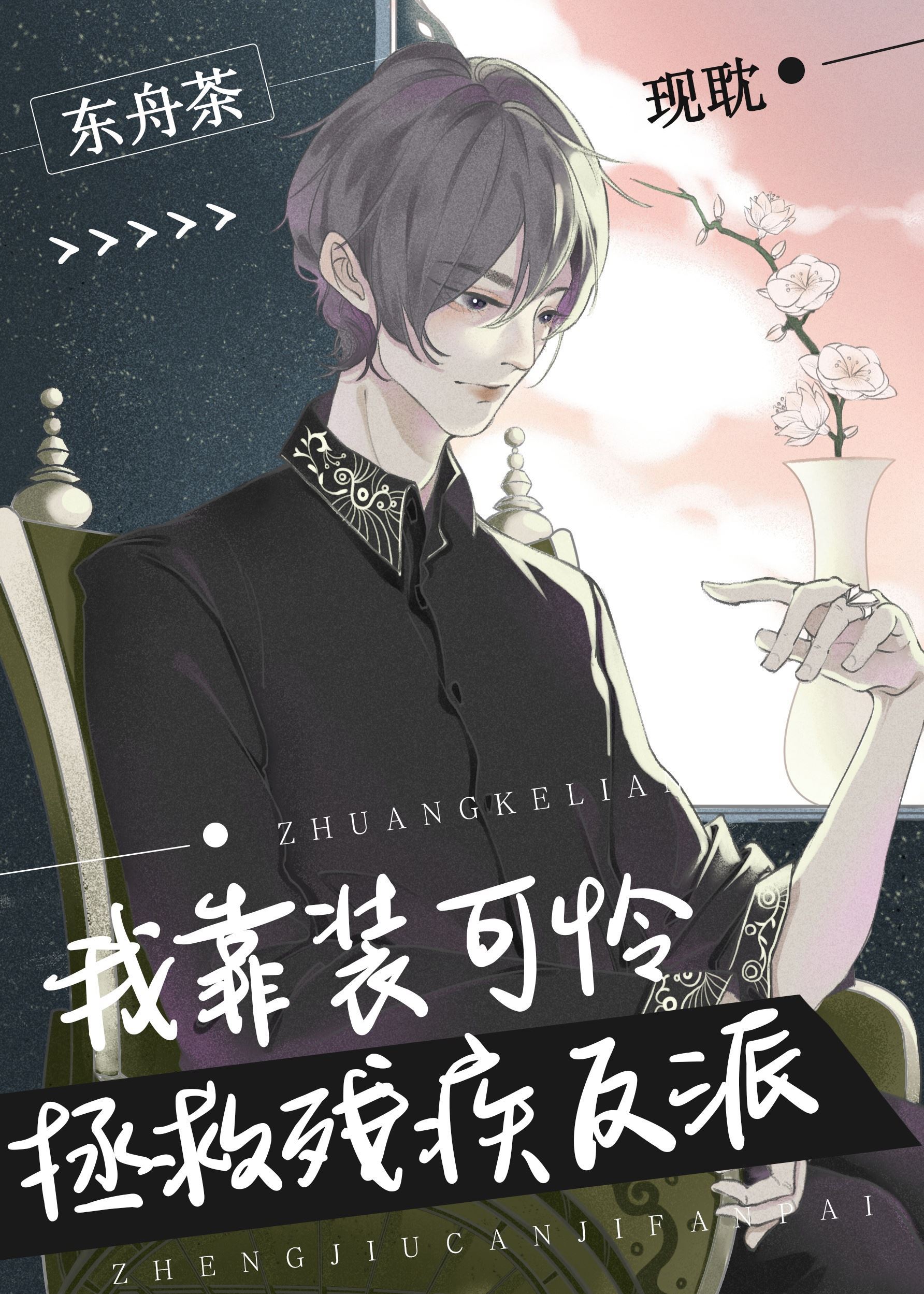
... Read More
There's something really deliberate about how this passage moves. You start in a crowded, tense social gathering - Rong Xu's been bumped around in his wheelchair, Rong Xingwen is being cold and performative, Chi Han's parents are doing that awkward networking dance, and the whole thing feels claustrophobic and loud even though the text doesn't use many words to convey noise. Then Chi Han essentially kidnaps Rong Xu for fresh air and suddenly everything slows down. The garden scene is almost meditative compared to what came before. But here's the thing - the pacing isn't just slowing for atmosphere, it's building tension in a different way. The quiet between Chi Han and Rong Xu is loaded with unspoken things. Every pause, every glance, every moment of silence feels charged. When Chi Han leans in close and Rong Xu instinctively flinches away, that's a micro-climax in itself. The author then pulls back and lets Chi Han apologize and create space, and this ebb and flow of closeness and distance creates this rhythmic tension that's way more interesting than if they'd just had a straight conversation. And then the passage ends mid-sentence almost - Rong Xu just sitting there stiff against the armrest with no resolution. It leaves you wanting more but also gives you a breath. Masterclass in controlled pacing.
... Read More
The tension in this chapter is absolutely suffocating and I cannot recover. Let's break down what Chi Han was actually up against. First: physically outnumbered and tied to a chair. Second: his wrist wound had already torn open from the struggle, bleeding near an artery, and he was re-bandaging it with Fang Jingluo's shirt because he couldn't find his own phone. Third: the entire ground floor was soaked in gasoline — one spark and everyone dies. Fourth: no signal. Not even 2G. He was completely isolated. And Xu Ting's plan wasn't just to kill Chi Han. He planned to go down with him. That's not standard kidnapping behavior — that's someone who has already written off every possibility except mutual destruction. The fact that Fang Jingluo almost triggered that explosion himself by not covering his nose and mouth properly? Perfect irony. The manipulator almost became the victim of his own setup. But the stakes escalated even further when Chi Han had to escape. He's scared of heights. He's wounded. He's crawling out a window backwards. And he slips. The author doesn't let up for a single second — every escape route is compromised, every solution introduces a new problem. Then Rong Xu enters the scene and the external conflict flips entirely. He's not rescuing someone safe — he's rescuing someone who is seconds away from certain death, and he doesn't hesitate for a moment. No calculated approach, no gathering information. Just pure, unfiltered desperation. He throws a stone hard enough to knock out an adult from waist-high weeds. That's not a hero entering a battlefield — that's someone whose entire world has just narrowed to one person, one moment, one impossible task. The explosion behind them confirms: both Xu Ting and Fang Jingluo are gone. Dying in that fire was apparently too easy for them. Rong Xu's internal vow to find them if they survived and grind their bones to dust tells you exactly what's coming next. The conflict isn't resolved — it's just changed shape.
... Read More
The structure of these four chapters is really something else. The author starts in an enclosed, intimate space—the hot spring room—and slowly expands the scope outward. First it's just the two of them in water and steam and candlelight, then it pulls back to show Rong Xu's internal monologue, then drops us into the cold reality of phone calls and medical equipment timelines, then jumps forward in time to an empty classroom where Chi Han is staring at an unoccupied desk. The pacing moves from intense closeness to emotional distance, and that structural choice mirrors exactly what's happening to their relationship. What's clever is the time jump. We go from the hot spring night directly to 'after returning,' and suddenly half of summer vacation has passed. The author doesn't waste time filling in the gaps—we're just dropped into the consequence of those days. Chi Han scrolling past empty desks and Rong Xu barely attending class. The pacing here mimics the feeling of realization: wait, how long has it been? Since when did this become normal? And Geng Xue's interlude—thank god for her—acts as a pressure valve. After the intensity of the hot spring scene, her chaotic inner monologue about a hundred-thousand-word tragic romance novel gives us a breath. It also reframes everything we just read through a comedic lens, which makes the return to the heavier tone hit even harder. The chapter ends on that fragment 'ever since that night w—' and cuts off mid-sentence. Classic cliffhanger, but not a cheap one. It feels earned.
... Read More
Can we just take a moment to appreciate how natural and distinct these voices are? Chi Han's internal monologue has this perfect chaotic energy—'Crap. I'm done for.' and 'So annoying!' and the whole dramatic phone-pointing scene. It's frantic and endearing and completely believable for a teenager whose heart is spiraling. But then Rong Xu is just... ice. His lines are sparse and devastating: 'Alright. Then carry on.' Four words and he has completely won that exchange. I love how different their voices feel. Chi Han is all energy and noise even in his panic, while Rong Xu is quiet and measured, which makes his occasional bursts of emotion hit even harder. And the narrator's voice is just... perfect. There's this wonderful dry humor woven throughout—like when Chi Han reasons himself into feeling justified about watching porn ('Isn't that supposed to be one of life's joys as an adult?!') or when it notes that 'Even someone as cold-hearted as Chi Han couldn't help but overthink a little.' The narrator has this knowing, slightly mischievous tone that makes you feel like you're getting the inside scoop. Geng Xue's dialogue is also so distinct—her internal panic about the 'Han-Xu CP' shipping while maintaining a 'flawless, unbothered smile' is comedy gold. And that line about 'reliable sources' with the implied meaning being 'so just forget it, okay?' is the kind of subtextual dialogue that makes you want to highlight entire paragraphs. The author's voice really shapes the whole experience here—there's this perfect balance of genuine emotional weight and sharp humor that keeps everything feeling grounded and human rather than melodramatic.

Leave a comment

You must be logged in to leave comments. or
