I Saved the Disabled Villain by Pretending to be Pitiful - Reviews

I Saved the Disabled Villain by Pretending to be Pitiful
+Add to Custom List
Sort
Add review
... Read More
Let's talk about the visual storytelling here, because this author is clearly a cinematic writer. The image of Rong Xu carrying a weak, trembling Chi Han from the wheelchair to the bedroom, tie half-draped across his cheek, buttons undone—that's a scene I could paint from memory. But then it cuts to Xu Ting's perspective, sitting alone on the edge of a bed with only a small lamp on, half his face hidden in darkness. This author consistently uses low lighting to mirror emotional ambiguity. Every key moment happens in dim rooms: the bathtub scene, the morning after, the midnight phone discovery. And the contrast! Rong Xu is always "neat and proper" even when his shirt is unbuttoned, while Chi Han can barely move, red-eyed and trembling. The physical world feels real—hard wheelchair armrests rubbing skin raw, grapes being fed casually, pillows being tucked under aching waists. These details ground the story in physical reality so effectively that you forget you're reading fiction. Even Xu Ting's apartment with its small lamp creates such an intimate, isolating atmosphere that makes his schemes feel like they're bubbling up from somewhere dark and lonely.
... Read More
"Even though the current conditions aren't ideal, you could sit on my lap." RONG XU HAS NEVER BEEN MORE DANGEROUS IN HIS LIFE AND I AM HERE FOR IT. Let me just sit with this scene for a second. They're on a plane — cramped even in first class, but the real tension isn't spatial, it's emotional. Chi Han is being soft and nostalgic about last year when Rong Xu was alone in a wheelchair, and then in the SAME BREATH Rong Xu pivots to something wildly flirtatious. The whiplash is intentional and it's gorgeous. The text describes Chi Han's ears turning red gradually. First he's listening seriously, then his ears warm up, and finally he has to physically cover them. This is a character who has zero defense against Rong Xu's brand of deadpan teasing. And Rong Xu KNOWS this. He does it on purpose. He's weaponizing affection and Chi Han is completely defenseless. What hit me hardest wasn't even the flirty stuff though — it was the quiet moment before it. Chi Han hugging Rong Xu because he felt bad remembering last year, and Rong Xu deliberately teasing him to stop tormenting himself. That's love. That's someone who sees their partner's guilt and redirects it into laughter. And then the wingman flight attendant. Poor guy got pulled in for cards and accidentally became the audience for their entire romance arc. His internal monologue at the end — "Is this the kind of game rich people like to play? Was he lured in just to be fed to the sharks??" — is the perfect comedic punctuation mark on two hours of pure CP chemistry. I can't stop thinking about that tissue-stripping moment where Rong Xu's fingertip slowly slides the tissue off Chi Han's lip and it's described as "inexplicably seductive." Seductive on purpose or not, THAT'S the showright there.
... Read More
Chi Han's dialogue is what makes this passage so fun to read. His voice is bratty in the best way — teasing, playful, slightly annoying but undeniably charming. The line "Yep, make it up to you!" with that exclamation mark and the way he grins about it? That's a character who loves to push buttons. And then getting dragged into a fitting room as payback is perfect karma. Rong Xu on the other hand barely speaks and when he does, it's surgical. "Make it up to me?" — that single question said twice, the first time as a whisper, the second time after the belt click. No explanation, no emotion, just cold delivery that somehow says everything. His dialogue is almost entirely action-based. He communicates through touching, guiding, flicking off lights. When he finally does talk in the closet scene, it's barely above a murmur and completely in control. The contrast between them in dialogue is what makes their scenes work. Chi Han talks to fill the space. Rong Xu lets silence do the talking. And the narrator occasionally drops these gems like "Chi Han: '???'" which is such a modern, almost meme-y way of writing internal confusion that keeps the tone from getting too heavy. One line that stayed with me though — when Rong Xu says "I'll help you change" while Chi Han is clearly having a meltdown. That calm, matter-of-fact delivery while simultaneously undressing his boyfriend? The dialogue doesn't need to say more. It's devastatingly effective.
... Read More
This chapter does something brilliant with temporal compression. The first section spans roughly a year—from exam day through university settling in—handled in what amounts to five minutes of reading. Then the birthday reveal takes up maybe three pages but feels like an eternity. That's controlled pacing. Look at the structure: it opens with a flashback (the hospital ward disappearing), moves to the exam (a single concentrated day), jumps forward to results, then to university life, then circles back to that present-night birthday. The author lets the reader sit in the waiting. That long pause when Rong Xu hears 'family' and doesn't respond immediately? That silence on the page is doing so much heavy lifting. And the cliffhanger ending—Chi Han stepping back, phone trembling, seeing him below—isn't cheap. It's earned. Every chapter since the hospital has been building toward this exact moment of visual recognition after months of only hearing a voice. The pacing says: you will wait. You will ache. And then—finally.
... Read More
Let me just say this - the pacing in these chapters is absolutely surgical. We open with Fang Jingluo already impatient, temperature rising, people restless. Then we cut to Chi Han observing from afar, watching Fang Jingluo with mockery. Then Rong Xu notices Chi Han looking at someone else and his expression shifts instantly. Three paragraphs and we've established an entire emotional ecosystem without a single exposition dump. And then we go into Fang Chen's backstory - his rivalry with Rong Xu, his scheme to plant Lu Min, his realization that he's been playing exactly the game Rong Xu wanted him to play. The exposition doesn't feel like exposition because it's delivered through active tension, not passive narration. Fang Chen's internal monologue about how he's curious about Old Master Fang's reaction later gives us a perfect countdown clock. We KNOW something is about to blow and the chapter structure keeps pulling us toward that moment. The transition from Fang Chen's scheming back to Chi Han pushing Rong Xu's wheelchair feels almost jarring in its normalcy, which makes the underlying tension even more palpable. By the time Fang Jingluo says Chi Han's name with that certainty and disdain sweeps over Rong Xu, I was ready for the collision. The chapter ends not with resolution but with the immediate precursor to conflict, and that restraint is what makes it work so well.
... Read More
I have to talk about Song Yao because this girl is genuinely fascinating and I think we're only seeing the tip of the iceberg with her. Chi Han has this whole subconscious framework where he's kept Rong Xu separate from everyone else—literally split his life in half—and Song Yao represents something that disrupts that entire architecture. When she looks at him across the room and he feels like there's a smile hidden in her gaze, that's not paranoia. That's recognition. She knows he's invested in Rong Xu, and she's choosing to play with that. The line that really got me was when she sent that photo saying 'Looks like a little butterfly is about to land on your precious flower.' She's talking about Chi Han to Rong Xu, and she framed it almost protectively but also almost mockingly. Like she's reporting on something Rong Xu should care about. And then she requested Wish You Peace for him at the KTV—what is that, really? A blessing or a curse? I keep going back to that moment where Chi Han is sitting alone with one earphone in playing Snake, and a girl actually asks him to sing and he shuts her down because he's still thinking about Rong Xu's text. His loyalty is unconscious at this point. He doesn't even realize he's being loyal. That's the most telling character detail in these chapters. What do you think Song Yao's endgame is here—is she trying to get close to Rong Xu, or is she trying to get close to Chi Han, or is she just having fun watching them both unravel?
... Read More
I've been thinking about Rong Xu ever since I finished these chapters and I can't shake this image of him sitting there watching Chi Han talk to that gardener. The writer describes it perfectly: "The beast locked in the cage inside him roared endlessly, wanting to lunge forward and tear that man apart." But here's what gets me—it's not just jealousy, it's restraint. Rong Xu could've pushed Chi Han away from that guy, made a scene, done something. But he doesn't. He stays in his wheelchair, fists gripping the armrests, swallowing every ounce of possessiveness because Chi Han likes talking to people. Chi Han likes those meaningless conversations. And Rong Xu would rather die than make him uncomfortable. That's the kind of love that makes me want to throw the book across the room because it's too much. Then you have Chi Han who has no idea—absolutely zero clue—that the guy in the wheelchair beside him is mentally murdering a gardener because he stood too close. And the worst part? Chi Han was actually annoyed by the gardener for talking too much. He just wanted to leave. Meanwhile Rong Xu is over there having an existential crisis. The power dynamic here is delicious and painful in equal measure.
... Read More
There's a lot of breaking happening in this chapter and I don't think it's accidental. The jadeite carving — something rare and precious, glass-quality, a symbol of Fang Jingluo's status and taste — reduced to rubble in seconds. Lu Min asking for glue. The antler splitting in two. And then those jadeite prayer beads wrapping around Fang Jingluo's wrist snap apart and scatter across the floor. Small detail? Maybe. But it mirrors everything: his control shattering, his authority dissolving, the carefully constructed image of the perfect heir cracking open to reveal the mess underneath. And the kneeling. Old Master Fang making his own grandson kneel in public — that's not just punishment, that's a statement about what the Fang family values more than blood. Reputation over humanity. The cycle continues. And Rong Xu, watching all this, recognizing his own history in it — 'if even the legitimate descendants of the Fang family were like this, let alone someone like Rong Xu, an unloved, incomplete person.' That line is the thematic core of the entire chapter distilled into one devastating sentence. The question the story keeps asking: what does it cost to belong to a family that treats you as interchangeable?
... Read More
There's a strange symmetry between the silly emoji photos and the Fang family's power struggle that I can't stop thinking about. On one hand, you have Chi Han and Rong Xu exchanging unflattering, photoshopped images as a form of flirtation. It's intimate, playful, and deeply personal. On the other hand, you have Fang Jingluo deliberately lowering the entry requirements for a traditional jadeite event—a move that's supposed to assert control but actually risks alienating the very people he needs to win over. Both actions are about visibility. The emoji photos make Chi Han and Rong Xu visible to each other in a way that's almost private. The event is supposed to make Fang Jingluo visible to the industry as a legitimate successor. But there's also a theme of authenticity versus performance. The ugly photos are awkward and unpolished, yet they feel more real than any formal portrait. Fang Jingluo's decision to remove barriers sounds inclusive, but it's actually a calculated power move designed to force an audience—specifically, to force Chi Han to witness his ascension. The text even hints at this when it says Fang Jingluo “wanted Chi Han to personally witness him taking over the Fang family.” So the symbolism circles back: everything is about being seen, but not everyone wants the same kind of visibility. The quiet intimacy of a shared emoji versus the loud spectacle of a public succession. One is chosen; the other is imposed.
... Read More
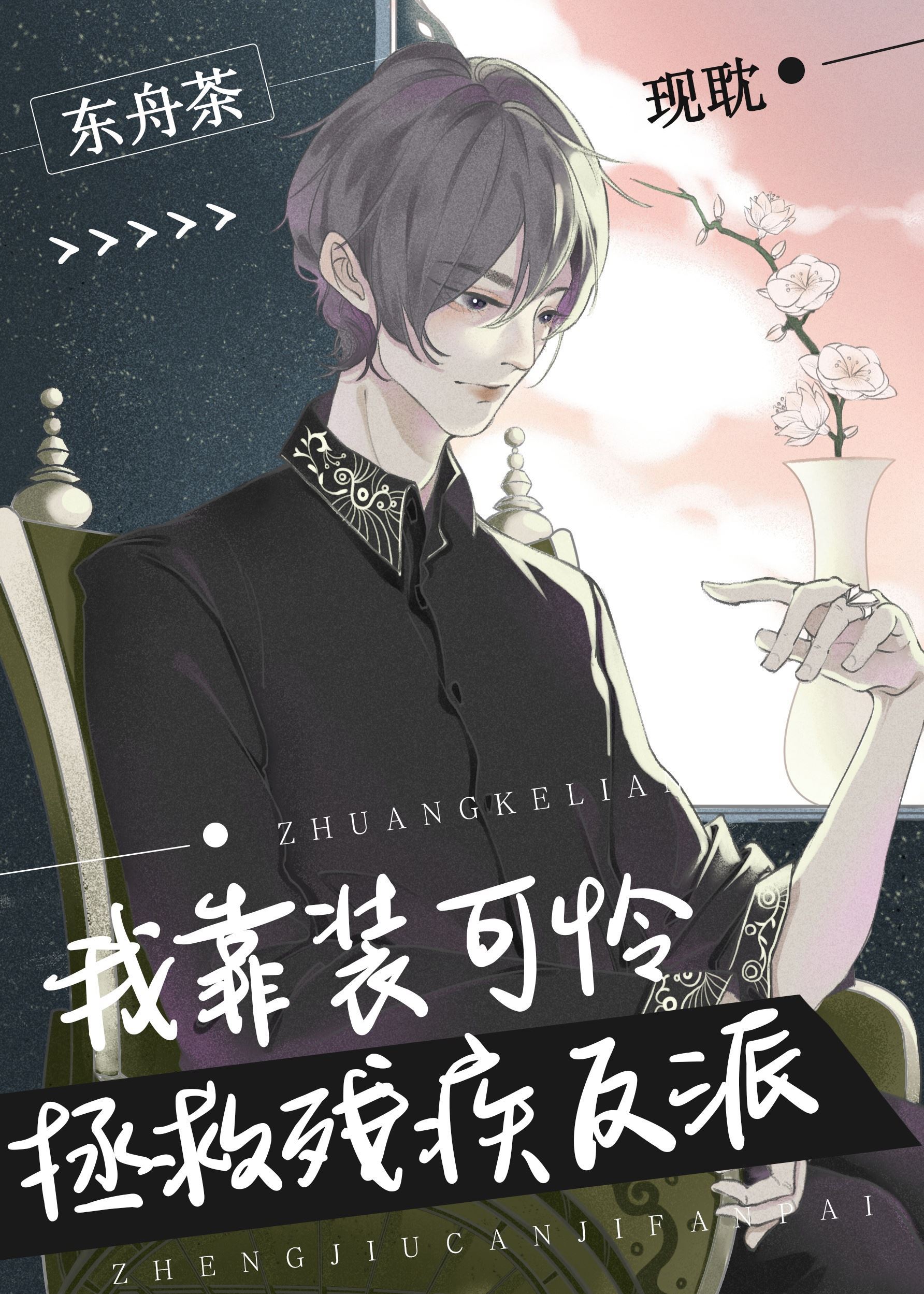
I need to talk about Rong Xu because this is the most devastating character portrait I've read in a long time. The author gives us this single devastating line: "Before falling in love with that ray of light, he would have extinguished it with his own hands." Think about that. That's not just a description — that's a diagnosis. Rong Xu is so damaged, so saturated with hatred, that he can't even accept kindness. The idea that someone might see him, might reach out, and his first instinct is to destroy that gesture... it's heartbreaking because it feels SO real. But here's what's terrifying: Chi Han is the one observing all of this. And Chi Han isn't innocent either. Watch how he talks to that bully: "Are you blind? Or do you want to donate your eyes to charity if you don't need them?" He's mockingly charming, completely unbothered, but underneath there's this cold calculation. He knows the bully will back down. He's played this before. The narrator even tells us: "He had to reluctantly withdraw his hand and said, 'Just you wait.'" — and that threat is meant for Chi Han, not just the original instigator. What I find most interesting is the dynamic between Chi Han and Rong Xu. Chi Han keeps checking on him — going to the bulletin board, watching him at his desk, sitting nearby during self-study. But he's not helping. He's OBSERVING. He's studying Rong Xu like a specimen. The narrator says Rong Xu "seemed like an empty shell, detached from the world, unable to be moved by anything." But then immediately contradicts this: "Chi Han knew that there was hatred inside him." So he's not empty. He's FULL of something — just not the right something. And that's far more dangerous than emptiness. The relationship between them is built on Chi Han's curiosity and Rong Xu's deliberate avoidance. Rong Xu "pretended not to see Chi Han, attempting to fade him out of his world." That's not indifference — that's survival. He's protecting himself by making himself invisible. And Chi Han keeps poking at the wound, not out of malice exactly, but out of this need to understand. Which is its own kind of violence, isn't it?
... Read More
These chapters do something really smart narratively—they run three separate threads that keep inching toward each other until they collide, and the collision is inevitable but not yet resolved. Thread one: Chi Han and Rong Xu in the garden. This is the emotional core. We start with Rong Xu in full fortress mode—"thick fog," defenses raised, unwilling to step forward. Chi Han slowly chips away at this with small gestures (the orange) and then one devastatingly sincere statement. By the end, Rong Xu is smiling and feeling warmth for the first time. The arc within these chapters alone is massive. Thread two: Fang Jingluo at the birthday banquet. The patriarch's last-minute demand for a unique emerald design draft creates immediate stakes. Fang Jingluo is positioned as someone who needs to deliver, and his arrogance masks genuine pressure. He's being groomed as successor but the rules keep changing under him. This is classic power-struggle setup. Thread three: The collision itself. Fang Jingluo spots Chi Han through the mist, mistakes him for Xu Ting, realizes the transformation, and decides to go downstairs. The chapter ends mid-sentence as they approach—"But even without knowing the answer, Chi Han"—which is a brutal cliffhanger. What was Chi Han about to do? What was he about to feel? The interruption is perfect because it mirrors how these characters' lives keep getting interrupted by circumstances beyond their control. The structure here is doing double duty: the garden scene gives us emotional payoff while the banquet scene gives us external conflict, and they're separated by mere physical distance but separated by class, family history, and unspoken tensions. When Fang Jingluo finally walks into that garden, it won't just be two people meeting—it'll be entire worlds crashing together. Also worth noting: the Xu Ting confusion. Jiang Yaoning sees Chi Han and thinks it's Xu Ting. Chi Han now looks more like Xu Ting than himself. What does this mean for identity in this story? Is Chi Han becoming someone else, or is he revealing something that was always there? The plot is quietly asking questions about selfhood that go way beyond the surface romance.
... Read More
Okay, so here's what stuck with me. The whole plot is building this incredible pressure cooker and I haven't even started unpacking it properly. Chi Han literally tells the headmaster 'Unless Rong Xu is my desk partner, I won't transfer' — and you know what? I respected the hell out of him for that. Like, he had every reason to just cave and take the deal. Class 1 has better resources. The provincial top scorer opportunity is right there. But he refuses. Why? Because Rong Xu matters more than the exam. More than his future. The way the author structured this was brutal actually — you had the mother calling, offering money and a sports car like it's nothing, and Chi Han just... doesn't care. One million. He earned more in one night from custom orders. The author is showing us that Chi Han has completely detached from the world his parents built for him, and that's where the real plot turns happen. It's not about passing the college entrance exam anymore. Chi Han himself says 'Rong Xu was no longer a fragile paper person; he was the only reason Chi Han was willing to stay in this world.' That line? That recontextualizes everything before it. Every conflict from here on out isn't about academics — it's survival. And the headmaster being described with 'flying light bulb' hair while trying to negotiate? That's not comic relief, that's the author telling you nobody understands what's happening and they're scrambling. The plot's threading these massive emotional stakes through what should be mundane school drama, and it's working so well.

Leave a comment

You must be logged in to leave comments. or
