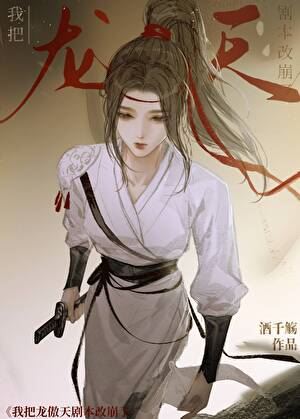
Let's talk about the worldbuilding in this chapter, because honestly, the author has crafted something genuinely special here. We're in a cultivation world — Misty Cloud Mountain, Bright Moon Peak, Dustless Island — and yet it feels less like a generic xianxia setting and more like a place where people actually live, eat, and occasionally try to cook magical birds.
The opening scene alone sets the tone perfectly: the group sharing peach blossom wine until the dregs become contested property. Xu Shulou rapping disciples on the forehead with her fan and declaring "The rest is for little junior sister. No fighting." — this isn't just dialogue, this is worldbuilding. We immediately understand the social hierarchy, the sibling-like dynamics, the casual violence that passes for affection in this family. And Bai Roushuang's internal monologue about how she "would have maintained her gentle, considerate facade" but instead decides to just... take the wine? That's character development wrapped in environmental detail.
Then there's Elder Changyu's cave entrance: "At the entrance of Elder Changyu's secluded cave for cultivation, Bai Roushuang finally saw her master again. Amidst the peaks of Misty Cloud Mountain, he stood alone, his wide sleeves and light robes fluttering, an ethereal aura surrounding him." Beautiful visual imagery — the floating robes, the frost-and-snow eyes, the whole "embodiment of an immortal" package. And then the author immediately undercuts it: "That is, if he kept his mouth shut." Which is such a perfect tonal shift. We're not in a serious cultivation epic — we're in a world where immortals still have dysfunctional communication skills.
But the real worldbuilding goldmine comes when we learn about the fasting pills. The author doesn't just mention them as a passing joke — they become a thematic anchor for the entire cultivation system. "Most cultivators in the world of immortal arts paid little attention to culinary pleasures, especially those who had long since transcended the need for food." This line tells us so much about the world: food is either forgotten or deliberately rejected by senior cultivators, creating this gap between the mortal and immortal experience that defines the entire culture.
And the fasting pill flavors! "One salty-sweet, the other sour with a hint of bitterness — both equally revolting." The specificity is chef-level — or should I say, chef-lack-level, since nobody in this world seems to have mastered cooking. The fact that Elder Changyu still maintains his "aloof and transcendent image" while choking down sour-fast pills? That's worldbuilding through behavioral contradiction. We learn about his priorities, his self-image, and his actual suffering all in one sentence.
The Misty Cloud Mountain setting itself feels alive. We have peaks, caves, cliffs, and this weird liminal space between the immortal realm and the mortal tavern world. The scene where Elder Changyu literally vanishes at "lightning speed" after hearing about food? That's not just comic relief — it's environmental storytelling. The mountain is vast enough that distance matters, fast enough that teleportation exists, but food still summons him faster than any summons spell could.
And then there's the cliffside finale: Xu Shulou standing at the edge of Bright Moon Peak's rear cliff, "her crimson dress and ink-black hair streaming behind her like an immortal ready to ride the wind and depart." The visual contrast — red and black against mountain mist — is cinema-quality. The willow leaf weapon moment reinforces that this is a world where nature itself becomes an extension of cultivation. Even petals can kill, if wielded correctly.
What really sells the worldbuilding, though, is the emotional geography. These aren't just locations — they're memories made physical. The cave where Master and disciple endured fasting pills together. The mortal tavern where they finally abandoned pretense. The cliff where Xu Shulou stands today, having survived her own darkness. Each place holds weight, and the author never wastes a single setting description.
The world of Misty Cloud Mountain feels lived-in because people have suffered in it, laughed in it, and learned to cook in it. Even immortals get hangry. Even geniuses need someone to remind them that chicken exists. And honestly? That's the most realistic worldbuilding I've seen in this genre.