I Ruined the Long Ao Tian Script - Reviews

I Ruined the Long Ao Tian Script
+Add to Custom List
Sort
Add review
... Read More
I need to talk about this moment at the very end. Bai Roushuang saying 'But I'm a little concerned. What if Senior Sister Xu doesn't like me?' with that soft, gentle voice — and Xu Shulou noticing how perfectly she matches the novel's description. This woman is performing innocence so well it's almost impressive. But here's the thing: could she actually be genuine? The text says her smile is 'soft and demure, with dimples appearing on her cheeks.' That reads as warm. Not manipulative. Not calculated. And yet — and this is what keeps spinning in my head — in the dream version of events, she's the villain. Or at least the weapon used against Xu Shulou. The junior brother even says she 'pleaded for leniency on your behalf,' which in the dream context is framed as either genuine kindness or performative magnanimity. But which one is it really? Is Bai Roushuang the sweet junior sister who genuinely likes everyone, or is she playing a longer game that the dream has already revealed? Xu Shulou's reaction to her is fascinating in its own right. She 'harbored no ill will toward her junior sister, regardless of the dream's veracity.' She returned the smile warmly. This woman has literally dreamed about being destroyed by someone and she's still being nice to her face. That's either incredible emotional maturity or dangerous naivety, and I can't tell which.
... Read More
Let's discuss the spirit beast stall because WOW. That giant multi-legged worm that everyone's just... selling? Like casually? The owner's like 'don't discriminate against spirit beasts' while draping a cloth over this poor misunderstood creature. I love that the author gave it agency - it's not just a monster, it's a business opportunity nobody wants. And then the moon rabbits! Bubbles that glow like moonlight at night? That's such a pretty image. But my absolute favorite was the white Kongjue - this peacock thing that shoots feathers as weapons when its master's in danger, and Bai Roushuang just blurted out 'wouldn't it go bald quickly' and the bird GLARED at her and turned around. Showed her its ASS. I cannot get over this. The barbecue stall scene was also perfect - just casually grilling meat next to all these spirit beasts, and that cultivator woman looking down her nose at Bai Roushuang for having sauce on her lip. The whole marketplace felt so alive, like you could hear the hawking and see the spiritual treasures everywhere. It's amazing how the author made something mystical feel like an actual bazaar you'd visit on a weekend.
... Read More
There's something deeply symbolic about the river lantern on Qixi Festival. It's a wish—fragile, floating, vulnerable to the slightest current. And right beside it, a flood that could swallow everything. The contrast is almost cruel in its beauty. Xu Shulou protecting that one eight-year-old girl's lantern from capsizing? That's not just a character moment—that's the entire theme of the passage crystallized. A single small wish, defended against overwhelming force. The little girl's lantern versus the roaring river. That image stays with you. The Qixi Festival itself is loaded with meaning here. Traditionally, it's about love and connection—girls praying for good marriages. But Xu Shulou subverts it entirely. Her wish isn't personal. It's for 'peace in the Three Realms.' She's operating on a scale that most characters in this story haven't even considered. Meanwhile, the flood—the destructive force of nature—turns out to be something that can be mitigated, prevented, countered by someone willing to act. And there's this recurring idea about perception versus reality running through the whole section. The common people see an 'immortal'—they don't understand the difference between a cultivator and someone who's achieved true immortality. Bai Roushuang sees Xu Shulou as either a threat or an enigma. Xu Shulou herself sees past the storybook's narrative, extracting truth from what was meant to be propaganda. Everyone is seeing something different, and the real question is: who gets it right? The folding fan—snow-white plum blossom—expanding in the air as a barrier. That image of delicate beauty protecting hundreds of lives? That's the thesis statement of the entire novel right there.
... Read More
I need to talk about pacing, because this chapter is a masterclass in how to control reader engagement without ever feeling manipulative. The author opens with a wine-drinking scene that could've been mere setup — just disciples hanging out, sharing a jar, establishing hierarchy — but instead uses it to build genuine emotional momentum before we even meet the main conflict. Let me break down the structural choices here. The first third is pure atmosphere: peach blossom wine, fan-rapping, Bai Roushuang's internal realization that she might actually like being the junior sister. This section could've dragged, but the author keeps it tight — every beat serves character or worldbuilding, and the humor lands without padding. When Xu Shulou says "The rest is for little junior sister. No fighting," we get hierarchy, affection, and comedy in twelve words. That's efficient pacing. Then comes the Elder Changyu entrance — and this is where the chapter's structural spine reveals itself. The author builds anticipation through sensory detail: the frost-and-snow eyes, the fluttering robes, the whole "embodiment of an immortal" framing. But then immediately undercuts it with the roast chicken joke. This pattern — establish, then subvert — runs through the entire chapter, creating a rhythm that keeps readers engaged without relying on cliffhangers or action beats. The feast scene is where the pacing truly shines. Elder Changyu literally sprints to food, then stays long enough for meaningful conversation, then delivers the master's final teachings. The chapter moves from humor to sincerity to nostalgia without ever losing momentum. Each transition feels earned because the author respects the reader's attention span — no scene lingers past its usefulness, no emotion overstays. But the real pacing genius is in the backstory drops. The fasting pill revelation doesn't come as exposition — it emerges naturally from Elder Changyu's appreciation of Bai Roushuang's cooking. The master-disciple history unfolds through a single shared glance. Xu Shulou's transformation from "vengeful, wrathful fallen princess" to who she is today isn't summarized; it's implied through present behavior. The author trusts us to connect dots without handing us the crayons. Consider the cliffside scene: Xu Shulou standing at the edge of Bright Moon Peak, willow leaf in hand, crimson dress streaming. This is the chapter's emotional climax, and the pacing around it is deliberate. We've just had jokes about cooking disasters and bickering siblings — and then suddenly we're in a moment of pure, unadorned beauty. The shift from chaos to stillness mirrors Xu Shulou's own journey. The chapter structure becomes metaphor. The author also manages tension through absence. We never learn what happened during Xu Shulou's "solitary journey in the mortal world" — and that mystery creates more engagement than any detail could. We know she encountered someone or something that led to her enlightenment, but the author refuses to explain. This creates a lingering question mark that pulls readers forward without demanding answers. Even the dialogue structures follow pacing logic. The siblings' bickering about Fifth Brother's homesickness disaster unfolds in quick back-and-forth — Jiang Yan sets up, Song Ping deflects, Ji Ci laughs, the punchline lands. Six exchanges, thirty words, complete scene arc. No wasted movement. And that ending — "It's nice" — two words that close the chapter after nearly a thousand words of setup? That's pacing as emotional compression. The author spent the entire chapter building toward this moment of understated resolution, and then delivers it with minimal fanfare. The structure itself becomes the message: growth doesn't need declaration. Change doesn't need drama. Sometimes it just... is. This chapter proves that good pacing isn't about speed — it's about giving each moment exactly the weight it deserves, then moving on before the audience gets tired of looking.
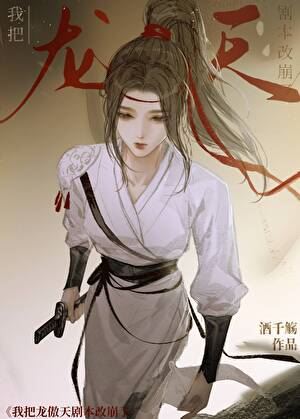
... Read More
Okay let me just say this outright—the stakes in this passage are EVERYTHING and the author builds toward them like a master craftsman. We start with something relatively low-key: a magical skill competition, some banter, a quiet festival stroll. Then the waves get bigger. Then bigger. Then they're basically tidal waves and people are SCREAMING. What makes this work so well is that the danger feels REAL. These aren't abstract cultivators fighting over resources—these are common people, families, children, caught in something they can't control. When Xu Shulou flies up and unfolds that fan, you feel the weight of what's at stake. The barrier extends 'as far as the eye can see'—that's not a small spell, that's an enormous expenditure of power, and the description makes you feel the sheer physical effort. But here's what really got me: the conflict isn't just human vs. nature. It's deeper than that. Xu Shulou is fighting against the STORY itself—the predetermined narrative that said those people should die. The storybook described a flood that killed Su Lian'er's family, and now Xu Shulou is actively choosing to break that script. Every life she saves is an act of rebellion against fate. And Bai Roushuang? She's caught between her own survival instinct and watching someone do something truly extraordinary. The moment when 'Bai Roushuang watched in disbelief'—that's the moment the entire story shifts. She came to this town guarded and skeptical, and now she's witnessing something that might redefine everything she thought she knew about this 'senior sister' she was so quick to judge. The fan is still unfolding in the air and I am literally holding my breath. WHAT HAPPENS NEXT.
... Read More
Okay, let me just say it — the scene where Elder Changyu and Xu Shulou almost cry remembering their days surviving on those awful fasting pills is genuinely one of the most touching moments I've read in a cultivation novel. Not romantic love, not even the usual CP tension — but something far more rare: found family that actually earns its warmth. Think about it. Xu Shulou was originally described as a "vengeful, wrathful fallen princess who once wished to drown the world in blood." She had that moment where she "dared to meddle with a soul-summoning banner" — which sounds like the kind of thing that could go very, very wrong. And yet here we are, years later, and she's the one cracking jokes about roast chicken while her master tries to cook a magical bird. The line that got me was when Elder Changyu says: "I didn't teach you much. Your talent carried you." It's such a modest master move, and yet somehow it makes the whole relationship feel even more real. He's not claiming credit for her growth — he's acknowledging that she survived something he barely helped with. And then he immediately follows up with: "I won't take any more disciples after this. Your junior sister is my last." Which honestly? That's the kind of indirect affirmation that hits harder than any grand declaration. And Bai Roushuang — oh, Bai Roushuang. She's this "gentle, considerate facade" character who normally would've shared her wine with everyone. But then she catches herself thinking: *perhaps being the elder sister's favored little junior sister isn't so bad after all.* And I just... yeah. That's the moment where the whole emotional architecture of this story clicks into place. It's not about romance or revenge or cultivation breakthroughs — it's about finding someone who sees you and decides you're worth keeping around. The author also drops this hilarious detail that Elders and Masters in the immortal world invented only two flavors of fasting pills: "one salty-sweet, the other sour with a hint of bitterness — both equally revolting." And then immediately follows it with: "Every novice cultivator had at some point furiously questioned whether the creator of fasting pills had taste buds." Which is honestly the most relatable thing I've ever read about mentorship. Every single teacher who's ever assigned terrible work and then acted surprised when students complained? What I love most is how the emotional beats don't feel manufactured. Xu Shulou's growth from a "drowning in hatred and rage" broken princess to someone who can joke about cooking birds isn't shown through some dramatic montage — it's shown through her catching a willow leaf mid-air without even looking, which means the skill came from practice, patience, and time. And Elder Changyu letting go of his "aloof and transcendent image" to literally sprint after a chicken leg? That's the moment where the master-disciple bond stops being a trope and becomes something actual. There's a line near the end where Elder Changyu asks Xu Shulou: "From hating mortals to protecting them, I don't think I've ever asked you — how does it feel?" And she just says: "It's nice." Two words. That's it. But somehow that's the most emotionally honest answer in the entire chapter. She doesn't need to explain it. She doesn't need to dramatize it. It just is. And then the story wraps up with all six disciples bickering about a cooking disaster from their youth — Song Ping trying to help Jiang Yan not be homesick by force-feeding him something that might've killed him — and it's just... wholesome chaos. The kind of chaos that comes from people who have survived together and decided to keep surviving together. Honestly? This is why I keep reading cultivation novels. Not for the power scaling or the sect politics — but for moments where a group of emotionally damaged people learn to share a meal without trying to eat each other.
... Read More
'Peace in the Three Realms.' That's what Xu Shulou wished for on Qixi. Not marriage. Not personal cultivation progress. PEACE. When Bai Roushuang mocks her for it—'What a false and empty wish. Who was she trying to impress?'—you can feel the narrator practically sighing through the page. Here's why this moment wrecked me: Xu Shulou literally just used her spiritual power to save an eight or nine-year-old girl's river lantern from capsizing. She noticed a child about to cry and SHE JUST... did it. No fanfare, no announcement, just quietly making sure this little girl's wish floats safely downstream. And then she releases her OWN lantern and wishes for world peace. This is the kind of character writing that makes you fall in love with someone you've only known for ten chapters. She's not doing it for recognition. She's not even doing it because she believes in fate—she explicitly says she won't let a dream determine her future. She's doing it because that's just who she is. The weak girl's lantern matters. The mortals by the river matter. Even though 'people's hearts always tend to side with the weaker side,' Xu Shulou sides with the people who can't side with themselves. And Bai Roushuang—poor confused Bai Roushuang—watches all of this and can't process it. The mockery on her face, the inner skepticism, the genuine bewilderment at Xu Shulou's beauty and power and... whatever THIS is. There's something tender happening here that neither of them fully understands yet. The river lantern drifts away and I swear I felt something in my chest.
... Read More
The good thing about the cultivation world is that it doesn't distinguish between men and women, and doesn't care about one's background. Everything is based on strength. I wanted to SCREAM when I read that. Not because I disagreed - because it was dropped right after the most intense, awe-inspiring, quietly-tearjerking flood scene, and she is saying it like she is ordering bubble tea. Oh yeah, also, meritocracy. Next topic. And the pacing is doing this whiplash thing where it goes: EXTREME TENSION (waves, fan, survival, tiny body vs. giant beast) to QUIET EMO (Bai's realization, the breakthrough, the pastry hand-off) to LIGHT AND FUNNY (bird plus qiaoguo, the contradictory state of the spirit bird) to NEW TENSION (pearl reveal, this was not natural) to EUPHORIC (flying, wind, mountains sweeping below). It is whiplash. Beautiful whiplash. I was bracing for the flood scene to be a five-page action sequence and instead it is this contained, almost still moment. The fan trembles. She holds it. The waves charge. An hour passes in narrative time and we just watch. And the emotional weight is all on the aftermath, on Bai Roushuang's blank stare, on the quiet thank-you-auntie exchange between her and the woman. The author is not going for spectacle. They are going for what does it feel like to witness something that breaks your understanding of the world. Which is harder to write, honestly. Then the bird scene is pure palate cleanser. You have been in this serious, almost spiritual mood and suddenly a spirit bird is being offered a pastry and its internal conflict is do I look disgusted or do I enjoy the scratches. And then BAM. Water-Control Pearl. I suspect someone used this artifact to deliberately worsen the natural disaster. Plot hook back on. New mission. New danger. If you come with me, it might be dangerous. I am not afraid of danger. And we are flying. The transition from the ground scene to the flying scene is almost violent in its abruptness. One second they are standing on a wet riverbank in the mud, the next mountains and rivers swept beneath them. No transition paragraph. Just... you are up. And that little I have never seen the mortal realm from this perspective before lands differently because you were JUST on the ground, in the crowd, watching the old man kneel. Now you are above it. The physical shift mirrors the emotional shift so cleanly I think I will be quoting it to whoever I talk to about this book next week and I was just about to say something about whether the dream subplot is going to slow everything down or actually speed it up and I realized I don't even have enough context on
... Read More
So here's the thing that's been haunting me since I finished these chapters: Xu Shulou treats her recurring dream as entertainment. 'She hadn't read a novel in a long time and found this dream quite entertaining.' She acknowledges that 'it would have been more enjoyable if the increasingly tragic woman in the story wasn't herself' — and then she basically goes back to sleep. This woman is living inside a narrative that's supposedly predicting her fate, and she's reviewing it like a book club member who just wants to discuss the prose style. There's something deeply poignant about that. The idea that a person can be so confident in their own agency, so disconnected from the symbols and signs around them, that a prophetic vision becomes background noise. Or — and this is the darker reading — maybe the dream isn't prophecy at all. Maybe it's a cautionary tale. Maybe it's the story of what happens when you ignore the warning signs until it's too late. The Nine Radiance Bird is interesting too. In the dream, it's a symbol of Lu Beichen's favoritism, a source of envy and resentment. But when Xu Shulou sees it in person, she just thinks it's beautiful and suppresses the urge to pet it. She's actively choosing not to be the character the dream says she'll become. That refusal — that's the theme, isn't it? The battle between narrative determinism and free will, played out through a woman who might be the most dangerous kind of protagonist: one who doesn't believe the story is about her until it's too late to change it.
... Read More
I need to talk about Bai Roushuang because honestly she is the most complicated person in this entire chapter and I love her for it. She came into this story with a very clear agenda: curry favor with Lu Beichen, use him to advance her cultivation if she couldn't reach Foundation Establishment on her own. She had a plan. Then Xu Shulou shows up and completely dismantles her worldview without even trying. The moment that got me was when Xu Shulou shielded Bai Roushuang during the fight—not strategically, not for points, but instinctively. She took a full-force strike meant for her junior sister and didn't hesitate. And Bai Roushuang noticed every single detail of it. She watched Xu Shulou interact with her martial brothers, saw how genuine their bond was, how effortless the warmth between them, and something inside her shifted. She says she envied Xu Shulou for being close to Lu Beichen, but the text makes it clear she's actually envying the sincerity of those relationships. "She suddenly found herself unsure whom she envied more." That line hit me like a truck. It's not about romance or competition anymore—it's about belonging. Xu Shulou offers her wine and says "For every disciple who joins Bright Moon Peak, I open a jar of wine." That's not just hospitality, that's unconditional acceptance. And Bai Roushuang, who has spent her whole life calculating and manipulating, doesn't know how to receive it. Her heart is a "tangle of mixed emotions" and she just... sits with that. No dramatic confession, no tears. Just a quiet, devastating realization that the person she thought was her rival is actually the kindest person she's ever known.
... Read More
Okay so the very first scene is this woman — Xu Shulou, or at least the version from the dream — kneeling in red robes while the sect strips her cultivation. Her own junior brother won't even look at her. Bai Roushuang is out here playing the generous senior sister and it's actually making my blood boil just reading it. This is supposed to be the protagonist of some romantic novel set around her betrothed, and she gets absolutely destroyed by everyone. No plot armor, no last-minute rescue, just pure, unfiltered downfall. Which is terrifying, honestly, because if this is really a preview of what's coming — if these dreams are some kind of prophecy — then we're watching a character slowly get erased from her own story. But then the narrative just... shifts. Xu Shulou wakes up and is like, 'huh, weird dream,' rolls over in her phoenix carriage, and goes back to sleep. That pivot from the most emotionally devastating scene imaginable to her lazily stretching like it's nothing? I was completely thrown off. Is she genuinely so detached from the dream that it doesn't register as a warning? Or is this the author setting up a contrast between the dramatic version of events and how Xu Shulou actually experiences them? Because the dream narrative and her waking reality feel like they're operating on totally different frequencies, and I find myself waiting for the moment they collide.
... Read More
Look I just - the whole thing where you think this is a straightforward natural disaster and then BAM, no, some human pulled a Water-Control Pearl from the river eye and cranked the damn waves up on purpose? That little shift hit me so hard I actually put my phone down and stared at the ceiling for like ten minutes. Because it changes the entire stakes of the chapter. It is not just oh-nature-is-scary-and-the-heroine-saved-the-day. It is someone is playing with this town like a toy, and there is a mastermind out there who is NOT done. And the whole dream mechanic layered on top of that - Xu Shulou is literally operating inside a fragmented dream and she is just going around saving people according to the dream trajectory without even trying to save herself first. The text says it flatly: the one destined for the most tragic fate in this dream is Xu Shulou herself, and she has not taken a single step to fix that line. She is just saving people because that is what you do. I need to understand how this dream actually functions. Is it a literal alternate timeline she can influence? Is she a prophet who only gets fragments? And the mastermind behind the pearl - are they going to actually appear on the page soon, or is this going to be a find-clues-investigation-continue situation that stretches over four chapters and I will lose my mind. Because I really do not want the tension of this batch to just evaporate into a travel montage.

Leave a comment

You must be logged in to leave comments. or
