I Really Am Just A Substitute[E-Sports] - Reviews

I Really Am Just A Substitute[E-Sports]
+Add to Custom List
Sort
Add review
... Read More
Okay so let me just say this: the lane phase in this chapter is somehow more tense than half the teamfights in esports dramas. Zou Hao walks in here thinking he can bait public opinion by picking Irelia, and honestly? That setup is brilliant because it immediately frames everything as a psychological battle before the first minion even spawns. The plot does something really clever here — it takes what could have been a boring laning phase and turns it into a slow-burn trap sequence. Lin Lan isn't just playing the lane; he's playing Zou Hao. Every traded hit, every minion kill, every level-up timing is a deliberate move in a chess game where only one person realizes they're being checkmated until it's too late. The real plot twist isn't the first blood itself — it's watching Zou Hao's realization dawn on him. He starts confident, gets confused when the trades go wrong, then genuinely panicked when he realizes he's been outplayed at every level. By the time he flashes to escape and Lin Lan flashes after him, the reader already knows he's dead. That dread is what makes the scene work. The narrative holds back just enough information so we understand what's happening before Zou Hao does. And then the kill happens and it's not even close. Fish on a chopping board — that metaphor at the end of the excerpt is doing a lot of heavy lifting here. This isn't a rivalry match, it's an execution.
... Read More
The structural conflict here is so clean it almost hurts. KIG has three extra ban slots because of DT's penalty, so they use ALL of them to target Lin Lan. Camille on top, Warwick in the jungle — two champions whose entire design philosophy revolves around punishing mobile AD fighters. This isn't subtle counter-picking; this is a declaration of war disguised as draft strategy. And Lin Lan responds by not backing down at all. Instead of playing safe, instead of giving them what they expect, he locks in Irelia — a champion that technically has a rough matchup against Camille once her ult comes online. What makes this scene work so well is that the author never lets us forget what's at stake for BOTH sides. For Zou Hao, it's about proving himself after his pre-match trash talk. For Lin Lan, it's about whether his transition to top lane was a one-game fluke or genuine skill. For the fans watching, it's the difference between witnessing something legendary or watching someone crash and burn on national TV. The tension isn't manufactured — it's baked into the setup from the very first line.
... Read More
Let me break down why these chapters work so well structurally, because the author is playing 4D chess with pacing and I appreciate it. Chapter 220 opens with a PHONE CALL. Not an action scene, not a dramatic confrontation—just Xie Zilu talking to Lin Lan through a screen, dropping revelations like he's reading a grocery list. The tension builds through dialogue alone: "I had almost given up. I never expected fate to bring you back." That single line recontextualizes EVERYTHING that came before it. The chapter ends with a recording beep and Lin Lan listening to it repeatedly. Perfect button. Then chapter 221 pivots HARD into emotional territory with Xiao Shengjing's arrival. The physical description of the consultation room—"pitch black, outside lights casting an eerie glow"—mirrors the moral ambiguity of the situation. Every conversation in these chapters happens in shadowed, liminal spaces. No bright sunny resolutions here. The Jiang Jin subplot at the end is a masterstroke of misdirection. We just finished an emotionally exhausting scene with Xiao Shengjing crying about whether Lin Lan will come back willingly, and suddenly we're getting... a guy giving massages and telling jokes? It's disarming. It makes you lean in. What changed? What does Jiang Jin know? The chapter doesn't explain—it just leaves you with a question mark and forces you to keep reading. That's how you maintain momentum without relying on cliffhanger combat scenes.
... Read More
I need to talk about the dragon pit scene because this is where the chapter's stakes hit peak intensity and I was genuinely sweating. Let's break down what's at risk here. Lin Lan is alone. Three enemies are at the Dragon pit. His team is elsewhere — Xiao Shengjing is still finishing a buff, Xiao Hai is following orders. The match is live-streamed. Any mistake means public elimination and criticism. The commentators are holding their breath. And Lin Lan decides to roll into the brush anyway. What makes this conflict so compelling isn't just the gameplay stakes — it's the interpersonal conflict layered underneath. Xiao Shengjing explicitly told him to wait. Lin Lan didn't listen. This is a team environment where following orders matters, where captain authority exists, and yet Lin Lan operates on pure instinct. The tension between discipline and instinct is what drives this scene, not just the five-versus-fight. The author handles the escalating danger beautifully. Each enemy drop extends Lin Lan's ultimate duration by four seconds, which means every kill buys him more time to get more kills. The math of it creates a terrifying countdown — if he misses, if he gets caught, the extended duration means nothing and he's dead. The mechanism itself becomes the suspense engine. And what's brilliant is that the author makes us feel the队友's anxiety in real time. Xiao Shengjing's confusion, his decision to abandon the buff again, the commentary team's breathless uncertainty — we're not just watching a fight, we're experiencing the collective dread of everyone who knows this could go wrong. The triple kill resolution works because the stakes were established so thoroughly. We knew what could be lost before Lin Lan risked anything, and that's why the payoff lands. If the chapter hadn't made us care about the consequences, the victory would feel hollow. But it doesn't — because every second of tension was earned.
... Read More
Here's what strikes me about how this author builds the world: you never feel like you're reading about Esports—you feel like you're sitting in a dimly lit room watching two people communicate through a screen. The celebration banquet mention is just one line, but it conjures an entire atmosphere of post-tournament exhaustion and drunken vulnerability. Then there's the solo queue chamber where Lin Lan 'ruthlessly brutalized' Jiang Jin. No crowd, no commentator, just the quiet sound of keys clicking and a career folding in real time. And now this new game with Draven—Lin Lan describing the axes, the risk-reward positioning, the way Jiang Jin's support suddenly 'stood still' like he'd been physically short-circuited. The game isn't backdrop; it's the furniture, the lighting, the unsaid language between them. I love how the author treats ranked matches like intimate confessions. When Jiang Jin invents 'jungle Morgana strategies,' that's not worldbuilding fluff—that's a love letter written in patch notes. Every meta shift, every hero pick, every role swap becomes a gesture. And when Lin Lan says 'just a little over a month,' that single detail transforms the whole scene from professional arena to something almost private, like they're sharing a secret world that exists between the loading screen and the surrender flag.
... Read More
There's this one scene that plays in my head like a movie and I just have to talk about it. Lin Lan walks past the window after the match and everyone stops what they're doing to stare at him. The text says their eyes were "filled with astonishment and excitement, like watching a monkey." Two people gather in twos and threes whispering: "Damn, he looks ordinary, completely unremarkable. I didn't expect him to perform so well on stage. I feel like I don't even know him anymore." I love this. I love it so much. The author doesn't need elaborate worldbuilding descriptions or pages of lore dumps. One glance from a teammate and we understand the entire culture of this esports organization. These are people who judge appearances, who are shocked that someone looking completely average can dominate a professional stage, who gossip in hallways like high schoolers. Then it cuts to the training room where the atmosphere has shifted completely. Ayu is placing a cushion for him like he's royalty. Xiao Hai is brewing coffee. Feifei's smiling with that proud-mother-energy that makes Lin Lan's skin crawl. The empty seats where Xiao Shengjing and Wu Tianqi should be hanging like a visible absence. Everyone's treating him differently now, and he can feel it on his skin. The visual contrast is incredible — from the bright arena lights and roaring crowd to this quiet, suffocating training room where admiration feels more uncomfortable than hatred ever did. The author paints these scenes with such economy. A few lines and the entire world comes alive.
... Read More
What I keep coming back to is the irony of Zou Hao's entire strategy collapsing under its own weight. He wants to lose deliberately, to let public opinion turn against Lin Lan, to perform incompetence as a weapon. But the universe of this story doesn't allow that kind of calculated failure when your opponent is this good. The deeper theme here is about authenticity versus performance — Zou Hao is trying to choreograph a narrative where he looks like a victim, but the actual game doesn't care about his script. Lin Lan doesn't play along. He doesn't pretend to struggle, he doesn't give the crowd the drama Zou Hao wants. He just wins, cleanly and absolutely, and in doing so, he exposes the hollowness of the performance. There's something almost philosophical about the spider web imagery too. Zou Hao thought he was the spider, setting traps for Lin Lan to walk into. But the roles were always reversed — Lin Lan is the one spinning the web, and Zou Hao walked right into it because he was too busy performing for an audience to notice the threads. The text literally describes him as 'trapped' and Lin Lan as 'looking down on his prey from a high vantage point.' This isn't just a lane swap, it's a paradigm shift about who controls the narrative in competitive spaces. And then there's the question of what happens next. Zou Hao's mentality is 'completely shattered.' What does a man do when his carefully constructed victim persona gets obliterated in five minutes on live television? I think that's where the real story begins — not in the win, but in the aftermath.
... Read More
There's something really cinematic about the coffee shop meeting scene. I keep coming back to the visual of Xie Zilu walking in — striped suit, blazing blue color, sunglasses indoors, rings on his hands, basically stealing everyone's attention like he's on a runway. Meanwhile Lin Lan is just sitting there with his drink and dessert, looking normal while this entire spectacle crashes into his space. The contrast between the mundane setting (a regular coffee shop, splitting the bill, ordering cappuccino) and the enormous subtext underneath every interaction is what makes it work. I also love how the author grounds the earlier investigation scenes with Xiao Shengjing — the computer search, the photos, the friend with contacts. It feels like a proper detective procedural moment that makes the world feel lived-in and real, even as the weird psychological game elements swirl around it. And the esports arena section? 'DT undeniably lost the second round' — I can practically see the arena lights, the crowd, the tension in the lounge. The author knows how to shift between intimate two-person conversations and larger public spaces without losing momentum.
... Read More
Okay so this batch is basically two levels of tension stacked on top of each other, and it works so well. On the surface, you've got this competitive esports match where DT is getting absolutely stomped by the LPL team. But then underneath all of that, there's this quietly building personal crisis with Ayu that completely recontextualizes everything his teammates are going through. The way the plot shifts from 'will they win the game' to 'is Ayu's grandmother okay' is subtle but devastating. I love how the author doesn't go for cheap drama — you can literally see Ayu's performance deteriorating in real time because of his anxiety, and every mistake he makes on screen mirrors him losing control of something far bigger off screen. That cliffhanger ending though — 'Your grandmother was hit by a car yesterday' — I literally gasped. The author has mastered the art of making you care about both the competitive stakes and the human stakes simultaneously, and when those two threads collide, it hits like a truck.
... Read More
The pacing in the Xie Zilu confrontation section is absolutely ruthless and I'm here for it. Ten to one—hour by hour, we watch Xie Zilu go from eager to impatient to genuinely furious, while Lin Lan is literally living his best life. Breakfast, sunbathing, lunch, a nap. Each time xiaoxue messages get shorter and more aggressive, and each time Lin Lan's replies stay painfully polite. The author doesn't even need dramatic music or cliffhangers here—the tension is in the silence between messages. And then the pivot to the esports subplot feels almost jarring, which I think is intentional. Like: yeah, this personal drama is happening, but the world keeps turning, there are bigger things on the horizon. The LPL deadline, the injured support, the troublesome top laner—suddenly this cozy room full of gamers has stakes. Two months. That's the ticking clock now.
... Read More
Lin Lan's dialogue in this chapter is Peak Character Writing. The guy asks for 'the most expensive one' at a salon he can barely afford because his salary is already depleted, then immediately backpedals to mid-range when he sees the price list. That is such a specific, human contradiction. He's not trying to flex — he just has this impulsive generosity with money that reflects some deeper wound or upbringing, and the author never explains it, which is exactly right. Then there's the line that made me snort out loud: 'Handsome.' When the stylist asks what kind of hairstyle he wants, he says 'Handsome.' Not 'modern,' not 'low maintenance,' just — handsome. Like it's a flavor at an ice cream shop. And when pressed, 'I want the kind that's irresistibly handsome.' The narrator immediately follows with 'The stylist, Toni, couldn't hold back a burst of goose-like laughter.' This is the author letting us know they're in on the joke too. Xiao Shengjing's dialogue is the perfect counterweight — nearly nonexistent. 'I'll buy it for you later.' 'Mm.' 'Is the hairdryer too hot?' 'Mm.' He speaks in monosyllables and yet every single one of these lines carries weight because of what surrounds it. His silence is louder than Lin Lan's chaos. The brief exchange about the cola is hilarious in its brevity: 'Um, Captain, about that cola last time...' 'I'll buy it for you later.' 'Okay.' The conversation is over. It's over. The hairstylist is confused. 'Why aren't you talking then?' And Lin Lan, unbothered, slides in: 'My captain is shy.' SHY. You've known each other for how long and you think he's SHY.
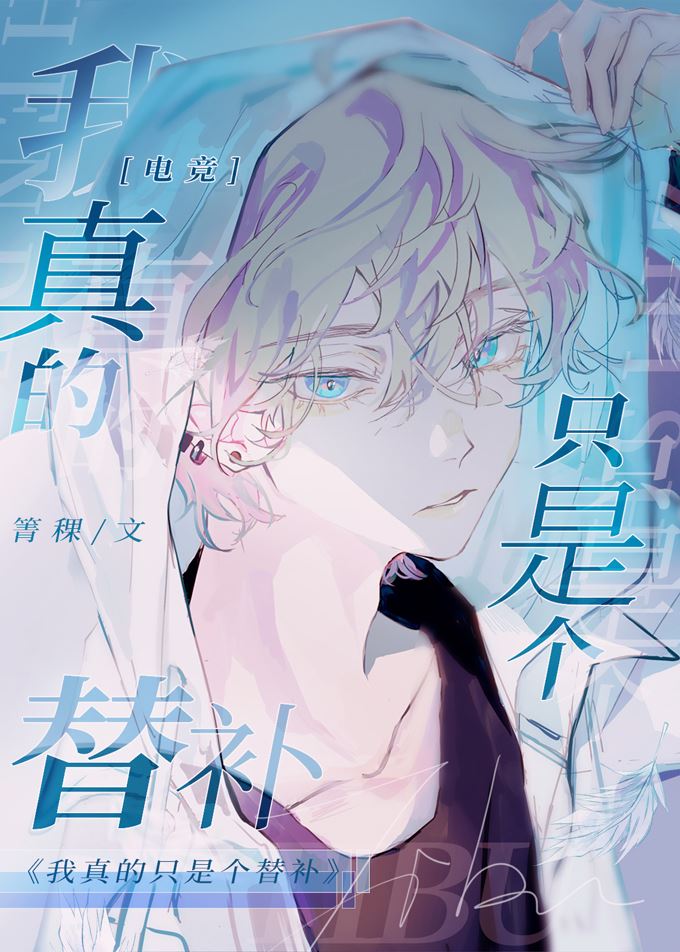
... Read More
I'm not even joking, the dialogue in this text is what makes me keep coming back. Xiao Shengjing's entire personality lives in these exchanges: "How many seconds until your ultimate?" "5 seconds." "Move forward." "Cast it here." Six words total. Six words that win a Pentakill. This man does not waste syllables. And then later: "Helped you block a slap, remember to return the favor next time." Said completely flat, zero emotion, while staring at Lin Lan like he's discussing the weather. Lin Lan's internal reaction: "What is this guy talking about?" And the reader is just sitting there dying because THIS IS ROMANTIC COMEDY GOLD and neither of them seems to realize it. Then the red envelope exchange: "Fine, repayment for you." "Will there be more next time? I can save you from bankruptcy." "Get lost." GET LOST. The Captain, the ice king, the man who scolds people into silence with surgical precision — BROKE CHARACTER. He cursed. Lin Lan's reaction: "Uh-oh, Captain just broke his image, he even cursed!" And I was wheezing. Coach Zhang's dialogue is equally distinct — loud, physical, slightly chaotic. "Doesn't Xiao Xiao have cleanliness issues? Never mind, never mind." The way he pivots from praising Lin Lan to suddenly being concerned about germs when he realizes he's about to slap the Captain is hilarious. Every character has a voice. You could cover their names and still know who's speaking.

Leave a comment

You must be logged in to leave comments. or
