I Didn’t Kill My Husband - Reviews

I Didn’t Kill My Husband
+Add to Custom List
Sort
Add review
... Read More
I need to talk about the emotional devastation in this opening and how it slowly, beautifully transforms. The wedding night scene is one of the most harrowing things I've read. Chris pulling her hair and grinding her face into the sheets, spitting on her, calling her a broodmare while clearly unable to perform because his ego is too wounded—the entire sequence makes you feel physically ill. But what struck me most wasn't the abuse itself, it was the NANNY. The one person who showed up, who cried FOR her because Scarlet couldn't cry for herself, who immediately understood what her lady needed without being asked. That single warm hand clasping Scarlet's cold one? I actually teared up. The emotional core of this story isn't really about romance—it's about a woman who has been stripped of every identity (daughter, wife, potential mother) and is slowly, painfully reassembling herself. And Scarlet's internal monologue about treating herself as 'less than human' because otherwise she couldn't survive? That broke me. But then—five years later, she's NOT broken. She's studying LAW. She's researching precedents. She's thinking three steps ahead while everyone else thinks she's just the 'shameless Duchess hiding in seclusion.' The emotional arc from the girl who bit her lip until it bled to avoid making a sound, to the woman who coolly tells her mother-in-law to contact Lady Gagnon instead of attacking her... I haven't been this invested in a character's emotional journey in forever. The author makes you feel every ounce of her pain, but also every spark of her defiance.
... Read More
Okay, I need to talk about Robert and Scarlet because holy shit. The whole scene where they finally touch without the thick gloves? I literally gasped. For five years this poor girl has been wearing those barriers like armor, and her dad removes his own to finally feel what she's been enduring. When Robert touches her bare hands and gets flooded with all those memories—the beatings, the humiliation, the isolation—I think I actually made a noise. He aged ten years in that one contact. And Scarlet? She's not some passive victim here. After all that crying, she lays out the facts like a lawyer and says 'I mean to use this incident as an opportunity and try to make my way forward more actively.' That line! She's done waiting for someone to save her. But then the part that really got me—when Robert offers to use that imperial shield just to get her out, and she refuses? She'd rather fight for her name than take the easy way out. These two are broken in different ways but somehow fit together. I just wonder… will she ever forgive him for arranging this marriage in the first place?
... Read More
I keep coming back to the symbolism in these chapters, and honestly it's remarkably layered for a romance-fantasy piece. The gloves alone deserve an essay. Scarlet wears these heavy outdoor gloves that reach her elbows, and she's wearing them *indoors*. Why? Because they're armor. They hide the physical evidence of her Esper abilities — the power surges, the clumped energy, the trembling. They're also a metaphor for everything she's been concealing: her true self, her pain, her desperate need for connection. When Edward removes that glove, he's not just preparing to Guide her — he's dismantling five years of isolation. One finger at a time. And the fact that *his* hand trembles too? That's the key. This isn't a savior saving a damsel. It's two damaged people recognizing each other across a chasm. “We were destined from the beginning to be together, like puzzle pieces that fit perfectly.” That line hits differently when you realize Edward was treated as expendable his whole life — a Guide born into a family of Espers, mocked, used, discarded. And Scarlet was treated as property — married off, neglected, expected to endure. The Emperor's greed is another thread I can't shake. Scarlet remembers her father coming home “only once or twice a month with a weary and dark expression” — and then realizing what that really means. The powerful consume the vulnerable. The male Guide consumes the female Esper. The Emperor consumes everyone. And yet Scarlet chose to hide her power rather than risk falling into that system. That's not weakness — that's survival. Chris's accident happening while he was secretly meeting Gagnon? Perfect dramatic irony. The man who treated Scarlet as accessory to his status got taken down by his own pursuit of pleasure. Meanwhile, the man who always believed Scarlet was worth something finally gets to prove it — not with grand gestures, but with the quiet, radical act of treating her like she matters. The Guiding itself is the ultimate symbol: two people who've been broken by the same world finding wholeness only through each other. Not romance for romance's sake — this is about recognition, belonging, and the terrifying vulnerability of letting someone see you truly.
... Read More
So let me just say this upfront: the pacing in these first two chapters is INSANE and I am not okay. Chapter 1 opens at maximum tension—Chris is being wheeled in on a stretcher, Gloria is having a full meltdown, and Scarlet is standing there looking completely calm. My heart was pounding. I had SO many questions. And then the chapter ends and Chapter 2 immediately drops you into the wedding night flashback, which is where ALL of this tension originated. The author doesn't waste a single paragraph. Every scene serves double duty: it advances the plot AND reveals character. The transition from the hospital back to the bedroom and then forward five years to the present is seamless—I didn't even notice the time jumps happening until they were already complete. What really got me though was how the author uses silence and omission. There's a whole section about Scarlet's research into divorce law that could have been an info-dump, but it's written in this clipped, almost clinical tone that mirrors how Scarlet has had to numb herself to survive. And then the ending—'the unspoken agreement of the world, that a woman could not step forward unless th'—wait, the text cuts off mid-sentence here, but even that abruptness works. It feels like the world itself is cutting Scarlet off mid-thought, mid-action. The cliffhanger is almost too perfect. You want to know what happens next, but more than that, you WANT her to succeed. Every structural choice in these two chapters feels deliberate and purposeful. No filler, no padding, just relentless forward momentum wrapped around this incredibly dense emotional core.
... Read More
The dialogue in these chapters is absolutely savage and I am here for it. Every conversation feels like two people circling each other with knives hidden in their sleeves. Let me just highlight a few moments that made me laugh out loud: Gloria accusing her own son of scheming: 'After you entered this house, the former Duke died, and Chris ended up like that too. This family is truly falling into ruin.' — The audacity. The sheer unearned confidence. And then Scarlet's response: 'If I were scheming, there is no reason I would say so with my own mouth.' Delivered with such calm superiority it's almost poetic. And Louis! This guy is my favorite new character and I barely know him. His joke about Scarlet enjoying the quiet while it lasts had me wheezing. 'Who knows how long it will last, but enjoy it while you can.' The man walks into his brother's deathbed chamber and immediately starts making it about himself and his dinner plans. Absolutely hilarious. But the real standout is Chris himself. The author gives him this voice that's equal parts pathetic and venomous—'You may say that, but I know you are not that kind of person. We were childhood friends, weren't we?' The manipulative whining is so natural it hurts. He can barely move and he's still trying to twist every conversation back to his victimhood. Meanwhile Scarlet's internal narration perfectly captures the exhaustion of dealing with him: 'He was a man who told her to be grateful that he beat her only with his body and not with a whip, so his head had been filled with flowers from the beginning.' That line is a masterpiece of restrained fury.
... Read More
These gloves. I can't stop thinking about these gloves. They're not just props—they're the entire thesis of the novel wrapped in fabric and padding. Scarlet wears them to block her unwanted reading power, yes, but also to block herself from the world. Five years of marriage reduced to tactile avoidance. And Robert! The man who built his life on strategic distance, who gave up his wife because he couldn't bear to hurt her with his power, who arranged his daughter's marriage for political survival—all of it comes crashing down when he peels off his own gloves and literally feels her pain through skin contact. The moment they clasp hands, every symbol converges. The barrier drops. The truth transfers. The father sees what he failed to prevent. But here's what really gets me: the author keeps returning to the idea that power without connection is punishment. Robert's Guiding power isolated him from his wife, separated him from his daughter. Scarlet's emerging power isolates her from normal touch. Even the imperial shield Robert mentions—a one-time escape hatch—is about transactional rescue, not genuine support. The real revolution isn't in divorcing Chris or investigating Artong. It's in two people choosing to touch without protection. And then Scarlet immediately channels that vulnerability into action. Touch → tears → strategy. That's the cycle. That's the story.
... Read More
I need to discuss Gloria because this woman is absolutely terrifying and I love her for it. The chapter gives us this beautiful, horrifying backstory that explains everything. Gloria came from a declining Viscount family, married into the Dukedom, and spent her life being humiliated by her husband's family—called a seductress, told she married only for status, scorned constantly. Her husband took mistresses openly. She was alone in that enormous mansion, waging silent wars against everyone who looked down on her. And then Scarlet arrived. Pretty, from a powerful marquisate, enormous dowry, chosen by the Emperor himself. Gloria became "nothing more than a remnant of the past, feared by all as though she were an evil spirit haunting the Galloway mansion." She had to ask permission to buy a single jewel. So when Chris collapses and can't move, Gloria doesn't just see a crisis—she sees an OPPORTUNITY. The text describes her walking out of Chris's room with "steps growing faster and faster" and humming to herself, looking like a madwoman. The maid is so frightened she tries to erase her own existence before running away. What makes Gloria such a fascinating villain is that she's not evil for evil's sake. She's a woman who was systematically crushed her entire life and now, for the first time, holds power. She genuinely believes she's doing the right thing—"I will handle everything"—while simultaneously being completely unhinged. Her theatrical delivery, like she's reciting a soliloquy she's absorbed into, shows someone who has lost touch with reality and replaced it with performance. And the cruelest irony? Chris, the man who spent years humiliating her with his infidelity and neglect, is now helpless and dependent on the very woman he spent a lifetime belittling. She seizes his jaw with bony hands and whispers chillingly through clenched teeth. This is poetic justice wrapped in pure menace. Meanwhile, back in the dining room, Edward and Scarlet are navigating something entirely different—a connection that's both genuine and dangerous, built on childhood intimacy but poisoned by present-day consequences. Two relationships, both trapped, both waiting for something to break.
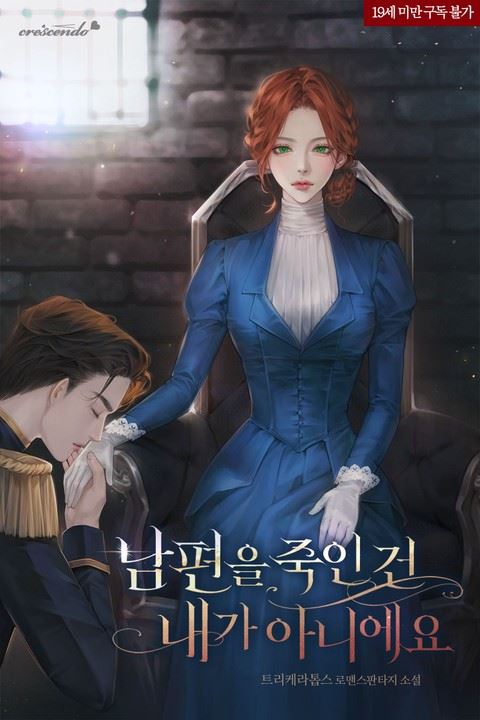
... Read More
The stakes in these chapters are doing triple duty and I am here for it. On the surface, we have Chris paralyzed and Scarlet's secret marriage crumbling — standard domestic drama territory. But underneath that? The entire political structure of this empire is teetering, and Scarlet is standing at the epicenter without even realizing it. Let's talk about what she's actually risking. She's a *female Esper* in a world where those are extraordinarily rare. The Emperor has already shown he covets powerful Espers — Scarlet literally describes his greed toward her father. If he learns she exists, she won't just be a Duchess; she'll be a resource to be harvested. And she's hiding this not just from the Emperor but from her own father, who is presumably also connected to this system of exploitation. That is a lonely, dangerous place to be. Then there's the personal stake: Scarlet has been walking around with unmanaged Esper energy for who knows how long. Guides explain that without proper Guiding, an Esper can go mad, their energy can clump and eventually explode. She's been living with this ticking time bomb in her body, alone, in a house where her husband cheats on her and her father is absent. The physical danger is real and immediate — headaches, nausea, the constant strain of containing something she was never taught to control. But the conflict that truly keeps me up at night is the moral complexity. Edward wants to help Scarlet, and he genuinely does — but he's also the Crown Prince of the same imperial system that destroyed her mother and drove her father to madness. His power to Guide her comes from the same hierarchy that views Espers as assets. When he says “I willingly extended his hand to Scarlet,” is that salvation or possession? Can it be both? Chris lies paralyzed, plotting divorce, still connected to Gagnon. The Emperor is somewhere in the palace, possibly already suspicious. Scarlet is caught between a husband who used her, a lover who might save her but also might consume her, and a system that wants her power. And she just wants to survive without losing herself. That's not just high stakes — that's suffocating, nail-biting, page-turning stakes.
... Read More
There's a scene in here that wrecked me and I need to talk about it. Scarlet remembers the night Chris kicked her while drunk. She remembers thinking it was the same old routine—shake her, scream at her, sleep with someone else, repeat. She was so broken in at this point that she just... went limp. Let him do what he wanted. And then she crawled toward the door. Toward freedom. Even if it was just out of the room. "When she barely managed to open that door amid the rain of violence, she saw Gloria standing among the servants who had come running at the sound of the screaming." And Gloria's response? "M-Mother. It's nothing. Scarlet and I were only having a brief talk." BRIEF TALK. He called DOMESTIC VIOLENCE a brief talk. And Gloria looked down at Scarlet "as though she were an insect." This is the moment that broke something in Scarlet permanently. "If there had ever been a greatest humiliation in Scarlet's life, it was the moment when she had unconsciously looked up at her with eyes asking for help." SHE ASKED FOR HELP. With her EYES. And nobody came. Not her mother-in-law, not the servants, not anyone. After that, she stopped screaming. She stopped begging. She just endured. "Refusing to open her mouth even if she fainted was no more than a small mental victory—proof that someone like him could never truly hurt her." That line broke me. A woman reducing her entire survival strategy to NOT GIVING HER HUSBAND THE SATISFACTION OF HEARING HER SCREAM. That's not strength—that's survival so deep it becomes invisible. And now? Now he's the one on his back. Now she's the one who could end him. And the text says: "Compared to that, it was laughable that the man who had once struck a woman far smaller than himself however he pleased should reveal fear so quickly the moment their positions were reversed." LAUGHABLE. She finds it LAUGHABLE. Not cathartic. Not satisfying. Just... pathetic. That's the most powerful position she could possibly be in—not angry, just indifferent.
... Read More
This part of the book is so atmospheric it's almost suffocating in the best way. The Galloway mansion isn't just a setting—it feels like a pressure cooker where every corridor, every closed door, every eavesdropping moment adds to this thick, claustrophobic tension. I especially love how the author keeps returning to physical spaces to ground the drama: Scarlet and her father hiding in the drawing room while Gloria waits outside like some predatory cat, Louis slipping in at dawn like a ghost who was never really gone. The detail about Marquis Clifford checking the darkening sky before leaving—such a small gesture but it tells you everything about how carefully they have to move in this house. And the scene where Scarlet finally enters Chris's room after the butler's report, only to find Louis already there? That moment when she steps into a space that was supposed to be hers alone and it's been invaded by someone else entirely—chills. The author paints these rooms so vividly you can practically feel the stiff collars, the heavy drapes, the way light falls differently in each corner. It's like watching a period drama where every frame is composed perfectly.
... Read More
Okay, I need to talk about this one scene because it literally wrecked me. Scarlet and Edward are sitting together after years apart, having just navigated this horrifying conversation about her impending divorce, and then he says: "The misunderstanding that I want you to divorce?" And his gaze—God, the text says his gaze was *hot* and entirely different from the calm warmth she remembered. This man who used to be just a sad little prince sharing apple pie with her in the imperial garden has become someone dangerous, someone who looks at her like he actually wants something from her. But what killed me wasn't the romantic tension itself—it was this moment right after: "Was it just her imagination? It felt as though Edward's gaze had brushed past Scarlet's waist, so slender it looked as though it might break. His expression was so calm as he spoke of another man's heir so casually that, for a moment, Scarlet found herself imagining her own belly swollen with child. Someone's gentle hand caressing that rounded belly. Herself smiling brightly beside him. She did not want to escape the sweet swamp of that fantasy." I SCREAMED. She doesn't want to escape the fantasy. She's so starved for warmth and tenderness that even a dangerous, half-formed daydream about being with Edward feels sweeter than her actual life. And then the next paragraph—"To her, this moment felt like a horrible, happy torture. Even so, because she did not want to miss even the smallest sound of his breathing after seeing him again at last, Scarlet engraved everything about Edward into herself again and again." This woman has been surviving on fumes for five years and the second someone looks at her with something other than contempt, she's mentally drafting their entire future together. That's not romance, that's desperation wearing a very pretty mask. And Edward isn't exactly innocent here either—he's the Crown Prince now, practically the future Emperor, and he's sitting across from a divorced woman and immediately offering her an out while his eyes wander somewhere deeply inappropriate. Neither of them is clean. Neither of them is harmless. And I am HERE for it.
... Read More
Can we talk about how the author uses food as emotional anchors throughout these chapters? Because I noticed something and it genuinely made me appreciate the writing more. Right after this brutal confrontation about divorce and infertility and all the awful truths Scarlet has been carrying alone, Edward's face—described as looking like he was "about ready to rush at her"—relaxes the SECOND she mentions apple pie. Not cake. Not wine. Apple pie. And suddenly we get this whole flashback to their childhood, hiding in the imperial garden, both of them kids who had nothing but each other, eating pie that tasted better cold because Scarlet figured it out through trial and error. "Once she took a bite of the softened apple filling, sweetness would rise all the way to the top of her head, and for that moment, she felt as though she were truly happy." Truly happy. Not extravagant. Not luxurious. Just... warm fruit and cinnamon and someone who remembered her. Five years of this gilded hell and the only time she felt genuinely happy was eating a cold pastry in a garden corner with a boy nobody liked. And then—slash cut to the present—she hasn't been able to eat apple pie since coming to Galloway because Gloria would make a scene. Gloria who "took issue with every single thing people ate" and would lecture her about "the dignity of a Duke's wife, her inborn vulgarity, and her pig-like, fleshy body." The fact that Gloria polices Scarlet's FOOD choices tells you everything you need to know about the kind of prison this marriage is. It's not just about Chris. It's about a woman who survived being looked down on her whole life now having absolute power over someone she perceives as superior, and she exercises it through petty, suffocating control. The apple pie becomes this tiny symbol of everything Scarlet lost—not just her happiness, but her最基本的 joy in eating something she liked without fear. Meanwhile, the setting shifts so sharply between chapters. We go from the intimate, candlelit dining room where Edward and Scarlet almost touch something real to Gloria screaming at a paralyzed Chris in a bedroom, humming to herself, looking like a madwoman. The contrast between these two scenes—one quiet and aching with restraint, the other loud and unhinged—shows us two completely different kinds of captivity. One traps you emotionally. The other traps you physically and then feeds on your weakness.

Leave a comment

You must be logged in to leave comments. or
