God’s Love Game [unlimited ] - Reviews

God’s Love Game [unlimited ]
+Add to Custom List
Sort
Add review
... Read More
'Xishan is a place where corpses are transformed.' Four words from the old man and suddenly the entire landscape recontextualizes. This isn't just a spooky mountain. This is a place where death does something specific—where corpses don't stay corpses but become something else. The word 'transformed' is doing so much heavy lifting here. It's not 'resurrected.' It's not 'reanimated.' Transformed implies process, change, something becoming other than what it was. The imagery throughout this chapter is incredibly vivid. Half-emerged talisman papers sticking out of the ground like grave markers that forgot to finish growing. The desolate and dry western mountain. Corpse-type entities that the taskers refer to with clinical detachment because they've seen it too many times. Villagers whose gray complexions darken with emotion like storm clouds gathering on a face. And the house! The villagers' house is this beacon of normalcy in a world gone wrong. Xiangnu knocks on the door holding a skull. The villager inside 'couldn't wait to open the door, and their eyes were full of longing.' Longing for what? For their dead body? For closure? For someone to see them as human again instead of this gray-skinned thing sitting in their own house? The contrast between the open graveyard of the western mountain and the enclosed domestic space of the villager's home is masterful. One is exposed, dangerous, full of half-buried talismans and shifting earth. The other is claustrophobic, tense, filled with people who want something but can't quite reach it. Both are liminal spaces in their own way. The talisman papers themselves are such a great worldbuilding detail—they're physical objects tied to the metaphysical rules of this world, half-visible, possibly helpful, possibly traps, created by the old man who watches everything from his yard with his black dog. You can feel the author building a system where objects carry power and intent, and where the landscape itself seems alive with history.
... Read More
Okay I need to talk about the staff member because honestly? This character gave me major villain energy and I'm here for it. Like, on the surface he's just some helpful greeter at the welcome center, right? But the more he talks, the more you realize he's basically a wolf in sheep's clothing. He starts all friendly, 'You reach out to the table,' nice and gentle, and then within three minutes he's already running a full-on sales pitch. The moment he says 'I haven't sold it to anyone else' about the navigation function, I literally said 'nice try' out loud. That is not the language of someone who genuinely wants to help you. That is the language of someone who sees a poor blind newcomer and is calculating exactly how much they can extract before Xiangnu figures it out. But what's fascinating is Xiangnu's reaction. He doesn't just accept the BS. He pushes back. 'You sell me 100,000 credit points for a function that can only be used in the central hall?! Sir, you are too crafty!!' And he's RIGHT. Nine-nine-nine-nine-eight for something that literally shuts off when you leave the building. That's not a discount, that's an insult to intelligence. The real power move though comes at the end when the staff suddenly finds a rental property and gets excited about it. Why does he suddenly care if Xiangnu can afford rent? Because if Xiangnu rents instead of buying, the staff still gets his commission. This guy is running a whole ecosystem of predation and he's barely hiding it. I also love that Xiangnu asks about the landlord. He can't see but he can still sense that something is off. There's a quiet intuition to this character that I think is going to be huge later. He may be visually impaired but he reads people like nobody's business.
... Read More
I keep going back over this sequence and the puzzle pieces just click so satisfyingly. "After coming out of the silver light, the feeling is the same as when we were thrown into the dungeon from the central hall." That line from Xiangnu? Genius. The author basically handed us a breadcrumb and we were all just casually nibbling on it without realizing what we were eating. What I love about this whole setup is how Yu Su plays the long game. He's out there actively giving information to the No. 4 carriage taskers but Xiangnu immediately clocked that this wasn't about helping them at all. Yu Su is using them as water-testing subjects. "I will find someone else to test the water first." Chilling. Absolutely chilling. He's willing to let strangers potentially die just to verify his survival hypothesis before he or Xiangnu makes a move. The structure here is really tight too — every revelation feeds the next one. They figure out the silver light shows the central hall, then immediately realize the ghost-cleaning pattern means certain cars are about to become death traps, and that naturally pushes everyone toward the only logical escape route. It's not just random escalation, it's cause and effect stacking on cause and effect. The No. 7 car already being occupied and No. 5 getting sandwiched by ghost-filled compartments — this is the narrative equivalent of a pressure cooker. And then to end this whole batch with Feng Hejia dropping that Wanfeng Park revelation? The author really knows how to leave you grabbing for the next chapter. "It seems... the stations we stop at will all be missi" — cut off right there like a knife. I need to know what happens next and I'm not even mad about the cliffhanger. The plot engine in this book just refuses to stop turning.
... Read More
"Twenty-five minutes have passed, how is the situation now?" That line from Xiangnu is such a quiet little anchor in the middle of absolute chaos and it works so well. Let me explain. The chapter opens with this tense, claustrophobic conversation — six people crammed in a carriage, exchanging information, suspicion simmering. Then BAM, the train arrives at Wanfeng Park and everything shifts. The red birds, the monument dimming, the heavy iron door slamming open. The author basically takes us from slow-burn paranoia to full-blown horror in about three paragraphs and I had to put the book down for a second. What's brilliant is the rhythm of the arrivals. One tasker falls. Then two more. Then four more. It's not a flood — it's a staircase, each escalation slightly worse than the last, giving us just enough air between each wave to process before the next one hits. By the time Chen Chengen is doing his math and confirming that 32 people have already been assimilated, my heart was actually racing. And then — right at the peak — Xiangnu just calmly asks about the elapsed time. Like a pressure valve. The chapter ends on his unfinished question about hope, and it's devastating because we know the answer might be no. The pacing here is surgical.
... Read More
I need to talk about the coat scene because honestly I had to put the book down for a second. So Xiang Nu wants to borrow clothes for the cross-dressing party and naturally his first instinct is to ask Yu Su for his coat. And then — and this is the part that got me — he takes advantage of the situation, shakes off his nightgown, and stands there in just his white cotton shorts while Yu Su is trying to help him get ready. The text says Yu Su was frightened by his sudden movement, eyes widening, but his honest eyes were glued to the beautiful young man's body and he couldn't move. Then Xiang Nu deliberately glances at him and puts on his shirt with a smile. His legs are long, his buttocks faintly showing beneath the wide hem of the shirt that he stuffed into his cropped trousers, those perfect curves highlighted by the slim-fitting clothes. And then Yu Su couldn't help but approach and hug him tightly. Xiang Nu feels the hardness in his abdomen and that flash of panic and shyness in his eyes — not rejection, never rejection, but real, genuine fluster. He cuddles in obediently, afraid of triggering some terrible consequence after flipping this unstoppable switch, and asks very obediently if they should go. Yu Su just says... hmm. That single syllable is doing so much work. It's not refusal. It's not acceptance. It's the sound of someone who wanted this and didn't expect it and now doesn't know how to handle the fact that it's happening. The hungry tiger metaphor is perfect — blocked by glass, smelling meat, desperate and restrained all at once. What strikes me most is how neither of them says anything about what's happening between them. No confessions, no labels, no dramatic moments. Just this escalating physical intimacy wrapped around practical conversations about dungeon quests and party invitations and what to wear. The emotional stakes are enormous but they're expressed entirely through body language and subtext. Xiang Nu's line about wanting to become a monster and go to Yu Su's dungeon world to be with him forever — that's not casual. That's someone stating their deepest desire in the only language they feel safe using. And Yu Su's response about all people being different, monsters also being different, is him saying yes without saying yes. This is the kind of slow burn that makes you forgive every other disappointment in fiction. Because these two? They're going somewhere. They just don't know it yet.
... Read More
I can't stop thinking about the word 'sheep' and what it represents in this chapter. Ten years of famine, starving villagers, the master's annual ritual of 'killing a sheep' to feed everyone — and now the implication that the 'sheep' is actually a person. Shu Jian, of all people. The honest, dull-looking one. The one the master singled out first. There's something deeply unsettling about how the tradition is framed asbenevolence. 'Every year I would kill a sheep for the villagers to share with them.' It sounds like charity. It sounds like care. Until you connect the dots and realize this is institutionalized cannibalism dressed up as community service. The old man isn't just a twisted cult leader — he's someone who has convinced an entire village that this is normal, that this is tradition, that this is somehow noble. And Xiangnu's refusal to play along — that's not just defiance of a person, it's defiance of a whole system of belief. When he force-feeds the porridge, he's rejecting the old man's authority, yes, but he's also refusing to participate in whatever comes next. The 'materials insufficient' line at the end? That's the author letting us know the sacrifice hasn't been cancelled — it's just been postponed. And that terrifies me more than anything.
... Read More
Okay I need to talk about the moment where Yu Su pinches Xiangnu's chin. I re-read that three times. It's such a small gesture but it says everything about their dynamic. Xiangnu keeps looking at him like he's trying to figure something out, and then this moment where he just casually touches his face? That's not even the romantic part—the romantic part is what comes AFTER when Xiangnu kisses his palm and Yu Su shrinks his hand away pretending he's not flustered. "You..." is all he gets out. And then Xiangnu just smiles like he knows exactly what he's doing. The CP energy here is INSANE. They're clearly together but in this weird power-dynamic way where Xiangnu seems to understand Yu Su better than anyone else does. When Xiangnu says "you look cold and hard but you're actually very soft inside"—ouch that hit me. Like he SEEDED Yu Su. But then the sad part is when Yu Su murmurs about how "when this dungeon is over, everything will begin" and Xiangnu doesn't really understand? There's this barrier between them even though they're physically close. Yu Su is protecting him by keeping him in the dark. Which is sweet in a toxic way. I'm here for it though. The kiss on the palm scene made me shriek internally. The way Xiangnu holds his palm with BOTH hands? That's devotion. That's "I will follow you into silver light or death." Meanwhile Yu Su is just over there being all cold and dismissive on the surface but clearly cares. Their physical closeness throughout—clinging to his arm, leaning on his shoulder—versus how he treats everyone else? Major contrast. This is the kind of slow burn where the heat comes from what's NOT said. What got me most was when Xiangnu says "please Mr. Yu to accompany me to a place" after considering the silver light might not work. He's not asking to survive—he's asking to stay WITH Yu Su even if everything goes wrong. And Yu Su just says "okay." No drama, no speech, just... okay. That's the most romantic thing I've read all year and I'm not even mad about it.
... Read More
I keep coming back to the imagery in this passage and what it might be pointing at beneath the surface. The notebook itself is doing symbolic heavy lifting—it's secret knowledge, private history, something carried close to the body (literally placed against the belly under the cloak). What's written in it matters, but more importantly, what it represents is trust and secrecy between these two characters. Then there's the cloak, found in a closet full of capsules labeled 'life jackets produced by the cocoon pupa workshop.' Cocoon. Pupa. Transformation. Don't you think that word choice is deliberate? Something is about to metamorphose in this story, and the imagery keeps circling back to containers and coverings—cloaks, capsules, the glass of the carriage door that turns Fenghe Lulu into a mural. That's such a striking image: a person pressed against glass and flattened into a picture. It's like the world of this train doesn't let people stay three-dimensional for long. And the silver light—the barrier, the threshold, the thing people are trying to survive. It's presented as almost religious in its function, a purification they must pass through or die trying. The life jacket is ironically a safety device on a vehicle that seems fundamentally unsafe. Who makes life jackets for a train that travels through dimensions of horror? The absurdity of that question is kind of the point.
... Read More
I need to talk about this moment because my heart just— Yu Su's expression when Xiangnu points at him and says 'I choose Mr. Yu, and I want him to taste the honey with me!' The text literally says 'Under Mr. Yu's tangled eyes.' TANGLED. Like his emotions are physically knotted up. He sighs, shows reluctance, thinks 'it was nothing,' and then silently leads Xiangnu to that goddamn white worm. He didn't have to do that. He could've walked away. But he didn't. And then later when he hands Xiangnu the cup and says that line about monsters losing all their humanity—was that directed at the monsters or was it a sideways comment about himself? Because honestly reading it felt like he was watching Xiangnu make a choice that could get him killed and he couldn't stop it. The whole dynamic between these two is so layered. Yu Su seems like he's been hurt before, or maybe he's the type who stays on the edge of everything rather than fully commit. But Xiangnu just publicly chose him in front of a room full of predators. That's either the most romantic gesture I've ever read or the most dangerous. Both can be true at the same time.
... Read More
The Xuan Ji and Xuanyan backstory is GRIEF. They were BROTHERS. Not just fellow disciples — the text literally says they had a very good relationship, ran away together after stealing the porcelain doll, and only fell apart because one was genuinely better than the other and resented it. That's not even dramatic villainy, that's just... human pettiness amplified by ghost energy until it became unforgivable. Xuanyan dissecting his own sworn brother and sharing the pieces is the kind of betrayal that doesn't come back from. But what actually gets me is Xiangnu's relationship with the people around him. Mr. Yu changes the bedsheets from white to red while he's showering. Doesn't announce it. Doesn't explain why. Just... does it. And Xiangnu notices immediately but doesn't panic. They have an unspoken rhythm now. Then there's Shu Jian — who refused compensation and was perfectly happy taking a smaller share — and Xiangnu PAYING him anyway because he made a promise. "Not too much, not too little, just right." That line wrecked me a little. This guy navigates human relationships with genuine care and precision even while wearing a mysterious skull and clearing supernatural dungeons. Meanwhile, Jiang Chao and the rest treated Xiangnu gently, didn't use him as bait despite his apparent limitations. There's this whole web of loyalty and quiet generosity that the horror backdrop keeps getting undercut by. Which is honestly more unsettling than any ghost could make me feel.
... Read More
I need to talk about this one exchange because it hit me in a way I wasn't expecting. Xiangnu tells Shu Jian: "Don't be afraid, third senior brother. If you are injured, it doesn't matter. I have a lot of life points. As long as you keep a life. You can look for me when you get out of the copy, and I will heal your injuries." On the surface this is just game-mechanics talk — hey, I have healing abilities, you won't die for real, it's fine. But read it again. "As long as you keep a life." Not "as long as you stay alive" or "don't die." He's treating survival as a conditional thing, like keeping a single point of HP is the difference between safety and oblivion. And then the promise at the end — you find ME when you get out. Not someone else. Me. I am the destination. I am the person you go to. And Shu Jian's response — he swallows his saliva, he's scared, he's hesitating between fear and trust, and then he just... commits. "Younger brother you won't harm me, I won't ask the reason, you draw the position to me, I'll dig!!" That exclamation point. That's someone choosing to trust anyway. That's friendship or loyalty or whatever this bond is between them crystallizing in real time. But what really stays with me is the contrast with the Yu Su thread. With Yu Su, Xiangnu is playful, vulnerable, asking for comfort, letting himself be cute. With Shu Jian, he's the protector, the one with resources, the one who can guarantee safety. Two different emotional registers, two different kinds of care. One is soft and silly and the other is steady and grounded. And I'm just over here trying to process that this character holds both modes simultaneously without it feeling forced. Is Xiangnu aware of how much he's carrying? Because it reads like he distributes his emotional availability like a resource, and I wonder if he ever runs out.
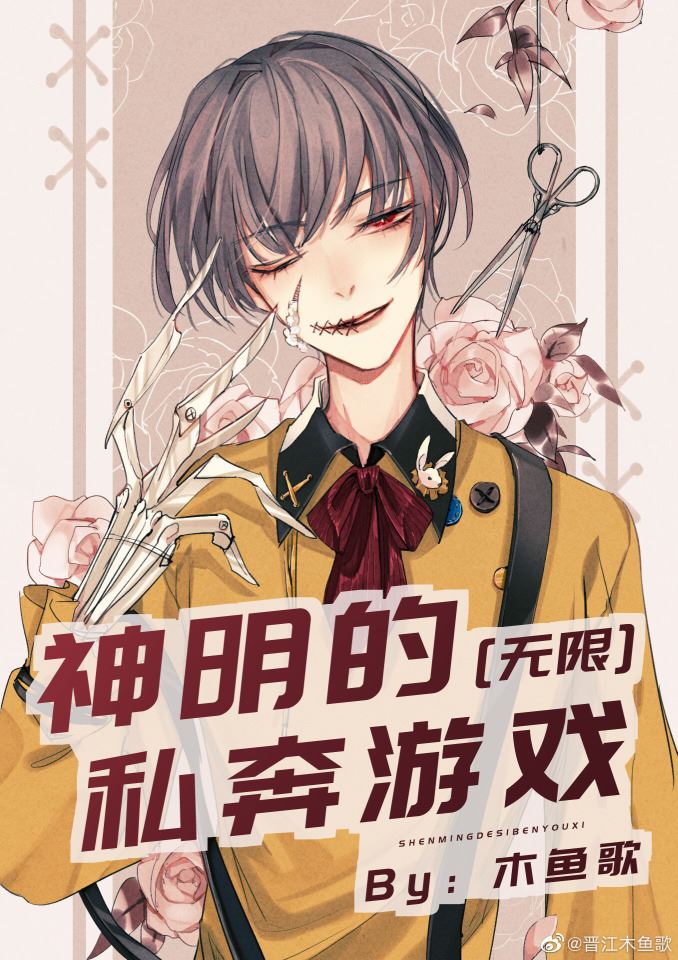
... Read More
Let me tell you, the dynamic between Xiangnu and Yu Su is absolutely filthy in the best possible way. On the surface, it looks like Xiangnu is the helpless newbie who somehow survived, but by the end of these chapters, we realize he has been playing both characters AND the reader the whole time. He literally lied about having OCD, lied about the brooch, and apparently lied about knowing nothing about... ahem... intimate matters. And the funniest part? He just casually drops this bombshell that he "educated himself" through some banned audio novel and thinks Yu Su is the elementary-school-level rookie here. The arrogance! I was screaming. But honestly, what makes their relationship so compelling is the power shifting. Yu Su comes in thinking he's the experienced one, the one with the territory and the knowledge. Then Xiangnu starts showing off his red mole, pulling up his personal panel, dropping mission intel like it's nothing. Each time he does this, Yu Su's mask cracks a little more. By the time he's leaning on the sofa with those eyes full of "bad intentions," you can tell this stern, controlled man is completely undone by someone who pretends to be vulnerable but is actually three steps ahead. And then the tone shift—Xiangnu getting genuinely worried about the competitive mission, asking if he can refuse, if it's too late to become a monster. And Yu Su holding his face. That's it. Just that moment. That silent gesture says everything about how he really feels. The man who was plotting to catch Xiangnu off guard next time is now physically reaching out to comfort him. These two are a menace.

Leave a comment

You must be logged in to leave comments. or
