Formless - Reviews

Formless
+Add to Custom List
Sort
Add review
... Read More
So this chapter starts with what could have been a completely generic company dinner scene, right? You know the drill — new employee, uncomfortable questions, forced laughter. But the author immediately subverts expectations by making it about something else entirely. Heewoon isn't there to drink or socialize; he's there because Kangwoo gave him permission to attend while Kangwoo himself had other plans. The real plot here isn't the dinner at all — it's the waiting. Let me talk about structure for a second because this is where the author gets clever. We're given this long sequence of awkward small talk — 'Is she pretty?' 'What does she do?' — and then suddenly it pivots to Heewoon going home alone, checking his phone repeatedly. The dinner was just setup. The actual narrative thrust begins when Heewoon messages Kangwoo: '[I'm heading home now. When are you coming back?]' And then... nothing. Silence. Hours of it. The tension builds not through dramatic events but through absence, through the space between messages. When Kangwoo finally appears, the scene shifts dramatically. We go from Heewoon's anxious waiting to Kangwoo stumbling through the door drunk — and this is where the real plot action happens. Not a fight, not a declaration, but something more interesting: Kangwoo asking 'Who bothered you at the company dinner?' after noticing Heewoon looks 'like a dog in the rain.' The plot device here is observation — Kangwoo paying attention to details others missed, which reveals more about their relationship than any dialogue could. The chapter ends on what feels like a cliffhanger but is actually something subtler: Kangwoo's mood shifting from tender to irritated, grabbing Heewoon's arm, saying 'Did I tell you to leave?' The conflict isn't resolved; it's suspended. And honestly, that's more effective than any neat conclusion would have been. The question hanging in the air isn't 'what will happen next?' but 'what has already happened between these two that makes this moment so charged?'
... Read More
The dialogue in these chapters is so sparse but it carries more weight than half the speeches I've read this year. Let me just start with this exchange: 'Because you don't call, I keep thinking about you, Sunbae.' '…If I call, you won't think about me?' This is two people having a completely different conversation in the same room. Heewoon is saying 'I miss you but I won't admit it' and Kangwoo is hearing 'Please tell me I matter to you.' The ellipses matter here—they're not just pauses, they're the space where the real words live. And Kangwoo's voice throughout this section is so distinct. He's blunt ('Come here,' 'Do you think that I'm such a pushover'), teasing ('Are you doing this on purpose because you got on my nerves'), and devastatingly tender ('Maybe I just keep thinking about you, Sunbae')—all in the same scene. He never sounds the same twice and that's why he feels like a real person, not a romance novel construct. The narrator's voice is equally good. Notice how it slips into Heewoon's head without warning: 'Heewoon found it strange to place such beautiful flowers in a vase, as they were dead flowers.' That's not narration, that's a thought. The boundary between external description and internal voice keeps dissolving, which makes the whole thing feel more like memory than storytelling.
... Read More
I've read a lot of kidnapping scenes but this one? This one different. Not because of gore or action — but because of one simple line that repeated through my head for like twenty minutes after I finished reading. "Please, just one call." Just. One. Call. Heewoon is lying on a cold tiled floor, hands tied behind his back, ankles wrapped in tape, and all he's asking for is to make one phone call. To Seo Kangwoo, presumably. Someone who would come running. Someone who could save them. The tragedy isn't that he's captured — it's that he's close enough to be saved but the only thing standing between him and salvation is three minutes of his voice. And then they tape his mouth. Let me be clear about what that looks like: tape wound around his head, pulling his hair, sealing his mouth while he's screaming 'Ummmmmph!' inside his own skull. The author doesn't describe it in painful detail but you can FEEL it. Every struggle, every muffled sound, every绝望 thought crashing against that tape. But here's what wrecked me the most — and I know this sounds small compared to everything else — the earlier moment in the alley. Heewoon holding his mother's hand, walking slowly because she looks like she might collapse, saying 'Let's go, Mom' in a whisper. That tenderness. That quiet love between a son and his dying mother. They had maybe thirty seconds of peace together before the van appeared. Thirty seconds of normal life — a taxi coming, a cigarette, a cat in an alley — and then everything turned to hell. The contrast between those two moments — the gentle walk and the violent grab — is what makes this emotional damage permanent. You can't unread the transition from 'Let's go, Mom' to 'Help...!'
... Read More
There's something almost poetic about how the author uses physical environment to mirror the psychological state of these characters. The opening scene in the car — the warmth inside making Heewoon strip off his padding, the seatbelt tangling around his clothes — it creates this claustrophobic intimacy. Two men alone in a confined space, Kangwoo staring at Heewoon in the side mirror before turning to look at him directly. The casual violence of that gaze shift. Then they step outside into the "biting wind" near the Han River, and the cold physically wraps around Heewoon's throat. Not metaphorically — the text describes it literally tightening. Later, at the restaurant, there's this wide window showing the night view of the Han River. Kangwoo enjoying the scenery, then suddenly turning to ask about wine. The contrast between the beautiful, calm exterior and the rotting conversation happening inside is devastating. I kept imagining this like a film scene — the camera lingering on the river through the glass, the warm interior lighting, and then cutting to Kangwoo's face as he casually discusses having caused a man to end up in the hospital. The Han River itself keeps appearing as a backdrop. It's cold, it's dark, it stretches endlessly — kind of like Kangwoo's influence over Heewoon's life. Beautiful to look at from a distance, but you don't want to fall in.
... Read More
Let me pick apart the imagery because this author doesn't waste anything. Heewoon's entire body is “soaking wet” and Kangwoo's robe is damp—but from what? Sweat? Tears? Vomit? The text never specifies, and I think that's intentional. It's all of it. Heewoon is physically overwhelmed, and the wetness represents how exposed he is, how nothing is hidden anymore. Then the tassels that “fallen out of Heewoon's hair and down his back”—hair accessories in this genre usually symbolize status, identity, composure. They've fallen. He's unraveled. And Kangwoo traces them with his eyes before speaking. He sees what's been lost. The most powerful symbol though is the hand-holding near the end. Kangwoo “gently opened the hand that was clenched into a fist and interlaced their fingers.” Heewoon's fist—clenched from fear, from sickness, from fighting—and Kangwoo prying it open not to force anything, but to connect. And then the narration: “His hand was indeed weak. His hand was incapable of holding onto anything.” This isn't just about physical strength. It's about emotional dependency. Heewoon can't hold onto himself—his dignity, his composure, his independence—so he has to hold onto Kangwoo instead. The wet blanket, the dropped tassels, the forced-open fist—every image tracks the same arc: collapse, exposure, and then being held anyway.
... Read More
There are two very different lighting schemes in these chapters and I think the author is doing something really intentional with them. The first is that late-afternoon golden hour outside Kangwoo's house. The sun is 'about to set' but there are 'no signs of red streaks in the sky yet'—so it's that pale, stretched light where everything looks slightly surreal. Kangwoo's massive gate opening. The dog rushing to greet him. Four steps of silence between two people. This is a cinematic scene, man. It could be a film. The spacious windows of the house, the possibility of someone working inside, the tree out back—every element of the setting is actively creating tension and stakes. The environment isn't just decoration; it's a character that keeps whispering 'what if someone sees you?' Then we cut to Heewoon's apartment and the lighting彻底 changes. Shadows. His mother's face 'covered in shadows' as she lies on the couch. The blue-ish glow of a TV drama rerun. The sliding door he opens. The bathroom where he washes his face to compose himself. This is a much smaller, darker, more claustrophobic world. The thermal long-sleeve he's wearing, the chill of sunset outside his building—it all creates this sense of coldness and isolation that contrasts sharply with the warmth of Kangwoo's house and garden. The contrast between these two spaces—the expansive, sunlit world of Kangwoo where passion and danger coexist, and the cramped, shadowy apartment where grief and duty live—tells you everything about Heewoon's divided existence without the author having to say a single word about it.
... Read More
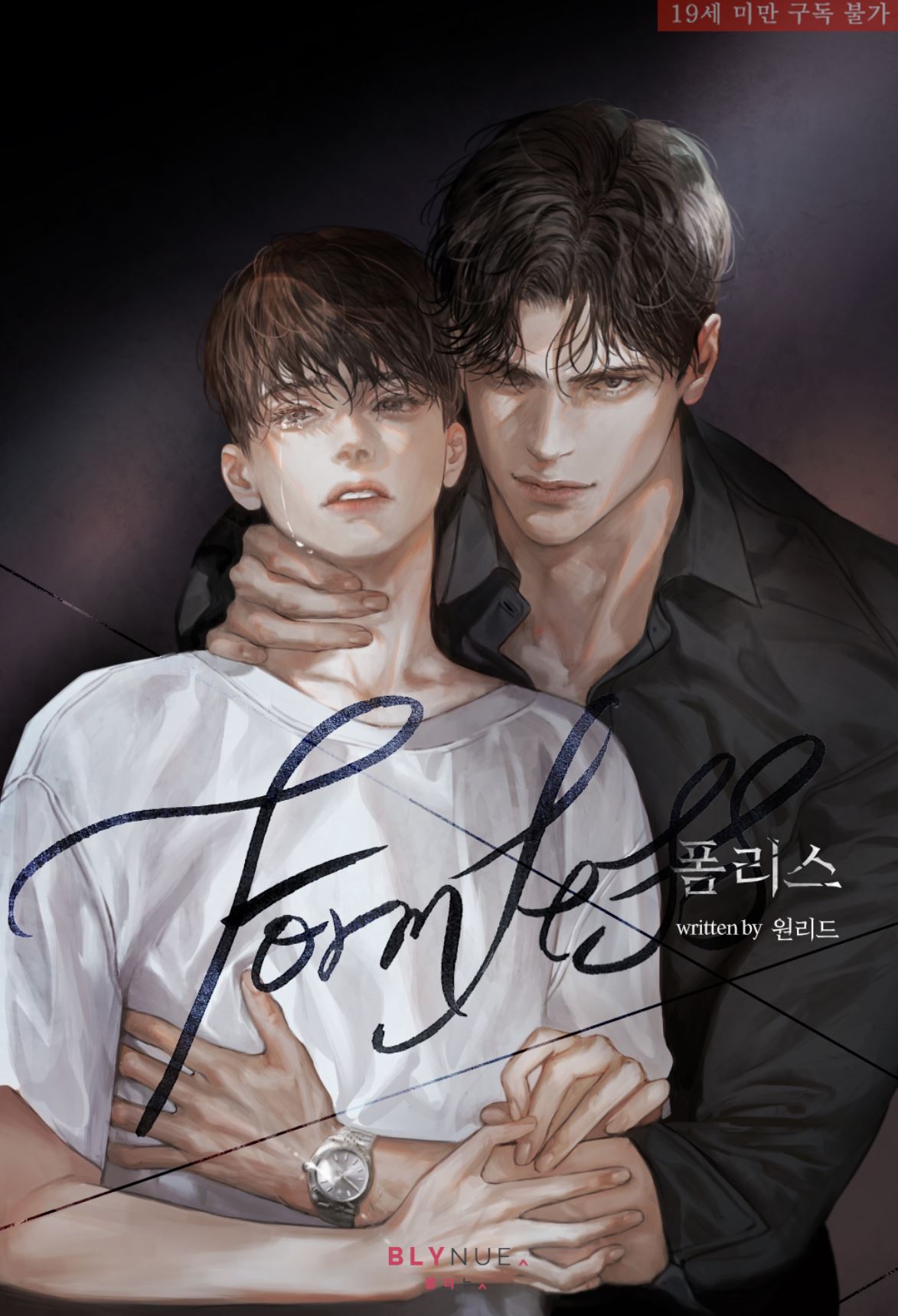
Okay, let me just say it: this chapter completely recontextualizes everything we thought we knew about Kangwoo. Up until now, I'd assumed he was the composed, controlled one — the one who set the rules, who allowed Heewoon to attend the dinner, who operated from a position of calm authority. But this scene peels that back layer by layer, and what we find underneath is someone who is simultaneously vulnerable, possessive, and acutely observant in ways that unsettle me. The moment that wrecked me was when Kangwoo asks 'Who bothered you at the company dinner?' Think about that. Heewoon didn't tell Kangwoo about the uncomfortable questions. Heewoon sat through that dinner silently, nodding and saying yes, unable to fight back. And Kangwoo — drunk, disheveled, barely standing — noticed. He saw Heewoon's face and recognized the expression immediately: 'You look like a dog in the rain.' That's not a casual observation. That's someone who has been watching Heewoon closely enough to read his micro-expressions, who knows what distress looks like on that face specifically. But then the relationship dynamics flip again. Kangwoo goes from gentle — stroking Heewoon's cheek, murmuring softly — to suddenly aggressive, grabbing his wrist, pulling him closer. The text says Kangwoo's grip was 'unlike that of a drunk person,' which is such a loaded detail. Is he really this drunk? Or is the alcohol giving him permission to do things he normally suppresses? The line between tenderness and control blurs completely here. And Heewoon — oh, Heewoon. His reaction is so telling. He's afraid. Not just of Kangwoo's strength, but of Kangwoo's mood swings. The text describes him feeling 'anxious' and worrying 'what if Seo Kangwoo had a bad drinking habit?' Yet he stays. He approaches. He lets himself be pulled onto Kangwoo's lap. There's this terrifying devotion in Heewoon's compliance, and I'm not sure whether to admire it or mourn it. The bite mark at the end is horrifying and intimate all at once. Kangwoo literally marks Heewoon's neck, says 'It looks good,' and Heewoon can only react with internal cursing. This isn't healthy. I keep telling myself that. But the complexity of it — the love and the fear tangled together — is what makes these characters feel so devastatingly real.
... Read More
Let me just say this upfront: the tension in these chapters operates on at least three simultaneous levels and the author never lets you settle into just one. First, there's the interpersonal conflict—Heewoon's jealousy and insecurity versus Kangwoo's patience and underlying control. This one hits hard because it's intimate and personal. Heewoon isn't just worried about cheating; he's worried about being excluded, about not being the center of Kangwoo's world. The line "I thought you were busy with work, but… you were chatting with a woman" isn't really about another woman. It's about Heewoon feeling like he doesn't have full access to Kangwoo's life. Second, there's the external danger—the axe, the bloodied face, the people who don't know Heewoon is there. This escalates the stakes from relationship drama to actual physical threat, and it changes everything about how you read the rest of the scene. Kangwoo isn't just a boyfriend organizing a surprise trip; he's someone who operates in a world where violence is casual and expected. The fact that Heewoon has seen unrecognizable faces and is now being tucked into a jacket and told to wait quietly—that's not romantic, that's survival-adjacent. And third, there's the internal conflict, the one Heewoon barely acknowledges: he follows Kangwoo anyway. Despite the fear, despite the blood, despite knowing this person operates in dangerous spaces, Heewoon can't stay away. "You're so full of fear, but why do you only follow me to places like this?" Kangwoo asks, and the answer is implicit and devastating: because Heewoon can't not follow. The stakes keep rising throughout these chapters in a way that's almost imperceptible until you look back. You start with a misplaced message and end with Heewoon standing in a villa in Hawaii, wearing Kangwoo's jacket, with blood on Kangwoo's shirt and people outside who might be a threat. That's not a gentle romance escalation; that's a slow collision between intimacy and danger, and the author is letting both forces coexist without resolving either. Which is exactly why I can't stop thinking about it.
... Read More
This chapter is pure psychological horror wrapped in a stalking narrative. Let me break down what just went down because I'm still shaking. So Kangwoo (Sunbae) confronts Heewoon about his stalking behavior. At first, I thought this might be some creepy romance turn, but NOPE. The tension escalates so fast. Kangwoo reveals he's known from the beginning, makes a gentle face even strokes Heewoon's head - and then the power dynamic shifts dramatically. Heewoon is a complete softie when it comes to violence. The author makes it clear that even Heewoon's loan sharks are surprised by how weak he is to physical threats. His palm already hurts from previous encounters. A single solid punch could knock him out. This detail actually sets up why Kangwoo has the upper hand - it's not about skill, it's about Heewoon's total inability to fight back. The plot twist here is beautiful in its cruelty. Kangwoo says "It was so funny how you chased me like an idiot. Why would you stop?" And suddenly Heewoon realizes: he's a witness. Kangwoo is the murderer. There's literally no reason for Kangwoo to keep him alive. Then we get to the emotional climax where Heewoon starts crying, thinking about his mother, the debt, the student loans, all the money problems. The author layers in these desperate survival thoughts while Kangwoo watches with this unsettling mix of pity and amusement. When Kangwoo touches his neck, when his fingertips brush Heewoon's Adam's apple... chills. Absolute chills. The plot doesn't resolve cleanly either. Kangwoo doesn't kill him immediately. Instead, he asks the most twisted question: "Did you want to hook up with me? Is that why you followed me?" When Heewoon stammers no, Kangwoo threatens to be upset. And Heewoon, in pure survival mode, changes his answer to yes - saying he wants to hook up right now. This is plot brilliance disguised as dark romance. The conflict isn't resolved; it's transformed into something even more dangerous. Kangwoo has him completely under his control now, and Heewoon traded his dignity for a chance at survival. The police are supposedly on their way, but they're not here yet. Every second stretches out like torture. The main storyline arc here is about power dynamics - who holds the cards, who can walk away, and who's trapped. Kangwoo could let him go. Kangwoo could kill him. But instead, he chooses something else entirely. The plot twist isn't just about who's the killer; it's about how far someone will go to survive, and what that costs them. I'm genuinely terrified for Heewoon now. He just made a deal with the devil, and I have no idea how this ends. The author has built this tension so masterfully that I can't look away, even though I know exactly how bad this is going to get.
... Read More
The dialogue in these chapters operates on at least three layers simultaneously and I'm exhausted from tracking all of them. Kangwoo's voice is the most distinctive in the book and it keeps getting better. His lines are short, often fragmented, and always carrying something underneath. 'Just us being like this, the sun might even start setting.' This sounds like a romantic declaration until you realize he's saying time is wasting away while he stares at Heewoon. Then immediately: 'If it gets dark, I can't see anything and won't be able to bury you.' The pivot is so casual it's obscene. One moment he's poetic, the next he's a threat, and Heewoon is just sitting there processing. His question 'Did you attend your lecture this morning?' after a moment of intimacy — that's not a follow-up, that's surveillance. He knows. Of course he knows. But he's checking, and Heewoon knows he's checking, and that's the whole dynamic right there. Heewoon's dialogue is almost entirely reactive. 'Okay.' 'Yeah.' 'No.' 'I see.' He communicates in acknowledgments and abbreviations. Even when he asks questions — 'Were your brothers at the dinner?' 'What kind of work is it?' — they come out halting, and he 'swallowed back the curiosity that kept escaping his mouth.' His voice is a man who has learned that speaking too much is dangerous. The mother-son exchange at home is devastating in its simplicity. 'How does Mom look?' 'It suits you well.' 'I don't have anyone to show this off.' Each line is perfectly calibrated. The mother's final line isn't directed at Heewoon — it's directed at the absence beside her. And Heewoon's response, 'Hyung will be coming soon. Let's go out together,' is a performance he's maintaining for an audience of one tired woman who just wants to believe her children are okay. The author never lets dialogue relax. Even the warmest lines carry tension.
... Read More
God, the emotional complexity in this scene is unbearable. Heewoon's fear isn't just about money—it's about pleasing Kangwoo, about reading his mood, about surviving this relationship. That moment when Kangwoo asks 'did you miss me?' feels like a trap. Heewoon panics, wondering if saying yes will make Kangwoo happy or just give him more power. The CP chemistry here is toxic, yes, but it's also painfully intimate. Kangwoo notices Heewoon's nervous habits—fidgeting with his phone, stiff hair—and touches them gently. It's possessive care, the kind that makes you question where affection ends and manipulation begins. And Heewoon? He's so acutely aware of Kangwoo's moods, gauging them like a survival skill. When Kangwoo ignores him twice, Heewoon's courage wanes. That's not just shyness; it's trauma response. The alcohol scene is where emotions peak. Heewoon downing whiskey straight, throat burning, nose scrunching—it's self-punishment disguised as compliance. Kangwoo refills the glass repeatedly, watching him, controlling his intake. It's almost loving, almost abusive. I kept thinking about how Kangwoo says 'If you make drunk antics, I'll throw you out of the window.' Is that a threat or a joke? Their dynamic is so layered. Kangwoo provides food, drinks, slippers—care packages that come with strings attached. Heewoon accepts them because he has no choice, because gratitude and fear are indistinguishable here. The emotional high is Heewoon finally speaking up about the card, and the low is Kangwoo dismissing it as trivial. That imbalance breaks my heart. Their relationship feels like a dance where one leads and the other stumbles, always terrified of stepping wrong.
... Read More
Can we just appreciate how Kangwoo speaks in this chapter? Every line from him is different and perfectly calibrated. First, the car scene: "Did I hit you?" — immediately concerned despite being confused "Stop crying." — firm, almost harsh "Stop crying, I said." — firmer, but the tone shifts when Heewoon doesn't stop Then the transition to something softer without any warning: "Is your stomach a little small? How are you full with just that?" — this is Kangwoo being playful, almost ridiculous, patting Heewoon's belly like a proud parent And the feeding sequence is pure Kangwoo: "Say ah." — commanding but gentle "Chew it thoroughly." — parental energy unlocked But then there's the line that changes everything: "It frustrates me to see you eating like that, Sunbae." Frustrates. Not worried. Not scared. Frustrated. Like Heewoon hurting himself is an inconvenience to Kangwoo's sense of order. That's such a Kangwoo way of caring. And the ending dialogue is devastating in its simplicity: "Why? Are you disappointed? Do you want to?" Three questions. Three completely different emotions packed in. Kangwoo isn't pushing — he's asking. Heewoon's response (grabbing his arm) says everything words can't. The narrative voice also does interesting things. It dips into Heewoon's thoughts constantly — his fear of being beaten for eating poorly, his calculations about when he can leave, his wondering about what the staff thinks. This inner commentary makes the dialogue land harder because we always know exactly what Heewoon is feeling beneath the surface.

Leave a comment

You must be logged in to leave comments. or
