Formless - Reviews

Formless
+Add to Custom List
Sort
Add review
... Read More
"I came back because I forgot to say something." - THIS LINE. I need a minute. This is the kind of line that sits in your chest for hours after you read it. Heewoon is literally battered, bruised, terrified, and his brain is still trying to find some normal conversation to have. The emotional complexity here is insane. I love how the author writes physical touch as both weapon and potential comfort. Kangwoo's hand on Heewoon's back is gentle one moment, then it SLAPS his cheek the next. Then later he strokes Heewoon's cheek and calls him cold. The emotional whiplash is exhausting and I cannot look away. Heewoon's internal state is so carefully rendered - "Even if his mind was abstract, he couldn't bring himself to hit him, so he just clenched his nails." That's not romance, that's trauma response written beautifully. The author understands that abuse isn't clean, it's confusing, and that confusion is what makes it so devastating. But here's what really wrecked me: Heewoon's desperation to survive mixing with his genuine fear. "Heewoon was breathing in tremors" - every detail of his body speaking the truth his words can't. And yet, underneath all that, there's this thread of something else. Some flicker of attachment or confusion or whatever complex emotion develops when someone is your entire world, even when they're hurting you. I don't know what to do with these feelings.
... Read More
The most haunting thing about this passage isn't the jealousy spiral or the heated kiss at the end—it's the quiet confession of imbalance buried in Heewoon's gift-buying. Three years together and he only learned Kangwoo's birthday last year. Last year. Not three years ago, not even two. That one line hits harder than any dramatic confrontation could. Kangwoo planned Hawaii, Italy, a ring. And Heewoon? Heewoon is buying a scarf with money that costs more than his monthly salary because he finally realized the debt he carries in this relationship. The power dynamic here is so delicately drawn. Kangwoo is the one who knows, who plans, who provides. Heewoon is reactive—reactive to gifts, reactive to surprises, reactive to Kangwoo's moods. When Kangwoo confronts him in the car, Heewoon's entire body goes on defense. But then—he kisses him. First the cheek, then the lips, twice—almost desperate. Is it affection? Or is it survival? Kangwoo grabs him by the nape and pulls him in, and honestly I can't tell if that's dominance or just the only language either of them knows for saying 'I'm scared too.'
... Read More
I need to talk about pacing because this chapter is a masterclass in controlled release. The author could have rushed this — introduced Kangwoo drunk, had the confrontation happen quickly, wrapped it up with a neat emotional beat. Instead, we get something far more effective: a chapter that moves at the speed of actual anxiety. The first third of the chapter lives in the company dinner, and on the surface, nothing happens. People ask awkward questions. Heewoon laughs along. The team leader makes a wandering comment about lovers. But the pacing here is deliberate — we're experiencing Heewoon's isolation in real time. He can't escape the questions, can't find the right words, can only nod. The reader feels that suffocation because the prose doesn't accelerate; it stays flat and repetitive, mirroring Heewoon's internal experience. Then the pivot. Heewoon goes home. The pacing shifts from social awkwardness to domestic suspense. We track time through phone checks: Kangwoo hasn't read the message. An hour passes. Heewoon starts boiling ramen. Midnight approaches. Each beat is small, almost insignificant individually, but collectively they create this mounting tension that has nothing to do with dramatic events and everything to do with anticipation. When Kangwoo finally appears, the pacing accelerates but doesn't rush. The author gives us space to absorb each moment: Kangwoo entering, loosening his tie, sprawled on the sofa. Heewoon's hesitation. The approach. The touch. Each action gets its own sentence, its own breath. Even the physical escalation — the wrist grab, the pull, the bite — unfolds slowly enough that we feel every inch of it. The ending is where the pacing choice becomes most interesting. Rather than resolving the tension, the chapter suspends it. Kangwoo asks 'What did I do that made you so scared?' and then the text cuts off mid-sentence: 'Kangwoo roughly caressed Heewoon's chee...' That fragment is either a technical error or an intentional rupture. Either way, it works. The chapter doesn't end — it's interrupted, just like Heewoon's sense of safety has been interrupted. I went from reading to staring at the screen, wondering what comes next, and that's the mark of excellent pacing control.
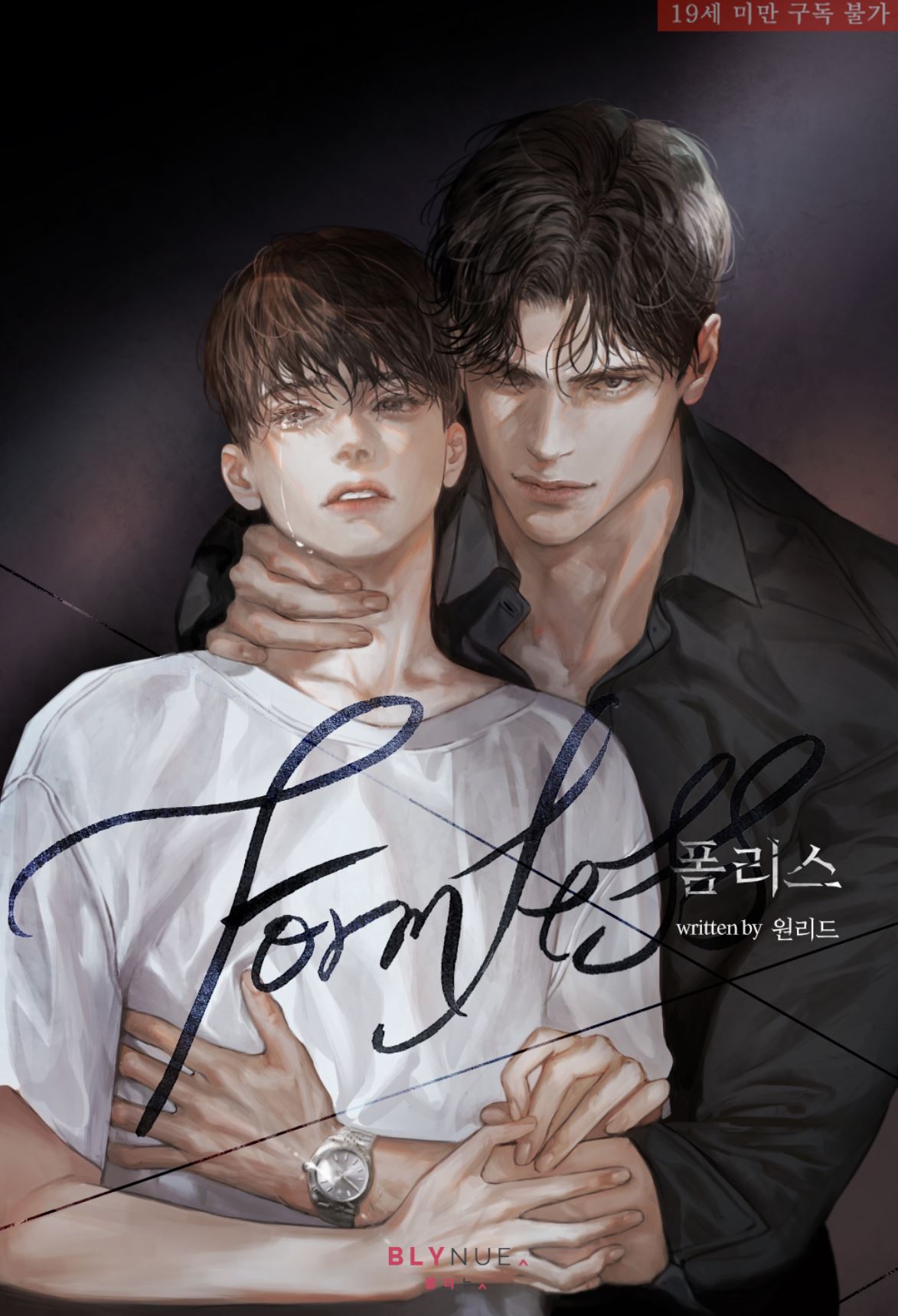
... Read More
"If I mess up, he says he'll kill me, Mom, and everyone else." Heehyun said this line and I nearly dropped my phone. This isn't just a family drama anymore, this is a full-blown hostage situation disguised as a slice-of-life. Kangwoo has been dangling the entire family over a cliff since last year and Heewoon is living in it like it's normal. Which is the saddest part. But here's what's actually terrifying: Heewoon doesn't seem afraid of Kangwoo. He's more annoyed than anything. When his brother grabbed his collar, Heewoon's internal thought was basically 'if you don't want to die, shut up.' That's not the reaction of a victim. That's the reaction of someone who knows exactly how dangerous Kangwoo is and has made peace with it. The stakes just exploded. We've gone from 'romance with a dangerous lover' to 'this entire family is being held hostage by a man who threatens murder as a casual conversation topic.' And Heewoon's mom is just serving them iced coffee like nothing is wrong. The disconnect is killing me. Then that third guy shows up at the end—some stranger who pushes Heehyun to the ground. WHO IS HE? Is he working for Kangwoo? Is he separate from him? The fact that the chapter just cuts there after this entrance is cruel and I respect it. What I love most is how the threat changes shape. Kangwoo threatens violence. Heehyun threatens violence. The new guy threatens violence. But Heewoon is the common denominator in all of it—he's the one everyone's fighting over and he just sits there. The real question is: what does HE stand to lose?
... Read More
This chapter is dangerous because it feels safe. Heewoon's back at school, they're sharing bread, he's studying in the car—nothing seems to be on fire. But the stakes are actually rising underneath everything. Remember what happened before Hawaii? Kangwoo hasn't gotten angry once since, which in this relationship is probably MORE alarming than actual anger would be. The TOEIC study group mention tells us Kangwoo previously controlled his academic social life, and now Heewoon is hesitantly considering joining another group. He's testing boundaries again. The Woo Heehyun subplot is basically a time bomb wrapped in practicality—who is this person, what role are they taking, and what does it mean for Heewoon's autonomy? And then there's Heewoon's own internal conflict: he knows getting closer to Kangwoo solves immediate problems, but at what cost long-term? The phone call he didn't make, the two hours of overthinking, the way he monitors Kangwoo's mood like a weather forecast—all of this builds tension that doesn't explode, it compresses. Every peaceful moment feels like it's accruing interest. I'm not worried about what's happening right now. I'm worried about what's building.
... Read More
Let's talk about the dog for a sec because I genuinely think Lexy is the emotional barometer of this whole story and nobody's giving it enough credit. Heewoon meets a lady on his walk who says "It's not my dog." This is literally the first interaction Heewoon has had with another person all day, and it immediately establishes his isolation. He's walking Kangwoo's dog, not his own. He doesn't belong here fully. But then — the turning point. Kangwoo throws the ball and Lexy responds. Heewoon throws it and... Lexy also responds. "Seems like he's finally listening to me." That word — FINALLY. Like Heewoon has been waiting his whole life for something small to work, to connect, to be chosen. "I thought you were only good at crying." Kangwoo says this while touching Heewoon's blushing, smiling face. And I think what he's really saying is: you're capable of so much more than pain. You're capable of joy. Of connection. Of making a dog run for a ball. Lexy is six years old. He's been with Kangwoo for a while. And now he's responding to Heewoon. This is about belonging, about earning your place in someone's life, about the small victories that prove you matter to someone. The dog isn't a pet. The dog is the third character in this relationship, the living proof that Heewoon can affect the world around him in ways he never expected.
... Read More
"I listened to you well, didn't I? Lately, I've been... I've been listening to you well." I had to put the book down for a minute. Just... put it down. Because this is the moment where everything about Heewoon's emotional state becomes crystal clear. This isn't just a drunk guy seeking validation—this is someone who has been walking on eggshells around Kangwoo for SO LONG and is terrified that he's not doing it right. The vulnerability here is almost unbearable. He's swaying, barely standing, and what does he reach for? Kangwoo's arm. Not because he's drunk, but because Kangwoo is his anchor. Everything about this scene is built around physical closeness as emotional language. The scarf hand-holding. The sleep-on-shoulder car ride. The mirror moment where Heewoon notices how small he looks next to Kangwoo and just... clings. And then the shower where Kangwoo grabs both his wrists and Heewoon doesn't pull away, he just trembles. My heart. The way the author writes Heewoon's fear of disappointing Kangwoo alongside his genuine affection for him—that's the core of this entire romance. It's not grand gestures or confession scenes. It's a guy in a hotel bathroom asking if he did a good job being obedient. And Kangwoo's response is to basically overwhelm him with presence and intensity. CHILLS. Actual chills.
... Read More
The pacing here is exquisite—slow burn building to quiet terror. It starts with Heewoon's sleepless night, the phone vibrating, the indecision whether to message. That hesitation stretches time, making us feel his anxiety. Then the morning call: Kangwoo skipping class, the casual 'did you miss me?' question, the sudden hang-up. The abrupt ending leaves Heewoon (and us) hanging. Next, the lecture scene where he searches for part-time jobs—that's a narrative breather, but the frustration builds. The real pacing shift happens when the call comes after dinner. The transition from home lie to bus ride to hotel is swift, compressing time to heighten tension. Once in the suite, the pacing slows again. Kangwoo's movements are measured—brushing hair, ordering food, placing slippers. Each action is deliberate, controlling the tempo. The dialogue is sparse, filled with silences and unspoken threats. That's where the structure shines: long pauses, then sudden questions ('did you miss me?'), then dismissals. The drunk antics line at the end is a perfect cliffhanger—it stops the scene but opens new questions. Will Heewoon get drunk? Will Kangwoo actually throw him out? The chapter flows from desperation to compliance to lingering dread. It doesn't rush; it lets each moment breathe, making the power dynamics feel inescapable. I found myself turning pages not because of action, but because of that quiet, mounting unease.
... Read More
This chapter moves like a river. It starts fast and chaotic — Heewoon crying, Kangwoo confused, the physical intensity of their earlier encounter still echoing — and then it slowly, deliberately slows down until everything is quiet. The car scene is frantic. Short sentences. Fragmented dialogue. "Uhhhhh…" "Huh? Tell me. Did I hit you?" The pacing here mimics Heewoon's emotional state — breathless, overwhelmed, unable to form complete thoughts. Then the transition to Kangwoo's house. The car ride is summarized in a few lines — "Left, then right. They seem to be leaving the parking lot." We fall asleep WITH Heewoon, almost. The narrative compresses time beautifully. "Wake up." Two words. A jarring return to consciousness. Heewoon bumps his nose against Kangwoo's shoulder — a small, human moment that slows everything down. The meal scene is the heart of the chapter. It stretches across maybe ten minutes of story time but reads like an entire evening. The author takes their time with every detail: the chicken, the ginseng, the watch, the chopsticks, the thigh placement. This isn't filler — it's the point. And then the bedroom. The expectation of sex, built up through the entire novel, is subverted. Kangwoo pulls him into a hug instead. The pacing drops to a whisper. "Take a short nap before you go home. Don't doze off like a sick chicken." Sick chicken. Kangwoo's humor even in tenderness. The chapter ends on this note of suspended expectation — Heewoon grabbing Kangwoo's arm, unsure whether to stay or go. The unfinished feeling is intentional. The author wants us to sit with that uncertainty.
... Read More
I need to talk about the jacket scene because I think it's the most symbolically loaded moment in these chapters and honestly the one I've been turning over in my head ever since I finished reading. Kangwoo takes off his suit jacket and buttons it on Heewoon while standing directly in front of him. This isn't just practical warmth—it's an act of wrapping Heewoon in Kangwoo's presence, literally covering him in Kangwoo's scent and shape. And then Kangwoo traces Heewoon's reddened eyes with his thumb. Touch as reassurance, touch as ownership, touch as apology. All three at once. The partition on the plane is another one that stuck with me. Heewoon asks Kangwoo to close it, and Kangwoo does, and the moment it descends Kangwoo kisses him. The partition was a barrier between them even in intimacy, and removing it becomes a threshold. Once it's down, there's no pretending they're just two guys on a flight. They're whatever they are, and the closeness of the sealed compartment forces that truth onto them. And the dark red stain on Kangwoo's shirt hem—that's the thorn in the rosebud of this whole sequence. Everything after the confrontation is almost too soft, too luxurious: champagne, first class, swimming pools, ramen at altitude. But that stain is there the whole time. Heewoon notices it when he looks down during an embrace, and it pulls him back to the violence he witnessed earlier. The stain is the story refusing to let you forget what Kangwoo is capable of. It's the ugly truth beneath the romantic surface. The Hawaii trip itself is also worth considering as symbolism. It's supposed to be a reward, a treat, something pleasant. But Heewoon got there through misunderstanding and tears. He followed Kangwoo like a detective, found evidence of someone else (Han Jiyoung), broke down, and only then was he brought along. The paradise is earned through suspicion and vulnerability. Isn't that kind of the whole relationship? The beautiful moments are always stained by something darker. And Kangwoo himself carries that stain visibly—it's on his shirt, right there, and Heewoon sees it but doesn't say anything. He just puts his cheek on Kangwoo's shoulder and breathes him in. Sometimes silence is the only honest response.
... Read More
What I love about how the author handles conflict in these chapters is that the biggest confrontation happens in absolute silence. Heewoon hears a phone call through a door gap. He reads a message on a black screen. He climbs the stairs and slips into his room. Not one word of accusation is exchanged directly between them. And yet — and YET — everything has changed. The stakes here are layered in the most painful way. On the surface, it's about romantic betrayal. But peel that back and it's about freedom versus captivity. Heewoon has been isolated, dependent, controlled — and the moment he realizes Kangwoo is choosing someone else over him, his first instinct isn't to fight, it's to hide under a blanket and consider begging. That's the real tragedy. The conflict isn't just external (is Kangwoo cheating?); it's internal (does Heewoon even have the tools to fight back?). And that's what keeps me up at night thinking about this story. Because the worst part isn't the cheating — it's that Heewoon's anger has nowhere to go. He yells "go out" at the man who owns this space, the man who controls his world, and then immediately regrets it. He's trapped in a loop where every act of self-preservation looks like weakness to himself. The suspense isn't in whether Heewoon will find out — he already knows. The suspense is in whether he'll ever be able to act on what he knows. And honestly? That's infinitely more terrifying.
... Read More
Okay can we just talk about this credit card for a second? Because that rectangular little thing in Heewoon's wallet is doing more emotional heavy lifting than most people's entire love letters combined. He didn't return it. He didn't use it. He just carries it around like a live grenade, and the worst part is, I get why. Kangwoo handing him that card isn't generosity — it's entrapment wrapped in silk. And Heewoon knows it, which is why he can't bring himself to take the money but also can't bring himself to refuse it either. "There's nothing sufficient to reason for giving him the card." That line from the narration hit me like a truck. Kangwoo already has total control over Heewoon. What does he NEED the card for? It's not a loan. It's not charity. It's a leash disguised as a gift, and Heewoon feels it in his bones. But here's what wrecked me — Heewoon's internal monologue about what happens IF he takes the card and goes along with it. He imagines a version of himself who doesn't have to bow down to younger students, who has free time, who's comfortable. And then the real fear sneaks in: what if, when this lifestyle ends, he's not happy? Not even grateful? What if he realizes he sold himself for convenience? That single thought — "What if when this lifestyle came to an end, he wasn't completely happy?" — is the most heartbreaking thing in this entire chapter. It's not about money. It's about identity. Kangwoo isn't just controlling Heewoon's body, he's erasing his future self before it even exists. And Heewoon is terrified that he'll survive all of this and still feel empty. I read that passage three times because it just... settled in my chest and wouldn't leave.

Leave a comment

You must be logged in to leave comments. or
