Formless - Reviews

Formless
+Add to Custom List
Sort
Add review
... Read More
There's something so specific about the way this author writes domestic spaces. Heewoon sitting at his mom's house, staring at the air conditioner like it's the most interesting thing in the world. The fan blowing on him. The iced coffee. The clock showing 5pm and he's already late for dinner with Kangwoo. It feels so normal, so painfully ordinary, and then you remember what happens outside this house and the contrast is unbearable. The yard scene was also incredibly cinematic. Evening air, cooled down, the gate, the sliding door. Heehyun storming out like a villain in a bad drama—and honestly, he kind of is—but then you see his hands shaking and his fear is real. The author doesn't romanticize any of this. No soft lighting, no dramatic music. Just concrete and frustration and people who can't look at each other. "For fuck's sake, I'm going through this hard work because of you…" Heehyun says this in an empty parking lot and it's the most honest thing anyone in this story has said. He's doing something dangerous for Heewoon and he's resentful about it. That's not a villain monologue. That's a messed-up brother trying to find a reason to justify his own complicity. I also need to mention how the NSFW scene was written differently—more visceral, more physical, the kind of intimacy that isn't sweet but is still intimate in its own twisted way. Kangwoo cupping Heewoon's face, the peck peck of kisses, the sudden slap. It's chaotic and aggressive and Heewoon doesn't resist it. That contrast between the domestic mother scene and the bedroom scene is really interesting. Both are moments of vulnerability, just in completely different contexts.
... Read More
Okay so let me just say - the dynamic between these two is EVERYTHING. Kangwoo is so subtly possessive it's insane. When Heewoon tries to go downstairs alone on his crutches because he's worried about his mother seeing them together, Kangwoo literally just clucks his tongue at him and says he can't beat Kangwoo. And then drapes his arm over his shoulders and they walk down together like... bro, Heewoon doesn't need a chaperone, he needs someone who respects his agency. But also, not being able to beat Kangwoo is such a detail. It shows Kangwoo's physical dominance even when Heewoon is injured. And the cheek biting scene?? "Grabbed both cheeks and bit his lips" - that's not romantic, that's barely consensual-adjacent and I love that it's written this casually. Meanwhile Heewoon's internal conflict about his mom is so layered. He feels guilty about avoiding her but also selfishly wants to avoid her because seeing her triggers chest pain. The line "I only had selfish thoughts that he should avoid seeing his mother for a while" - that's such a raw admission of self-preservation over familial duty. And then when he tells his mom "when my leg is completely healed, let's go eat something delicious" - he's making a promise he knows might not happen, or might mean something different by then. Kangwoo asking "Do you feel disappointed?" right after the mom leaves is such a Kangwoo move - reading Heewoon's mood without context, just instinctively knowing when to probe. The whole power dynamic here is so deliciously toxic yet tender.
... Read More
What I love about these chapters is how the author lets the tension breathe before releasing it. You've got Heewoon discovering the messages, the confrontation, the tears—this whole emotional spiral happens in real time, and the author doesn't rush away from it. The passage where Heewoon says "You were the one who led me to misunderstand, yet you strangled me... Uhhh" and then the tears come—that's not melodrama, that's the accumulation of every unresolved thing between them finally breaking open. And then the author immediately undercuts it with Kangwoo laughing and asking "When did I strangle you?" which is both funny and slightly unsettling. The shift from emotional climax to domestic tenderness (the jacket, the chin on shoulder) is masterful pacing. It doesn't feel like the author is avoiding the heavy moment; it feels like Kangwoo is giving Heewoon an exit ramp from his own panic. Then you get the Hawaii trip, which could've been a boring travelogue, but the author compresses it into these sharp sensory snapshots—the first-class experience, the partition, the ramen, the sleepwear. The chapter ends on "he could see those thin ankles and rounded toes. Mmm" and just trails off mid-thought. That's not a cliffhanger in the traditional sense but it's a really effective soft landing. It makes you want to keep reading without screaming at the page. My only critique: the transition from the violent earlier scene (the axe, the bloodied face) to the Hawaii trip feels a little abrupt. One moment there's implied danger and gore, the next they're sipping champagne in first class. The author doesn't acknowledge the tonal whiplash, and I kind of wish there'd been a beat where Heewoon processes what he saw before just... forgetting about it to enjoy ramen at 30,000 feet. But maybe that's the point—Heewoon needs to escape, and Kangwoo is giving him exactly that.
... Read More
I need to talk about Kangwoo because something SHIFTED in these chapters and I am not okay. Earlier Kangwoo would have absolutely dragged Heewoon into a room and made it happen whether Heewoon liked it or not. But here? He pauses at the DOOR. He questions himself. He wonders if his desire comes from genuine wanting or from some warped sense of entitlement. That is a character who is actively, consciously trying to be better. And Heewoon? Heewoon sees it. Heewoon wraps his arms around Kangwoo's waist and presses his cheek against that solid chest like, 'I know you're fighting something. I'm here.' And then the after-scene? Kangwoo brushing Heewoon's hair back, saying 'you're mine, right Sunbae?' and when Heewoon doesn't answer immediately, BITING his neck until he does. That is possessive. That is intense. But it's ALSO tender—Kangwoo lying on the bed holding Heewoon, combing his hair, sighing that 'it would have been better like this from the beginning.' He's regretting every cruel thing he did before. Heewoon falling asleep against him, feeling that 'small, comforting warmth,' and Kangwoo patting his back like he's been given a task to protect someone. The dynamic has completely inverted. Heewoon used to be the one chasing, begging, desperate for any scrap of attention. Now Kangwoo is the one making sure he puts on a jacket, zipping it for him, demanding he promise to call. The power isn't gone—it's redistributed, and honestly? It works.
... Read More
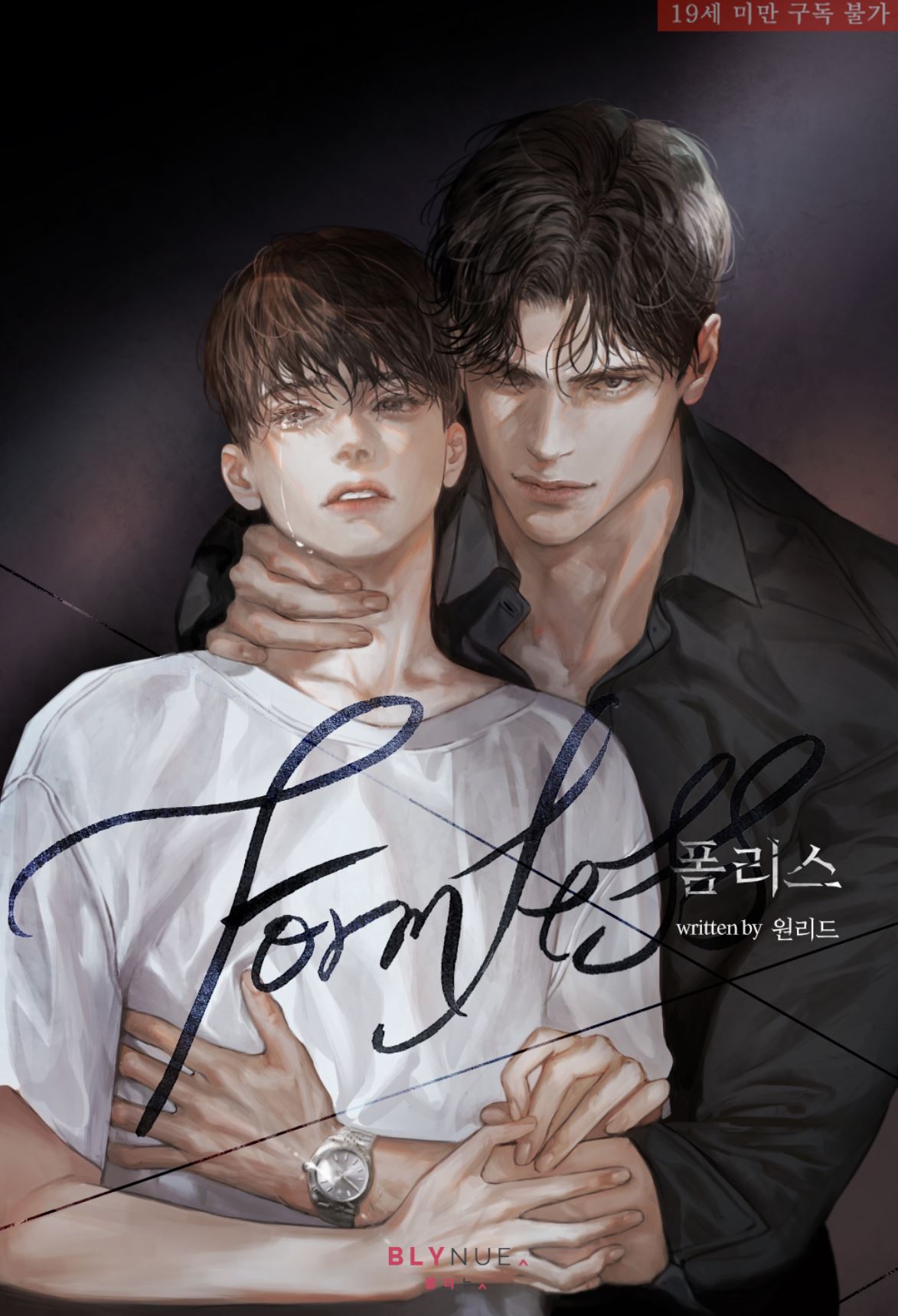
There's a scene in this chapter that I cannot stop thinking about, and it's not the violent parts or the emotional confessions—it's the light. 'The reddish sunset glow of dusk was seeping in. Until a little while ago, it would already be completely dark at this hour.' This detail about the changing seasons, the earlier darkness, the shift from winter to something else—it's doing so much work. It marks the passage of time, the end of a long dark period, and Kangwoo is BATHED in this red light, looking beautiful enough to enchant people while having just discussed breaking bones. The visual contrast is staggering. Warm light. Soft touches. A bedroom setting that should feel intimate and safe. Kangwoo adjusting pillows, stroking hair, the domestic normalcy of it all. But every tender gesture is shadowed by what we know—the bruises, the broken leg, the debt, the isolation. The room itself becomes complicit. And the mother's voice on the phone—just a voice, distant, crying, apologizing—creates this other spatial layer. Two worlds existing simultaneously: the warm bedroom with the sunset, and the cold distance of a mother who's losing her son. The phone becomes a portal to a reality Kangwoo is actively replacing. Even small details serve the atmosphere. 'A fair hand rested still on the bed, its nails scratching the sheets.' Heewoon's anxiety made physical. The wrinkled bedsheets under his grip. These aren't set dressing—they're emotional barometers. The world of this story feels suffocatingly real because every surface, every light, every sound carries weight.
... Read More
'But don't suspect me if your brother dies sometime soon. He seems to be getting involved here and there for his business. If he dies, it's probably because he's got a few grudges to settle.' I need to talk about Kangwoo because this character is genuinely unsettling in the best way. He's predatory, possessive, and completely aware of it. The scene where he asks 'Are you trying to cheat on me?' after Heewoon asks about being watched? That is such a Kangwoo move - turning concern into accusation, making Heewoon defensive about his own safety. But then he softens. He strips off Heewoon's pants immediately upon arrival, takes his time exploring his body, hugs him gently afterward, showers with him, dresses him in a robe. He's physically dominant but also somehow tender. And when he admits to watching him, he frames it as 'I got rid of all the eyes that were watching you, Sunbae' like he did Heewoon a favor. Like he's the good guy here. The nickname 'Sunbae' is interesting too - it adds this layer of hierarchy and intimacy. Kangwoo uses it while demanding total transparency: 'Tell me everything you do, and always call me when you go somewhere.' That's not romantic, that's control wrapped in affection. And Heewoon's response? He just says 'Yeah' and nods. He's exhausted, he's caught between resenting his brother and feeling loyal to him, and Kangwoo offers him this twisted sense of protection. 'When you're scared, make sure to call me. I'll embrace you like I'm doing right now.' It's manipulative, yes, but it also genuinely soothes him. The author isn't shy about showing how complicated these feelings are. Also low-key fascinating how Kangwoo treats Heewoon's brother situation. He doesn't mock him for it, doesn't use it against him directly. He just... knows. And that knowledge makes him more dangerous because he understands exactly what Heewoon's vulnerable to.
... Read More
'It's because there's something I can do for you now.' Heewoon says this so casually and yet it's one of the most intimate things in the entire chapter. Think about it—he received so much money from Kangwoo, and he feels indebted. But instead of asking for more money or material things, he wants to give something back. A trip. A celebration. His time. That is the Heewoon I know. He doesn't do big declarations of love. He does small, precise gestures that cut deeper than any speech. And Kangwoo? Kangwoo literally says 'Do less of that outside. You're fucking good at making me turned on…' and then immediately changes the subject because he's flustered. The man is completely owned and he doesn't even care. I've re-read that dinner scene like five times. The way Kangwoo feeds Heewoon meat, the tickling over the phone, the way Heewoon says 'Maybe it tastes better because you bought it for me, Sunbae' like it's some kind of compliment? That's not food, baby. That's romance. And when Kangwoo asks him to tell his colleagues he's going with his lover and Heewoon almost deflects—I wanted to shake him. This man doesn't realize that every time he hesitates to claim Kangwoo, Kangwoo's heart breaks a little bit more. But then he agrees! He says 'Oh. Yeah, I'll tell them.' And Kangwoo just smiles and moves on. These two are disaster pieces for each other and I'm here for it.
... Read More
I need to talk about the moment Heewoon blurts out 'Do you have a girlfriend?' while practically choking under Kangwoo's grip. The sheer vulnerability of it. He knows he's in a weak position, he knows Kangwoo could hurt him, and he asks anyway because the image of a heart emoji next to a woman's name won't leave his head. And then Kangwoo's response: 'If I just wanted sex with you, I'd tie you to the bed. Why would I bother feeding and dressing you?' —that line wrecked me. It's brutal and practical but underneath it there's something almost tender, like Kangwoo is genuinely confused that Heewoon would reduce their entire connection to physical arrangements. The chapter ends with Kangwoo offering to show him the truth on his phone instead of shutting him down, and somehow that's more emotionally devastating than any confession could be.
... Read More
I need to appreciate how the author handled the pacing across these chapters because honestly it was masterclass-level manipulation of my emotions. We start with this incredibly tender scene between Heewoon and Kangwoo — soft smiles, head pats, the whole thing. It felt warm. Safe, even. And then the very next moment Heewoon steps outside into the bitter cold and the loan sharks are waiting. The temperature drop wasn't just weather — it was narrative. Like the story itself was reminding us: nothing good lasts here.
... Read More
The way this scene is written — I need to talk about the LIGHTING. Or rather, the lack of it. Everything happens in near-darkness. 4am. Lights off. Darkness familiar to Heewoon's eyes. The fractured phone screen becomes 'brighter than anywhere else.' This isn't accidental atmosphere, this is the author building a world where visibility itself is a luxury. Let me paint what I see: the narrow room full of overwhelming fear. The mother checking passports in the dark. Heehyun leading the way and peeking outside. Sneaking through other people's yards with their hearts pounding. The flowerpot shaking on the edge of stairs. The bricks crumbling under Heewoon's feet. Each obstacle is small — a pot, a cat, a wall, some loose bricks — but in this darkness, they feel like mountains. 'The old houses were tightly packed together, and the walls were not very high.' This detail matters. It's not a wealthy neighborhood. These are cramped, close-quarters houses where you can hear your neighbors' heartbeats if you're quiet enough. The walls are low precisely because there's no money for proper construction. Every surface is a potential danger. And the cold! 'This freezing cold that caused their bodies to become stiff.' Physical discomfort layered on top of terror. Their fingers fumbling with zippers and latches. Sweaty palms on rough concrete. The contrast between the cold night air and the heat of panic. The most cinematic moment for me has to be Heewoon hanging on the wall after the bricks shatter. 'Because of the noise, Heewoon turned around, hanging on the wall. However, the unlit house remained quiet as ever.' That silence is deafening. The author doesn't give us relief here — just that suspended moment of holding your breath, waiting for the consequences that haven't arrived yet. The world in this story feels suffocatingly real. I could feel the cold pavement through the soles of those worn-out sneakers.
... Read More
I need to talk about the part where Heewoon goes days without seeing Kangwoo and just... falls apart a little. Not dramatically. Just quietly. Staying home, cooking the same kimchi stew for his mom, pretending to go to tutoring to escape his own house. That's not loneliness, that's something worse—it's the ache of having found something that makes everything else feel gray. And then Kangwoo opens his arms at the top of the stairs like Heewoon just walked through a door instead of a whole week of missing him. The physicality of it—'their bodies pressed against each other completely,' Heewoon stumbling, Kangwoo laughing—this isn't passion, it's relief. Both of them. But the real gut punch is Heewoon thinking 'Maybe my presence made it harder for his mom because then she felt the need to pretend to be okay.' This boy is so wrapped up in everyone else's pain that he can't even sit with his own. And Kangwoo—'Even if you call, I'll still think about you'—that's not romance, that's someone saying I carry you with me whether you're here or not. The dried flowers line ('Wouldn't it be nice if Woo Heewoon was like the flowers too?') is supposed to be tender but it's also kind of terrifying. Preserved. Beautiful. Dead. Kangwoo sees something in Heewoon that he wants to keep forever, and that's equal parts sweet and deeply uncomfortable. Heewoon notices it and just... nods vaguely. He doesn't know how to process it either.
... Read More
There are so many layers to unpack here, and the central theme is one that this story has been circling since the beginning: the violence of protective silence. His mother hides her surgery. She lies about visiting the aunt. She borrows money rather than burden her son. The fibroid itself — a growth inside her body that she kept hidden, just like she kept their financial struggles hidden — is almost too perfect a symbol to be accidental. It's literally an unseen thing growing inside her, something that requires cutting open to address, something she'd rather not discuss. And Heewoon's reaction to discovering it mirrors the story's deeper question: does love mean shielding people from pain, or does it mean trusting them to face it alongside you? The aunt represents the older generation's approach — matter-of-fact, practical, slightly dismissive ('nothing to worry about at all'). Heewoon represents the younger generation's experience — overwhelm, guilt, the crushing weight of knowing too much too late. But then there's Kangwoo, who operates on an entirely different frequency. Where the mother hides and the aunt minimizes, Kangwoo shows up. He doesn't ask for a full explanation. He doesn't offer empty reassurance. He simply places his hand on Heewoon's face and says nothing. In a story about silence, Kangwoo's wordless presence is the loudest statement anyone makes. The recurring motif of coldness — cold ankles, ice-cold hands, the bitter wind — could also be read as the emotional temperature of a family that has learned to endure hardship alone rather than reach out.

Leave a comment

You must be logged in to leave comments. or
