Formless - Reviews

Formless
+Add to Custom List
Sort
Add review
... Read More
There's this one moment where Heewoon just says, completely casually, 'I said that I would see only you.' And Kangwoo lifts his head from Heewoon's shoulder, cups his face, and kisses him SO HARD his lips hurt. On paper, this should be romantic. The devoted lover, the pledge of exclusivity, the passionate kiss. But it doesn't FEEL romantic at all. It feels like Kangwoo hearing the words he wanted and rewarding himself. Heewoon's devotion is Kangwoo's victory condition. And yet—I'm also not immune to the tenderness buried in here. Kangwoo adjusting the pillows. Stroking Heewoon's hair. Touching the bruise on his cheekbone like it's something precious. These gestures ARE genuinely caring, which makes everything so much worse. He's not a cartoon villain. He loves Heewoon. He loves him in this twisted, possessive, destructive way, and Heewoon knows it and loves him back in some confused, dependent way too. The sunset scene is haunting. 'The reddish sunset glow of dusk was seeping in.' Kangwoo illuminated in red light, smiling beautifully, having just admitted to two unspeakable things. Heewoon watching him and wondering if this is really love—'There was no way to express this violent relationship... with such an emotional word.' That line destroyed me. Heewoon literally cannot name what they have because the word 'love' feels like a lie spoken aloud. And then Kangwoo whispers, 'To Sunbae, I'm now the most important person' with a smile. Not 'you're the most important person to me.' HE is important to Sunbae. His own significance is the prize.
... Read More
there are so many things happening beneath the surface of this text and I want to talk about objects as symbols because this author is doing it intentionally First: THE PHONE. Heewoon clutches it even while drunk. He searches for it on the desk. He checks it first thing in the morning. And then Kangwoo asks about it and Heewoon deletes ALL his contacts. What does this mean? The phone represents connection—but also burden. Every number in that phone is someone who's bothered him, taken from him, or failed him. Deleting them is both an act of surrender (he's giving Kangwoo full access to his world) AND an act of self-preservation (he's clearing the noise so he can finally hear one voice). Then there's the BLANKET. Kangwoo pulls Heewoon under it. Heewoon huddles. This is such a domestic, almost childlike image—two grown men sharing warmth on a bed—but it carries so much weight. The blanket is safety. It's the boundary between the cold world outside and this fragile space they've built. When Heewoon says "I'm not being clingy," he's confessing that he needs the blanket, needs Kangwoo, needs to be held. And Kangwoo's response—just pulling him closer—says everything without words. The EYES keep coming up too. Kangwoo touches Heewoon's swollen eye. Heewoon shields them when Kangwoo makes that joke about not needing eyes. Kangwoo checks if they're itchy. Eyes as vulnerability, as identity, as the thing Heewoon fears losing most. And yet—the deepest seeing happens when Heewoon finally opens up to Kangwoo about all the people who bother him. He literally can't see his own situation clearly, but Kangwoo sees it for him. And the MORNING LIGHT. Waking up on the sofa, half-dressed, Kangwoo in just pants with no shirt, the smell of food from the kitchen—this is domestic realism dressed as romance. It's the everyday made extraordinary by who's sharing it with whom. This story isn't just about two men falling in love. It's about what happens when someone who's been surviving starts believing they might be allowed to live.
... Read More
Seo Kangwoo's dialogue is one of the most unsettling things I've read in a while because it never feels like he's being overtly mean — he's just... conversational. Almost warm. And that's what makes it terrifying. "You're this skinny because you're only eating bread." — sounds like concern, right? Until you realize he's cataloging every detail about Heewoon's life like data points. "I know that Sunbae won't tell anyone. How can a kid who's trembling from just getting slapped a few times do it." — this is delivered almost casually, like he's discussing the weather. The fact that he references the slap as if it's already in the past, already normalized, shows how completely he controls the narrative frame. "I haven't even given this a name yet" — CHILLS. Absolute chills. He's referring to whatever this is between them and he's saying it's so undefined, so outside conventional categories, that naming it would ruin it. Or maybe he's saying HE gets to name it, and Heewoon doesn't get a say. Both readings work. Heewoon's voice, by contrast, is all fragments and hedging. "Uh...", "I think… I ate bread?", "Yes, yes... I understand." He barely gets a full sentence without qualifying it or apologizing mid-thought. His dialogue sounds like someone who's permanently mid-retreat, always stepping back before the other person can push him. The author's narrative voice is deceptively simple — no flowery prose, no dramatic flourishes — which makes the horror land harder because nothing romanticizes it. It just happens, matter-of-fact, and that matter-of-factness is what haunts you.
... Read More
Okay so I need to talk about this scene where Kangwoo feeds Heewoon chocolate because honestly I re-read it three times and I still don't know whether to squeal or scream. On the surface it seems like just a sweet moment but beneath that there is this entire history between these two guys that just shifted. Remember when Heewoon used to follow Kangwoo around like a lost puppy? Now Heewoon is walking faster than him in the hallway, avoiding eye contact, acting all flustered. And Kangwoo notices EVERYTHING. That's the thing about him—he has this predatory awareness of Heewoon's every little movement. When Kangwoo says "Are you getting bored with me since we already hooked up?" — that's not just casual flirting. That's someone who is genuinely insecure underneath all that confidence, and who would rather attack first than be abandoned. The violence of his thoughts about grabbing him by the hair and taking him to the bathroom is terrifying BUT it's also honest. Kangwoo doesn't know how to express care any other way. And then THE CHOCOLATE SCENE. He picks up a piece of chocolate and feeds it directly into Heewoon's mouth. No hesitation. No asking. Just… feeding him. And Heewoon accepts it. The whole dynamic here is so rich — Kangwoo calling him a squirrel, asking if he's storing up for winter, saying it's fun thinking about him buying and eating stuff like this. That last line hit me like a truck. Kangwoo is essentially saying "I like imagining your daily life" but phrased in his twisted way. Then the card comment at the end. "So use the card often, a lot." What does that even mean? Is Kangwoo offering financial support? Is it control? Is it love? I don't know but my brain is fried.
... Read More
Can we just take a moment to appreciate how Kangwoo speaks versus everyone else in this book? "Maybe because you take him for walks often." Simple line. Seems normal. But the context — Heewoon just got Lexy to fetch the ball and he's beaming, face all lit up, and Kangwoo's response is this dry, almost teasing observation that somehow carries so much weight. And then: "I thought you were only good at crying." CHILLS. Absolute chills. That line does SO much work. It's half-insult, half-compliment, half-confession. Kangwoo is basically saying: I've been watching you. I know what you look like when you're upset, but have you ever seen yourself happy like this? And he noticed. The writer also nails the casual intimacy in their shorter exchanges. Like when Kangwoo whispers "Sunbae, when you sleep, you aren't that quiet. The sound of your breathing is quite loud." It's playful, it's teasing, it's him knowing exactly how to get under Heewoon's skin in the gentlest way possible. Meanwhile Heewoon's dialogue is barely there — "Yeah," "Okay," "Is that so?" — which I think is intentional. His voice IS quieter. He barely speaks to anyone all day. But when Kangwoo is around, he opens up just enough. The contrast between his silence and Kangwoo's steady flow of words creates this whole unspoken language between them. The author's narrative voice is also worth noting — it's observant without being purple, detailed without being cluttered. You always know whose head you're in.
... Read More
I'm still recovering from this line: 'Even though he was still afraid of Kangwoo, it wasn't as terrifying as it once was. He slept well now, and the food he ate in front of him even tasted delicious.' This is trauma bonding portrayed with such quiet precision. Heewoon isn't happy. He's not even comfortable in a healthy way. He's DESENSITIZED. The fear hasn't disappeared—it's just been replaced by something almost worse: numbness. He can sleep. The food tastes good. The abuse (physical or otherwise implied by 'blatant and impolite hands') has become routine enough that his body has stopped reacting with panic. And then IMMEDIATELY after this devastating realization, the narrative cuts to his mom cooking braised short ribs and asking him to buy quail eggs. JUST NORMAL MOM STUFF. 'Can you go to the supermarket and buy some?' The domestic normalcy is so sharp it cuts. She has NO IDEA what his nights look like. She thinks everything is fine because he comes home fed and sleeping well. The quail eggs detail is everything. It's so small, so meaningless on its own, but it represents this entire parallel life Heewoon is living—a life where his mother's biggest concern is whether he remembered to buy eggs, while he's managing loan shark payments and surviving nights with Kangwoo. He 'broke into a sweat inside his padded jacket' carrying those bags home. Physical exhaustion masking emotional exhaustion. And he cheerfully says 'I'll be back!' like nothing is wrong. The ending of this passage—with winter approaching, the heating warm, everything feeling 'so peaceful'—feels like the calm before everything collapses. It HAS to collapse. This level of dissonance can't hold.
... Read More
Let's talk about what's actually at stake here because it's not just 'will they or won't they'—it's 'if they do, what happens to everything else.' On the external level: Heewoon's mother is dying of liver cancer. She has illegal loan debts. They're socially precarious. He just barely survived an earlier crisis and now he's bringing a man home, hiding his life, performing normalcy while his body is still recovering from an exhausting encounter. The possibility of someone seeing them at Kangwoo's house isn't just embarrassment—it's exposure of a secret he's clearly not ready to share with the world. Every passionate moment is shadowed by the knowledge that his life is held together by thread. On the internal level, the stakes are even messier. Heewoon is terrified. The text literally says 'He could see the fear in Heewoon's expression, likely due to the thought of having sex outdoors.' This isn't just about privacy—it's about control. Kangwoo is pushing, pulling, provoking, and Heewoon keeps saying yes even when he's afraid. 'Then, I'll do it' comes out immediately, without hesitation. That's not consent born of confidence; that's consent born of desperation. He wants this so badly he'll risk everything. And the mother-son subplot adds another layer of guilt on top of it all. Heewoon comes home drained and has to perform for a woman who is literally fading away. She almost says something—'About that, Heewoon'—and then stops. What was she going to say? Does she know? Does she suspect? The silence after that unfinished sentence is probably the most stressful three seconds in the entire passage.
... Read More
What strikes me most about this chapter is how physically present everything feels. The author doesn't just tell us what's happening — we inhabit the spaces. Let me walk you through some of the sensory details that made this scene unforgettable. The company dinner is rendered in this almost claustrophobic warmth. We're in a room where everyone is 'drinking,' where soju is being poured, where the team leader mutters from across the table about having a lover. The atmosphere is surface-friendly but underneath there's this current of invasive curiosity — 'Is she pretty?' asked with zero boundaries. And Heewoon, the quiet new employee, can only 'nod in agreement or say yes.' The physical setting reinforces his powerlessness: he's surrounded by people who feel entitled to ask him personal questions, and there's no exit strategy. But the real masterpiece is the apartment scene. The lighting, the sounds, the spatial dynamics — everything is calibrated. Heewoon 'turning off the gas stove' as Kangwoo enters. The way Kangwoo 'sprawls out, sighing' on the sofa, loosening his tie. The text tells us Kangwoo's 'black pupils met his eyes' and his gaze was 'unlike usual' — cloudy, intimidating. I could see this in my head like a film sequence. The domesticity of it — ramen water boiling, phone left on the table, the clock ticking — makes the eventual physical closeness feel both intimate and threatening. The most vivid image for me is Kangwoo 'staring into space' while drunk, 'comfortably stretching his legs and leaning his neck against the back of the sofa.' This is a man unmoored from his usual composure, and there's something vulnerably animal about it. When he grabs Heewoon's wrist, the text emphasizes the physical contrast: Heewoon's nightwear has no pockets, his hands are empty, he's defenseless in his own home. Yet he stays. The author also does something brilliant with proximity. As Heewoon approaches Kangwoo, 'their knees touch' — this small detail of physical contact in a shared space carries enormous weight. The chill of Kangwoo's voice stopping Heewoon mid-step. The sharp sting of alcohol in Heewoon's nostrils. These sensory anchors make the scene breathe.
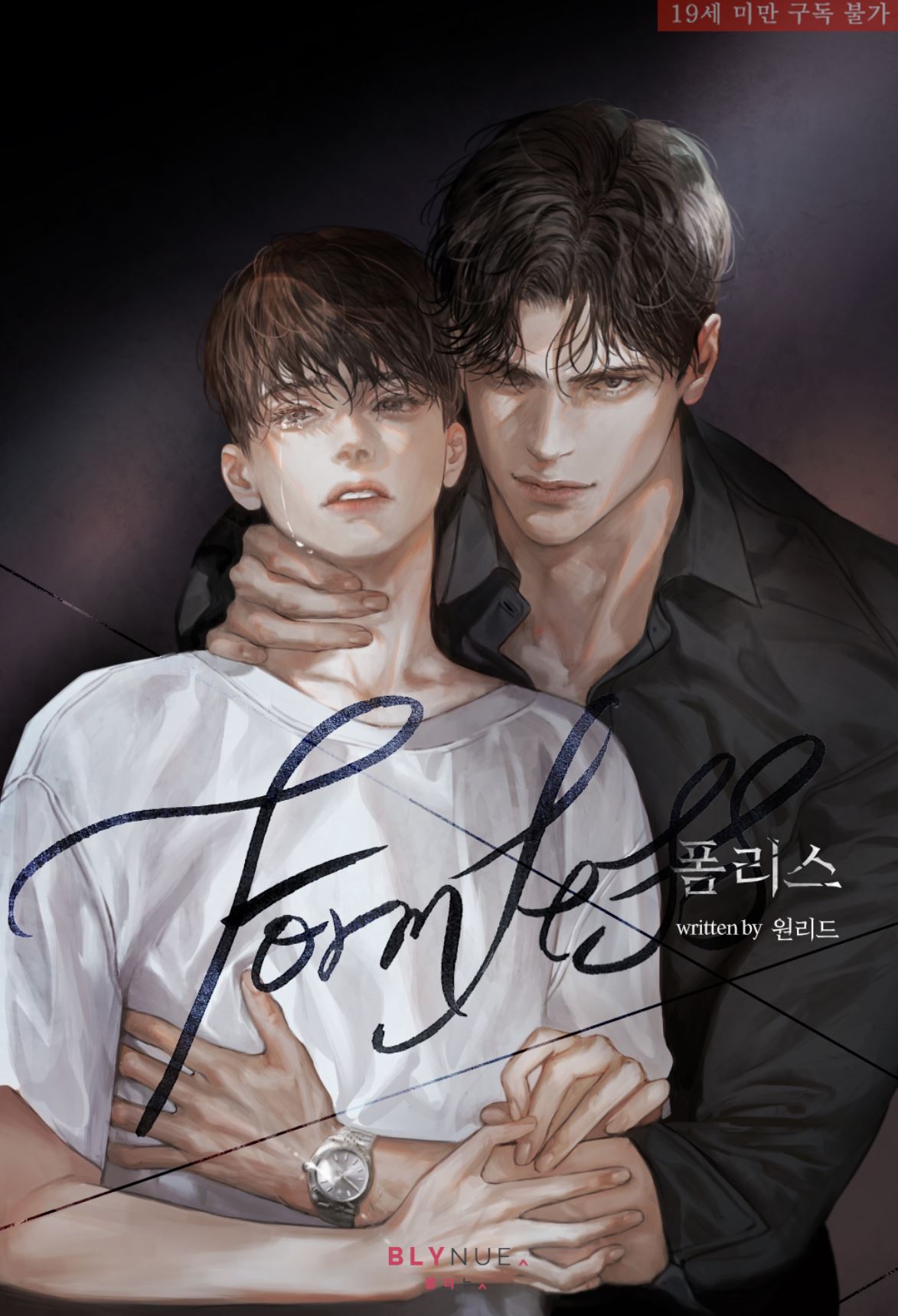
... Read More
"Kangwoo, eat a lot." / "Yes. Thank you, Sunbae." I NEED A MOMENT. This is the first time Heewoon is buying Kangwoo a meal, and they're sitting there talking like a proper senior-junior couple swap, and it's the most domestic thing I have ever read. After everything — the violence, the intimidation, the whole creepy-but-kind-of-sweet obsession — this quiet dinner where Heewoon is trying to feel like a senior and Kangwoo is just happily eating beef and letting him have this moment? I'm emotionally compromised. The fact that Heewoon was so worried about the cold war — when really Kangwoo had already resolved it and just found Heewoon peeking around doors adorably — shows how much Heewoon cares about Kangwoo's mood. And Kangwoo? He let him have this. He didn't mention the CCTV stuff at all. He just bought the reservation and let Heewoon feel like the generous one. That's love. Messy, slightly terrifying love, but love nonetheless. The CP chemistry is insane because they genuinely seem to understand each other in their own twisted way.
... Read More
Can we talk about how Kangwoo literally pulls Heewoon by the wrist and makes him straddle his lap like this is totally normal behavior? This man operates on a whole different wavelength. But here's what I love - Heewoon isn't actually scared of him. Not really. He's wary, sure. The text says he approached "cautiously" and his eyes went wide. But then he also just... goes along with it. Kissing him again. Letting himself be held. There's this trust underneath all the power imbalance that made me actually emotional. And Kangwoo? He pretends to be annoyed but the narrative keeps showing us the truth - he's "laughing with a deep voice," his gaze "softened," he's gently stroking Heewoon's nape. This man is ridiculously smitten and he will literally never admit it out loud. The whole "you must be doing this on purpose" exchange? He knows Heewoon is being insecure about Jihwan's situation but frames it as playing hard to get because calling it what it actually is - a cry for attention - would require emotional vocabulary Kangwoo simply does not possess. The hand-holding at the end sealed it. Kangwoo notices Heewoon staring at his hand, tilts his head in confusion when Heewoon doesn't take it immediately, and then wraps it around his warmly. One inch bigger, more prominent bones and veins - the author took time to describe the physical difference between them and honestly it made the gesture feel even more tender. Heewoon literally just sat there gazing blankly before choosing to take it. That's not fear. That's devotion.
... Read More
Okay so this entire passage is just pure, unadulterated tension and I love it. The whole setup—Heewoon tied up, mom and brother beside him, waiting for the doctor who never shows up on time— feels like the author is deliberately stretching every second out until it's almost unbearable. You know that feeling when you're reading and your thumb just hovers over the next page and you can't scroll fast enough? That. What's clever is how the author plays with time perception. Heewoon calculates— if they start with his brother first, maybe he and his mom get a few extra hours. Every assumption he makes is basically a desperate attempt to buy time through logic, which is such a real human reaction to terror. And then just when you think the worst is about to happen, Kangwoo walks in. Boom. The release of that tension must have been insane to write and read. The structure here is tight too. It starts internal (Heewoon's thoughts spiraling), moves to external (the men talking, the environment), then builds to a climax with the door opening. Classic three-act compression in a single chapter. The phone ringing at the end? Chef's kiss. Cliffhanger done right.
... Read More
The structure of this passage is brutal and I mean that as a compliment. You've got the graduation scene—bright, busy, full of movement—then BAM, we cut to Heewoon alone at home for days. No Kangwoo. No stimulation. Just a mom who can't stop thinking about her dead husband and a boy who's cooking the same stew on repeat. The pacing here makes you FEEL the emptiness. It's deliberate. Then Kangwoo's house. Up the stairs. The embrace. The dried flowers. It's all so slow and intimate, like the story is letting us breathe after that vacuum. And then—'On a weekend morning, Heewoon pressed Kangwoo's house doorbell, and at the same time, his phone rang.' Same moment. Two entrances. The doorbell (safety, comfort, Kangwoo) and the phone (danger, the past, whatever that unknown number represents). The author didn't even give us a breath between them. One second Heewoon is being held, the next his heart drops and he's darting inside like he needs to hide from his own life. And that last line—'Heewoon paled as he listened to the continu...'—just stops. No cliffhanger punctuation, no dramatic pause. It just cuts off mid-reaction. That's not a chapter ending, that's a gasp caught in someone's throat. I had to put the book down for a minute.

Leave a comment

You must be logged in to leave comments. or
