Formless - Reviews

Formless
+Add to Custom List
Sort
Add review
... Read More
"Can it just be the two of us?" Two words from a phone call through a cracked door and suddenly the entire narrative architecture of this story collapses. Up until this moment, I was reading something that felt like a slow-burn romance with a protective (if controlling) partner. Then Chapter 262 hits like a freight train. Let me walk backward for a second because that's how my brain processed this. The author does something really clever with pacing here. We've been given all these small breadcrumbs — Kangwoo working on Sundays, coming home late, the general sense that Heewoon is isolated and dependent on him. But instead of making it obvious, the story dresses it up as warmth. The scene where Kangwoo messes up Heewoon's hair, the wine on the sofa, the movie night — it all reads like domestic fluff on the surface. That's what makes the reveal land so hard. The plot isn't just subverting expectations; it's been subverting them chapter by chapter and we were too busy romanticizing it to notice. And that ending? Heewoon yelling "go out" and then immediately shrinking under the blanket, considering begging? That's not a protagonist gaining agency — that's someone whose entire reality just got rewritten and they don't know how to be angry in the right direction. The plot thickens, sure, but it thickens into something suffocating.
... Read More
There's this recurring motif of consumption and taste running through these chapters and I can't shake it. Let me back up — the peach drink. Kangwoo describes it as having a fragrance that reminds him of Heewoon's scent, but once he actually tastes it, it's just artificially sweet and he throws it away. Then Heewoon himself says 'Have it' about the cream bread, and Kangwoo internally wonders why he even used that phrase about this 'slightly off-putting stalker punk.' The word 'have it' is so casually hungry, so physical, and it lingers. And then there's the bread itself. Heewoon eats the same cheap cream bread every day — it's his dinner, his ritual, his comfort food. Kangwoo notices this through the CCTV and thinks 'It was undoubtedly what he had for dinner. He really liked something so much like him.' The bread is cheap, simple, unpretentious. It's also what sustains him. What does that say about Heewoon's life? What does it say about the things we cling to when we have nothing else? The watch-and-be-watched dynamic is another layer I keep turning over. Kangwoo has a CCTV camera specifically positioned to observe Heewoon. Heewoon positions himself behind trees trying (and failing) to hide. Both of them are performing surveillance, both of them are visible to each other even when they think they're alone. The camera becomes a metaphor for their entire relationship — intimacy through observation, connection through distance. And the name. Kangwoo can't stop muttering 'Woo Heewoon. Woo Heewoon' when he's alone. Names have power, and the fact that this name has taken up residence in his mouth — repeated like a spell or a prayer — suggests that Heewoon isn't just a stalker anymore. He's become part of Kangwoo's internal landscape. That's not something you escape with a trash can.
... Read More
There's a lot happening beneath the surface in these chapters that I can't stop thinking about. Let me start with the jacket. When Heehyun literally takes Heewoon's jacket without asking — Heewoon even says 'that's mine' out loud and his brother just ignores him and walks out wearing it — what does that say about their entire relationship? Heehyun has been taking from Heewoon his whole life. Money, resources, emotional labor, peace of mind — and he took his jacket too, because of course he did. It's not about the jacket. It never was.
... Read More
'Fuck it, who are you calling in the midst of us dying like this?' Heehyun's dialogue is brutal and I love it. Not love love, but the kind of love you have for a line that perfectly captures a character. He's terrified, he's exhausted, and his way of expressing care is aggression. There's nothing fake about it. Real siblings don't say 'I'm worried about you' — they say 'who the fuck are you calling' while trying to snatch your phone. Then Heewoon's response: 'I'll just make one call!' The desperation in that simplicity. One call. That's all he needs. One call to the person who might save them or might destroy them further. The dialogue here is economical to the point of pain. Every line is stripped down to survival. But what really stands out to me is the internal monologue versus the spoken words. Heewoon says almost nothing during the escape. His mother's voice is described as 'wet' — she's crying but barely speaking. Heehyun gives terse commands. The dialogue during the escape is functional, whisper-quiet, efficient. This contrasts sharply with the earlier domestic chaos. The most dialogue-heavy section is actually Heewoon's thoughts about Kangwoo, which are mostly recalled quotes: 'The situation is tough, so I'll look out for you, sir.' 'We can pay it all back. We just need to endure a bit together.' These remembered lines are Kangwoo's voice, and they're insidious because they sound reasonable. Kind even. That's the trap — Kangwoo's words weren't threats, they were promises. And that's why Heewoon is stuck. 'I want to call Seo Kangwoo. I hope Kangwoo won't get angry. I want to hear his voice. It would be nice if he praised me for calling him.' This stream of consciousness reads like someone talking to themselves at 3am, which is exactly what it is. The narrative voice captures that half-conscious, looping quality of desperation perfectly. No punctuation polish, just raw impulse. The author's voice throughout is restrained — never telling us how to feel, just showing us Heewoon's physical reactions (biting lip, sweating palms, heart pounding) and letting the dialogue carry the emotion. It's a voice that trusts the reader. Which I appreciate enormously because so many novels don't.
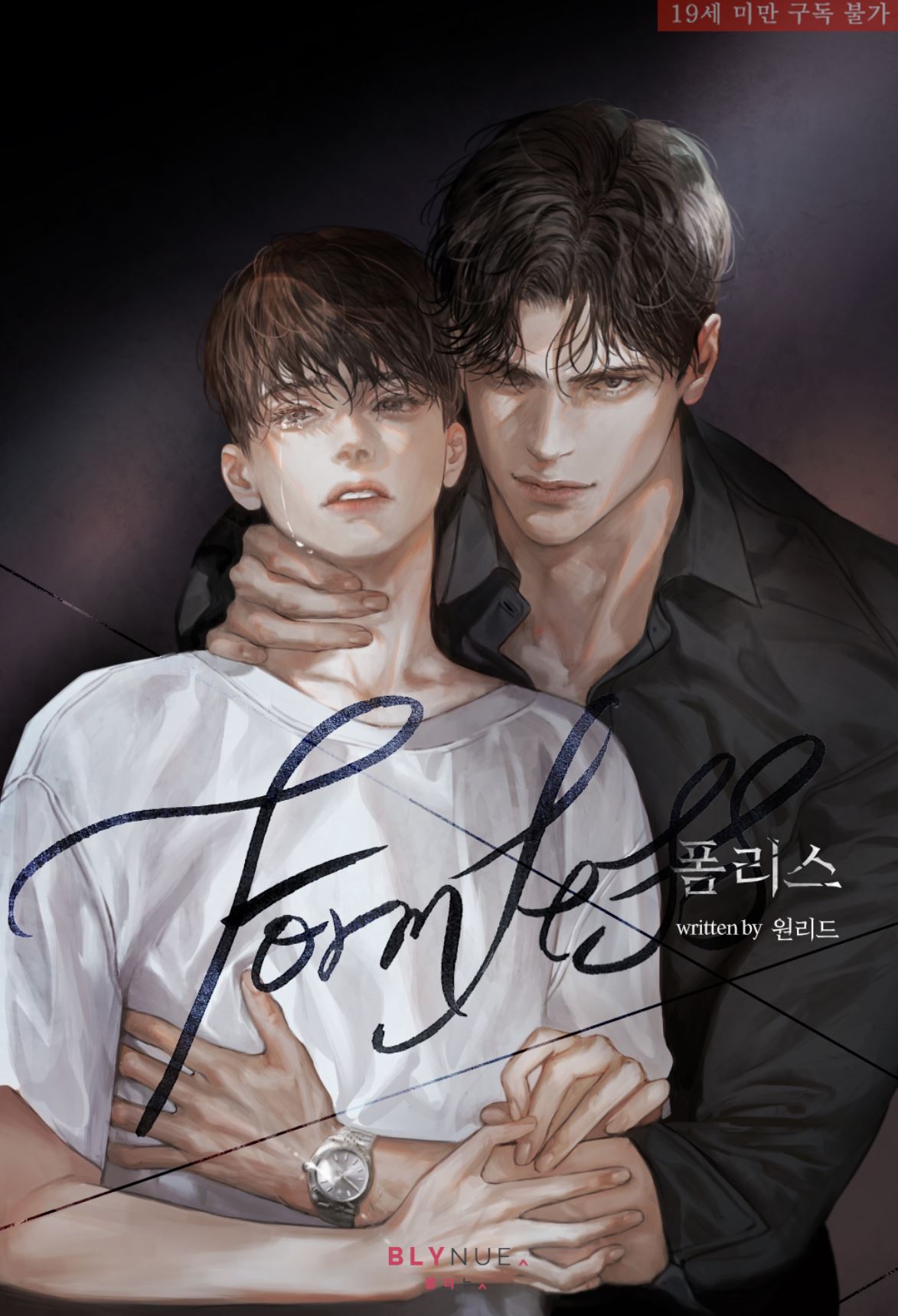
... Read More
The atmosphere in these chapters is thick enough to choke on. It starts with the cold—a 'white smoke escaped his mouth' that mirrors the chill in his chest. The graduation setting is rendered with almost oppressive detail: the congested main gate, the identical bouquets, the excited peers in caps and gowns, the sunlight breaking through leaves to cast shadows on Kangwoo's face. It's a world of bright celebrations where Heewoon is a ghost moving through periphery. The dried sinensis bouquet is perfect—a gift that shouldn't exist, costing twenty thousand won for something dead, symbolizing their relationship: preserved but lifeless, expensive but worthless. When Kangwoo takes the photo, the camera sound 'echoes' in a way that feels like a gunshot in a library. Even the car ride after isn't quiet relief; it's 'after returning to the car' with tension still coiled between them. The author builds immersion through contrast—the warmth of graduation joy against the cold of secrecy, the vibrancy of the campus against Heewoon's internal greyness. You don't just observe this world; you feel the weight of the scarf around your own neck, the paranoia of every passing glance, the surreal horror of smiling while your soul screams.
... Read More
The pacing in this stretch is genuinely masterful and I don't say that lightly. Chapter 184-187 operates on two levels of tension simultaneously. There's the external tension — the leader's accident, the ongoing danger that made Heewoon check every car parked on the street, the insurance negotiations, the looming threat that Kangwoo clearly knows more about than he's saying. Then there's the internal tension of the romantic relationship, which is building through these tiny domestic moments instead of big dramatic declarations. The transition between these two registers is what I find most impressive. Heewoon gets out of the car, eats a sandwich he doesn't remember ordering, texts Jihwan about the leader's condition, and within the same narrative arc we're at Kangwoo's apartment with tablets and stolen glances. No jarring shift. The author treats the relationship development with the same narrative weight as the plot development, which means neither feels like filler. The cliffhanger ending — the knock during the kiss — is perfectly timed. It's not a cliffhanger about plot (who's at the door? Is it danger?) but about emotional momentum. We've just had a scene where Kangwoo says "I missed you too" in his own roundabout way, and then *knock knock*. The reader is left wanting both the resolution of the romantic beat and the answer to the practical one. Also worth noting: the six-month timeline Kangwoo mentions — "at least six months, about four left" — that's a ticking clock embedded in the romance. It gives the whole relationship a deadline without making it feel like a countdown. Just... life.
... Read More
Can we just take a moment to appreciate how Kangwoo speaks? Every line out of his mouth is calculated. 'Sunbae, if something out of the ordinary happens around you or your surroundings, it reaches my ears.' Said so casually, like he's sharing a weather report. Heewoon asks why he wasn't told about his mom, and Kangwoo's first response isn't an explanation — it's 'Are you drunk from the cocktail?' Deflection disguised as concern. The dialogue between these two has this strange rhythm where Kangwoo always has three sentences prepared for whatever Heewoon throws at him. Heewoon, on the other hand, stammers. 'I-I'm sorry.' '...Yeah.' 'Yes.' He barely gets more than fragments out. The power of who controls the conversation is right there on the page. And then Kangwoo drops this absolute bomb: 'But I want to sit you on my lap.' Said with a 'plainly indifferent tone.' Like he's commenting on the weather. The tonal whiplash is intentional and it works so well — Kangwoo can shift from menacing to affectionate to sexually suggestive in one breath without even raising his voice. Meanwhile Heewoon is just 'Yes' this and 'Yes' that, playing along because what choice does he have? The author's dialogue style here is masterful because it makes you feel Heewoon's desperation through what he DOESN'T say as much as what Kangwoo does.
... Read More
Can we just take a moment to appreciate how Kangwoo speaks? The man does not use three words when one perfectly devastating word will do. 'Hm? Is there a place you'd like to go?' — sounds almost sweet. Innocent even. And then two sentences later he's got his tongue in Heewoon's mouth and his hand in his hair. The whiplash is the point. Kangwoo's voice is this slow, deliberate instrument and every line is calibrated to disarm Heewoon. 'I was going to do it upstairs…' — the trailing off, the casual delivery of something wildly inappropriate. And then the follow-up: 'But you kept tempting me.' Bro, YOU grabbed ME. You literally seized my arm. But of course Heewoon is the one being told he's the tempter. That's Kangwoo's genius—he reframes his own aggression as Heewoon's fault and watches him short-circuit. 'Is that so? But why do I feel turned on?' — I laughed out loud. The absolute audacity. Asking your partner if they're looking for a place to have sex and then when they panic, laughing dryly and going 'what if I say I want to do it?' This man is playing 4D chess while Heewoon is over here just trying to breathe. And Heewoon's dialogue! 'Wh-when did I… I didn't do that.' The stuttering, the denial, the pouting silence. He's adorable and utterly powerless against Kangwoo's verbal jiu-jitsu. Their banter isn't just fun—it's a power struggle every single time, and Kangwoo always wins, and Heewoon always comes back for more.
... Read More
"Inside his mouth, Heewoon could still taste the sensation of the hardness of the pliers, which tasted like blood, or the semen he had reluctantly swallowed." I had to stop reading for a full minute after this sentence. Not because it was shocking—though it was—but because it was so brutally honest about what trauma smells and tastes like. The author doesn't describe fear or pain directly. Instead, we get sensory fragments that hit harder than any adjective could: the metallic taste of blood from extracted teeth, the humiliating memory of forced intimacy, the physical soreness that makes even swallowing hurt. These aren't metaphors. They're evidence. What broke me emotionally was the contrast between Kangwoo's calm domesticity and Heewoon's internal horror. One moment they're discussing whether Heewoon should have gotten porridge instead of solid food—banal couple chatter—and the next, Heewoon is remembering violent sex and tooth extraction. The tonal whiplash is intentional. It mirrors how abuse survivors live: one second you're making dinner, the next you're drowning in memories you can't escape. Heewoon's attempt to stay composed—"His face crumpled" but he won't let himself cry—is the most heartbreaking part. He knows if he breaks, Kangwoo will use it against him. So he swallows water, gobbles shrimp, endures. The emotional labor of pretending to be okay while your world collapses is something I've felt, and seeing it rendered here with such precision made my chest ache. The line "I was scared to death" at the end, whispered in darkness while Kangwoo sits up behind him, is the quietest scream I've ever read. No melodrama. No tears. Just a man who realizes he's not sleeping beside a partner—he's sleeping beside his captor. And he's too tired to even be angry anymore.
... Read More
I need to talk about Kangwoo because this chapter fundamentally changed how I see him. Before, you could almost convince yourself that maybe he's having a soft patch. Five days without a single beating. Preparing his own clothes. Bringing coffee and macarons. Letting Heewoon use the study room. But this chapter yanks that illusion away so fast. "That made Heewoon feel even scarier." — I need to sit with that sentence. The abuse wasn't scary because it was constant; it was scary because it was *intermittent*. The terror lives in the uncertainty now. Is he nice today? Is he cruel tomorrow? When does the switch flip? That's not a person who's reformed—that's a person who's found a more efficient way to control. And Heewoon! This is the first time we really see him act autonomously. He doesn't just endure, he plans. He researches, he packs, he goes to the airport. He's been conditioned to believe escape is impossible, but the moment his class gets canceled, his survival instinct kicks in. The fact that he even considers running shows he hasn't been fully broken yet. But then Kangwoo shows up in a suit at the airport. A suit. Does he work there? Does he follow him? Or does he just know Heewoon's patterns so well he can predict exactly where he'd go? The relationship isn't evolving—it's mutating. Kangwoo's affection now feels like a different kind of cage.
... Read More
This chapter is deceptively calm on the surface but the stakes underneath are NOVEL-LEVEL important. The external conflict is minimal—just a domestic scene, some teasing, a mention of a future company dinner. But the INTERNAL conflict is where everything happens, and it's devastating. Watch Heewoon's arc in this chapter carefully. He starts vulnerable (crying over ramen). He lets his guard down (telling Kangwoo about his day while eating fries). And then—somewhere between the kiss and the fry consumption—he realizes something. "He must hide information about his coworkers from Kangwoo." That's not a conclusion he jumps to. It's earned. Kangwoo's interrogation about the company dinner, the chin grip, the implication that Heewoon needs "permission" to live his life—all of it landed, and Heewoon's response is self-protection. The stakes just shifted. This isn't about a company dinner anymore. This is about whether Heewoon will continue to be honest with Kangwoo or start curating what he shares. The power imbalance isn't abstract—it's reshaping their entire communication pattern. And yet! The chapter ends on what looks like a totally normal scene—Heewoon at a restaurant being asked if he wants more cider. The banality is the point. Life goes on. Work goes on. But something has changed underneath, and the author knows it and we know it and Heewoon definitely knows it now. The suspense isn't in what happens next—it's in wondering when Kangwoo will realize that Heewoon has started keeping secrets, and what that will do to them.
... Read More
"The smile on Heewoon's face gradually faded, and a new smile appeared on Kangwoo's face. Soon, their smiles became the same size. It was a moment that would be remembered for a long time." Let me sit with that opening line for a second because I think it contains the entire thesis of this section, maybe the entire novel. Two smiles becoming the same size — this is the image of两个人 performing the same emotion for completely different reasons. Heewoon's smile is fading because something real is dying. Kangwoo's smile is appearing because something false is being born. They look identical from the outside but they're opposites on the inside. That's the central metaphor for their entire relationship: identical on the surface, radically different beneath. Then there's the blanket. Heewoon covering himself with it, shrinking into the fabric, feeling the cold where Kangwoo's warmth used to be. The blanket is isolation made physical — it's what Heewoon has been living in this whole time, wrapped in the illusion of protection. And the phone screen, black and reflective, showing the message like a ghost — it's the truth surfacing from darkness, literal and figurative. The house itself is a symbol I can't stop thinking about. Kangwoo has "locked him in the house and made him unable to do anything without him." Home should be sanctuary. Here it's a cage with comfortable furniture and wine and movie nights. The warmth was never freedom — it was the bars painted gold.

Leave a comment

You must be logged in to leave comments. or
