For My Birthday, I Was Gifted Five Husbands - Reviews

For My Birthday, I Was Gifted Five Husbands
+Add to Custom List
Sort
Add review
... Read More
The stakes in this scene aren't about whether they'll end up together—they're already contracted. The stakes are about agency. Can Eugenie maintain any control over what happens to her body? Can she draw a line and have it respected? And the answer, brutally, is no. But it's not just external conflict. The real tension is internal—her body is betraying her. She says ‘no,' ‘please,' ‘stop'—but her body responds with “more.” And the author doesn't resolve this dissonance. Eugenie never gets to a place where she's fully comfortable with what's happening. She's always torn, always conflicted, always wanting and fearing at the same time. The knotting threat raises the stakes from ‘this is intense sex' to ‘this could change the trajectory of her entire life.” Pregnancy in this world isn't just a biological possibility—it's a political one. She's the Duchess. A child changes everything. And yet, the text implies she might actually want it deep down, which makes the conflict infinitely messier. “His promised partner from long ago. A monster's mate bound by contract.” This line hits like a truck. It frames the entire conflict: she was promised to him before she knew him. She's bound by contract, not choice. And now her body is choosing for her. The external stakes (political marriage, potential pregnancy) collide with the internal stakes (does she want this? does she want him?). And neither conflict gets resolved—they just intensify. The scene ends without resolution because the author knows the conflict isn't over. It's barely beginning.
... Read More
alright i need to talk about how this author builds atmosphere because the sensory details in this chapter are NOT subtle and i am HERE for it the opening image alone sets the tone perfectly: Alfred looking at moisture on his palm, slowly licking it off, a sly smile on his face. that's it. that's the entire chapter's energy condensed into three seconds. dangerous. deliberate. unhurried. then the bedroom itself—we don't get a lot of description of the room, which is actually brilliant. the focus is so tightly on their bodies, their textures, their sounds, that the setting disappears entirely. what remains is sweat. skin. the thud of his body against the mattress. the squelch and splash of fluids. the creak of the bed. it's almost ASMR-level in how specific the audio-visual details are. "Thud. Thud."—two words and i can hear the mattress. "Squelch, Squelch..."—the sticky sounds of their joined bodies. the author doesn't shy away from the Messiness of it. this isn't some polished romance novel where everything is soft lighting and petals. this is fluids on abs, droplets on the floor, tangled sheets, raw sounds. and then the beach flashback hits and suddenly the sensory palette shifts entirely: hot sun, salt water, sand sticking to tear-streaked faces, a boy's arms around a smaller girl. the contrast between the dark intimate bedroom and the bright open beach is almost violent. one is enclosed and heated and private; the other was expansive and sunny and somehow still devastating. the most powerful atmospheric moment for me though was when Eugenie sees droplets forming on Alfred's abs and immediately covers her face in shame. the text describes her sweat beading on her forehead, her flushed cheeks, the way the room filled with ragged breathing and wet slapping sounds—and then her personal terror at being SEEN in this state. the atmosphere shifts from purely physical to deeply emotional in one sentence. "We're going to be seeing a lot of this from now on." Alfred saying this while looking at the mess they made. he's not just talking about sex. he's talking about her vulnerability. her tears. her shame. her pleasure. all of it. and he's saying it like he's already accepted all of it. the scene doesn't end with resolution. it ends with them frozen, trembling, overwhelmed. no tidy bow. just two people who have crossed a threshold and can't un-cross it. and honestly? perfect.
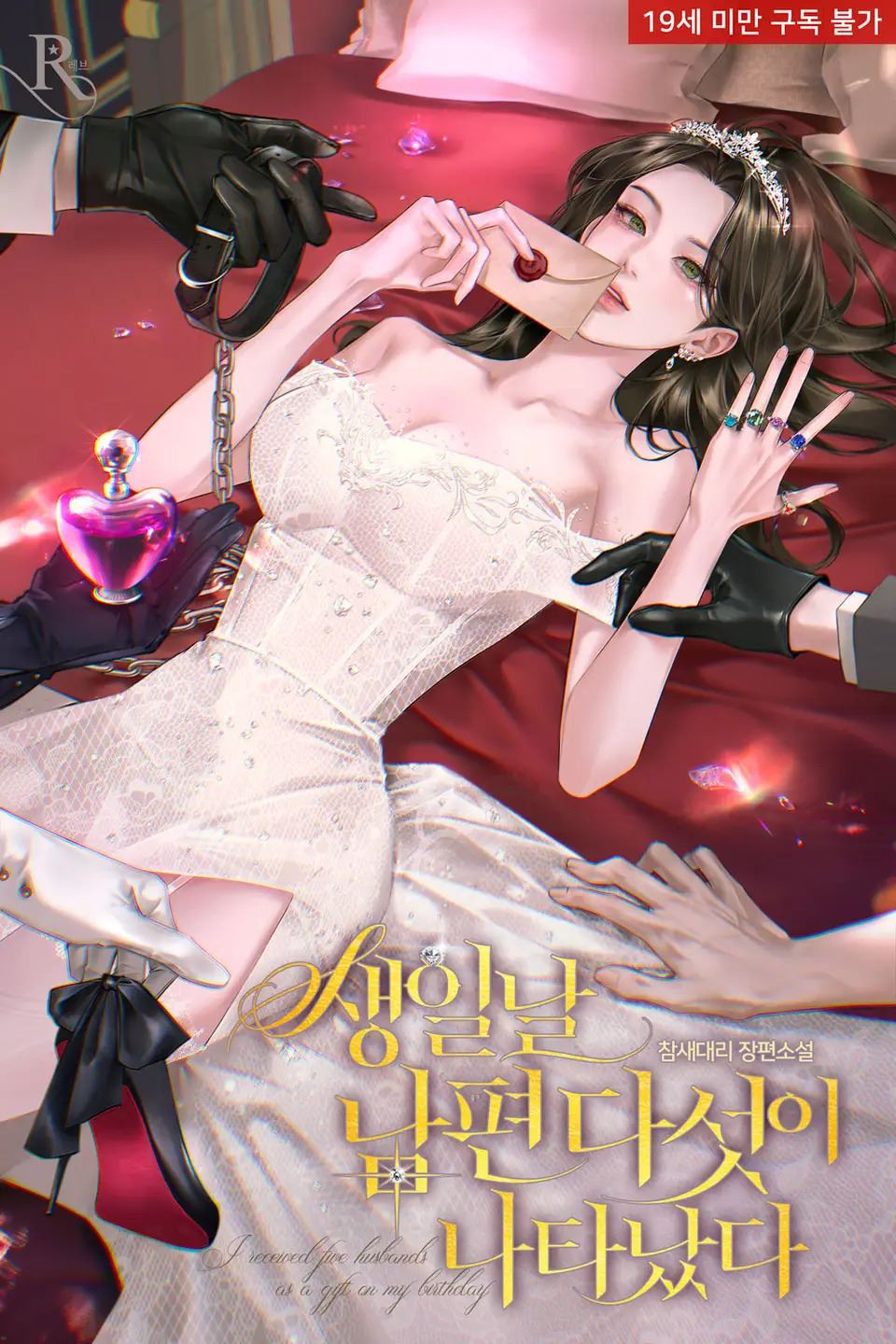
... Read More
I cannot stop thinking about Carter. The way the author wrote that scene with him was genuinely painful and I'm not even mad about it. They have this history—childhood friends who drifted apart after an 'incident' when they were seventeen. Six years of silence. And yet when he shows up at her door, he's warm and easy and makes her feel like nothing changed. But everything DID change. Eugenie literally thinks 'it felt like talking through a glass wall.' That line just destroyed me. She's sitting there with a broken engagement and inheritance problems and the one person she used to trust most is standing in front of her and she CAN'T tell him what she needs. She starts to ask him to marry her and then chickens out. Of course she does. That glass wall is still there. And the way Carter smiles—'like sunshine passing through ice'—it's beautiful and it's hollow at the same time. He's being kind, he's being perfect, but there's something underneath that Eugenie can't quite reach. Or maybe she's refusing to reach. Meanwhile Peter, who she trusted and chose, just reduced her to white-vision dizziness. Apollin, who seems to have orchestrated everything, is the villain we already know how to hate. But Carter—Carter is complicated. He's the one who matters. I need to know what happened when they were seventeen.
... Read More
There's a recurring theme of emptiness in this text that I can't stop thinking about. The blank page in Theodora's letter. The safe that contained only letters instead of jewelry (which Peregrin presumably sold). The marriage contract that Eugenie thought was purely transactional but turns out to have hidden clauses about physical obligations and a trial period. Even the Emperor's Wish Claim letter — handwritten, slightly unsteady from drink, almost accidental in its power but ultimately binding. These empty spaces all point to the same idea: things are not what they appear. The surface narrative is a woman crashing a wedding and marrying five men for her inheritance. But underneath, there's a mother's quiet rebellion against a life of subservience, a magical contract with hidden terms, and political intrigue involving the highest ranks of the Empire. The most powerful symbol, I think, is the safe combination — 0524, the wedding anniversary. Even in death, Theodora was tethered to a man who betrayed her. She kept the key to his memory in a locked box, and when Eugenie opened it, all she found were letters and a plea for her daughter to live better. The mother's nostalgia is described as 'traces of her defeat,' and that phrase haunts me. She lost. She stayed. She loved a man who didn't love her back. And Eugenie's entire arc seems to be about refusing that same ending. Multiple husbands, a queen-like life, safety and happiness — this is a story about a woman building a fortress out of relationships, where every bond is chosen rather than endured.
... Read More
There's this one paragraph that made me literally stop reading and stare at the ceiling. It's when Eugenie is lying there, shaking, covered in sweat and his fluids, and she thinks: ‘After tonight, her sensitivity would never return to what it once was.' Not ‘I'm hurt.' Not ‘this was too much.' But ‘I will never be the same again.' And the author writes it so matter-of-factly, like it's just a fact of life, like she's noting the weather. But it's devastating. Because it's not just about physical sensitivity—it's about her emotional state. She's crossed a threshold. The woman who went to bed with her second husband thinking she'd need to endure this is gone. What's left is someone who is already craving the next round, even as she's begging for it to stop. The CP chemistry between them isn't sweet. It's not ‘they hold hands and look into each other's eyes.' It's feral. It's teeth and claws and chains slipping off beds. And yet—and this is the part that wrecked me—there's tenderness underneath. The palm kiss. The ‘we can stop here.' The way he ‘ensured that this liquid soaked into the folds of her inner walls as he rubbed the entire length of himself against her and sank back inside.' That's almost reverent. Like he's worshipping her even as he's consuming her. “Madam, if you keep tightening around me like that, I won't be able to push deeper.” He's pleading with her too. He's losing control and he's asking her to help him. That's not just sex—that's intimacy in its most raw form.
... Read More
This chapter is a MASTERCLASS in escalating stakes and I need to break down exactly why it works so well. On the surface, the conflict is simple: a woman who has never experienced pleasure is going through her wedding night with a husband who is both incredibly skilled and unpredictably intense. But the REAL conflict—the one that keeps me on the edge of my seat—is internal, and it operates on THREE levels simultaneously. Level one: Eugenie's body vs. her guilt. Every time pleasure builds, the beach memory surfaces. Her body wants something her mind thinks it shouldn't want. The text captures this perfectly—she's crying from overwhelming sensation AND from the grief of remembered sand and broken families, and Alfred has to tell her "this isn't your fault" like ten different ways. Level two: Control vs. surrender. She took contraception. She planned this. She set boundaries. But then Alfred changes position, goes deeper, touches her breasts, and she LITERALLY loses control of her body. The panic when she thinks she might wet herself? That's not just embarrassment—that's the terror of a person who has controlled every aspect of her life suddenly being overwhelmed by something she cannot manage. "Wait, pull out! I'm going to...!" But he doesn't. And she can't stop him, and she can't stop herself, and that's the most terrifying and liberating thing that could happen to her. Level three: The unspoken fear. She doesn't say it out loud, but I think she's afraid that if she lets herself enjoy this—if she lets herself be held and reassured and Pleasured by the boy who once saved her from her own shame—then she'll have to admit that what happened at the beach WASN'T her fault, and if it wasn't her fault, then what WAS it? And if she's free of that guilt, what's left of her identity? The stakes just went from "will they consummate the marriage" to "will she survive knowing she deserves to feel good." That is HOW you raise stakes. And I am physically shaking.
... Read More
Here's what keeps me up at night: Eugenie just discovered she genuinely ENJOYS this. After Alfred, she feels "remarkably energetic," possibly even "made for this," and the text makes it clear she's already aroused the next morning before even meeting Percival. But here's the conflict—that's NOT just a physical revelation, it's an identity crisis waiting to happen. Eugenie grew up hating her mother's weakness, vowing never to be the woman who clings to a cheating husband, and now she's literally living out the arrangement her mother made for political survival while simultaneously discovering she's built for the exact thing she despised. The stakes aren't just about whether she'll survive five husbands—they're about whether she'll become the kind of woman she judged at fourteen. And then there's the external conflict: the CONTRACT with Percival. "Conditions must be met before I can share it." What conditions? Sex? Emotional intimacy? Time? Whatever it is, it means this marriage isn't just performative—it's transactional with hidden terms, and Eugenie is playing a game where she doesn't know the rules. The 1,875 expeditions funded her wedding. Her mother arranged this. The Empress's maternal line holds magic ores. There's a conspiracy underneath the harem and I'm sweating because every time I think I understand the power dynamics, the text flips them. Percival is nervous. Alfred is hiding a wound. Eugenie is discovering her own desires while losing her mother's memory. The ground is shifting under everyone and I am HERE for it.
... Read More
"I've prepared everything for you. Perfect men. Not just one, but several." That line. That's all it takes. Two sentences from a dying woman and the entire emotional architecture of this chapter shifts. Eugenie initially reads it as delusion—a dying mother's妄想. But then the five men show up with wax-sealed letters bearing her mother's maiden initials 'T.F.,' and suddenly it's real. The mother didn't just love her daughter; she spent her final energies building a fortress around her. Every favor, every alliance, every whispered promise was a brick in that wall. What gets me is Eugenie's internal monologue: 'What on earth did you do, Mother?' There's awe there, yes, but also grief. She's standing in a room full of strangers who love her because of a debt to a woman Eugenie barely understood. The mother is everywhere and nowhere—present in every contract, absent in every arm that reaches out to hold Eugenie. And then there's the quiet tenderness underneath all the drama. Carter showing up with a bouquet of anemones and daisies, a childhood friend still remembering her. The men exchanging uncomfortable glances but looking at Eugenie with 'relatively sincere' eyes. For all its absurdity, this is a story about being genuinely, fiercely wanted. I'm not okay.
... Read More
There's something about the way this world is painted that just sticks with me. The Empire is running out of its primary energy source—magic ore, depleted—and that's basically the backdrop to everything. Your protagonist's entire life is unraveling while the civilization she's part of is quietly crumbling around her. That's excellent environmental storytelling. The religion piece is fascinating too. The Livingston family holding priestly positions at the capital temple for generations, inherited through marriage and childbirth—it gives the world this layered history that feels real. Carter's choice to follow tradition while Eugenie pursues science and graduate research isn't just character detail, it's worldbuilding through contrast. And the news headlines! "Pirate Honegold defeated, third medal awarded," "Duke Percival Troys concludes final battle with the Ravenic Kingdom," a skin disease outbreak in Corbenik. These tiny details paint a picture of an empire that's vast, troubled, and held together by noble families doing the heavy lifting. It feels lived-in. Eugenie's apartment is described with such warmth—an old creaky door, sunlight through windows, newspapers spread out. Despite everything falling apart, there's this domestic coziness that makes you want to visit. The contrast between the grand world (dukes, temples, pirates, noble houses) and her tiny cramped apartment is what makes the story feel grounded. I also love the pet name for the capital: 'Hermeland.' Sounds soft but the world is anything but.
... Read More
Okay, I need to just sit with this plot mechanic for a second. Eugenie's mother died and left behind FIVE men who are all contractually obligated to propose to her daughter? That's not a setup, that's a full-blown strategic masterclass. The reveal came in pieces—first the vague dying words about 'perfect men,' plural—and then watching Eugenie piece it together in real time. That moment when she reads the letters and realizes her supposedly ordinary mother had arranged all of this? Chills. Absolute chills. And then—the wedding crash. She doesn't just accept the situation passively, she weaponizes it. Showing up at her stepsister's wedding with five suitors lined up like an army? That is the single most satisfying narrative pivot in this whole chapter. The author made us think this was a romance setup, but it's actually a power play. Eugenie isn't a bride-to-be here; she's a general marching into battle. Also, the contract itself has this insane legal loophole angle—Carter literally says polygamy isn't a sin if you're bound to multiple people simultaneously, and Magnus confirms it's technically legal in this empire. The author is building this whole alternate-history legal framework that makes the premise actually work instead of being cartoonish. I genuinely wonder what other rules of this world are hiding in the background, waiting to be weaponized later.
... Read More
Okay, I need to talk about this one detail that completely sold me on Percival as a character. Mid-scene, Eugenie notices his skin changing color—from pale white to reddish-brown—and she's like ‘Is there something wrong with my vision?' But it's not her vision. His body is literally transforming because of the heat, because of the monster side waking up. And the author doesn't explain it, doesn't dump lore on us. They just let Eugenie's confusion do the work. That's how you write a character who's half-human, half-something-else. You don't give him a monologue about his lineage. You show his eyes going from ‘fluttering with embarrassment' to ‘glinting like ice, resembling a massive carnivorous beast.' That's three sentences that do more character work than most novels do in three chapters. And Eugenie's relationship to him? The way she compares his tongue to a cat's lick—scratchy, stinging, stimulating—is weirdly specific. It's like she's trying to intellectualize the sensation, to put it in a box she understands, but she can't. She's dating a creature who speaks in growls and keeps threatening to knock her up, and she's simultaneously terrified and addicted. “Percival took Eugenie's left hand and rubbed it against his cheek. Then, he kissed her palm gently and whispered, ‘…If you're scared, we can stop here.'” This man goes from beast-mode to gentle whisper in one beat. That's the whole relationship in a nutshell—he's dangerous but he checks in. She's overwhelmed but she asks for more. They're both terrible at communicating and somehow perfect at reading each other.
... Read More
I need to talk about the Magnus Napier problem because this man is quietly the most dangerous person in this entire story and nobody else seems to realize it yet. Percival is physically dangerous — he has monster blood, he loses control, he breaks furniture. That's obvious stakes. Alfred had a visible wound that needed magical healing. Those are conflicts you can see coming. But Magnus? Magnus is a threat in a completely different category. He remembers EVERYTHING from the Academy. He noticed she stopped carrying a cane (or started, actually, wait — SHE noticed HE started using one). He knows where she shops for books, where she studies, who her advisor is. He bought a house specifically positioned so he can watch Professor Racket from a tower room. "You'll be able to see if that guy actually shows up for work or if he's just goofing off and ignoring your thesis." On the surface this sounds helpful. It's not. This is a man who has been tracking her academic life for approximately ten years and framed it as generosity. The stakes here aren't physical danger — they're the slow erosion of Eugenie's autonomy. Every 'convenient' detail Magnus reveals about his knowledge of her life is another thread pulling her tighter into his orbit. And the external stakes? The monster blood means Percy could lose control again. The magical contract means Eugenie's mother may have set her up for something she can't undo. Five husbands, five different magical complications, and Eugenie is just now starting to understand what 'fulfilling their duties' actually means. "To know if they are right for the family, I need to ensure my husbands fulfill their duties to me." This line chills me. It's supposed to be empowering — she's taking charge. But read alongside Magnus's surveillance and Percy's beast blood, it sounds less like agency and more like she's walking into a maze where all the walls are moving.

Leave a comment

You must be logged in to leave comments. or
