Flying Dust [Fei Chen] - Reviews

Flying Dust [Fei Chen]
+Add to Custom List
Sort
Add review
... Read More
'He's not giving alms! It's because he gives you whatever you want!' — Mo FeiChen shouting this at Wen Qianliu destroyed me. Because he KNEW Lu Qingmo's expression before he even looked at it. That line about the love and admiration he once felt being treated as alms — that's Lu Qingmo's entire emotional world crumbling in one sentence. I keeps replaying the moment where Lu Qingmo held Mo FeiChen's hand. He's usually so calm, so unfathomable, but here he was — desperate, pleading with his shixiong to come back. And Mo FeiChen? He immediately understood. He didn't need to see Lu Qingmo's face to know how heartbroken he was. That level of emotional attunement between them is everything. The author wrote: 'Lu Qingmo's eyes are often unfathomable sadness' and I think this is THE defining line for his character. He's sad about everything — his shixiong, his relationships, probably his own powerlessness in this moment. And yet he still throws himself into battle. Dang Xiao Sword disappearing into the Thousand Cloud Sword's aura — he went all in for people who couldn't even save him from this pain.
... Read More
"Who is immortal in this world?" Liu FeiYing says this to Luo Qingyu right before she's about to die, and I just... I've been sitting with this sentence for twenty minutes. It's not dramatic. It's not performative. It's a woman who knows she's dying looking at the boy she raised like he's still a child and telling him the most honest thing she knows. The way the author handles this deathbed scene is remarkable because it doesn't romanticize it. There's no last confession, no grand revelation about hidden feelings, no dramatic reversal. Liu FeiYing simply checks off her final requests like a list: take care of Xiushui Palace. You be its new Palace Master. That's it. She pulls Mo FeiChen's hand with the grip of someone who has almost no strength left but knows this moment will define everything that follows. Luo Qingyu's grief is written with such restraint too. He doesn't wail. He sobs with his head down, grabbing her hand. When she calls him "silly child" — that breaks me every single time. It's paternal, affectionate, and completely ordinary. That ordinariness is what makes it devastating. And then there's the Bai Jingxi rejection that hits like a physical blow. Luo Qingyu's shoulders trembling on the ground after being brushed off... the scene doesn't linger on it. It just cuts to Lu Qingmo pulling him up and saying "instead of crying, stay by your master's side." The emotional intelligence of that line is staggering. Lu Qingmo isn't dismissing the grief. He's redirecting it toward something productive, which is exactly what Liu FeiYing would have wanted. The final image of Liu FeiYing smiling and asking Mo FeiChen if her palace is too small for him — that lightness, that terrible warmth from a woman who is literally seconds from death — it's the most human moment in the entire passage.
... Read More
Bai Jingxi's dialogue is some of the sharpest writing I've encountered recently. Every line he speaks does three jobs at once: it advances the plot, it reveals character, and it establishes the philosophical framework of the entire scene. Take this exchange: "In my eyes, there are only the living and the dead, there are no good or bad people." That's it. That's his entire philosophy delivered in one sentence, and it reframes everything we thought we knew about this world. Good people don't get saved. Bad people don't get punished. The universe operates on a binary that has nothing to do with morality. It's cold, yes, but it's also strangely liberating — because if there are no good or bad people, then Wen Qianliu isn't evil in some cosmic sense either. He's just... alive. And winning. Liu FeiYing's voice is equally distinctive. Even as she's dying, she doesn't sound like a dying person. She sounds like a strategist making final calculations. "Although Qingyu is diligent, in terms of cultivation he is far inferior to FeiChen." She states this without apology, without softening the blow. She's not being cruel to Luo Qingyu; she's being honest in a world where dishonesty would be the real cruelty. Mo FeiChen's voice is the most conflicted — and that's the point. He keeps pushing back: "But there is still Big Brother Lu, his martial arts is better than mine." He's genuinely trying to find another answer, another path. The author gives him this quality throughout, and it makes his eventual acceptance — however reluctant — feel earned rather than forced. The dialogue never feels like exposition. Even the most information-dense lines (like Lu Qingmo explaining Liu FeiYing's injuries) carry emotional weight because of how they're delivered. That's craft.
... Read More
I have been thinking about He Yunfeng nonstop after reading this chapter, specifically about the contrast between the man everyone knows and the person who lost control. On the surface, he is the calm leader. He is the one others come to for wisdom. But the scene where he overturned that entire dinner table because Mo Fei Chen was gone... that was not a leader having a tantrum. That was someone who genuinely cared, and the fact that he suppressed it for so long made the release devastating. There is a whole history between him and his disciple that we have barely seen, but every small detail the author gives us now lands like a hammer blow. The moment He Yunfeng looked around at Li Bilian's body and then leapt up to the top of the tree to examine it... that is not just investigation. That is grief trying to find something to hold onto, something tangible in a world that just took too much away. And then there is Leng Yufang. She is terrifying not because she is evil for no reason, but because she understands exactly which strings to pull. She did not just capture Mo Fei Chen; she made him an offer he could not refuse by threatening Wen Xin. She weaponized compassion, which is far more cruel than any blade. And Lu Qingmo, watching all of this unfold from the shadows, feeling that something was wrong at the dinner... he is the observer, the one who notices the subtlest shifts in atmosphere. His instinct to rush back early and check on Mo Fei Chen shows that he sees what others miss. These three perspectives on the same crisis — He Yunfeng's explosive grief, Leng Yufang's cold calculation, Lu Qingmo's quiet intuition — they create a triangle of emotional truth that feels incredibly layered. Nobody is simple here. Nobody is just a hero or a villain.
... Read More
Here's what keeps me up about these chapters — the stakes feel simultaneously enormous and completely made up. We've got this whole Jianghu world with legendary swordsmen, Qi transformations, two great sects competing for dominance, and our protagonist can't be bothered to climb a tree properly. But that gap between the world's importance and his indifference is exactly where the tension lives. What does Fei Chen stand to lose? Right now, nothing that matters to him. His master won't punish him. His senior brother will scold him but also carry him back to bed when he gets hurt. The other disciples will complain but keep playing with him. He's built a life where failure has zero consequences, which in a genre built on life-and-death stakes is either incredibly smart or deeply naive. The external conflict is already set up though — the World Detention Sword and Thousand Clouds Sword legend, the promise of Qi-as-sword mastery, Yu Jin's ambition to become a top ten swordsman and leave the mountain. Someone is going to come knocking on this peaceful, tea-drinking, unambitious household, and when they do, Fei Chen's comfortable nothing will be threatened. That's the suspense hook. Not whether he'll become strong — we already know he won't try — but whether strength will find him anyway. And honestly, that's a better story than the usual one.
... Read More
Okay can we just talk about Lu Qingmo for a second because this man is the quietest softie in fiction and I am SOFT for him. Six years of pouring his internal energy into Fei Chen without saying a word, just to keep him alive. That's not even hero-level devotion, that's something beyond heroic. And the fact that he never makes it a thing—like, when Fei Chen says he'll work like an ox in his next life, Lu Qingmo doesn't say 'I did all that for you.' He just deflects with a joke about Changbai Mountain and ginseng. Meanwhile he's standing there barely conscious, having carried Fei Chen across two mountains AND fed him energy the whole time. The subtext is EVERYTHING. When he says 'you don't even like me,' he's being playful on the surface but I can feel the actual loneliness underneath. And then at the very end, Wen Qing Yuan apologizes to HIM for wasting six years of cultivation. BRO. Lu Qingmo just lost six years of his martial arts rank and nobody who matters even knows.
... Read More
Okay so I need to talk about this scene because my heart actually did a thing. Lu Qingmo literally says to Mo Fei Chen "if you dare to go, I will do you here" and then proceeds to hug him from behind while pressing against him. And Mo Fei Chen's entire body goes rigid like a board. I was SCREAMING internally. This man is playing with fire and he KNOWS it. But then the absolute legend of a twist — Lu Qingmo laughs and says "if I really wanted to do something to you, why would I wait until now?" WHICH MEANS HE HAS ALREADY DONE SOMETHING OR INTENDED TO ALL ALONG. The audacity. The sheer uncut gall. And the self-mocking undertone in that laugh? Chef's kiss. He's teasing Mo Fei Chen but there's also something real underneath it, isn't there? And then he casually bets that Qu Xiruo will still be waiting the next day, and of course she is. This man is a genius at manipulating situations to his advantage while making it look like he's just being cruel. Meanwhile Mo Fei Chen is over here blushing and sweating and his heart beating fast — and I don't just mean from fear. Like come on, we all know what's actually happening here. The fact that Lu Qingmo uses his own sexuality as a tool to push Qu Xiruo away while simultaneously using it to pull Mo Fei Chen closer? That's not just strategy, that's... something else entirely. I'm not okay.
... Read More
Okay so let me just say this chapter had me doing double takes. You have Wen Qian Liu showing up out of nowhere, practically losing his mind, and then the revelation about Luo Lianyun being ALIVE is just... devastating in the best way. First you think she died, then suddenly she's been sleeping all along, and then RIGHT ON TOP OF THAT—her sword seed got STOLEN. Who does that to a person, let me tell you. And He Yunfeng's reaction? He didn't even want to go back to Jianghu, but when it comes to her? He's gone. Pack your bags immediately energy. The structure here is really tight too—starting with urgency, building through the tomb reveal, and then ending on this bittersweet note about why she chose to lie there. That last bit about her wanting to spend half her life roaming with him after he wakes up... man. It's the kind of plot twist that recontextualizes everything you thought you knew.
... Read More
I need to talk about the visual poetry in this chapter because the author really outdid themselves with the imagery. When Lu Qingmo unleashes the Dang Xiao Sword, the description hits different—'as if to shake off the noise of the mundane world in the air and as if it was about to swallow its opponent in an instant.' That's not just action writing, that's landscape painting with swords. And Leng Yufang's attack? Described as 'like a poisonous snake spitting its tongue' which immediately sets her apart from every other sword user in the novel. She's venomous, calculated, lethal. The setting details matter too. MFC wakes up in his original guest room, opposite Li Du's bed where that guy is sleeping in perfect condition—meaning Lu Qingmo handled Leng Yufang. The spatial relationship tells us everything without exposition. And when MFC falls after losing the sword fight, he hits a female disciple of the Xiu Shui Palace, which grounds us in the physical space of the manor. The half-mask detail on Leng Yufang is classic wuxia worldbuilding—mysterious beauty trope executed perfectly, where we can infer symmetry from partial description. Even the medicine bowl scene has environmental texture: Jun Wushuang's tongue stirring at the bitterness, the physical act of forced feeding, the taste itself. The world feels lived-in because every location has history (manor rooms, guest beds, the aftermath of battles) and every object has weight. When Lu Qingmo's spiritual sword 'faded away and disappeared like an ink trace,' that's not just combat—it's calligraphy coming alive, which fits the scholarly martial arts aesthetic perfectly.
... Read More
There's a theme running through these four chapters that I can't shake: the idea that stories are both prison and passport. Mo Feichen's transmigration is triggered by a physical object—a pirated paperback of Jin Yong novels—that his mother tried to destroy. She saw it as a distraction from his future, a threat to his real-life trajectory. And in a way, she was right, because that book literally became the vehicle for his entire existence to change. The irony is delicious and layered. He spent his original life being punished for reading wuxia, and that punishment is what sent him into the world he secretly loved. The novel his mother hated became his new reality. Every martial arts trope he consumed as escapism is now his lived experience, and the text makes us aware of this continuously through his internal references. When he thinks about 'heavenly steed, soaring across the skies' or compares the manor's platforms to Wudang Mountain movies, he's not just being funny—he's showing us that his entire framework for understanding this world comes from fiction. Then there's the snow, which operates as this persistent symbolic temperature throughout. Snow is beautiful but deadly, covering everything in a deceptive layer of white purity while hiding the harsh reality beneath. The woman is walking through it desperately. The boy carries firewood through it efficiently. Mo Feichen, wrapped in a quilt as a defenseless infant, is entirely at the mercy of it. Snow in wuxia has always been a symbol of isolation and endurance, and the author is deploying it with intention. The stone gate with unfamiliar characters is another symbol I keep coming back to—his entrance into this world is marked by language he can partially decode but not fully understand. He recognizes some traditional characters but not all. This is him as a literal child in a world he only knows from books: partial comprehension, partial belonging, constantly translating between two frameworks of reality. It's a quiet but powerful metaphor for the immigrant experience, the translation of self, the gap between knowing about something and actually living inside it. And the man himself—Mo Feichen. His name means 'perhaps sink' or 'why not deepen,' which feels oddly apt for someone who fell into another world and is now forced to go deeper than he ever planned.
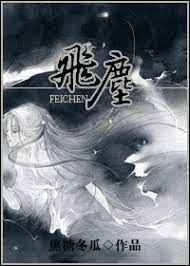
... Read More
I need to talk about this one scene where Mo Fei Chen is sitting there eating and Jun Wushuang offers him the marinated pork, and he says there's mountain ginseng in it because "you don't seem to last long as I do." And Mo Fei Chen's reaction is just to sit down and eat and look relieved that Yu Jin got away safely. That is the most devastating kind of intimacy I have ever read. Think about it. Jun Wushuang is essentially drugging his food to enhance Mo Fei Chen's stamina for whatever they do at night, and he mentions it like it's a casual dinner conversation. This man has no chill. No respect. And yet Mo Fei Chen finds it attractive. He literally thinks it's attractive. The author writes: "It was obviously such a natural gesture, but Mo Fei Chen found it particularly attractive." Natural. Natural! Like this is normal, like this is love, like any of this makes sense. But here's what gets me — earlier in the text we read about Xu Mituo's moment of realization: what he was sad about wasn't just Jun Wushuang letting go of his hand, it was discovering Jun Wushuang had too many secrets he knew nothing about. And then it says He Yunfeng gave him complete honesty and tolerance as if he was destined to belong to him. So Mo Fei Chen is comparing his situation to someone else's broken love story while simultaneously being trapped in one himself. The irony is so thick you could spread it on bread. And the ginseng scene — Jun Wushuang is essentially keeping him here, feeding him特殊 diets, touching his waist with that wicked smile — and Mo Fei Chen is just accepting it while mentally counting the seconds until Yu Jin can get help. He's trapped and compromised and still trying to survive. That's not romance. That's Stockholm syndrome with better prose. Or maybe it IS romance and that's what scares me about it.
... Read More
The forest scene in this chapter is one of the most vividly written sequences I have encountered recently. It is not just a backdrop; it is almost a character itself. The way the darkness presses in around Mo Fei Chen as the blood cicada net descends, the sound of leaves rustling overhead before he even sees what is coming, the sudden impossibility of movement once those strings touch his skin... all of it creates an atmosphere so thick you can feel your own chest tightening. And then there is Li Bilian's poison. The black veins crawling up her arm like a map of her own mortality, visible even in the dim light, telling a story of time running out without a single word spoken. The manor setting at the beginning also deserves mention. The half-over dinner banquet, the lingering osmanthus fragrance in Mo Fei Chen's untouched room, the candlelight still flickering where someone had eaten nothing but anxiety. These sensory details are doing heavy lifting. They tell us about absence before they tell us about presence. The author understands that what is missing from a scene can be louder than what is in it. Even the tunnel to the tomb, mentioned only in passing through Li Bilian's testimony, feels like a place that exists beyond the page. We know it is dark, damp, and dangerous. We know Wen Qian Liu was there in that tomb with its secret fragrance medicinal powder and its lamp smoke that could poison without warning. Every location in this chapter carries weight. The manor, the forest, the tomb, the carriage with its wavering incense smoke... they are not interchangeable. Each one changes the mood and shifts what the characters are capable of. That is masterful environmental storytelling.

Leave a comment

You must be logged in to leave comments. or
