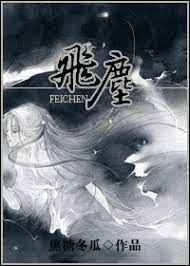
Let me just say this: the stakes in this novel have been climbing like a mountain, and here they peak in a way that made my hands actually shake. Mo Fei Chen has been seriously injured, his sword seed trembling at the sea of qi, unable to sustain his own true qi without He Yunfeng's intervention. If He Yunfeng hadn't used his internal energy to support him, Mo Fei Chen would have died the moment he entered that space. That is not dramatic exaggeration — the text states it plainly: 'I would probably have gone to heaven the moment he entered.'
But here is what makes the conflict so effective: it is not just physical danger. It is the emotional danger of He Yunfeng losing control. The author describes his mind as 'a kite that had its string cut off, it could no longer be pulled back or held back.' This is a man who has spent his entire cultivation career maintaining composure, maintaining the role of master, maintaining boundaries — and in this moment, he simply cannot. The kiss itself is described as gradually increasing in force and intensity, lips entwined as if to clasp with each other's breath. He is feeding Mo Fei Chen qi through his meridians while simultaneously crossing a line he never intended to cross. Both are happening at once. The boundary between healer and lover dissolves completely.
Then the外部 conflict arrives — Great Master Wu Liang from Ding Chan Temple showing up uninvited. He Yunfeng immediately becomes protective, almost feral: 'Is this the Buddhist monk that hurt you?' His voice changes. The tenderness from moments before is gone, replaced by something colder, more dangerous. The stakes just doubled again. Mo Fei Chen is recovering but will not be fully healed for eight or ten years. 'If he leaves this hut, he will die.' Eight to ten years of vulnerability, of dependency, of being trapped together. That is a terrifying prospect for anyone, but especially for people who have built their identities around independence and strength.