Fierce chirp~chirp! - Reviews

Fierce chirp~chirp!
+Add to Custom List
Sort
Add review
... Read More
Okay can we just talk about how every single person in this Prince's Mansion has completely lost their minds over the cub? Like, Qiu Chongshan, who has lived for tens of thousands of years and is apparently some kind of dragon elder, cannot help but hold his breath. Qiu Yiming is literally hammering the sofa trying to contain himself and whispering about how cute his brother is. Qiu Jingyu, the stoic one, silently nods in approval. Even the servant who arranged the flowers is getting judged looks. And the system!! The poor system is having an existential crisis because its host is too cute and now everyone wants to peek at it while it sleeps. This is not a normal household, this is a cult of cuteness and I am here for it. The way they all share this unspoken desire to 'pick up the basket and run away quickly' is hilarious. Also theibling dynamic between Qiu Yiming and Qiu Jingyu is so fun—one is chaotic and expressive, the other is quiet but clearly equally obsessed. That's the kind of sibling bond I live for.
... Read More
I need everyone to understand what's building here and why I'm already emotionally compromised. The entire galaxy is losing its mind over a kindergarten recruitment video. Adults crouching for hours waiting to see a parent. A six-hundred-year-old applying secretly. A self-proclaimed space pirate watching from another galaxy. This is not a side plot—this IS the emotional core of the story right now, and the author knows it. "I'm going to see whose family this little cub came from!!! I'm going to steal him tonight!!!" Everyone says they want to steal the kid, but what they're really saying is they've never seen anything this precious and they're terrified it'll be taken away from him. The humor is armor for genuine tenderness. And the elves! They were originally gathering to watch how humans fall in love with THEIR forest, right? That's the setup. But the text cuts off right as they start doting on the little cub instead—and I am SCREAMING because of course they do. Of course the elves, who live in a magical forest and presumably value cuteness above all else, become the biggest fan club. Sylvester's smile in the principal's office—"clearly intentional"—tells me he engineered this entire moment. He KNEW the guardian reveal would hit like a freight train. The printers churning out forms nonstop while he watches the galaxy lose its collective mind? That's not just administrative success. That's someone who understands exactly what emotional leverage he's wielding. Whoever this guardian is, whoever the little cub's family is—I already care too much. The author has successfully made me invest in people I haven't even met yet, and that's honestly terrifying in the best way.
... Read More
There's this recurring idea in the passage that the beast transformation isn't just a power system—it's identity theater. Qiu Yiming literally transforms to prove a point to his brother. The system notes that Qiu Yiming's wagging lion tail looks like a husky's when he's happy, which is both funny and deeply telling: his fierce beast form betrays his soft interior every single time. The mask slips through the tail. Qiu Jingyu's switch to panther form is described as learning from his brother, but the narrator frames it as something he 'always looked down on.' That's the key tension—he's adopting a practice he mocked, which means he's either grown or compromised, and the text leaves both readings open. The concept of mental energy fluctuation periods being something only 'young and strong beasts' experience adds another layer. Qiu Jingyu is experiencing it too, despite being the composed eldest. So the 'villain' family—these people with superior genetics, impressive appearances, high social standing—all of them are dealing with the same biological vulnerability that the system casually explains away as plot requirement. The text winks at us: you think these are terrifying antagonists? They're just animals having a rough week. And the crystal fruit-flavored cub candy—a small, sweet, almost absurd object that becomes the emotional token of the entire goodbye scene. Nothing grand. Something a child would give someone they love. That's the whole thematic point dressed up as a detail.
... Read More
This batch does something really clever with its pacing structure. It starts almost like a slice-of-life comedy — the gem misunderstanding, Ortnes having a meltdown, Qiu Qiu earnestly trying to teach his dragon boyfriend manners. It's light, warm, almost fluffy. And then halfway through, it pivots. The breakfast scene introduces this undercurrent of worry about Eldest Brother being absent, the system mentioning something about a monthly cycle, and suddenly the tone has shifted without warning. The author builds this quiet tension across three separate scenes: the gem (domestic sweetness), the breakfast (family curiosity mixed with unease), and finally the bedroom visit (pure dread). Each scene is shorter than the last, and the emotional weight compounds. By the time Qiu Qiu opens that door and sees the black cat, you're not just curious — you're physically holding your breath. What's interesting is how the chapter ends on an incomplete moment. Qiu Qiu calls out 'Bro, Brother?' and the text literally cuts off mid-sentence with 'not'. That's a deliberate structural choice that's so effective it almost hurts. The author isn't giving you closure — they're giving you a threshold and then pulling the rug out. I immediately opened the next chapter. There's also this really smart use of dramatic irony in the family scenes. Yiming casually drops that Eldest Brother doesn't like turning into his beast form, and the reader who's already seen the black cat in the bedroom upstairs knows WAY more than Yiming does. That gap between what the characters know and what we know creates this low hum of tension even during the lighter moments.
... Read More
I need to talk about the STAKES here because people aren't paying attention to how dangerous this moment actually is. Qiu Qiu is small. He's golden-winged. He's trembling. He ran into a room full of the most powerful beings in the galaxy—famous beasts from the Prince's Mansion, dragon clan representatives, and the Speaker himself, who apparently terrifies everyone around him. One wrong move and this little cub could have been trampled, exposed, or worse. The reporter tried to stop him. People were panicking. 'It's over! The Speaker has seen it!' This wasn't a cute misunderstanding—it was a potential disaster waiting to happen. If Qiu Jingyu had ANY inclination toward ruthlessness, if he'd cared about face or politics over his brother, Qiu Qiu would have been ruined on live broadcast. But Qiu Jingyu chose differently. He lowered his head. He asked gently. He protected Qiu Qiu from every gaze. And when the crowd turned hostile—when those same famous beasts glared—he just... looked at them. Casual. Unbothered. The message was clear: touch my brother and you deal with me. The text says 'the hands that used to only sign documents' peeled the candy wrapper. Those are hands that have signed orders. Ordered things. Probably ordered deaths. And yet here they are, gently handling a piece of candy for a scared child. The contrast is devastating. So now the stakes just went through the roof. A hidden villain has been triggered. This was supposed to be a public alliance announcement. Now it's become something else entirely. What does the villain want? And what happens when they realize the Speaker has a soft spot—the exact weakness they could exploit?
... Read More
"In this case, the agreement between the two parties is basically consistent. From the second half of the year, a series of cooperation will officially begin, and relevant media conferences will also be held." This line hit different. We're in this FULL interstellar universe where dragon clans hold priceless blood in vaults and it's basically the most valuable substance in existence, AND yet the negotiation scene reads like a corporate boardroom meeting except everyone's wearing dragon ancestry like a designer suit. The contrast is everything. What really sold me on this world is how casually brutal it is. Like, dragon blood is so valuable it could never flow into auction houses or black markets because the Dragon Clan's prestige is "engraved in almost every corner of the interstellar world." You could literally kill for it, and they treat it like fine wine at a dinner party. Meanwhile the flower garden scene where Torrance and Qiu Qiu are sitting together? Soft sunlight, flowers, this tiny fragile bird-like creature who's been told his health isn't great, and this golden dragon kid who keeps looking at him like he wants to pick him up and rub him. The worldbuilding works on SO many levels — high-stakes political dragon diplomacy upstairs, and down below, two kids having a moment that could reshape everything. The conference hall goes from warm celebration to FREEZING POINT in like two seconds when someone yells that the safe is empty. That atmospheric whiplash? Immaculate.
... Read More
There's a lot happening beneath the surface of this chapter if you look for it. The most obvious symbol is the name itself — Qiu Qiu, 'Qiu in autumn.' Autumn is a season of transition, of things changing and preparing for dormancy. And what is Qiu Qiu? A creature about to undergo transformation. The name foreshadows change. But it's also warm and gentle, not harsh — which seems to be exactly what Qiu Jingyu and the family want for him. Then there's the dragon blood. Ancient dragon blood as currency, as something worth negotiating treaties over. Blood as power, blood as legacy. The Myers Dragon Clan has hoarded this blood and its associated power for hundreds of thousands of years. And now it's entering into exchange — which means the isolation is ending, which means everything changes. Blood ties and blood trades are literally the foundation of this world's politics. But the deeper theme I keep coming back to is protection. Almost every character in this passage is doing something to shield Qiu Qiu — from bullies at school, from the dangers of the world, from having a ridiculous name (well, trying). The family's confidence that 'no matter what, you will never be bullied' is both a promise and a warning. It implies the world IS full of bullies, both literal and metaphorical. And Qiu Qiu, for all his cuteness, has zero self-awareness. That gap between how vulnerable he is and how much power surrounds him is where the story's tension lives. The author seems interested in asking: what does it mean to be protected by people who are dangerous themselves?
... Read More
Okay so let's talk about Torrance because THIS CHARACTER IS A COMEDIC GEM. "But I also want to have friends! Is he good-looking? I like good-looking friends!" "Wouldn't that be as annoying as those guys in the class!?" "Then I'm not interested anymore. I don't want to feed him my blood." THIS BOY IS A MENACE AND I LOVE HIM. His dialogue is pure id with zero filter, and the way the author writes him absolutely crackles. He's a dragon child who treats everything like a toy including his father's threats about bleeding his blood. The running joke that his dragon blood is nearly pure despite having a human mother and mixed-dragon father keeps coming up organically through conversation rather than exposition dumps, which is honestly impressive craft. Ames's exasperated parental voice contrasts perfectly—"Torrance, don't touch anything without washing your hands," "look at what you look like"—that weary dad energy who clearly has three other children worth mentioning and is somehow still losing control of the household. Even the minor characters like the old housekeeper and the servant have distinct voices. The servant's eager "Yes, Young Master" followed by immediate confiscation of the letter by his father is a whole comedic beat delivered in two sentences. The author knows exactly how to use dialogue to paint personality without ever stopping to explain it.
... Read More
I need to talk about how this chapter breathes. Because honestly? The pacing IS the anxiety. Qiu Qiu counts his feathers—'one, two, three, four, five, six, and seven'—and suddenly you're feeling the weight of each number like a countdown. Seven out of nine. Two missing. What happened to them? The text doesn't rush to explain; it lets the silence between the numbers do the work. That's masterful. Then it cuts to Qiu Yiming, and the pace shifts completely. Where Qiu Qiu's section is tight, internal, claustrophobic (hiding in a flower basket, staring at a photo frame), the second brother's scenes are sprawling and restless. Books piled 'half a person high,' catching falling globes, lying weakly on tables, having full-blown daydreams. The structural contrast between the two brothers mirrors their emotional states: one compressed and worried, the other expansive and fantasizing. But here's what I love—the chapter doesn't resolve either trajectory. Qiu Qiu gets comforted and then immediately returns to his 'spicy chicken prey encyclopedia,' diving back into preparation. The worry is put on hold but never answered. Qiu Yiming's contradictory feelings about his brother's transformation are left dangling with 'I want my younger brother to grow up quickly, but I am a little hesitant.' No conclusion. Just honest, unresolved emotion. The chapter ends on that note of hesitation, which is the perfect structural choice. If it had ended with Qiu Qiu confidently practicing or with the father returning with prey, it would've felt like a bow tied too neatly. Instead, we're left in the in-between space—everyone wants something for Qiu Qiu, everyone has plans, and Qiu Qiu himself is caught between fighting spirit and the terrifying question: 'What if I'm the only herbivore?' The pacing here understands that suspense isn't about withholding information; it's about stretching the moment between knowing and not-knowing until it becomes unbearable. And then it cuts away anyway.
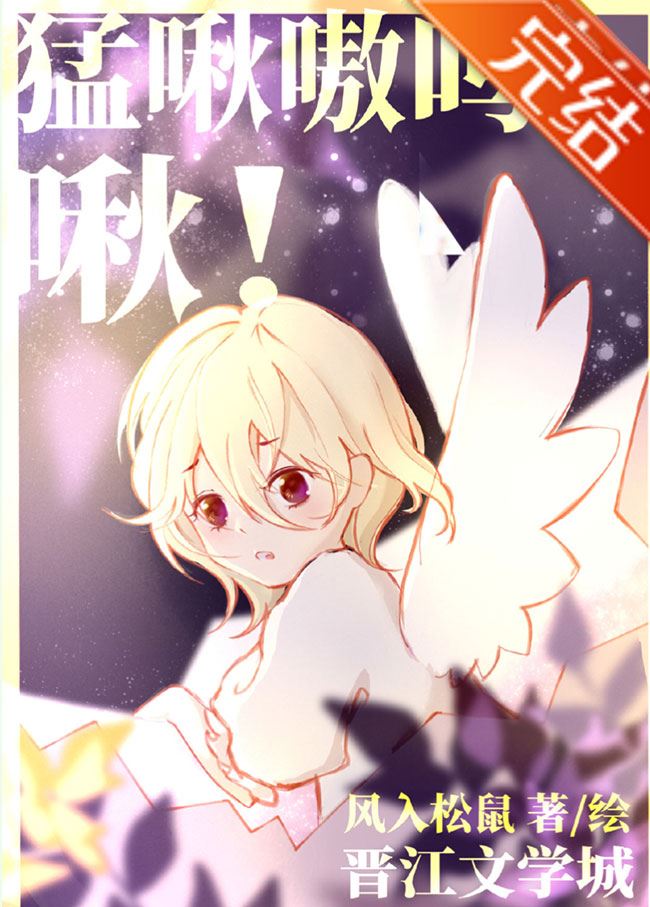
... Read More
Okay can we just talk about the Elf Forest for a sec because THIS is what I'm living for. The way the author describes that lake in autumn with 'vibrant colors of an oil painting' and the little cub dipping his toe in... I literally stopped breathing for a second. It's one of those rare moments where the setting isn't just backdrop—it's basically a CHARACTER. And the wind chimes! The wind chime intro that plays EVERYWHERE now, apparently even hiding in the break room? My friend, I have watched this scene fourteen times and I still get chills every single time. There's something about how the camera work is described that makes it feel cinematic. The little crab blowing bubbles, the shy question 'Brother, can-can I touch it?' directed at someone off-screen—it's all so tender and unpolished, and THAT'S exactly why it works. This isn't a glossy promotional video, it's raw. It's like watching a child discover the world for the first time, and somehow the author made ME feel like I was discovering it too. The whole vibe of Kleist Kindergarten being hidden inside this enchanted forest with flying cubs and fireflies at night—how is this not the most wholesome thing ever. Also can we address the hashtag situation? #KleistElfForest# trending? In-universe people are losing their minds over a KINDERGARTEN VIDEO. I laughed out loud. This world feels ALIVE and I am here for it.
... Read More
Let's talk about the commentary section because it is genuinely hilarious and so well written. You've got these completely unhinged reactions like 'I'm right here in front of the camera!!! How could you just leave your big bro behind like that!!' and 'your big bro hasn't even had time to lick the screen clean yet!' The way the author captures that specific brand of internet fangirl energy is spot on. It's chaotic, it's obsessive, it's somehow both supportive and wildly inappropriate, and it feels SO real. Then there's the contrast with the actual dialogue. The host is doing his practiced MC routine—'His Excellency Qiu Jingyu, the Council Speaker of the First Star Region!'—all formal and stiff. And Qiu Jingyu himself speaks in this measured, composed way that sounds like he's reading from a prepared statement, except for that one moment where 'there was undeniably an indescribable softness to his voice.' The author uses dialogue to show character without needing to explain everything outright. Lida's panic is all action and exclamation marks, while her grandfather sighs and dispenses calm wisdom. Sylvester losing it over the tea is pure physical comedy translated into dialogue. Even Qiu Qiu barely speaks but when he does—'Big Brother'—it carries weight because it's so simple. The narrative voice itself has this fun, slightly irreverent tone that matches the chaotic energy of the scene without ever breaking immersion. It's like the narrator is in on the joke with us.
... Read More
On the surface, this reads like a lighthearted comedy about an overprotective big brother and his adorable little sib. But if you actually sit with what's happening, there are some genuinely interesting questions the text is asking. The central symbol is obvious: the little brother is physically tiny—palm-sized, a child—but he is somehow the most desired student in the galaxy. Two elite academies are literally competing to recruit him. What does that say about power and potential? That true strength isn't always what it appears to be on the surface? That the smallest beings can command the most attention and resources? There's also the carnivore-herbivore dynamic running underneath everything. The herbivore kindergarten existing specifically for offspring of carnivorous families suggests a world where traditional enemies are being forced to coexist, where the natural order is being questioned and restructured. And Qiu Yiming—a top carnivore beast who has somehow assembled a pack of rival beasts under his influence—feels like a living embodiment of that theme. He's not just strong; he's creating new social structures where none existed before. The candy itself is almost symbolic too. A peace offering that Qiu Yiming refuses to acknowledge as one, yet posts about extensively. It's about the tension between vulnerability and pride, between wanting connection and wanting to appear untouchable. Every character in this passage is doing something slightly performative—posting, arguing, recruiting—while actually being driven by something more genuine underneath. And then there's the homework promise. The most important emotional truth in the entire passage, stated by the smallest character, reducing the most powerful adults in the room to silence. Maybe that's the real theme: genuine connection always matters more than institutional power.

Leave a comment

You must be logged in to leave comments. or
