Fierce chirp~chirp! - Reviews

Fierce chirp~chirp!
+Add to Custom List
Sort
Add review
... Read More
'Kleist actually released a promotional video!! And they were too despicable this year!!' This single outburst carries the weight of an entire institutional crisis. Let's talk stakes because the author does something really smart here—the conflict isn't between good and evil, it's between two schools competing for the same稀缺 resource: cubs. And the stakes feel genuinely high because of what's at risk for each side. For Kleist, failure means continuing their years of empty classrooms and ridicule from people who 'look down on them.' For the Imperial Academy, failure means losing face before the Dragon Elders, especially Elder Alice, and validating all those online rumors. The moment Natas slams that terminal in front of Komodal, the power dynamic completely shifts. Those academy staff were so sure they'd won—they weren't even worried about the 'leaks.' Their confidence was their blind spot. And now they're realizing that Kleist didn't just compete—they outmaneuvered them by targeting an audience the academy completely dismissed. The suspense here isn't 'who will win' anymore; it's 'how badly will the academy fall?'
... Read More
There's something almost cinematic about how this chapter handles its quieter moments. Summer night. Cicadas. A soft little dumpling-shaped creature hovering over an injured dragon, checking wounds that can't physically heal. The contrast between the noisy, chaotic opening scene—dragons, anger, family drama—and this deeply intimate midnight vigil is staggering. The visual of Jin Lin finally opening his eyes, watching this tiny being circle around him with concern, is painterly. Pale golden pupils, the bandaged leg, the 'soft fluffy ball'—every image is sharply rendered but emotionally understated. The author doesn't tell us these characters are bonding, we just WATCH it happen in real time. And the line about the scars: 'cannot be healed at the physical level at all. If they could, they would have been healed hundreds of years ago.' That's devastating. The wounds aren't on the body, they're deeper. And Qiu Qiu, bless him, keeps checking anyway because caring is his native language.
... Read More
Okay so let me just say this chapter did EVERYTHING to me. The system revelation—that Qiu Qiu isn't just some random kid but a participant in some kind of villain assignment system—is absolutely wild. Everything recontextualizes. All those earlier chapters where he seemed awkward or out of place? Suddenly it all clicks. He's not naturally like this, he's ANTI-NATURAL for this role. His spiritual body matching his introverted, sickly self? That's not coincidence, that's narrative symmetry. And then the stakes drop like a bomb—keeping that little dragon as a pet is literally a provocation to the Dragon Clan, and the original book's villain family gets destroyed for exactly this kind of arrogance. The tension between what Qiu Qiu wants (a family, warmth, people who won't drive him away) and what his role demands (become a vicious villain) is the engine of this entire story. It's not just plot mechanics, it's existential. And the fact that he got the first full score on the villain test? That's almost cruel humor from the author.
... Read More
This chapter is a masterclass in pacing. Let me break down why it works so well. It opens with a hook — that fragmented thought about the Second Young Master being obsessed with his brother — that immediately pulls you in with intrigue. But then it pivots hard into something much more grounded: a kid trying to open a snack box. This tonal shift is deliberate. The author is telling you 'don't worry, we'll get to the plot stuff later, right now let's just breathe and enjoy the scene.' And that breathing room is what makes the chapter feel unhurried despite being packed with information. The structure follows a classic pattern: setup (weird atmosphere in the lounge), escalation (Heber's growing panic), climax (the realization that Qiu Qiu called his dragon 'Ah Lin'), and resolution (Heber trying to reset the situation by acting normal). Each beat is given exactly as much space as it needs. The snack-opening sequence alone takes up a good portion of the chapter, and it could have felt like filler — but instead it works as a pacing device. It slows us down, makes us inhabit the scene physically, and then the emotional payoff hits harder because we've been sitting in the tension. The ending is particularly well-timed. Qiu Qiu's sincere apology ('Ah Lin seems to be in a bad mood today. Please don't scare him.') followed by Heber's internal meltdown ('Wait, what do you mean by your Ah Lin???') — that last line is the chapter's mic drop. It lands cleanly, leaves you laughing, and implicitly raises the question of what happens next. No cliffhanger, no forced drama. Just a perfect comedic button on a well-paced scene.
... Read More
There's this one moment — or rather, this one series of moments — that I keep coming back to, and it's not the fight. It's not the dragon cub either. It's the silence after the wolf dies. Qiu Chongshan stares at the corpse for a long time, sighs, and then starts mentally shopping for the perfect training partner for his son. There's something almost devastating about how casually he treats a life-and-death battle like a grocery run. But underneath that casualness is this deep, almost mundane love. He's not just any beast who found a random cub. He's a father who went out of his way — patrolling, evaluating, discarding options — to find something that would challenge his child without killing them. That's not careless. That's hyper-aware care disguised as pragmatism. And the sub-dragon cub! "It looks a little lame." "8 out of ten it was probably thrown out." He's describing this abandoned, discriminated-against creature and somehow it becomes the perfect match. The author doesn't need to write a single sentimental line about found family because Qiu Chongshan's actions scream it louder than any dialogue could. Meanwhile the Dragon Clan is panicking on the other side of the forest, and I just — I can't. This is the kind of emotional layering that makes you want to immediately reread the whole chapter. Who is this cub going to become? And more importantly, who is Qiu Chongshan becoming by choosing to raise it?
... Read More
"Would you like me to raise you?" — I am not okay. I am literally not okay. This line broke me. Like, think about the power dynamic here. This tiny fluffy creature is looking at an ancient dragon and asking to RAISE IT. The audacity. The innocence. The complete lack of self-preservation instinct. And Jin Lin's reaction? He just... freezes. His tail pauses mid-air. He's been called provocative, ridiculous, arrogant—and yet this little voice asking such a naive question makes him completely speechless. "Jin Lin:………………?" — the ellipses say everything. He's a being of ancient majesty who's probably been feared or worshipped his entire existence, and here comes this soft warm thing touching his tail and looking at him with those gem-like eyes and he can't even formulate a response. What killed me most was the physical description of that touch. "A warm, soft touch that caught him off guard" — for a spiritual body that hasn't felt physical sensation in who-knows-how-long, this is huge. The dragon remembers being circled by a tail before and now THIS. I'm already emotionally invested in these two and they've barely interacted. Qiu Qiu flying crookedly toward the dragon's ear saying "I remember that its eyes are so beautiful. Like a gem." — why do I feel like I'm watching the first frame of something that's going to destroy me later. The fact that Jin Lin closes his eyes and curls his tail tightly when Qiu Qiu keeps trying to approach... is that rejection or is that overwhelming sensation he doesn't know how to process??
... Read More
The image of a black dragon tail circling midair to catch a falling golden dumpling-sized creature is cinematic in a way that stayed with me. There is something almost surreal about the scale contrast — this massive, ancient beast using the very tip of its tail like a lifeline, catching something fragile with what the text calls 'precision measured in minutes and seconds.' It feels like watching a master craftsman do something delicate, or a parent hovering just beneath a child on a swing. The courtyard setting grounds the extraordinary in the ordinary. People are running frantically with mats, voices rising in panic, and yet through all that chaos, there's this one suspended moment where the dragon's tail becomes the center of the universe. The breeze swaying the fluffy fluff, the sky spinning as Qiu Qiu is thrown — these details make the scene feel alive rather than staged. What strikes me most is how the world feels lived-in. The mention of spiritual bodies, skill gift packs, primary skills like something from a game tree, the system jumping out in shock — these elements suggest a world where magic and mechanics coexist seamlessly. We don't get exposition dumps about how this world works; instead, we see it in action through the characters' instincts and reactions. The dragon tail being sacred, reserved for close relatives, touched only by those allowed — this single detail does heavy worldbuilding. It tells us about hierarchy, about intimacy, about what is forbidden and what is precious, all without a single paragraph of explanation.
... Read More
There's a question hanging over everything in these chapters: what makes a villain? The Qiu family treats catching dragons and extracting blood like it's a normal Saturday activity. The system rewards villain points almost dismissively, like it's just another stat to maximize. And Qiu Qiu — the protagonist, the hero, the good one — is drowning in villain points generated by his own family's chaos. "I am such a failure as a villain, why can't I catch up with my father's villain speed even though I try my best" — this line broke me. He's trying so hard to be bad and failing, while his family accidentally accumulates villainy through sheer negligence. The comedy is sharp but the theme cuts deep: villainy isn't always intentional. Sometimes it's just the environment you're born into. Then there's the name scene. "Ah-Lin." The prefix is a term of endearment, and Jin Lin's reaction — stunned silence, then writing the character "Lin" on the table — is the most symbolic moment in the whole chapter. A name is identity. By giving Jin Lin a name, Qiu Qiu is doing something radical in a world where dragons are commodities and bloodlines are currency. He's saying: you are not a thing to be traded. You are someone. "I will raise you well." Three words that reject the entire value system of this world. Not "I will train you" or "I will use you" — I will raise you well. As if love is the ultimate rebellion.
... Read More
Okay so Qiu Xingchuan just walks in out of nowhere and flips the entire dragon blood negotiation on its head. The setup was this harmonious family moment—mother praising Torrance, everyone feeling warm and fuzzy—and then *boom*, this guy who supposedly deals with the Zerg returns and immediately starts picking apart the terms. Classic hidden villain entrance, and honestly I love how the system commentary basically confirms it. But here's what really got me: Qiu Qiu tries SO hard to explain that it's not actually a dragon blood problem, it's literally just his own fault, and absolutely nobody listens. That moment when he flies off to Jin Lin like 'what should I do, Ah Lin?' was equal parts heartbreaking and hilarious. Meanwhile Ames is fuming because he's been outmaneuvered by someone who barely broke a sweat. The plot twist isn't even the biggest revelation—it's watching Qiu Qiu's genuine desperation get completely ignored while the adults have their scheming session. Torrance's little gift at the end felt like such a weird bookend to all that chaos. Who even is this guy??
... Read More
Okay, let me just say it—this entire chapter is basically one giant anxiety dream wrapped around a golden feather. Think about it. Qiu Qiu counts his tail feathers, finds two missing, and instantly spirals into this existential crisis about whether he'll become an herbivore in a family of predators. The prophecy feather SHATTERED. Not just fell off, didn't dry up, actually disintegrated the moment he touched it. That's not a metaphor, that's a plot detonation. What hits me hardest is how the story frames the question of transformation as both blessing and threat. Everyone in this family becomes a beast. Qiu Qiu is terrified of being the exception. And yet, when Second Brother (Qiu Yiming) holds that golden feather and starts imagining this ridiculous fluffy-earmuff Christmas scene, you realize even the people who love him most are projecting their own fantasies onto what he'll become. The father's search for prey, the research on the feather, the planetarium Souvenir from an astronomy competition—all of these details accumulate into this portrait of a family that collectively can't stop thinking about what Qiu Qiu will turn into, as if he's some kind of canvas rather than a person. Big Brother's line 'In the future, no one will dare to say that you are not' is such a loaded promise. It's generous, it's arrogant in the best way, and it's also kind of heartbreaking because we know how stories like this work—the child who tries hardest to fit in is usually the one who becomes something unexpected. The prophecy painting shows a beast, but prophecies in fiction have a nasty habit of being literal in the wrong direction. I'm already bracing for the reveal. And the ending—Qiu Yiming's contradiction, wanting his brother to grow up but also fearing what that growth means if 'all the beautiful feathers turned into those dark scales'—that's the real plot engine. This isn't just about transformation; it's about the grief of watching someone become something you don't recognize. The stakes are emotional first, supernatural second.
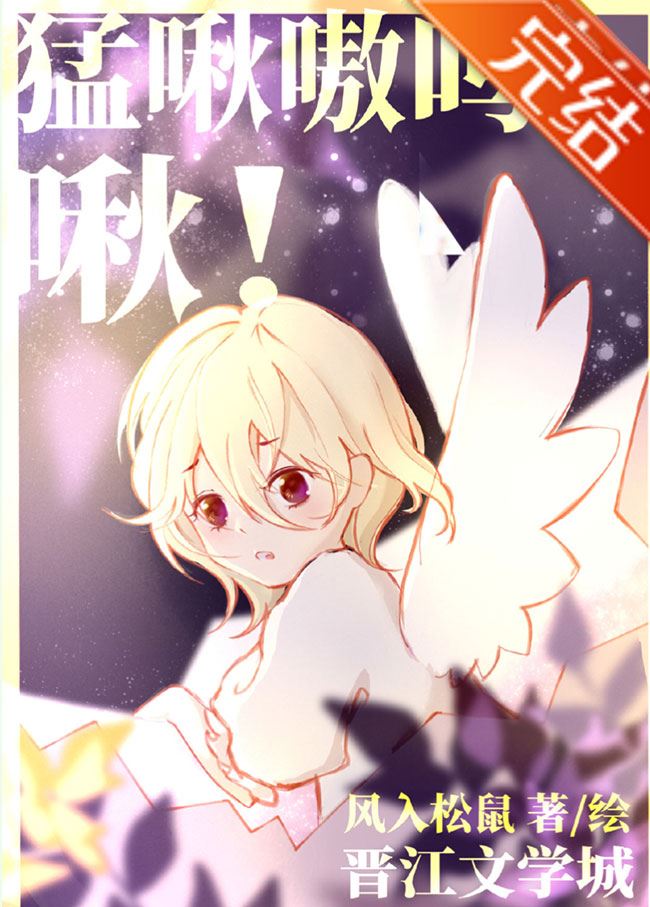
... Read More
This chapter segment is a masterclass in emotional whiplash, and I am here for it. Let me walk through how it unfolds because the rhythm is *chef's kiss*. It starts with tension—young master Qiu Yiming is clearly losing control, kneading metal ornaments like they're nothing, spiritual power running wild. That's your hook. Reader is leaning in: what happened? Why is he upset? Are his classmates okay? Then—and this is the brilliant part—the little brother Qiu Qiu flies in and de-escalates everything with this soft, earnest voice. The shift is instantaneous. You go from 'oh no he's going to destroy the furniture' to 'aww look at them being siblings.' But wait, the author isn't done. Just as we're settling into warmth, Qiu Yiming asks for a kiss as a trade, which completely derails the wholesome mood into comedy. The silence that follows—those nine exclamation marks in the original telling you how stunned everyone is—then his explosive 'I DECLARE MYSELF THE TWENTY-FOUR FILIAL PIETY STUDENT OF THE SCHOOL' is pure catharsis. It's the release valve the whole scene needed. And then the father's sour reaction, the dragon subplot with Ortnes panicking about future romance while Jin Lin remains hilariously indifferent, and the butler's quiet philosophical observation about the house changing direction. All of this in one continuous scene. The pacing never drags because every beat introduces a new emotional note, and the transitions feel natural rather than forced. No rushed chapters, no filler—just momentum.
... Read More
The structure of these chapters is doing some really smart work that I want to unpack because the author is playing with contrast like a conductor. On one side you have the Qiu family—immediate, sensory, grounded. Flying dragons, fur dolls, shoulder-nuzzling, casual physical comedy. The pacing here is loose and bouncy, almost domestic in rhythm. You fly through it because it feels like breathing. On the other side, Miles Dragon Manor hits with this slower, more politically charged energy. The letter arrives like a plot device dropped on a chessboard. Ames reading it, Torrance causing chaos, the whispered concerns about dragon blood politics and the Conservative old guys at the Peak of Order—all of it builds this undercurrent of tension that the fluffy scenes completely ignore but the reader can't stop feeling. The transition between these two worlds is seamless but deliberate. One moment you're cooing at a lion-fur doll, the next you're wondering if the Qiu family's dragon blood request is going to blow up someone's entire galaxy. That tonal whiplash is intentional, and I'm here for it. Ames ending on 'Why does that family's youngest son need dragon blood? Ordinary cubs shouldn't be able to bear it at all?' is a cliffhanger that lands perfectly. It raises the stakes without breaking the chapter's flow.

Leave a comment

You must be logged in to leave comments. or
