Fallen Idol Group - Reviews

Fallen Idol Group
+Add to Custom List
Sort
Add review
... Read More
Let's talk about the word "teammates" because this author does not let that word rest. Zhu Lianzhen literally cannot finish his own sentence—he starts to say "keep being…" and Tan Qing just fills in the blank for him like he's been waiting for this exact moment. "Teammates." Not friends. Not anything else. Just teammates, which is somehow more intimate than coworkers but infinitely more distant than whatever they were before. It's a label that contains both connection and confinement at the same time. And earlier in the scene, there's this whole motif around lies and honesty that threads through everything. Tan Qing calls him out directly: "Friends are supposed to be honest with each other. But we're not." Right after Zhu Lianzhen lied about why he came to the set. The surveillance cameras are another brilliant detail—Zhu Lianzhen mentions the dozens of cameras Tan Qing installed, and Tan Qing casually reveals he only noticed Zhu Lianzhen because the software sent an alert. Someone was watching, but not in the way Zhu Lianzhen probably hoped. The camera caught his presence but not his intent. And then Tan Qing admits he was too busy filming to even check what Zhu Lianzhen did in the house. The person who supposedly invaded his space wasn't even looking at him. The irony is suffocating. Both of them are performing versions of themselves for each other—Zhu Lianzhen performing casual indifference, Tan Qing performing cold detachment—and the audience is the only one who can see through all of it. Mother's Day hangs over this whole scene like a ghost. Zhu Lianzhen came because he was afraid the day would make Tan Qing sad, but he couldn't even say that out loud. Some truths are too heavy for the wrong moment.
... Read More
There's a line in here that just got me and I need to process it. Zhu Lianzhen says the Asia tour is his favorite era because it was when they argued the least and worked together with a shared goal. The fans stopped fighting. Everyone was shining. And then he immediately follows up with 'we don't know either' when asked about the next concert. That silence between those two statements is carrying so much weight. I keep coming back to the contrast between what each member remembers. Fu Rong remembers being excited to go solo — genuinely, nostalgically happy about not having to see his teammates. Ji Yunting agrees it was 'a wonderful time,' which reads as either sincere or deeply ironic depending on your interpretation. Tan Qing is the only one mourning the trainee days, the simplicity, the slow pace before adult anxiety set in. And then Koty brings up sharing a dorm room with Fu Rong for two days before getting kicked out, slapping his thigh in regret like it's a precious memory. Fu Rong just glares at him. This is found family at its most complicated. They don't always like each other. They don't always remember the same things. But they're bound together by eight years of shared history, and that creates an emotional gravity that pulls them back even when they say they want out. The fact that Tan Qing smiles and says 'looks like I am' when nobody shares his nostalgia — that's not dramatic. It's quieter than that. It's the emotional equivalent of someone realizing they're the only one holding onto a feeling and deciding not to make it anyone else's problem.
... Read More
'The lights in the room had been turned off. The darkness was perfect cover.' I keep coming back to this line because it's doing so much work. The darkened room is the only space where Tan Qing feels safe enough to say 'let's start over' and bite that Pocky without fully facing the consequences. Darkness becomes this almost character-like force—it gives them permission to be sloppy with their emotions, to let things happen that they'd never admit to in full light. And then the physical setting shifts entirely: 'A few chilly showers swept across the gray cityscape, marking the beginning of spring.' This is such a small detail but it sets the entire tone—cold rain, gray skies, the fragile promise of something new. The dorm itself feels like a pressure cooker, four people trapped together with cameras about to invade their space. Every room in this novel seems designed to reflect the emotional state of the characters: the dark living room for hidden feelings, the gray rainy city for uncertainty, and now the dorm becoming a television set, transforming private life into public spectacle. The author has this incredible ability to make spaces feel alive with tension.
... Read More
This chapter is a masterclass in how to control the reader's heartbeat through structure. It starts in media res with a conversation that's already layered with unspoken history. Then — BAM — fireworks, the award announcement, the group winning. The whole crowd goes wild. You're riding that high. Then the author does something really smart: instead of continuing the celebration high, they cut to 2 AM. Zhu Lianzhen alone in his room on the phone with his mom. The energy drops from public triumph to private tenderness. And then it drops further — his mother asks about Tan Qing, and suddenly everything shifts again. The phone call becomes awkward, defensive. He's explaining CP fanservice to his mom like it's some kind of cultural translation problem. After he hangs up, there's this long quiet moment where he just... thinks. The prose slows down. Time passes. 3 AM. He gets up. Pushes open a door. And there's Tan Qing, alone, drinking in the dark. The chapter ends on an almost cinematic frame — hallway light spilling into the room, Tan Qing asking him to close the door. No dramatic confrontation, no resolution. Just... a moment hanging in the air. The pacing here is incredible because it gives you the high of the award win, then systematically strips it away until you're left with something much more intimate and aching. Who needs cliffhangers when you have atmosphere like this?
... Read More
The pacing in this section is absolutely ruthless and I respect it. You start with two people in near-total silence — Tan Qing leaning in, mic off, asking something devastatingly personal. Then BAM, we're cut to the industry-wide anxiety about Music Class regulations. Then the car ride with Ah-Xu. Then the hallway scene with dozens of characters. Then Lock-M's manager shutting everyone down. Then Acemon arriving like a swarm of legends. Then Koty blasting rock music as a power move. That is A LOT of ground covered and somehow it never feels rushed. The author achieves this by constantly shifting the focal character — we go from Zhu Lianzhen's memory to Ah-Xu's phone screen to the hallway idols' POV to back to Zhu Lianzhen. Each shift is brief, almost journalistic, which keeps the energy moving forward. The chapter ends with the music standoff — Lock-M's volume "steadily increasing" — and I literally had to stop reading because I needed to know what happens next. Also worth noting: the author doesn't waste a single scene. Even the bit about Koty's neck tattoo and scarf? It establishes his character (vain, image-conscious) AND sets up a potential problem for the stage. Everything has purpose. The pacing feels like a heartbeat — quick bursts followed by brief moments of breathing room.
... Read More
This is the part where I need to admit something: I thought this chapter was going to be soft. Like, sickfic comfort vibes, tea and soup and awkward caring. And sure, there IS that stuff, but underneath every single line is this razor-wire tension that had me literally holding my breath. The stakes here aren't about life or death—they're about something more terrifying for these two. They're about whether they can survive telling the truth to each other without either of them crumbling. Look at the phone call scene. Zhu Lianzhen asks Tan Qing what he is in his eyes, and Tan Qing's immediate response is to redirect with a joke about being a poser. Classic deflection. But then HE flips the script and asks Zhu Lianzhen how many times HE faked it with him today. FAKED WHAT exactly? The fever? The closeness? Both? That line dropped like a bomb and then he just walked away laughing. And Zhu Lianzhen's internal panic when he realizes the heartbeat trick—it wasn't even real, it was just the phone on his own chest—but Tan Qing made him BELIEVE it was the other way around. That is some next-level emotional manipulation wrapped in warmth. The stakes are so high because neither of them knows if they're being genuine or performing right now, and that uncertainty IS the conflict.
... Read More
This author writes dialogue like a god. I don't care what anyone says, this is top-tier character voice work and I will die on this hill. Let me just put this right here: "It tastes bitter." Four words. That's it. And then the ENTIRE power dynamic shifts in the next three sentences because Tan Qing is clearly lying about the bitter taste just to see Zhu Lianzhen panic. The way Zhu Lianzhen immediately grabs his cheeks and squeezes his mouth open like an angry parent checking for cavities—that's SO specific and SO真实. You can FEEL the urgency mixed with affection mixed with confusion all compressed into one physical action. And then Zhu Lianzhen's whole monologue about the crayfish incident? "So it turned out you just thought peeling crawfish looked uncivilized? You really know how to put on a show!" He's listing evidence like a prosecutor but it reads like love language. This is someone who has been PAYING ATTENTION to Tan Qing for years and has collected every little contradiction like souvenirs. Tan Qing's replies are always quieter, always landing slightly off-center from where Zhu Lianzhen expects. "Yes, I am pretentious"—he admits it with a laugh instead of fighting it. That's the difference. Zhu Lianzhen accuses; Tan Qing disarms. By agreeing, he removes the weapon. Brilliant. Just brilliantly written.
... Read More
Let me just say this upfront: the stakes in this entire passage are layered like an onion and I'm not sure anyone in the story has fully calculated what they're actually risking. On the surface, it's a variety show. A TV program. Some manufactured drama to boost ratings. Easy, right? Wrong. Because underneath that is the idol contract system—secret relationships equal termination, apparently. Ji Yunting says this offhand like it's just how the industry works, but it's horrifying when you actually sit with it. These are human beings whose careers hinge on performing authenticity while living completely fabricated private lives. Then there's Acemon's reputation. 'Long suffered from a poor reputation when it came to professional ethics.' That's the subtext everyone's dancing around. This show isn't just entertainment—it's damage control for a group that the public has already written off. One wrong move and fans detonate online. One right move and maybe, just maybe, they earn something resembling respect. But the real stakes are the ones nobody's talking about: what happens when Tan Qing discovers something real? Because here's the thing that keeps me up at night—the director and producers are scripting fiction, but Zhu Lianzhen is actually spending nights at a hotel, actually wearing perfume, actually performing deception. What if the line between scripted drama and genuine betrayal blurs? What if Tan Qing finds out the girlfriend is real? Or worse—what if she isn't real, and Zhu Lianzhen has to pretend to be in love with someone he's not, and it changes how he looks at the person standing next to him on the stairs? 'Changed your perfume?' That's not just a question. That's a fault line opening up beneath everyone's feet. And I'm gripping the edge of my chair waiting to see who falls first.
... Read More
The most terrifying thing about this section isn't any big confrontation. It's Zhu Lianzhen finally understanding that 'Tan Qing never opened up to me' and realizing too late that the trust has already started to crumble. Think about the stakes here—he's not just losing a relationship, he's losing the version of himself that existed within that relationship. He thought he knew Tan Qing. Turns out he knew a performance. And Tan Qing? His entire life is built on not asking for anything. Self-taught cooking because his mom worked late. Learning to make dinner for two when she was sick. Then learning to make dinner for one after she died. The conflict isn't happening between two people fighting—it's happening inside one person who has mastered the art of swallowing everything until there's nothing left to swallow. Then there's the fan video of Zhu Lianzhen at fourteen, trying to act cool for a reporter. 'Chuunibyou kid'—the caption says. That teenager already knew how to perform confidence. Maybe that's why he couldn't read Tan Qing later. He mistook silence for agreement, patience for indifference. The stakes keep escalating quietly. Every unsaid thing is a debt. Every unanswered emotion is interest compounding. By the time the earbud arrives, the debt is due and neither of them knows how to pay it back.
... Read More
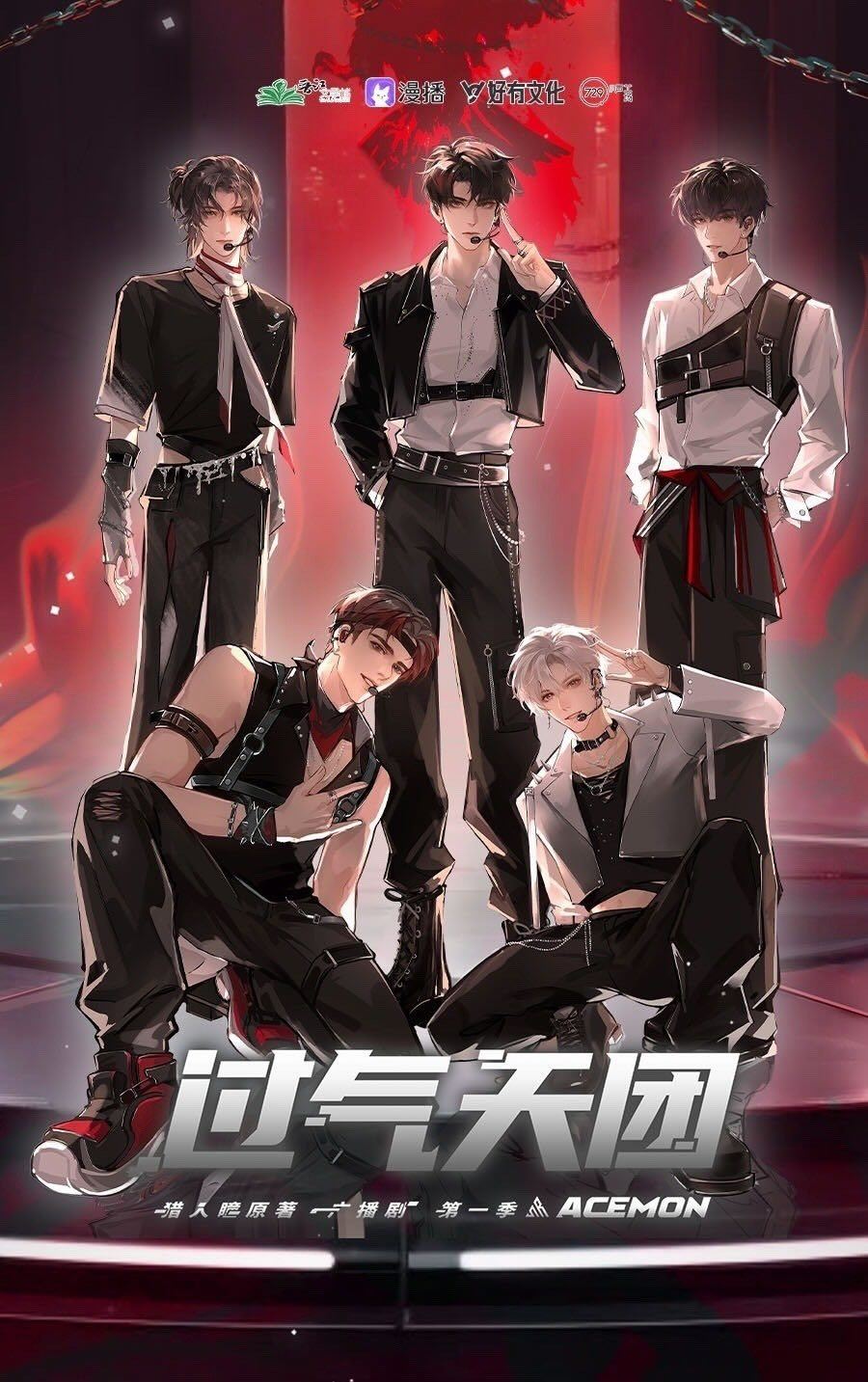
There's a symbolism in this text that I couldn't stop thinking about after I finished. Let me unpack it because it's too good. The pomegranate juice. Of course Tan Qing buys pomegranate juice. Pomegranates are ancient symbols—fertility, rebirth, the underworld, being trapped between worlds. Zhu Lianzhen is stuck in his career, stuck in his pride, stuck in this emotional limbo with someone he clearly still cares about. The juice gets stuck in the vending machine first, then another can lands on top of it, both wedged, both unable to fall. How perfectly does that mirror their situation? Trapped together, pressing against each other, unable to move forward or backward. And the fragrance—Zhu Lianzhen catches caramel coffee on Tan Qing before he even sees him. Scent is memory, right? The olfactory pathway goes straight to the emotional center of the brain. He smells Tan Qing and suddenly he's remembering everything—their history, their fallout, the two years of silence. The body knows what the mind tries to forget. Then there's the broader symbolism of the entertainment industry itself as a gilded cage. Zhu Lianzhen is rich, famous, powerful—and he can't refuse a producer's daughter without losing endorsement deals. He can't submit his thesis on time because his schedule doesn't allow it. He can't be honest about his feelings because 'idols who fall in love should be beheaded.' The industry demands performance, conformity, emotional availability without actual vulnerability. Both of these men are performing roles so constantly that they've forgotten how to be anything else. The CP name 'QingZhen' meaning 'genuine and sincere affection' while fans call it 'false affection'—that's the central paradox. The fans think they're watching something fabricated, but the reality is far more complicated. What looks like false affection from the outside might be the only genuine thing either of them has left.
... Read More
I have to admit I was skeptical going into this because slow-burn relationships in celebrity fiction can so easily drag, but the pacing here is genuinely excellent. The chapter starts with a quiet domestic scene—breakfast, casual conversation—and it LINGERS. It doesn't rush to the next plot point. It sits with the moment of Tan Qing watching Zhu Lianzhen eat, the sunlight, the unspoken history. And that patience makes every subsequent revelation land harder. The transition into the study feels completely natural, almost accidental—which is exactly how these discoveries happen in real life. Zhu Lianzhen picks up the gift box, follows Tan Qing into the study, and then the layers start peeling back one by one: the perfumes, the puzzle, the records. Each object is a small beat, a small revelation, building momentum without the author ever raising the volume. It's all done in whispers. Then the pivot to the memorial photo hits like a car crash after ten minutes of calm driving. That's when the pacing snaps tight. Tan Qing stops him—"abruptly turned his head and stepped forward"—but it's too late. The shock of discovery collapses back into that same quiet tone with "There's just nowhere else to put it." And then immediately after, we get the phone message from Ah-Xu, which introduces a new thread of tension about the restricted social media post. And then—cliffhanger—we're dropped into a flashback that explains everything and nothing at the same time. The structure here is so deliberate. Every scene end opens a door rather than slamming one shut.
... Read More
'Most of what people said to one another, if you really broke it down, was unnecessary, wasn't it?' This line hit me harder than any confession scene. Because underneath the romantic tension, underneath the hug and the hesitation and the whispered threats, the author is asking something devastating: what is the point of speaking at all? Zhu Lianzhen thinks about this internally — 'So even if it's not important, you can still talk about it. And I can still listen.' But he never says it out loud. He walks away. And Tan Qing, who has spent the entire novel building walls, offers him food advice instead of honesty. The whole section is about the gap between what matters and what gets said. The hug matters. The concern matters. The pain Tan Qing hides matters. But none of it makes it across the space between them. Instead we get knuckle-pinching and topic changes and a livestream where the real drama happens in the comments section. The theme isn't just 'these two like each other.' It's about how language fails us when we need it most, and how the things we refuse to say become the heaviest things in the room.

Leave a comment

You must be logged in to leave comments. or
