Embracing Lies, Embracing You - Reviews

Embracing Lies, Embracing You
+Add to Custom List
Sort
Add review
... Read More
The stakes in this chapter are layered in a way that makes every interaction tense, even the casual ones. On the surface, Zeng Yu just won something huge — a business partnership, shares in a company, a chance to prove himself after being rejected. Jiang Nan is offering him thirty percent and treating him like an equal partner. This should be a high point, and structurally it IS — but the author won't let him breathe in it. Because the moment Zeng Yu walks out of that apartment and into his hallway, he's surrounded by evidence that winning at one thing doesn't mean winning at everything. Wang Zheng is hiding something about his past — he looks pale, he's evasive, and Ye Xiyan sees right through it but stays anyway. Their conflict is internal and unspoken: he's planning to leave when he makes it, she's planning to let him. The stakes here are emotional survival — how do you stay with someone knowing they'll eventually go? Zeng Yu's conflict is sharper and more immediate. Xiao Xiao left him because he wasn't good enough, and now he's literally building himself into someone who IS good enough — but the person he's building himself into might not be the person she'd choose. Or maybe she would, and that's the worst part. The text says 'Zeng Yu didn't resent Xiao Xiao; everyone has the right to choose their own path in life.' That's not bitterness, that's acceptance — and acceptance is harder to carry than anger ever would be. The tension in this chapter comes from watching three people at different distances from their own heartbreak, all living within twenty feet of each other, all trying to figure out what comes next. The stakes feel real because nobody's dying — they're just losing people, and that's somehow worse
... Read More
Okay so this whole batch is like one big tangled knot of lies and love, and I cannot stop thinking about how the preserved egg opens everything. Jiang Nan's allergic to them, Fu Yu makes them anyway because habits, and then Zeng Yu — this guy who's barely invested a single cent but holds thirty percent of the company — immediately notices, hands her a tissue, says something actually sweet about her just needing to speak up. The structural beat right there is everything. The author uses a tiny domestic detail to pivot into the bigger plot thread: Zeng Zhanhao's gallstones, the surgery, the decision to hide it from their son because he's starting his business. That's the second lie in this chapter, and it's layered on top of Jiang Nan's white lie about back problems being nothing serious. Two separate deceptions, motivated by love, colliding in the same scene. And then Li Geng making that sarcastic comment about Zeng Yu rushing out like the chair had nails, and Yuan Lei shutting him down with this cold reveal about Zeng Yu's actual title — vice president in charge of daily operations. That's a tension spike I didn't see coming. The author is playing with dramatic irony: we know about the gallstones, we know about Jiang Nan's acting, we know about Li Geng's impending trouble, but Zeng Yu walks in completely in the dark. And then the foreign chef showing up at the elevator with Michelin three-star Feixuan Restaurant trying to introduce Sophie wine — another door opening, another plotline entering the frame. The narrative architecture here is doing three things simultaneously: the family secret, the workplace hierarchy reveal, and the business intrigue. That's ambitious for one chapter, and mostly it works because each thread has its own emotional weight.
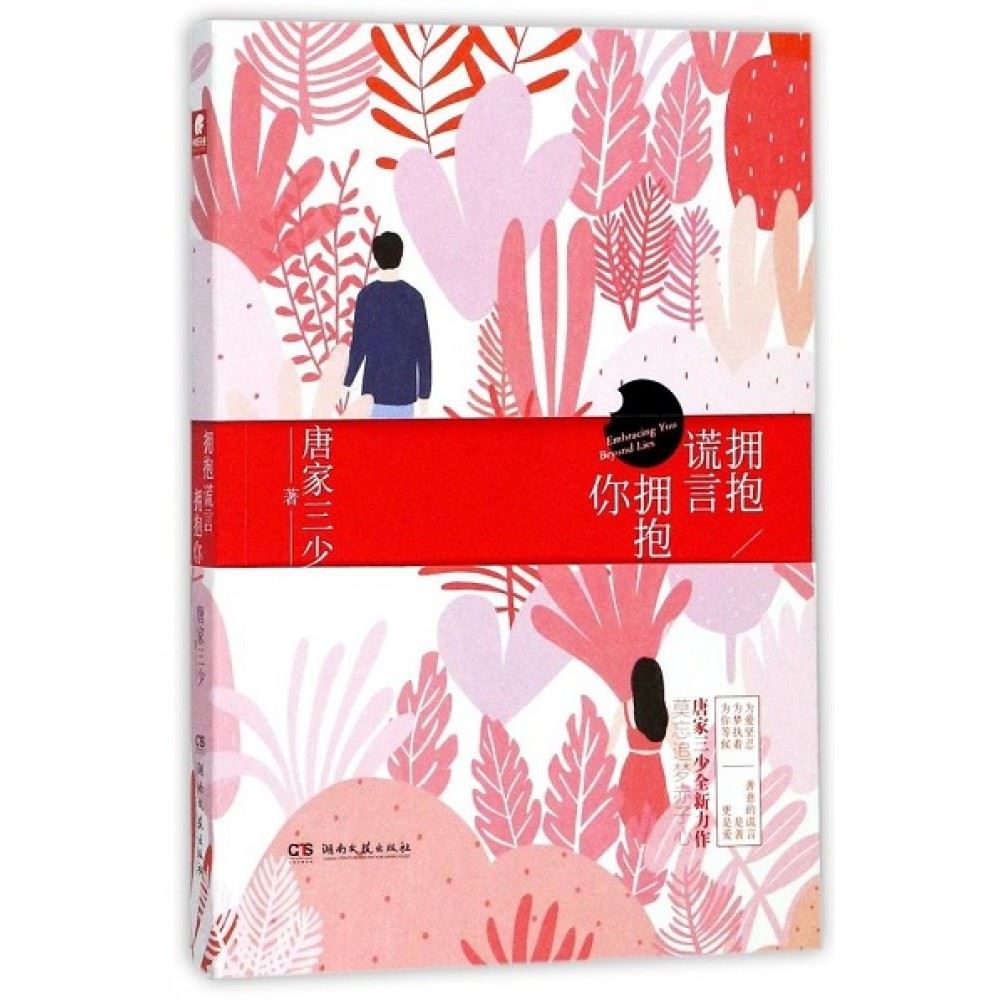
... Read More
That single word—"Coward!"—echoing in an empty cinema. It haunts me. Is it Jiang Nan's voice from some imagined distance? Is it Zeng Yu's own self-accusation? Or is it the author speaking through the void, accusing his own characters of running from each other? I keep coming back to this moment because it feels like the thematic core of everything. Both Zeng Yu and Jiang Nan are cowards in their own way. She runs away to protect him, pretending her love was a game so he'll hate her instead of wondering why she left. He stays behind and waits three years, which is simultaneously brave and a form of hiding—hiding in grief, in memory, in the belief that love alone can bridge any distance. Neither one is wrong. Both are human. The three years themselves function as a symbolic threshold—not just a timeframe but a test of whether love can survive without physical presence, without daily affirmation. Can it exist in pure faith? Zeng Yu says yes, and the author seems to believe it too, especially with that afterword promise: "Jiang Nan will come back, I promise you that." Which brings me to the deeper theme, the one that the author makes explicit in the afterword about his wife's illness: life is full of suffering that can't be prayed away, and the only answer is to face it. "Don't fear things when they happen." The novel itself is an argument for courage—not the heroic kind, but the quiet kind. The kind that says "I trust you, I can wait" when everything in you wants to run. The kind that writes sequels when you want to quit. "Live every day as if it's your last, and make it as exciting and fulfilling as possible." The author didn't understand this then. Now he does. And somehow, through Jiang Nan and Zeng Yu's story, he's asking readers to understand it too.
... Read More
So here's the thing about this section—it's structured like a set of Russian nesting dolls. You've got the main doll, which is Wang Chengfu winning back Yuan Lei's family. That's satisfying, that's complete, that's the 'okay I can sleep now' part. But then you open the next doll and it's Yuan Lei calling Jiang Nan to brag, which opens ANOTHER doll about Jiang Nan's own romantic situation, which opens THE SMALLEST DOLL which is just two people sitting in a dark theater not saying anything for forty-five minutes and it's the most exciting thing that has ever happened to me. The author is playing with contrast masterfully here. The loud, boisterous dinner scene with all thegifts and speeches and then—bam—quiet cinema, slow art film, sleepy romance. The pacing dips deliberately in the second half, and instead of boring me, it makes me LEAN IN. Every glance, every pause, every unspoken thing becomes charged. And then the chapter ends on 'Do you believe in fate?' with the sentence trailing off mid-word. Mid-WORD. I have so many opinions about this structural choice and I will share them with nobody because I need to go read the next chapter first.
... Read More
Okay so this chapter hit different. I mean we knew Zeng Yu was struggling financially but wow did the author go hard on that bracelet reveal. Six thousand yuan vs a hundred thousand - that math doesn't lie folks. The way Jiang Nan caught him lying about it being a knockoff but just smiled instead of getting mad? Chef's kiss. And then the dizzy scene right when she gets home from celebrating? Classic foreshadowing, I'm telling you. Author dropped that 'felt dizzy, swaying a little' line and I immediately knew something was up. Health plot hook right after the birthday gift drama - smooth transition. The parallel structure here is wild: she lies about not hiding her wealth, he lies about the bracelet price, both are protecting each other but it's creating this wall between them. And ending on Zeng Yu researching those clothes? That's not a cliffhanger, that's a landmine. I need to know what he found out.
... Read More
The scene where Wang Zheng wakes up hungover in an unfamiliar room is one of those moments that just hits different. Let me paint it for you — he opens his eyes, doesn't recognize where he is, mutters something about water, then notices the toothbrush already set out with toothpaste and a rinsing cup on the bathroom counter. That tiny detail, just the toothbrush and the cup, tells you so much without the author having to explain it. Someone prepared for him. Someone who knows his routine. And then the foreign woman handing him his phone like 'Here.' in perfectly good Chinese. The scene is so visual it's basically a film sequence at this point — the hotel room, the fresh clothes laid out on the bed, the second uncle appearing in the doorway with that smile. But what really sells it for me is the emotional shift. One moment he's confused and slightly paranoid, the next he's crying out 'Wang Chengfu, you still know how to come home?' and just losing it. The contrast between the mundane details of a hangover recovery and that raw emotional explosion is staggering. The author doesn't over-describe the room or the setting — they trust you to fill in the blanks. And that works. It makes the scene feel lived-in rather than staged. I also love how the second uncle and the foreign friend (Worner?) are having tea earlier in a completely separate scene, discussing favors and past friendships in Africa. It grounds the story in a specific kind of globalized world where people have histories across continents, where a chef in France owes a debt to a businessman in China, where wine trades connect people who've never met. The world feels enormous and real.
... Read More
'Bullshit, my second uncle died in Africa. We even have his memorial tablet at home.' I am not okay. I just—Wang Zheng says this in his SLEEP and the second uncle is standing there CRYING. This is the kind of dialogue that does three things at once: it's funny, it's heartbreaking, and it tells us everything about Wang Zheng's relationship with his family without a single explanatory paragraph. The author's voice here is so confident. You can feel them leaning into the scene, knowing exactly what they're doing. And Zeng Yu's dialogue is perfect too—his casual, slightly sarcastic edge ('All you do is drink. Why don't you drink yourself to death?') makes him feel like a real person, not a protagonist on a pedestal. Then there's the breakfast scene with Jiang Nan forcing down preserved egg because Fu Yu is watching her. That exchange—'Not sure if this suits your taste. This is how we usually eat at home.'—such normal, domestic dialogue that carries so much weight. It's the sound of a family welcoming someone in, quietly, without fanfare. Meanwhile Xiao Xiao's phone call is all deflection and evasion, and Zeng Yu's short 'I have to get up early tomorrow' feels like a wall going up. The contrast in how people speak to each other in this chapter is the entire emotional architecture of the story.
... Read More
This scene between Jiang Nan and Zeng Yu is absolutely fascinating when you break down their dynamics. On the surface, she seems like this young woman with no real power—unemployed, mourning her grandmother—but the moment she reveals she borrowed Yuan Lei's car instead of owning one herself, it completely flips everything. She's been playing a delicate game here, testing whether Zeng Yu would dismiss her if he thought she was too well-connected. And Zeng Yu? He immediately latched onto that detail. When he asks "Where's your car?" and gets told it's Yuan Lei's, he literally "felt a bit more at ease." So his interest wasn't really about partnership at all—it was about whether she was a threat or not. Once he determined she wasn't dripping with family wealth, he agreed to talk tomorrow. That's cold calculation disguised as romance or friendship. Jiang Nan's proposal of 51% shares is either genuinely generous or another manipulation tactic. Given how strategic she is—crafting conversations, reading people, using affection as leverage with her mother—this could be either. The mother-daughter scene with Han Jiayi is especially revealing. Jiang Nan instantly shifts into pampered daughter mode, rubbing her face against her mom's cheek, and gets exactly what she wants: the Sophie brand as a birthday gift. "With her goal achieved, she didn't linger." Not a second longer. She's not naive; she's efficient. Then there's Zeng Yu's neighbor situation. Ye Xiyan showing up with her drunk boyfriend Wang Zheng—that moment where Zeng Yu hoists 150 pounds onto his back without complaint feels significant. He's physically capable, strong, but internally he's crumbling over Xiao Xiao leaving and feeling like he "wasn't anything special." The contrast between his external competence and internal insecurity is what makes him such a compelling character right now.
... Read More
Okay so this chapter basically opens with what I can only describe as a stealth operation disguised as a family reunion. Jiang Nan asks her dad to have a private chat, Han Jiayi conveniently takes the bait for water, and suddenly they've got space. That's when Jiang Ziliu dismisses all their security detail like it's nothing—takes a week's paid leave, handles everything post-holiday. The woman is clearly not in the habit of playing by the rules, and I love it. But the real plot twist? Zeng Yu getting personally named by some foreign client at Feixuan Restaurant—a three-star Michelin place, no less—and Jiang Nan's immediate reaction is to suggest he buy a lottery ticket because, excuse me, that is not normal business luck. She even jokes about it to his face. Meanwhile, she's juggling her mom's potential depression, her dad's overseas work, Zeng Zhanhao's upcoming surgery scheduled for next Monday, AND her company's expansion into a new restaurant partnership. The plot threads are piling up and I am here for it. What's interesting is how the Zeng Zhanhao surgery subplot sits in the background like a ticking clock. We get a confirmation call, a high success rate reassurance, and then... nothing more until we read on. It's there, hanging over Jiang Nan's head, reminding us that her personal life isn't just boardroom deals and family dinners.
... Read More
"Sweet words are just empty. Make sure you treat Yezi better from now on." A Hong says this with zero sentimentality but everything lands anyway. Because she's the third wheel in this room watching two people who've spent the whole series circling each other finally stop running. And she's also the one whose eyes go red but nobody notices. That detail about A Hong's eyes—that's the kind of thing that haunts me. She held Yezi's hand through the darkest period while Wang Zheng was busy being a catastrophe. Now she's the one paying the hospital bill and making sure they both get home safe, and her eyes are wet and nobody even glances at her. I keep thinking about that. The Wang Zheng and Ye Xiyan stuff between them is... different now. He's bleeding through his clothes and he's still holding her hand. "I already said I wouldn't leave this time. I'm not lying." Not a grand declaration, not poetry. Just a fact, stated plainly, and somehow that's more powerful than anything romantic I've read this year. She smiles quietly. That's it. That's the whole romance. And then Wang Chenghan dropping the villa bomb as what amounts to a wedding commitment? Yeah, that's a whole emotional shift for this family. I didn't expect to cry over a property transfer but here we are.
... Read More
What I love about these chapters is how alive the world feels. We're not just in abstract offices and vague restaurants—we're in a space that has texture. The office scenes have this wonderful specificity. Zeng Yu on the balcony with a cigarette and coffee, the knock on the door, Li Geng standing to take the glass of water before sitting back down because he's respectful and a little intimidated—that's a whole personality portrait in three movements. The meeting room where Jiang Nan slips in, the phone buzzing under the table, the collective applause when bonuses are announced. You can SEE this place. It has lighting, furniture, atmosphere. Then the wedding—white dresses, a stage with performances, a host guiding couples through affectionate rituals, Wang Zheng in the corner. It's cinematic. The camera pulls back from the intimate office space to this grander setting, and suddenly we're in a completely different emotional register. Bright, celebratory, but with Wang Zheng's darkness threaded through it like a shadow. And then the car ride. 'The address was quite far, and the car was already heading toward the outskirts.' That last line is doing heavy lifting. It's not a description of scenery—it's a transition. We're leaving the world of celebration and entering the world of uncertainty. The outskirts of the city become the outskirts of hope. Where Ye Xi Yan is, what she's doing, who she's with—we don't know yet, and that distance feels physical, almost geographical, like the story itself is driving toward something we can't yet see. The settings aren't just backdrops. They're emotional coordinates.
... Read More
The scene at Yuan Lei's place is cinema-grade. Her father charging at Wang Chengfu with a rolling pin. Her mother trying to play peacemaker. The two bottles of Maotai on the floor, presumably already smashed from the initial thrown barrage. And through all of it, Yuan Lei standing calm as a rock, clapping after the third hit like she's grading a performance. Then the pregnancy reveal hits and the entire energy shifts. The father freezes mid-swing. The rolling pin drops. He sits down on the couch like his bones turned to water. This is a man who went from homicidal rage to catatonic shock in approximately four seconds, and the image of him just sitting there, defeated by the news that his granddaughter will carry the Yuan name, is both hilarious and kind of beautiful. Contrast that with the airport scene—bright, clean, fluorescent. The convenience store detour that's really a tactical maneuver. The parking lot where they watch Jiang Nan drive away. Jiang Ziliu rubbing his eyes, Han Jiayi asking what she's talking about, then the slow reveal of her own discoveries about her daughter's behavior. It plays out like a quiet film scene where everything important is happening underneath the dialogue. And then there's the company meeting—Zeng Yu running a tight ship, Li Geng energized by the prospect of international travel as a sales incentive, the joke about the recommended wine making someone blush. It's corporate but warm, like a place where people actually want to work. The author paints all these spaces without heavy description; the atmosphere comes from what people do and say inside them.

Leave a comment

You must be logged in to leave comments. or
