Embracing Lies, Embracing You - Reviews

Embracing Lies, Embracing You
+Add to Custom List
Sort
Add review
... Read More
This chapter moves like a rollercoaster that someone kept adjusting the track on, and I'm here for it. It opens with something almost sitcom-level — Jiang Nan lying about cooking dinner to her mom, the towel exchange, the abs reveal. It's light, it's funny, it's basically a rom-com scene and you're leaning back thinking this is going to be a bright business romance story. Then Wang Zheng walks downstairs looking pale and the whole temperature shifts. You don't even notice it happening until you're three paragraphs into a subplot about a guy selling musical instruments and a girl who thinks love is fate. The pacing here is so confident — the author doesn't slow down to explain that things have changed, they just let the tonal shift happen naturally and trust the reader to catch up. Zeng Yu's return to his apartment is where the pacing really pays off. The business excitement of the day — the partnership, the shares, the company registration — all of that gets dumped onto the floor when he walks through his door. 'Lying on the bed, Zeng Yu's mind wasn't on the company but on Xiao Xiao.' One sentence and the whole chapter reorients itself. The external plot (business success) collides with the internal plot (emotional failure) and neither one wins. The chapter ends with this little self-encouragement ('Come on, Zeng Yu, don't give up') that's equal parts touching and heartbreaking because you can hear the exact moment he's trying to convince himself. The structure of this chapter is basically: rise, peak, fall, quiet aftermath. And the aftermath is the most interesting part.
... Read More
Okay, so this whole setup starts with Zeng Yu bringing his parents to meet "a friend" but really it's playing some kind of matchmaking game with Ying Su, right? But then Jiang Nan just SHOWS UP and takes over the whole situation like a pro. The way she handles Zeng Yu's parents is honestly impressive - she knows exactly what to say, what not to say. And that moment when Zeng Yu gives her a thumbs up and whispers "Great acting"? Chills. Absolute chills. What I love is how the plot layers these two parallel stories - Zeng Yu taking care of Ying Su while simultaneously trying to prove to his parents that Jiang Nan is the perfect girlfriend. Neither person knows the full picture. Ying Su thinks she's the potential match, Zeng Yu's parents think Jiang Nan is this amazing thoughtful girl, and Jiang Nan herself is just... going along with it while secretly pining. "Jiang Nan, Ying Su is just the daughter of a friend of Zeng Yu's uncle. Zeng Yu was asked to look after her," Fu Yu felt the need to explain. - this line caught me off guard because it shows how much Zeng Yu's mom is already investing in Jiang Nan as a daughter-in-law. She's not just accepting her, she's actively defending her against Ying Su. The pacing is also really tight. Every scene pushes the plot forward without wasting time. Even the Wang Zheng scene serves a purpose - it introduces another potential complication with Ying Su and sets up future conflict. I can't wait to see what happens when these two storylines collide. Also the bit where Jiang Nan runs to open the door and blushes? That's not acting. That's the plot showing us what she won't admit even to herself.
... Read More
There's a lot happening symbolically in these four chapters and I want to unpack it. First: the cigarette. Wang Zheng is supposed to have quit. Zeng Yu snatches it from him after two puffs and whispers 'If Yezi finds out, I'm dead.' This isn't just comic relief — it's about how love changes the rules. Wang Zheng breaks his own rules, Zeng Yu enables it secretly, and Ye Xiyan's knowledge (or lack thereof) becomes the hidden boundary that holds their world together. The cigarette is a metaphor for every transgression that happens in the name of love or loyalty. Second: the wheelchair. Wang Zheng is recovering, being pushed by Ye Xiyan, and yet he's the one dispensing advice to Zeng Yu about marriage and family. The physically weakened brother becomes the emotional anchor. Third: the old house. Jiang Nan hasn't fully moved on from Fu Yu's presence — the fridge is still stocked with her groceries, the range hood is still broken. This is a space caught between past and present, just like Jiang Nan's relationship with Zeng Yu. She's building something new but the old house keeps reminding her of what came before. And the mother-daughter dynamic — Han Jiayi saying 'She doesn't listen to me anyway' while immediately handing the phone to the father — this is a family system built on indirect communication. Nobody says what they really mean. Nobody confronts anything directly. The entire family operates through texts, through third parties, through loaded silences. And now Zeng Yu is about to enter this ecosystem, and he has no idea what he's walking into.
... Read More
The preserved egg is the symbol of this entire chapter and I'm still not over it. Fu Yu makes them because that's her habit, her way of showing love, her cultural language of care. But she doesn't consider that Jiang Nan is allergic. The love is real, the gesture is genuine, and it makes the recipient sick. That's the first layer. Then the second layer: Zeng Zhanhao and Fu Yu discover gallstones — hereditary, apparently, his mother had the same condition — and their immediate instinct is to protect Zeng Yu from the worry. They won't tell him about the surgery because he's just starting his business. This is parental love as information control, as managed truth, as something beautiful and slightly suffocating. Jiang Nan becomes the accomplice in this protection, volunteering not to tell him, swearing she'll keep the secret. She's now part of the family's private world of caring lies. And the deepest layer: Zeng Yu holds thirty percent of a company he hasn't invested a single cent in. What is that worth? What does it symbolize? Jiang Nan's trust, Jiang Nan's family, Jiang Nan's future? The author keeps circling back to this idea that parents give without expecting return, that love is shown through sacrifice and sometimes through omission. The foreign chef introducing Sophie wine — an underrated brand that his boss drank in France — feels like the author hinting at something else entirely:价值的重新发现,未被看见的珍贵。Things that seem ordinary but carry hidden worth. Just like Jiang Nan, just like Zeng Yu, just like a daughter's love expressed through a preserved egg someone didn't ask for but was meant for them.
... Read More
I'm genuinely confused by how well this author controls pacing because on paper this should be the 'calm after the storm' chapter. The big romantic milestone happened. Now what? Usually this is where novels drag for 30 chapters of miscommunication and jealousy arcs. But this author keeps it moving by layering micro-tensions instead of macro-dramas. Look at the structure: it opens with high emotional payoff (the embrace), immediately undercuts it with mundane reality (instant noodles, work), then introduces a parallel storyline that raises new questions (Wang Zheng's dad, Ye Xiyan's silence), then circles back to the main couple with new intimacy (her visiting his place, seeing his work up close). By the time you think you've settled into one rhythm, the author shifts perspective entirely. The chapter transitions are also masterful. Remember how Wang Zheng gets a message about the medical parole and thinks 'it'll be a breeze once we get there'? That line is doing SO much work as foreshadowing. Nothing in this author's world is ever 'a breeze.' The calm before the storm has never been more clearly established. And the return to Zeng Yu and Jiang Nan after the Wang Zheng interlude feels like coming home, but with new information. Jiang Nan has now seen his business strategy firsthand. She's invested beyond just romance—she's a partner in his ambitions. 'Once we make a name for ourselves, we can go to France and secure more brands.' This isn't just a girlfriend encouraging her boyfriend. This is someone who's doing the math. The pacing never lulls because every scene introduces either emotional deepening or new narrative questions. Even the quietest moments are doing double duty.
... Read More
There's a scene in this batch that I can't get out of my head, and it's not because of anything dramatic that happens. It's because of what doesn't happen. Wang Zheng returns to his rental apartment late at night. He looks up at the window and notices the light isn't on. That's it. That's the entire horror of the moment. No storm, no confrontation, no farewell note. Just darkness where warmth should be. He opens the door. Nothing has changed except for the absence of Ye Xiyan smiling. He walks to the wardrobe—her clothes are gone. He checks the bathroom—her makeup is missing. The author describes this like a crime scene investigation, except the victim is a relationship and the evidence is an empty shelf. "Only then did Wang Zheng realize that she had truly left." The prose here is so restrained it aches. No melodrama, no internal monologue about betrayal or confusion. Just a man standing at his doorway, realizing that someone who was there is now not there, and the physical evidence is gone too. The apartment hasn't changed shape, the walls are the same, but it has become a different kind of empty. Not the absence of a person—it's the absence of proof that a person ever existed in that space at all. This is contrasted beautifully with the earlier scene at Lanmei bar, where three women are bickering playfully and Yuan Lei is shouting about being a married woman tomorrow. Same chapter. One room full of noise and future plans, another room full of silence and erased traces. The world of this novel feels real because it holds both simultaneously.
... Read More
"He wanted to use this opportunity to prove to Xiao Xiao that he could create everything she wanted with his own hands. If only she had enough patience, he could have given her everything she desired." I just... what. This single paragraph contains the entire tragic arc of Zeng Yu's emotional life. He's not some cold calculating businessman—HE'S A ROMANTIC who got rejected and turned himself into a workaholic to prove his worth to someone who didn't believe in him. And now he's doing the exact same thing with Jiang Nan. Work hard. Prove himself. Build something magnificent. The parallel is SO obvious and it makes my chest hurt. But here's the thing that actually gives me hope: this time Jiang Nan IS there WITH him. She's not waiting passively—she's working weekends, showing up at the office unannounced, calling him 'second boss' like it's the most natural thing in the world. Their dynamic is fundamentally different from Zeng Yu's past because there's genuine equality. She noticed he was still working and immediately followed. That's not obsession—that's partnership. But I'm still terrified this pattern will repeat itself because Zeng Yu clearly hasAttachment issues written all over his history
... Read More
Let me just start with that line from Wang Zheng because it stayed with me like a stone in my shoe. "Just when I started to understand the value of money, our family lost it all." Grown man, race car driver, and he says it with slightly red eyes. The author doesn't dramatize it. Doesn't add any commentary. Just that sentence, delivered like a fact, and it carries more weight than any monologue could. And Jiang Nan's message—let's be honest, it's the longest piece of dialogue in these chapters and it works because of its raw letter format. It reads like someone who has already said everything they can say and is now writing it down because speaking it aloud would destroy them. The structure of the message is interesting too: deception admitted first, love confirmed second, the request for three years third, the apology last. She leads with honesty even though it hurts, which tells us everything about who she is. "Zeng Yu, my love!" — such a simple opening and yet it's devastating because we know what's coming. She's signing off and she can't help but start with affection. That's real. That's how people actually write goodbye messages. Not with eloquence, but with the habits of love they can't unlearn. And Zeng Yu's response, or lack thereof. He doesn't write back. He just sits there. The fact that he doesn't compose a counter-letter is itself a kind of dialogue—a silence that speaks louder than any words could. The author understands that sometimes the most powerful communication between characters is what happens when they stop communicating. The author's own voice in the afterword is also worth noting—conversational, direct, almost confessional. "I don't often write tragedies because honestly, I don't enjoy them." This is a writer talking to readers like humans, not performing. It shapes the entire reading experience in a way that makes the fiction feel more real, not less.
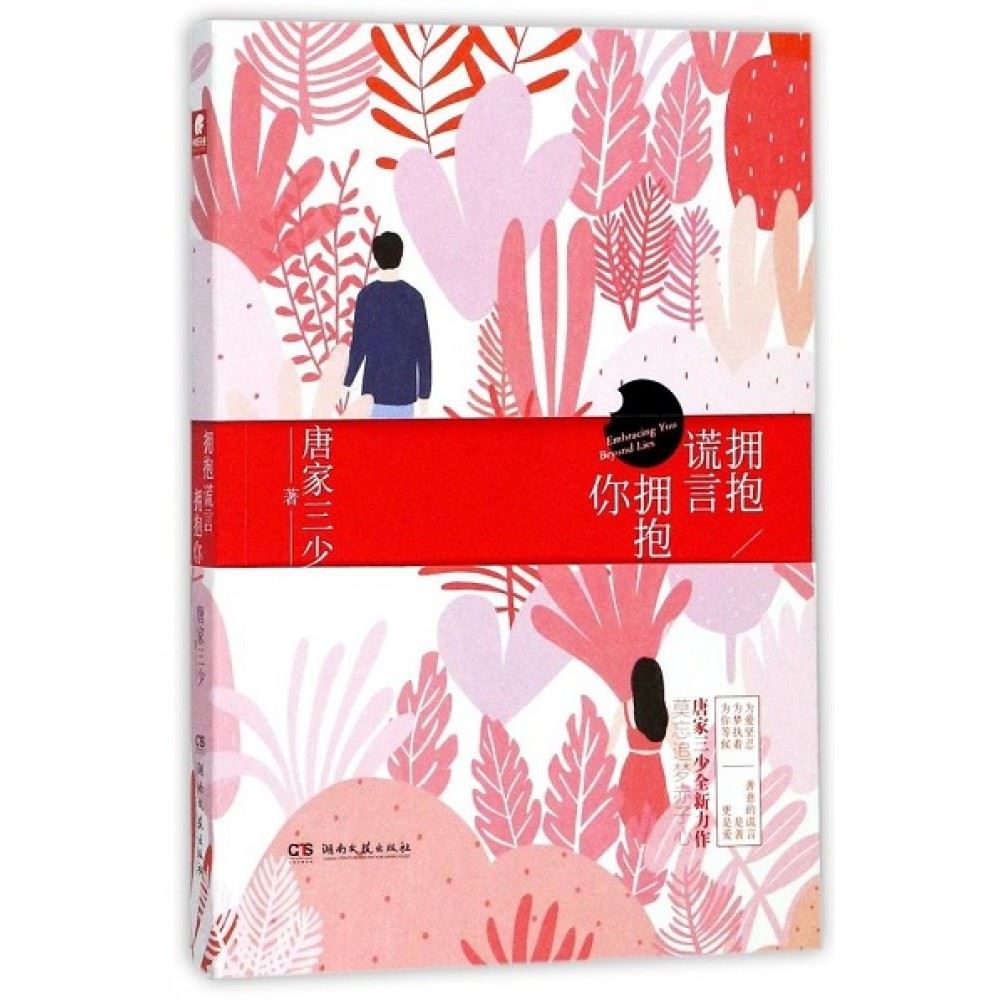
... Read More
I need to talk about the pacing here because this chapter is a masterclass in emotional whiplash done right. It opens at maximum tension—Zeng Yu and Xiao Xiao are already in conflict, no warm-up, just straight into 'you're a threat' territory. Most authors would slow down and give us backstory, but no. The author trusts us to figure things out as we go. 'He had once imagined marrying Xiao Xiao' drops like a bomb in the middle of their argument and suddenly we understand everything without a single flashback scene. Then Jiang Nan enters and the pacing does this incredible thing—it briefly RELEASES tension (Xiao Xiao flees!) but immediately replaces it with NEW tension (who IS this woman and what does she want?). The reader never gets a moment to breathe, which is exactly what Zeng Yu is experiencing. We're trapped in his perspective with no escape, and that's intentional design. The Yuan Lei section is where I almost skimmed at first, but now I realize it's crucial. It slows things down just enough to let us process, but also raises the stakes higher. 'I can make that man leave Xiao Xiao' is a line that changes EVERYTHING about where this story might go. It introduces a new force in Zeng Yu's life that's neither romantic love nor old history—it's power. And then the return to the party, the quiet moment with Wang Zheng, the group singing—it's all deliberate decompression. The author knows we need to land before the next act. The chapter doesn't end on a cliffhanger; it ends on a song request. That's confident pacing. It says 'I don't need to shout to keep you hooked.' My only minor critique: the transition between Zeng Yu talking to Yuan Lei and coming back in felt slightly abrupt. A beat of reflection from him would have deepened the emotional aftermath. But honestly? The rawness works too. Life doesn't give us clean transitions.
... Read More
Okay, let's talk about what just happened because honestly my brain is still spinning. We've got three threads running here and they're weaving together in this really interesting way. Wang Zheng's desperate search for Ye Xi Yan is the emotional core — he goes all the way to her hometown, gets money from her parents, comes back to an empty apartment, and then posts this devastating public confession. But the twist that hit me hardest was discovering Ye Xi Yan was literally standing behind a tree downstairs the entire time he was up there. She says she won't go back because he doesn't need her and she'd be a burden. The parallel storyline with Zeng Yu and Jiang Nan is quietly building something beautiful — the hospital visits, the chicken soup, the wallpaper moment where she changes his desktop to her photo and claims it. And then there's Yuan Lei's wedding happening in the background like a ticking clock. What I love is how these stories don't collide yet but they're clearly heading toward some kind of convergence. Wang Zheng's confession post reads like a climax, and the fact that there's no reply from Ye Xi Yan? That's not a resolution — that's a hook. The narrative structure here is doing something clever: it's giving us emotional peaks (Wang Zheng's post) and soft landings (Zeng Yu and Jiang Nan's quiet moments) in alternating fashion, so the reader never gets overwhelmed by one emotional register.
... Read More
Can we talk about Zeng Yu? Because this man is quietly the most complicated person in this story and I am HERE for it. So Xiao Xiao shows up bruised, desperate, and of COURSE he drives her home instead of just dropping her off somewhere neutral. Then he hands her a bank card with her birthday as the password — her birthday! — and tells her to take it. He doesn't even hesitate. When Jiang Nan finds out, does she explode? No. She listens. She processes. She says "you're a trustworthy person, a kind person" and immediately pivots to helping Xiao Xiao find a lawyer. This woman is not insecure at all, and that makes her so much more interesting than the typical female lead. But the real character moment — the one that ruined me — is Xiao Xiao's reaction when she sees Jiang Nan sitting in the passenger seat. The text says: "That seat used to be hers, but she had ruined it herself." Just six words. Six fucking words and the entire history between these three people collapses into that single image. She didn't just lose Zeng Yu. She lost the version of herself that deserved to sit in that seat. And now she's watching the replacement take her place while asking for help. I can't breathe.
... Read More
The stakes in this section are layered like an onion and I'm not okay. On the surface: Jiang Nan needs to prove herself to her parents and uncle, who are quietly questioning whether she can handle the family estate. But dig deeper and there's SO much more. The Sophie brand belongs to the Jiang family but is managed by Hongda—Han Liren's company. When Jiang Ziliu tells his brother-in-law to 'keep an eye on her,' the threat is palpable: you mess with her and you mess with us. Han Liren's bitter realization that putting Han Jie in charge of Sophie was a 'huge mistake' sets up future conflict we can all see coming. Then there's the business stakes—two million yuan deposit, a warehouse deal on the line, a new company that could disappear fast. Zeng Yu's pragmatism about saving every yuan contrasts with Jiang Nan's naivete, and their partnership itself is a gamble. She sees him as her Xiao He, her Zhang Liang—the brilliant strategist who helped Liu Bang build an empire. What happens when that illusion shatters? What happens when her parents find out how little she actually knows? The dowry comment at the very end—cutting off mid-sentence—is the kind of cliffhanger that makes you immediately open the next chapter.

Leave a comment

You must be logged in to leave comments. or
