Dry Land - Reviews

Dry Land
+Add to Custom List
Sort
Add review
... Read More
Okay so let me just say this: the character dynamics in this stretch are absolutely brutal and I love it. Fu Baiqi is such a complicated mess here. He deletes Fang Fengzhi's messages without reading them out of spite, but then immediately regrets it and wonders if Fang Fengzhi is "just sulking." He types out a message but doesn't send it. He wants to go find Fang Fengzhi at his workplace but can't bring himself to do it. This man is doing the emotional equivalent of spinning in circles and I'm HERE for it. The fact that he's an Omega who is married but STILL unmarked and staying alone somewhere vulnerable — that's not just plot detail, that's a whole character study in how stuck he is. And then MIN ZHI. Oh my god, Min Zhi. His entire internal monologue when he hears about Director Zhang's wife is DEVASTATING. He hears gossip about his husband cheating (or having a lover), and instead of being jealous in a simple way, he starts spiraling into this horrifying self-realization. The line about him being just "the person who helped him get through his estrus period" — I literally had to put the book down. He knows his place in this arrangement. He knows he's temporary. And yet he's the one sitting on the sofa where Fang Fengzhi used to sit, breathing in chamomile scent, feeling all this loneliness. The way Fang Fengzhi bolts up the stairs like he's being chased is both funny and heartbreaking. He's terrified of Min Zhi in this moment, and you can feel how layered their power dynamic is. One word from Min Zhi — "Why are you running?" — and the whole scene pivots.
... Read More
Okay the pacing in these chapters is absolutely ruthless and I am here for it. Chapter 154 (presumably) opens with a slow burn — Fu Baiqi physically aching for pheromones, Fang Fengzhi reluctantly providing them, then immediately taking them back with words. The author takes their time here, letting each beat land. Fu Baiqi resting his head on Fang Fengzhi's back. The inhale. The shudder. The cold rejection. Each action gets its own paragraph, its own breathing room. You feel the seconds ticking by like minutes. Then Chapter 155 pivots sharply into the kitchen scene with Min Zhi, and the tempo changes completely. The previous section was slow and heavy; this one is quick and electric. Hugged from behind. Mouth covered. A bite on the lip. A reprimand about clothes. It moves like a chase scene except the weapon is jealousy instead of a gun. And then — BOOM — Fu Baiqi walks in. The pacing goes from fast to frozen instantly. Min Zhi's response is so casually smooth that the tension almost deflates, and then it snaps back twice as hard when Fang Fengzhi drops those noodles. The author knows exactly when to slow down and when to accelerate. The structural choice to end on an incomplete sentence about Min Zhi eating noodles is fascinating. It's not a cliffhanger about life-or-death stakes — it's a cliffhanger about *social awkwardness*. Min Zhi is about to taste food made by the person he's manipulating while that person's husband sits in the other room wondering why nobody made him any. The stakes feel small on paper but emotionally they're enormous. What I appreciate most is that the author never lets us breathe between scenes. We go from Fu Baiqi's physical suffering to Fang Fengzhi's guilt to Min Zhi's jealous spiral to an almost-caught moment and back to domestic routine without a single chapter break that says "take a rest now." It's relentless. I finished reading and immediately had to sit still for five minutes. The only minor complaint — and this is truly minor — is that the transition between the living room and the kitchen could have been a beat longer. We go from Fang Fengzhi saying "I also know that you and your family don't like me" directly to him walking into the kitchen. A single sensory detail there — the sound of footsteps, the feel of the doorknob — would have smoothed the seam.
... Read More
"He used to cry and beg him to mark him, but now even a slight touch seemed to make him scared, as if he wanted to keep a distance as far away from possible." I need a minute. I literally need a minute after reading this. The contrast between who Fang Fengzhi WAS and who he's becoming is just devastating. This poor Omega—he was once desperate for closeness, willing to be vulnerable, to open himself up completely to someone. And now? Now the very thing that was supposed to bind them together has become a source of terror. You can feel the weight of whatever happened during that marking scene just from the aftermath. Fu Baiqi calls it his 'irresponsible behavior' but honestly? It reads like something far worse than carelessness. This is trauma language, people. This is someone who associated intimacy with pain or violation. And Fu Baiqi? He's not even fully grasping what he's done. He's mostly worried about his own feelings—jealousy over Bai Zhen, confusion over Fang Fengzhi's distance, annoyance at having to explain things. He notices Fang Fengzhi's face and thinks he's prettier now, sure, but he doesn't seem to connect the dots between his own actions and Fang Fengzhi's emotional withdrawal. That gap—between what Fu Baiqi feels and what Fang Fengzhi is actually experiencing—is where all the tragedy lives. Meanwhile Min Zhi is just... quietly devastating in his own way. Standing there watching, jealous but also knowing he has no right to interfere, and then that moment in the elevator when Fang Fengzhi takes his hand? "Don't be mad"—signed silently. This Omega is still trying to manage everyone else's emotions while his own world is collapsing. Absolutely gutted every time.
... Read More
Okay so here's the thing that genuinely surprised me about this chapter sequence — the author didn't just use the dual-pheromone conflict as a sexy-time setup, they made it ACTUALLY dangerous. Like, Fang Fengzhi is physically tearing himself apart and there's NO CLEAN SOLUTION. Can't be marked (gland injured), can't use anesthesia, can't use inhibitors. The author basically locked the protagonist in a corner with no exit door and just... watched him suffer. That's good plotting, honestly. The estrus getting triggered forward by Fu Baiqi's mark is also a smart move — it means the original conflict isn't resolved, it's multiplied. Now you have timing pressure ON TOP of the incompatibility problem. And the dream sequence at the beginning? That's not just atmosphere, it's foreshadowing. He's dreaming of a state of peace before his body turns against him. The structure of these chapters moves from internal chaos (the night of pain) to forced proximity (Min Zhi holding him) to failed intimacy (the kiss rejection) to a new crisis (the naked confrontation). Each beat escalates the stakes rather than repeating the same tension. The only question that keeps me hooked is: what happens when the temporary marks fade? Does resolution come, or does the author pile something else on top?
... Read More
The pacing in this section is masterful. Let me break it down. The chapter opens with Fang Fengzhi discovering the tracker—immediate conflict, high energy. Then we cut to the flashback of the Fu Baiqi encounter, which slows things down but adds crucial context. We learn about the child, the new ring, Fu Baiqi's emotional state. It's a beautiful, melancholy interlude. Then we snap back to the present and the confrontation escalates rapidly. Each line of dialogue raises the stakes: the tracker reveal → the schedule monitoring → the 'you and him were married' bomb → the 'forever' question → the realization that it was all planned. The tension builds like a drumbeat getting faster and faster. And then THE BABY CRIES. Not a resolution. Not a calm-down moment. A disruption that forces Fang Fengzhi to physically leave the confrontation. This is such a smart structural choice because it prevents the scene from becoming a melodramatic shouting match and instead leaves everything unresolved, hanging in the air. The reader is left wanting more, desperate to know what Fang Fengzhi will do next. Also worth noting: the author uses the flashback structure really effectively. We don't get the Fu Baiqi encounter from Fang Fengzhi's POV until after the confrontation has started, which means we're already invested in Min Zhi's jealousy before we understand its trigger. Smart.
... Read More
Let me just say this: the author of this novel has zero chill when it comes to pacing, and that is EXACTLY why I keep coming back. Chapter starts slow and sweet—Fang Fengzhi visiting Min Zhi daily, their pheromone extractions, the domestic intimacy of him half-leaning on the bed and waving tiredly. We get all the warmth, all the softness, all the feeling that maybe these two are actually building something real despite their circumstances. And then—right when we're getting comfortable—that phone vibrates. Fu Baiqi's message. The video. The surveillance footage from half a year ago. In the span of maybe three paragraphs, the entire emotional foundation of the story gets yanked out from under us. The pacing shift is almost violent in how quickly it happens. One moment Fang Fengzhi is blushing about the singer's divorce, the next he's on the ground trembling because his entire world has collapsed. But what I love is that the author doesn't rush the aftermath. We get Fang Fengzhi's physical collapse, the stumble, the fall, the numbness in his hands. Then his decision to run back. Then the reunion scene where Min Zhi immediately shifts from romantic partner to protective anchor—checking injuries, applying medicine, holding him close. The structure mirrors the emotional arc perfectly: setup, disruption, reaction, resolution (temporary). And that last line—"Be obedient and don't make me angry"—coming from Min Zhi after everything? The author is teasing us with power dynamics again. Is this comfort or control? Both? The pacing keeps us on the hook without giving us safe ground to land on.
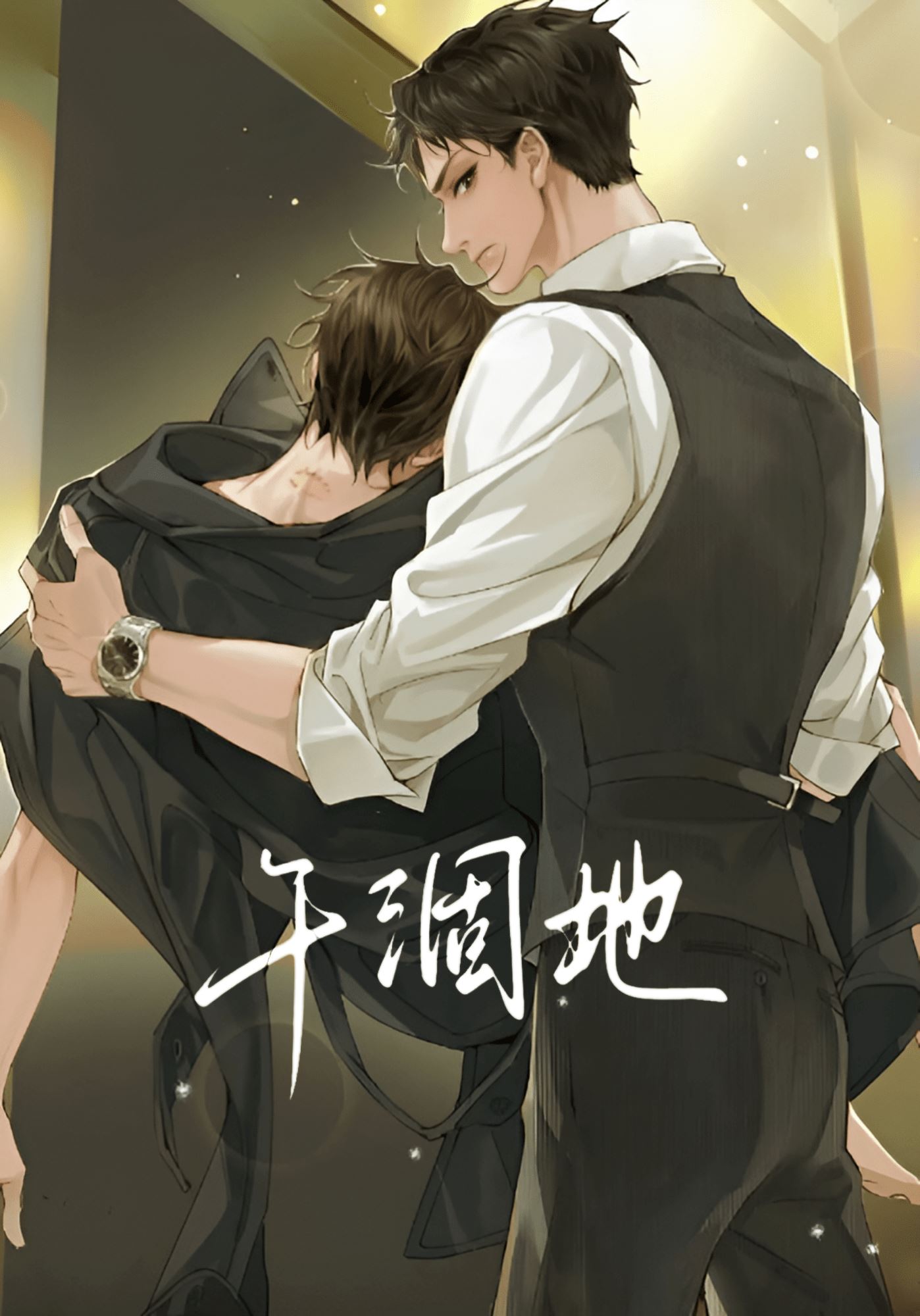
... Read More
"Enigma had no destined relationship, but he also knew how much attraction the destined relationship had for each other." This sentence is the entire thesis of the book compressed into one line. Fang Fengzhi and Fu Baiqi are supposed to be together—destined, fated, biologically locked in some cosmic arrangement—and yet it's failing. Meanwhile Fang Fengzhi and Min Zhi are not destined but they're choosing each other anyway, quietly, desperately, in secret phone calls and clenched fists and glances across hospital rooms. The story keeps asking this question: which is stronger, the bond you're born with or the bond you make? And it's not giving easy answers. Fang Fengzhi feels guilty because Fu Baiqi is being good to him, because their marriage is supposed to work but it doesn't, and because he's betraying someone who isn't even mad at him. The caretaker watching him becomes this symbol of exposure—that eventually everyone will know. But the real exposure isn't about cheating, it's about the fact that Fang Fengzhi's destined match is a hollow shell and his chosen match is a secret he can't share. How do you reconcile that
... Read More
"Maybe they should be closer, or at the very least, offer an explanation for the kisses that had nothing to do with pheromones." I HAVE to start here because this sentence alone contains more emotional complexity than entire novels. The kisses that had nothing to do with pheromones. NOTHING. After everything the world of this story has built around biological inevitability and scent-matching, Min Zhi is sitting there realizing that some of their most intimate moments happened BECAUSE they wanted to, not because their bodies forced them to. And that's what terrifies him. Because if it was just pheromones, he could dismiss it. If it was just biology, he could shrug and move on. But no — these were choices. And now Fang Fengzhi is going to be alone after the divorce, and Min Zhi can't stop thinking about it. Meanwhile on the other side of the story, Fang Fengzhi is standing over an unconscious man who isn't his real partner, breathing in someone else's scent, and feeling 'an indescribable sense of guilt.' He turns sideways to face away from Fu Baiqi because he can't bear to let the comatose husband see him comforted by another Alpha's pheromones. The emotional geometry here is devastating. Three people trapped in a triangle where only one of them is conscious.
... Read More
I literally sat there staring at the screen after reading the scene where Fang Fengzhi notices the cut on Fu Baiqi's neck. Not a bite mark. A cut. From a sharp blade. And his own healed mark is almost exactly the same location. My heart actually physically hurt. There's something so devastating about Fang Fengzhi touching that scar on his own neck like it's a mirror of Fu Baiqi's injury—like he's trying to understand what Fu Baiqi went through by feeling what Min Zhi did to him. The whole thing with Min Zhi marking Fang Fengzhi against his will, then getting imprisoned, then coming home to find him gone—it's not romantic, it's terrifying. But here's what got me: Min Zhi calling Xu Wen while standing in the empty villa, admitting "he was a little irrational now, but he had to find Fang Fengzhi." He knows he messed up. He knows locking him up was wrong. And yet he still did it. The fact that Fang Fengzhi left anyway, and then came back right as Min Zhi was calling for him—what does that even mean? Did he come back because he wanted to? Or because he had nowhere else to go? I keep going back to that ending and I can't tell if it's hopeful or devastating.
... Read More
"Here it comes again, this ambiguous and suffocating feeling." THIS LINE. I read it and immediately sat up in bed. This entire chapter is a masterclass in romantic tension built through mundane domesticity. Let me just say it: nobody has ever made noodles for someone and then hand-fed them ice cubes like it's no big deal unless they're desperately trying to express feelings they refuse to name. And Fang Fengzhi—oh my god, Fang Fengzhi. He's sitting there, heart beating unnaturally, holding an ice cube in his mouth that Min Zhi literally placed there, and he can't even form a complete sentence. The scene where Min Zhi looks at Fang Fengzhi's lips, remembers the wound from days ago when Fang Fengzhi cried out in pain and ran to apply ointment by himself... that detail about him refusing to let Min Zhi kiss him again after getting hurt? That's not just physical memory, that's emotional armor. And then the narrator drops this: "They can't get any closer." As if it's a rule they've agreed upon, as if distance is a choice rather than a wall they've built. But the text undercuts it immediately—Min Zhi appeared at his door. Min Zhi cooked for him. The body remembers what the mind tries to forget. I swear the chamomile pheromone detail is the author's way of saying "this tastes like love and neither of them will admit it."
... Read More
I need to talk about the elevator encounter between Min Zhi and Fu Baiqi because this is worldbuilding through pheromones at its finest. The entire society operates on scent hierarchy — Alphas, Omegas, Emigmas, inhibitors, temporary marks, gland markings. But the author never stops to explain the mechanics. Instead we LEARN the world through what people can smell and how they react to it. Consider this line: "Before he even opened the door, the scent of Fu Baiqi filled the air." That's it. That's the entire power dynamic in one sentence. Fu Baiqi enters a room and the atmosphere changes. The chamomile and woody scents aren't just descriptions — they're characters themselves. And then the meeting room scene! Min Zhi complaining that it's "stuff" when several executives have already put on coats at 16 degrees. The author paints this entire corporate environment where pheromone control is an unspoken expectation, and Fu Baiqi's natural scent is so potent it disrupts board meetings. That's worldbuilding that doesn't feel like worldbuilding. We're not reading an info-dump about this society's rules — we're living inside someone's sensory experience of it. The hospital scene with Fu Baiqi's mother is similarly layered. She's "lying on the hospital bed, her husband serving her" — the visual of a matriarch using illness as leverage, completely unbothered, winking at Fang Fengzhi like this is all part of the plan. The setting tells us everything about family power structures without a single exposition paragraph.
... Read More
The dialogue in this section is deceptively simple. On the surface it's just two people talking to each other, but if you actually read it slowly, there's this whole subtext engine running beneath every single exchange. Let me give you the best one: Fang Fengzhi notices Min Zhi isn't nervous at all, which is suspicious, and Min Zhi just... pulls him into an embrace and lets his HEARTBEAT do the talking. No grand confession, no dramatic monologue. Just thump thump thump against his chest. That's the entire relationship dynamic condensed into one moment. And then the follow-up — "You'll only have these two times in your life" — delivered while trying to kiss him on the lips and getting redirected to the cheek because PEOPLE ARE WATCHING. The refusal to be dramatic in public but completely unhinged in private? That's character voice. And Min Zhi calling him a puppy later — "On the surface, he seemed gentle and lovable, but in reality, he was sometimes incredibly bold" — that narration reads like someone describing their own partner with a mix of exasperation and devotion. The author's voice here is remarkably confident. She doesn't over-explain emotions. She lets the dialogue and physical details carry everything. Even Fang Fengzhi's internal monologue during the punishment scene is hilariously practical — he's not thinking about romance, he's calculating which forms of punishment are worse than sex during early pregnancy. Their voices feel DISTINCT and REAL, not like characters performing in a novel.

Leave a comment

You must be logged in to leave comments. or
