Dressed as The Villain’s Mother - Reviews

Dressed as The Villain’s Mother
+Add to Custom List
Sort
Add review
... Read More
This section opens with domestic quiet—breakfast, hair-touching, a child asking permission to sit at the table—and then immediately drops us into Zhile's room, where the tone shifts from warmth to something colder and more claustrophobic. The revenge notebook scene takes up nearly a quarter of the passage, and it works because it's not rushed. We watch him write, erase, rewrite, rub his sore wrist. The pacing mirrors his emotional state: halting, meticulous, exhausting. Then the lantern. Sudden color. The scene explodes outward—rainbow light, shocked eyes, pride swelling in a three-year-old's chest. This is the story's reward for sitting with the darkness, and it lands because we've earned it. The contrast between the dim desk drawer and the glowing lantern is structural, not accidental. The kindergarten sequence is where pacing becomes a weapon. The teacher announces two lanterns will be displayed. The class buzzes. Zhile presses his lips to keep from laughing. Then—his name is called. The relief is palpable, almost physical. And then Chen Jingdong asks, “Do you have a mother?” and the whole careful structure tilts. The chapter ends mid-chaos, with children shouting and a boy in tears. No resolution. Just the raw aftermath of a child's defense mechanism slamming into reality. The Monday timeline jump is also worth noting. Si Tian's morning routine—phone, bank balance, system banter—creates a breather between Zhile's night and the next day's chaos. It's a pause that makes the return to Zhile's perspective hit harder. The structure says: we're about to go back to the child, and things are about to get worse before they get better.
... Read More
The opening image of this chapter—Ji Zhile trembling with chopsticks, unable to use them properly—sets up everything about power and dependency. He's three and a half, a big kid, but he can't eat alone. Grandma Fang immediately swoops in to feed him, and this act of feeding becomes the central metaphor for the entire chapter. Who controls how the child eats is who controls the child. Grandma Fang feeds him; Si Tian makes him feed himself. One creates dependency, the other demands independence. And then the stolen spicy chicken—the utensil becomes weapon when Si Tian uses chopsticks to snatch the food from Ji Zhile's spoon. Utensils of care become utensils of control in the same household. The contract itself is another symbol: paper that should give Si Tian authority, but Uncle Lu reveals it's not her decision to make. Paper promises mean nothing when power lives elsewhere. Even the three million yuan transfer is symbolic—money as the great equalizer that transforms Si Tian from powerless wife to empowered mistress in seconds. She goes from furious to accommodating in one notification ping. The underlying theme is clear: in this family, love is conditional, authority is negotiated, and a child's sense of being liked can be manufactured by whoever holds the spoon. Ji Zhile's final scream of "no one likes me" isn't just childhood tears—it's the logical conclusion of a system where affection is dispensed like snacks and withdrawn like dessert.
... Read More
This chapter has an unusual rhythm for transmigration fiction. It starts slow—the system dialogue, the rooftop conversation, the soft exchange with Ningyi—like it's lulling you into a domestic comfort zone. Then it pivots HARD the moment they walk back through the villa door. The pacing shift is almost violent. One second Si Tian is holding her son's hand in the sunshine, the next she's dismantling a three-year-old's entire emotional manipulation network and firing a family employee. The chapter doesn't warn you. It just goes from warmth to cold confrontation in about three paragraphs, and that's deliberate. The author knows exactly what they're doing. The Nanagi scene with the Ultraman outfit functions as a breather—a sweet, almost dreamlike interlude—but even that has an undercurrent of tension (the translator's note, the boy's hidden dislike). Then BAM, back to the villa, back to the conflict. The chapter ends on Ji Zhile's breakdown and Ningyi's explanation, which is a perfect pivot point: the older brother becoming the mediator, the younger one still stuck in toddler rage. It leaves you needing the next chapter because the structural question is now: what does Si Tian do with this newly cleared authority?
... Read More
Okay I have to talk about the phone call scene because this is genuinely hilarious and also kind of pathetic in the best way. Si Tian is FURIOUS at Ji Jiangzhou for keeping Grandma Fang around after she clearly crossed the line—saying bad things about her, alienating her from her own son—and she calls him to lay down the law. She's standing there ready to chew him out, voice all fierce, like this is going to be a serious confrontation. And then Ji Jiangzhou drops THREE MILLION YUAN on her like it's nothing. Three million. And watch what happens. The woman's entire demeanor shifts so fast I nearly fell out of my chair. She goes from "you don't come home and you're a drag" to sweet little voice asking if he's busy next Tuesday, saying she's fine, the kids are fine, just money matters... Oh honey. And Ji Jiangzhou on the other end just CHUCKLES. He hears it. He absolutely hears it. But here's the thing that caught me off guard—he doesn't mock her for it. He says "I'm glad to see your changes" and she's down there climbing back down the ladder trying to maintain dignity like "because I have grown up." The whole dynamic between them is this weird transactional dance where money is both the problem and the solution, and yet somewhere in there, Ji Jiangzhou is genuinely noticing her transformation. That's... not nothing. Also the translator drop of "Ohh woman~~~" at the end had me wheezing.
... Read More
The dialogue in these chapters is genuinely impressive. Ji Zhile's voice is SO distinct—I could tell he was speaking just from lines like 'I can finish it, I can' said to himself while staring at a hamburger that clearly wouldn't fit in his mouth. The repetition, the self-encouragement, the dramatic sighs—it's perfectly captured. Si Tian's lines are sparse but weighted. 'Heaven's sins are forgivable and self-inflicted sins cannot be lived' — she dropped a Chinese proverb casually at a kid and I lost it. Meanwhile Ji Ningyi speaks in complete, thoughtful sentences that reveal a kid who's been forced to grow up too fast. 'I promised my sister to take care of you. If anyone dares to bully you in the future, you can tell me. I beat people very badly.' THE BLUSH NARRATION. The author doesn't even need to describe his face for me to picture him turning crimson. And Pei Jing's quiet gratitude versus Ji Zhile's dramatic declarations—they never sound the same, which means each character has genuine distinctiveness. Rare for this genre.
... Read More
There are two scenes in this batch that hit me like a truck visually, and they're bookending each other in the most beautiful way. First: the flashback. "The light was a bit dim and only the lamp on the bedside table was on." Ji Zhile in RED clothes, festive, looking like a New Year's doll with his fair face. That image of a little boy dressed up for his birthday, full of repressed joy, glancing cautiously at the woman who should be happiest to see him — and she just stares with DISGUST. The contrast between the warmth of the scene (birthday, red clothes, lamp light) and the emotional coldness is devastating. Then: the present day. "The sun was shining gently and the host looked serious." Si Tian making that lantern. The system even comments on how beautiful this scene is, how it went from heart-stirring flashback to daily life. She's hanging it on the railing of the children's room. And when she walks into Ji Zhile's room to apologize? The lighting shift from that dim, suffocating birthday memory to whatever soft daylight fills this moment — it's like the story itself is breathing easier. The author doesn't overdescribe these spaces, but every detail lands. The vase shattering. The blood puddle. The potato chips taken away. These small objects carry so much weight.
... Read More
Symbols hide in plain sight in this passage, and I need to unpack them because they matter more than you'd think. The Ultraman Tiga costume. It represents everything Ji Zhile wants—recognition, belonging, the status of being special. In his kindergarten, only one child has it. One child. And that child is his brother. The outfit isn't just clothing; it's a symbol of maternal investment, of being chosen, of being seen. When Si Tian admits she bought it, Ji Zhile's entire worldview shifts. The candy in his mouth loses its sweetness—not because the candy changed, but because he now understands that love is distributed unequally and there is nothing he can do about it. Potato chips. This is the novel's recurring symbol of stolen joy. Grandma Fang hides them in her clothes like contraband. Ji Zhile eats them in secret, cheeks bulging like a hamster. They represent the small rebellions of a powerless child—sweetness obtained through deception, pleasure tainted by guilt. Every potato chip is an act of defiance and an act of submission at the same time. The self-criticism paper. Three words, two in pinyin. This is the institutional violence of childhood—forcing a child to confess to crimes he didn't commit, to admit faults that aren't his. The paper sits on his desk, unfinished. He tears it up and throws it away. The act of destruction is small but significant: he refuses to perform the ritual of apology that his mother expects. This is the birth of resistance. The lantern. Ji Zhile's attempt is 'just a piece of yellow cardboard cut into strips.' It's ugly. But it's his. Si Tian mocks it mercilessly—not cruelly, but honestly—and then shows him what a real lantern looks like. The transformation from cardboard strips to glowing red silk-thread masterpiece mirrors what Si Tian is trying to do with Ji Zhile: help him see something more beautiful than what he's been given. But the metaphor is complicated because the mother figure who shows him beauty is the same one who caused his wound. The scar. The caterpillar-shaped mark on Ji Zhile's arm. This is the physical embodiment of maternal violence made permanent. Si Tian sees it and feels bafflement, but for Ji Zhile it's a daily reminder: your mother hurt you and nobody believes you. When she asks about it, he doesn't hear concern—he hears accusation. The scar is proof of what happened, and proof that no one cares enough to acknowledge it. And the system—Xiao Ai—represents something else entirely. An external force guiding Si Tian's actions, giving her missions, testing her cooperation. Is this fate? Is this redemption or punishment? The system doesn't know the past, and that's the point. Si Tian is being forced to live in a present she didn't choose, with a child who carries scars from a mother who is no longer there. Can she atone for sins she didn't commit? Can love heal wounds inflicted by someone else? These symbols aren't decoration. They're the architecture of meaning beneath the story.
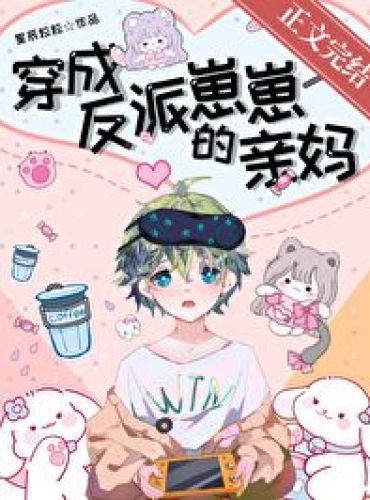
... Read More
The children's room. That's where the whole story converges. Let me paint this for you. Ji Zhile's room has a little bed, a small desk with a self-criticism paper he couldn't finish writing, and a bag of potato chips he's hiding like contraband. His room is tidy—not messy at all, which is somehow more heartbreaking because it means he's always trying to be small and good and unobtrusive. There are dolls. Lots of them. 'When he grows up, he will buy Ultraman clothes himself.' A three-year-old dreaming of independence as an escape from powerlessness. Then Si Tian enters that room and we see the children's room properly. There's the yellow cardboard cut into strips—a terrible attempt at a lantern. The instruction manual on the floor. Soft cushions where he sits and watches his mother work. This is a space designed for childhood but occupied by a child who doesn't feel like he belongs in it. The contrast with Ji Ningyi's room is implied rather than shown, but we know—Ultraman Tiga clothes on the bed, brother buying candy, a different energy entirely. One son gets praise for reading with his back straight like a poplar tree. The other gets spanked for not eating breakfast. And the kitchen. Si Tian sends the cook to make lunch an hour early because she's 'a little hungry today'—but really she wants to create a window where Ji Zhile won't be feeding secretly. The house has its own ecosystem of surveillance and control. Grandma Fang enters Ji Zhile's room with potato chips hidden in her clothes. The door closes. She whispers conspiratorially. This is the only place a child can taste sweetness without fear, and even that sweetness is tainted because Grandma is manipulating him. The room is supposed to be his sanctuary but it isn't—even here, adults are using him. The visual detail of Ji Zhile's face—red eyes, puffed cheeks like a hamster, chip powder on the corner of his mouth—these are the images that stick with you. The author doesn't need to describe the house's architecture or the neighborhood or the city. The world lives in the emotional geography of rooms and doors and what happens when someone crosses the threshold. That children's room where Si Tian throws the terrible lantern aside and crosses her arms, furious and unsettled—that's the center of the novel. That's where the story changes direction. Everything before was setup. Everything after will be consequence.
... Read More
I keep coming back to the dinner scene in this chapter because it's filmed like a movie and I need to talk about it. The framing of Ji Zhile at the table, seeing his mother's braised pork ribs while his own bowl has this pale, tasteless shrimp—visual contrast established in one sentence. His cheeks bulging as he forces down food he doesn't want, then the decisive moment when he stands up, pretends to be calm, and extends that spoon toward her spicy chicken. The camera of the author's eye follows every micro-movement: the corner of his mouth curling up in triumph as he scoops the piece, then the chopsticks snapping in to steal it back. Si Tian's deadpan "children can't eat this dish" against his desperate "I can eat it!" creates this tiny domestic war played out over food. And then the visual of him searching the living room afterward—three-and-a-half-year-old climbing off his stool, patrolling rooms that don't contain the woman who used to be his entire world. The black closet mention later reframes Si Tian's home not as a safe space but as a place of punishment in her son's imagination. Even the setting details matter—Uncle Lu leading her to another room for the contract talk, the living room where Grandma Fang's face drops, the separate spaces where adults make decisions about children's lives without asking them. This is a house divided not by walls but by loyalty, and every room tells you which side you're on.
... Read More
Let's talk about stakes, because this chapter understands them on multiple levels simultaneously. The immediate conflict: Si Tian has thirty minutes before she dies. The system makes this visceral — her heart slows, her body weakens, every instinct screams that this is real. She tries to bargain. She threatens. She ultimately surrenders. This is life-or-death tension that doesn't rely on exposition; it lives in the body. But then the stakes expand. The main mission spans sixteen years. Sixteen years of raising two traumatized children. Sixteen years of ensuring they survive a car accident on October 10th. That's a long rope to tie yourself to when you're already dying. The contrast between the thirty-minute countdown and the sixteen-year commitment creates this exhausting urgency that never lets up. Then there's the domestic conflict — the real, human-level tension. Ji Zhile doesn't trust Si Tian. He flinches. He runs. He measures every interaction for signs of punishment. Si Tian wants to connect with him, but her every attempt is filtered through his trauma response. The moment she offers milk and then backs off, he doesn't see kindness — he sees unpredictability. That's the conflict nobody can fix quickly. And layered on top of everything: the mystery of the drawer. What happened to the original owner? What is the monster? This unknown variable adds a third dimension of stakes — not just survival, but comprehension. If she doesn't understand what destroyed this family before, she can't protect it now. The author maintains tension by never letting any single conflict resolve. Just when Si Tian completes the breakfast task and feels a surge of warmth, she opens a drawer and the floor drops out again. That's masterful pacing.
... Read More
I need to talk about the system's voice because it is genuinely one of the funniest things I've read this year. Every time it speaks, it's like watching someone slowly lose their composure. The host threatens it with death by jumping off a balcony and the system responds with: "Host, let's go back. The typhoon is so cold and strong, I'm a little scared." A SCARED SYSTEM. In a book about saving children from tragic fates. This thing was designed to be Helpful and Authoritative and instead it's over here negotiaging with a woman who just told it "you'd better be more effective, or I will die sooner or later for you to see." The dialogue throughout this chapter is sharp because everyone speaks differently. Si Tian is blunt, sarcastic, occasionally unhinged — totally fitting for someone who transmigrated and is now bargaining with an electronic voice for her life. Her internal monologue is hilarious: "Draw a card? I can't, my face is dark." She's treating system mechanics like a lottery she's doomed to lose. The children's voices are distinct too. Ningyi speaks softly, politely, with complete sentences even as a kid. Zhile's dialogue is fragmented, angry, defensive — short bursts of rebellion masking deep fear. When he says "There are many people who like me, I don't need you to like me!" it's the kind of line that sounds like something a real child would say after being yelled at. And the translator's comment — "What a miserable system! Hahaha" — that's the author winking at us, acknowledging the comedy. The narrative voice balances sincerity and humor so well that you never know whether to laugh or tense up.
... Read More
"One for brother, one for mother." Ji Zhile pushed his plate forward like it was the most natural thing in the world, even though he clearly adored those chicken wings. My heart absolutely shattered. Here's this three-and-a-half-year-old who just discovered his family might be poor, and his immediate response isn't to panic or complain—it's to SHARE his food. He didn't want to let his mom and brother eat the 'bad' eggs while he ate the good chicken. That's not even childlike generosity, that's pure instinctive love. And the milk scene! He drank the entire glass with this pained expression like milk personally offended him but he was doing it anyway because Mom said so. The obedience was so forced and so sincere at the same time. I'm not crying, you're crying. Also, Pei Jing offering to beat people up for Ji Ningyi made me swoon. Six years old and already trying to be useful in the only way he knows how.

Leave a comment

You must be logged in to leave comments. or
