Dressed as The Villain’s Mother - Reviews

Dressed as The Villain’s Mother
+Add to Custom List
Sort
Add review
... Read More
Let's talk about stakes because this chapter escalates everything. Si Tian walks into the living room and Grandma Fang's face drops when Si Tian produces the contract. We KNOW what's coming—we've seen the pattern. Grandma Fang has been feeding Ji Zhile, buying his favors, whispering poison in his ear about his own mother. The scene with Si Tian calling Uncle Lu for the contract, being led away like a fool, and then finding out Ji Jiangzhou already made the decision without consulting her—that's powerlessness as a recurring threat. But then the real conflict hits during dinner. Ji Zhile trying to steal the spicy chicken, the chopsticks snatching it away, and the explosion that follows. He's not just throwing a tantrum—he's revealing the entire manipulation apparatus. Grandma Fang told him his mother doesn't like him, that she locks him in a BLACK CLOSET, that she won't let him eat meat or buy him Ultraman clothes. These are accusations that reframe EVERYTHING we thought we knew about Si Tian. Is she actually abusive? Or is this exactly what a manipulative housekeeper would plant in a three-year-old's mind? The stakes just skyrocketed. Si Tian has to fight not just a fired employee, but the narrative that employee built inside her own son's head. And the worst part? When Ji Zhile says those things, Si Tian doesn't defend herself. She just looks at him feeling a little headache. No evidence, no proof, just her word against a child's tears—and that child has been coached.
... Read More
Ji Ningyi. That's it. That's the review. Just his name. Because honestly? The boy made me emotional in three paragraphs. Let me explain. This kid is twelve or thirteen, dealing with a mother who is sick — possibly dying — and he's already doing everything an adult would struggle to do: managing household tasks, comforting his younger brother, speaking to his mother with this quiet, aching tenderness. "Mom, don't be angry. I hope my mother will always be happy." Are you kidding me? I nearly cried reading that. And then Ji Zhile enters the picture — three and a half years old, fists clenched, convinced his mom might cut off his legs as punishment for kicking her. This kid's trauma response is so vividly rendered. He doesn't understand love anymore; he understands punishment. He runs upstairs when confronted. He whispers "I hate you" at his brother. But the moment Si Tian shows him even a sliver of warmth — forgetting to force him to drink milk — he bolts. It's heartbreaking. The relationship between the two boys is the emotional core of this chapter. Ningyi protects Zhile instinctively. When Zhile runs away, Ningyi is right there, catching him, scolding him gently. "You can't be rude." Even in chaos, he's the responsible one. Meanwhile Si Tian is observing all of this, a stranger in a body, trying to figure out how to mother children who have already learned not to trust adults. The system threatens her life, but the real tension — the real heart-stopping stuff — is watching these two kids navigate a broken home while their new mother figure learns how to love them.
... Read More
Ji Zhile is three and a half years old and already understands betrayal. I need to talk about this kid for a second because he broke something inside me. The Ultraman scene. Come on. He sees his brother's new Ultraman Tiga outfit—his idol, the one kid in kindergarten who has it—and his mom bought it for him. Meanwhile, this same kid gets spanked for not eating breakfast and is told no snacks. The candy his brother gives him suddenly tastes wrong. He doesn't understand the mechanics of favoritism yet, he just knows it in his bones: Mom doesn't like him. She never will. And his brother... his brother is getting things while he gets nothing. Then Grandma Fang comes in. And she weaponizes her own impending departure. 'Grandma may not be able to take care of Zhile in the future.' Do you hear what she's doing? She's making the child feel guilty for wanting her to leave, then using that guilt to manipulate him into calling his father. This woman is a master manipulator and the worst part is she genuinely loves this child. That makes it infinitely worse. Ji Zhile's self-criticism paper on his desk—three words, two in pinyin because he doesn't know how to write them all. He tears it up and throws it away. 'No one would read it anyway and Mom would laugh at him after reading it.' A three-year-old who has given up on being understood. The scar on his arm becomes this whole thing. Si Tian asks about it casually and the kid explodes. 'I hate you!' Not because of the question itself but because of everything that question represents—the pain, the memory of being pushed, the vase, the bleeding, the fact that his mother knew and never said anything. And Ji Ningyi? The golden child. Reads books with his back straight like a poplar tree. Tells his brother 'don't call Mom that woman' with this gentle, reasonable voice. But his reasoning is devastating: 'Because she is our mother. It is not easy for our mother to give birth to us, so she can do some things wrong.' He's been trained to excuse her. Trained since childhood. And somewhere between that lecture and the Ultraman clothes, Ji Zhile's heart hardened. I keep thinking about what happens to this kid. The text says Si Tian thought 'she does not see that he will grow into a vicious male partner in the future.' Vicious. That's the word. A three-year-old who's already learning to hide his feelings, already lying about whether he thinks his mom is pretty ('It's not good-looking'), already running away when hurt. This isn't a bad kid. This is a kid who has survived by becoming something harder than he was born. The relationship between the two brothers is probably going to be the most interesting thing in this entire story. One learns to please. One learns to resist. And somewhere down the line, those two paths are going to collide. What do you think happens to Ji Zhile when he's older? Because right now he's just a toddler who cried over potato chips and a self-criticism he couldn't finish writing. God, I want to reach through this page and give him a hug.
... Read More
There's this one image that keeps stuck in my head: the white T-shirt, the sun falling on Ji Ningyi, described as 'delicate and lovely, like an angel.' It's such a simple description but the author uses light like a brushstroke to tell us everything about how Si Tian sees him for the first time. Then you have the shopping mall scene—cosmetics counter, children's playground, the whole consumer paradise of it all. Si Tian is suddenly a person with money, swiping her card without hesitation, and the mundane act of buying makeup becomes a quiet rebellion against the original owner's neglectful existence. But the most powerful scene spatially is the villa entrance. Si Tian and Ningyi walking back, holding hands under warm sun, the contrast between that tenderness and then—the voice from inside the house. 'Grandma Fang, I want to eat potato chips.' The domestic space shifts from sanctuary to battleground in one sentence. The living room becomes a courtroom where Si Tian cross-examines Ji Zhile, dismisses Grandma Fang with a single look, and reclaims her authority. 'I'm Zhile's real mother, could it be that you are also his real grandmother?' The line is sharp enough to draw blood. Every room in this house has memory and power attached to it.
... Read More
Okay, so let me just say this first: the way Si Tian handles Xiao Ai is peak smart-person-energy and I am here for it. She lies to the system about going to the rooftop just to breathe, gives it a fake warm tone, and the system—bless its naive little digital heart—actually buys it. [Okay.] Xiao Ai thought, maybe it was misunderstood. MAYBE. Si Tian literally thinks to herself that the system is a bit stupid, but then immediately reframes that stupidity as an advantage: something a little bit more stupid is more obedient. THIS IS HOW YOU SURVIVE IN A HOSTILE ENVIRONMENT. She doesn't fight the system; she manages it. And that sets up this whole dynamic where the 'villainous mother' exterior is partially a performance for the system's benefit, which makes every scene with Ji Ningyi and Ji Zhile feel layered with double meanings. The plot isn't just about her becoming a better mom—it's about her juggling a manipulative AI companion while repositioning herself in a family that already hates her. The tension comes from the reader wondering how long she can maintain these layers before something cracks.
... Read More
The potato chips scene is the single most symbolic moment in this entire batch and I'm not even being dramatic. A three-and-a-half-year-old boy strategically skips his breakfast so he has an excuse to demand snacks, then successfully plants the idea in the caregiver's ear that his mother is abusive—'she didn't let me eat breakfast'—and when the actual mother appears, he immediately hides behind the enabler and shouts his demands. The potato chips are a MacGuffin for parental allegiance. Grandma Fang uses them as currency to buy Ji Zhile's affection. Si Tian uses the denial of them as the boundary that establishes her authority. But here's what I keep coming back to: the LEGS. The crutches. Si Tian learns that the original owner broke her leg, and Ji Ningyi remembers the exact day—it was the second day after Zhile's third birthday. The leg injury is a ghost that haunts this family's history. It's never explained yet, but it's there, present in every scene like a third child neither of them can see. Broken bones, broken trust, broken meals—this story is about things that were damaged and the slow, careful work of rebuilding them. Si Tian is rebuilding herself while simultaneously rebuilding a family that was already fractured before she arrived.
... Read More
Okay, let me just say — the opening setup is genuinely clever. You've got a transmigrator waking up in a book she read, told she's already dead and has exactly thirty minutes to complete some Villain Rescue System task or she disappears forever. That's a ticking bomb right there, and I love how Si Tian reacts to it: not with panic, but with this exhausted, dry sarcasm. She literally takes out her phone to set a timer. Who does that?! It immediately tells us everything about her character — she's not easily rattled, she's seen too much, and she's not going to play along with some cosmic nonsense gracefully. The plot also drops us into an already complex family dynamic before we even know what's going on. Two boys, one protective and obedient, one volatile and abusive — and the mother figure is completely alien to both of them. The contrast between Ji Ningyi's gentle "Mom, don't be angry, anger is bad for your health" energy and Ji Zhile's "HATE YOU" frog toy assault is genuinely funny and deeply unsettling at the same time. The authors are layering so much information in these first few chapters without any exposition dumps. You're figuring out the rules alongside Si Tian, which keeps the pace tight. But here's what's really getting me — the original mother in this book was apparently cowardly and gentle, and Si Tian immediately flips that by smacking Ji Zhile across the ass. The plot is already shifting simply because the person in the mother's body isn't the person who was there before. That's a really smart way to start a transmigration story. The conflict isn't just external (will she survive the system?) — it's immediately internal (who is she now, and how do these kids react to her?). The scene where Ningyi brings her a medicine box and asks if it hurts — that moment completely reframes him. He's not just a good boy, he's observant, strategic, and clearly already noticing that something is different. The tension is building in layers.
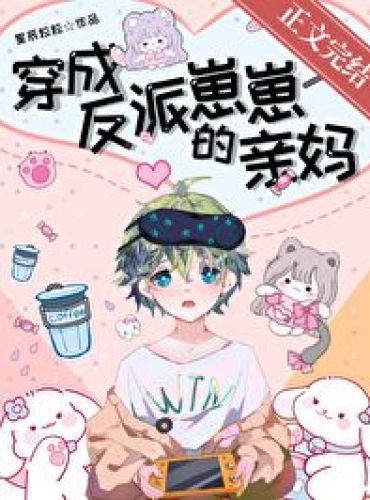
... Read More
I need to talk about Ji Ningyi for a minute because this boy is devastating in the best way. Think about it: he's six years old, he's been living with a mother who apparently neglected him, and the first thing he does when Si Tian shows up is cling. Not just cling—observant cling. He watches her. Her hair is rolled up, she's wearing white, she's smiling. He calls her a fairy. Then he volunteers to try on the Ultraman outfit he actually dislikes because 'if Mom likes it, he will wear it for Mom.' That is not a child who feels safe. That is a child who has learned that love is conditional and performance-based, and he is WILLING to perform. The car scene where he slowly inches toward her and tentatively touches her sleeve? Her fingers rubbing his hand? She's held a six-year-old's hand and felt his soft fleshy fingers and just... stayed there. Meanwhile Ji Zhile is hiding behind Grandma Fang throwing tantrums because he doesn't get potato chips. The contrast isn't even funny. One kid mistakes kindness for kindness. The other one weaponizes hunger. And Si Tian—god, Si Tian is figuring this out in real time. She catches Ji Zhile's manipulation instantly ('So, there are still people who are sowing discord') but she's still learning how to read these kids.
... Read More
Okay, I NEED to talk about this flashback scene because it completely changed how I see everything. Si Tian forces the system to replay the moment Ji Zhile got his scar, and oh my god. It was his birthday. He's wearing red clothes, looking like a New Year's doll, all excited to celebrate with his mom. And what does she do? She pushes him, he falls on broken glass, and then she MANIPULATES him into keeping it a secret. She literally says if he tells anyone, he'll never see her again. This is some next-level villainy right here. But here's what really gets me — Si Tian watching this from the outside, seeing her past self do all this to a child who just wanted cake and attention. Her reaction isn't just disgust, it's guilt. She says "isn't she very bearish to him?" and immediately starts making amends by finishing that lantern task properly. The way the plot pivots from horror to tenderness in the next scene when she actually apologizes to the kid? Chef's kiss. Also the reveal about the word "monster" coming from the original owner's mouth toward Ji Zhile? That graffiti in the drawer finally makes sense. This kid was called a monster by his own mother on his birthday. No wonder he's damaged.
... Read More
The structure of this batch is wild. It opens with Si Tian forcing the system into dangerous territory — replaying a memory she has no right to access, risking irreversible bodily harm. Xiao Ai is basically begging her to stop, and she does it anyway. The system's voice reads like a stressed assistant: [Host, the scene recall function can not be used an unlimited number of times.] Then BAM — we're in the past. Birthday. Red clothes. Vase shatters. Blood. Manipulation. The whole thing plays out in real time with this creeping dread that builds until Ji Jiangzhou's voice at the door and the white flash that cuts it short. It's visceral. You feel Si Tian getting dizzy, the system panicking, her face getting worse. And then —和生活 — she rests, stands up, and starts making a lantern. The shift from high-stakes trauma recall to domestic craft is jarring in the best way. It's like the story itself is catching its breath. The pacing slows from urgent to methodical, from emotional explosion to quiet action. Then lunch. Chopsticks. Grandma Fang trying to feed him. Si Tian pushing back. And Ji Zhile's ear turning red as he insists he can do it himself. Three and a half, eating alone, already performing independence because someone might take his food away otherwise. The chapter ends there — not with a bang but with a child picking up vegetables with chopsticks he rarely uses. That's the kind of pacing that sticks with you.
... Read More
Let's be real—the entire chapter runs on food symbolism and I am HERE for it. KFC = luxury, privilege, childhood indulgence. The packed leftovers = loss of that innocence, the first crack in the 'we have everything' worldview. Milk = something nutritious but bitter, consumed only out of duty and love, never desire. Eggs = survival food, plain and functional. Ji Zhile's entire journey from greedy consumer to conscious sharer happens THROUGH food. He goes from aggressively chewing a hamburger to silently offering chicken wings to his family. The bottle-picking fantasy at the end? That's not just a kid being cute—it's the birth of financial awareness, the moment childhood dissolves and reality kicks in. And there's this running theme of 'not having money' that Ji Zhile keeps stumbling onto like a blind man finding doors. His dad's vague job, his mom not working, the whole house运转 on invisible labor. The author never says 'this family is struggling' directly—we piece it together from hamburger prices and milk preferences. Subtle doesn't even begin to cover it.
... Read More
I need to talk about this hamburger. A single hamburger sets off the ENTIRE plot arc of these chapters. Ji Zhile orders way too much food, can't finish it, and instead of just throwing it away, his mom makes him carry the packing bag home. That's it. That's the inciting incident. From there, everything cascades: he concludes they must be poor, he tries to become a bottle-picking entrepreneur, he has an existential crisis at kindergarten about his dad's job, and his little brother has to lie to protect his feelings. The author built this entire emotional earthquake out of ONE wasted hamburger. No villain, no dramatic betrayal—just a kid realizing his family might not have infinite money. And honestly? That's way more relatable than any plot twist I've seen in web novels. The pacing was also weirdly perfect—starting light and funny with the chicken leg sharing scene, then dipping into genuine sadness when Ji Zhile lies on the desk muttering 'how do kids make money?' and ending on this bittersweet note of him still clinging to hope that his mom will pick him up tomorrow. Chef's kiss.

Leave a comment

You must be logged in to leave comments. or
