Dressed as an Abyssal Dragon Hatchling [Holographic] - Reviews

Dressed as an Abyssal Dragon Hatchling [Holographic]
+Add to Custom List
Sort
Add review
... Read More
'Instantly, the dragons in the vicinity activated their Best Actor skill.' I literally laughed out loud at this. This line alone tells you everything you need to know about the tone of the book. The dragons are not just powerful mythical creatures—they're also performing emotional labor, carefully curating their expressions to avoid alarming their baby-dragon hostage. The fact that the narration treats this with the casual humor of 'oh they activated their skill' makes the whole scene feel so grounded despite the absurdity. And the Desert Sculpture King's voice? Absolutely iconic. Let's talk about the dramatic fling of its head against the nest with a 'duang' sound, attempting what the narrator explicitly calls a 'suicide' pose. This creature is dignified, it is a ruler, and it is being treated like a unruly toddler by five-meter-tall dragons who won't stop poking it. The internal monologue 'What torture for a sculpture!' combined with the executioner's blade metaphor is pure comedic gold. Then there's Jing Nian's internal voice, which is a masterclass in contrast. Externally, he's 'show[ing] a calm and innocent expression, curiously observing the Sculpture King.' Internally, he is 'grappling with how to get to the teleportation point' while feeling 'a wave of excitement that he could hardly contain.' The gap between his outward appearance and inner monologue is where the humor lives, and the author weaponizes it perfectly. The dialogue from the Game Development Department staff is deliberately flat and bureaucratic—'How could an NPC in the newbie village have a bug?'—which creates this incredible tonal shift. One moment you're laughing at dragons poking a sculpture, the next you're reading sterile technical language about data adjustments. That juxtaposition is the author's signature move, and it never gets old.
... Read More
There's something deeply symbolic about where Jing Nian is right now. He's inside an eggshell—not just physically but existentially. He's between forms, between worlds, between identities. The shell is both shelter and prison, and the light filtering through its creamy yellow surface is the only connection he has to anything familiar. When the little dragon hugs him, that warmth is the first genuine contact he's had since whatever happened to put him here. But the shell is also fragile. He Kun and Xuan Lei treat it like a playground and send it flying through the air in a parabolic arc—the kind of imagery that suggests Jing Nian's current state of safety is entirely dependent on forces he can't control. I keep coming back to the contrast between the two worlds the author is building. One is rooted in ancient magic, blood pools, dragon eggs, and instinctual bonds. The other is steel and circuitry, S-class mechs, security systems, and a general who tears through defense grids for one person. Both worlds revolve around loyalty and protection, but they express it through completely different vocabularies. The dragon clan protects their hatchlings with ritual and caution; Jing Xing protects his person with violence and speed. Neither approach is perfect. Both are desperate. And Jing Nian is caught between them, literally in one case and probably figuratively in the other. The eggshell is a threshold symbol—something that must eventually break for growth to happen. The question is whether he'll emerge on his own terms or be cracked open by the chaos around him. Either way, the fact that he's not alone in there—the little dragon with him, the warmth, the shared breathing—suggests the story believes in connection as the answer to displacement.
... Read More
Okay can we just talk about this tiny little Shadow Clan guy for a second? The one who literally trembled while standing up to propose his clan's infiltration plan. The text describes him as having "a pair of dim and lifeless eyes filled with despair, hope, and supplication." I keep coming back to that because honestly it broke something in me. This is a race whose territory is already being swallowed by the red ink on the map—literally running out of land—and they're trying to volunteer for something dangerous just to carve out a sliver of relevance. And Yorkshire? Don't get me wrong, the guy is charming as hell. Gentleman mage, old-school with his magical record book instead of those common crystal orbs, totally exudes the vibe of someone who actually gives a damn. But then he drops the hammer on the Shadow Clan's hopes with surgical precision. "That method, I believe... can be called 'Viewing.'" He literally says it with compassion in his tone while completely eviscerating their only possible contribution. The text even says Yorkshire "couldn't conceal information about the outsiders out of sympathy." That line hit me like a truck—he couldn't hide the truth BECAUSE he was sympathetic. Like his own kindness forced him to crush this guy's last hope. The Shadow Clan leader just... vanished. "All the complexity in his pitch-black eyes vanished. He slowly retreated behind the massive throne of the Demon Lord Shura, almost as if he had never existed." Like he was erased. Not because he wasn't valuable, but because the world doesn't care about the weak even when they're offering everything they have. Meanwhile the dragons—Jing Nian included—are watching from their dragon consciousness groups like it's a damn reality TV show. "I'm here just to give you face." And I'm over here spiraling about a background character whose entire existence was reduced to a plot device in three paragraphs.
... Read More
Okay so let me just say this: the moment Yiqu Liushang sees the Jing brothers in-game and goes 'IS [YI NIAN] THE YOUNGEST JING!?' — I literally gasped out loud. I was sitting on my couch and my roommate asked if I was okay. The author has been dropping breadcrumbs about Jing Nian's family background this whole time and I'm not even mad about it because this payoff is SO satisfying. Na Yang knowing but not telling Yiqu Liushang? Meanwhile Yiqu Liushang already knows Jing Nian's family doesn't support his gaming but has NO IDEA he's a Marshal's son? That dramatic irony is chef's kiss. And then the author note where it says 'a love rival arrived!!!' and Huo Pippilu Yi Diary references — I'm not even going to pretend I didn't see that shipping energy coming from a mile away. The plot structure here is doing SO much work: the real-world esports plotline weaving into the dragon world plotline, both converging on Jing Nian's secret identity. Na Yang is basically holding the entire web of information together and I love him for his suffering.
... Read More
'Tsk, don't you want to know how to get your pretty boy back into his own body?' From the first line Ji Heng speaks, you KNOW this character is trouble. He's chaotic, inappropriate, gossipy, and absolutely essential to the plot. The way he talks to Huo Yi — all casual and dismissive on the surface but actually deeply perceptive — creates this amazing dynamic. Two ancient beings who have known each other forever, and their entire conversation reads like old friends who will never admit they care about each other. The humor is sharp but never breaks tone. 'Two tops have no future, I get it!' — what. In the middle of a cosmos-altering conversation about gods and world-merging, Ji Heng drops this and Huo Yi just... accepts it. The nonchalance is perfect. And then immediately pivoting to the actual gossip about the God of Light and God of Undead being on a break because 'certain things between them were too cold' — I wheezed. The author's ability to make cosmic mythology feel like workplace drama is genuinely unmatched. But the dialogue also does serious emotional work. Compare Ji Heng's rapid-fire, punchy speech pattern with Huo Yi's measured, strained responses. When Huo Yi says 'His name is Jing Nian' — that's not correction, that's PROTECTION. He's claiming Jing Nian's name as something that matters, not just a detail to be moved past. And Ji Heng catches it immediately: 'Now you're being protective?' The subtext in three words. The author's note is also interesting meta-text — insisting 'Ji Heng and Huo Yi have a purely friendly relationship, with no romantic involvement, just banter, hearts~' is exactly the kind of thing someone says when they're absolutely wrong. But that's also why the character works so well.
... Read More
There is a recurring question hanging over this entire chapter that I can't stop thinking about: are these beings REAL or just holograms? One dragon explicitly asks 'even if we kill them, they can come back'—as if testing whether their attachments have any actual weight. And then the dragons flip it around: 'So are you stuck in this fantasy and can't get out?' Who is really trapped? Jing Nian's world has no magic, no cultivation—only technology that lets fragile humans pilot steel suits the size of dragons. The irony is thick: in one world they're powerless without technology, in this world they're beloved Dragon Lords who can ride ancient beasts. The 'betrayal of the Temple of Light' theme connects to something deeper too—it's about TRUST in shared realities. If the game world is virtual, why do the dragons' concerns feel real? Why does Huo Yi's wind barrier feel more genuine than anything in Jing Nian's 'real' world? The little dragon, swallowed and vomited, still asking for a hug—that is the thesis statement right there. Connection transcends ontology. Whether bodies are 'virtual' or 'real,' the care between these characters IS real, and that's what makes the betrayal hurt so much. The underground entrance 'isolated from divine perception' suggests there are things happening that even the gods can't see—which means trust must be earned, not assumed.
... Read More
There's a moment in this chapter that I need to sit with because it's so quietly devastating. Jing Nian accidentally reveals his title, panics internally for a second, then watches Huo Yi's face and sees absolutely nothing. No surprise, no calculation, no disappointment. Just plainness. And somewhere between that blank stare and the little dragon's earlier interference, Jing Nian's entire emotional architecture shifts. He goes from hoping Huo Yi doesn't notice to feeling almost... relieved? That Huo Yi doesn't care? It's such a specific emotional beat. The fact that being seen and not judged feels like a gift is telling about where Jing Nian has been mentally. He's spent so long guarding this title, this identity, that its casual acceptance doesn't register as warmth initially—it registers as something strange he has to process. And then there's the warrior. This guy who just got saved, who should be a background character, and yet he's the one who asks 'how can I accept such a valuable gift' and then looks at Jing Nian with genuine reverence. That moment where Jing Nian realizes he can just command this person—not through force but through a knee guard and a task—and gets '100 loyalty' from a system message... it should feel hollow. But it doesn't. Because Jing Nian means it when he gives the order. He's not playing with people. The physical closeness between Jing Nian and Huo Yi is also doing emotional work that I didn't expect. Huo Yi picks him up and carries him out of the market. That's not romantic—it's protective, familiar, almost parental. And then the mask removal happens outside, in private, which makes it feel like an intimate gesture rather than a dramatic reveal. By the time Jing Nian recognizes that face, the fear is already mixed with recognition, and recognition is already mixed with something that might be relief or might be grief or might be both. The ending where Jing Nian is spinning around, terrified and calculating, is the emotional inverse of the beginning where he was just trying to survive a conversation. He's gone from guarded to overwhelmed in roughly two thousand words, and that arc feels earned because the book has been building toward identity disruption since chapter one.
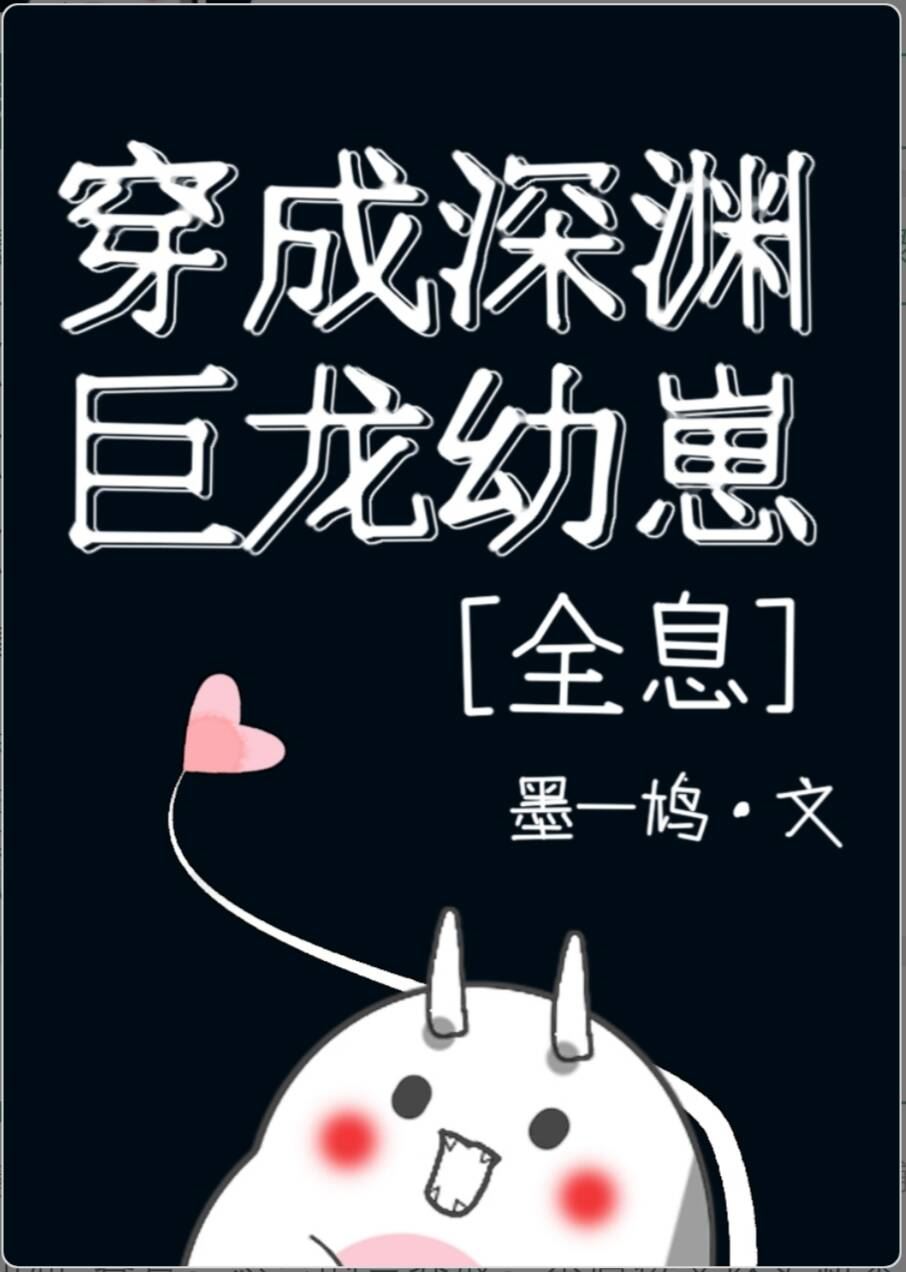
... Read More
Can we talk about Gordon's voice? The man screams "Waaaahhhh—bang!!!" when he's dropped from the sky and I have never related to anything more in my entire life. This character has a presence even when he's just being ridiculous. And the dialogue between Jing Nian and Huo Yi? So subtle but so funny. Look at this exchange: "How about we split the reward evenly?" That's it. That's the whole conversation. Jing Nian just offers to split loot with the guy who was literally trying to kill his friend minutes ago, and Huo Yi just... agrees? "Sure," he says, like this is the most normal business proposal ever. The casualness is everything. But the real gem is Huo Yi's internal monologue. The author doesn't give us much dialogue from him—just that soft laughter that somehow carries across the forest—but every action speaks volumes. He notices the young dragon's behavior, he reads the situation, he holds back his amusement. His silence is louder than any speech. Gordon's panic is beautifully rendered through broken dialogue: "Brother vulture, please come down and save me!" followed by that desperate look at Jing Nian when the vulture ignores him. The hierarchy of the bird kingdom is apparently more important than loyalty. Classic. The narrative voice throughout is perfectly tuned to this absurd game-world tone. Serious descriptions of combat mixed with system prompts and comedic timing—it all works because the author never wavers in its commitment to the bit.
... Read More
I need to address the pacing of this batch because it's actually really interesting. You've got this entire first section devoted to Jing Nian's departure — worldbuilding about outsiders and the sage's observations, then the packing scene, the goodbye chaos with the dragons, and finally the cliff-launching of disgruntled dragons. It's a lot packed into what should basically be a transit chapter, and yet it never feels padded. The transition is where things get sharp though. One moment you're watching this absurdly sweet farewell montage and the next you're cut to the Abyssal Mouth with Huo Yi arriving. That switch is brutal in the best way — it goes from comedic warmth to cold suspicion almost instantly. The five dragons roaring at an intruder, Huo Yi standing there unmoved... the tension builds so naturally because you can feel the shift in the room even though these are two completely different storylines. What's clever is that the chapter ends on a question we didn't expect. We're waiting for the dragon-friend verification scene to play out, and the author just leaves us there with the rules already established: if the young one gets sent flying, the dragon wins. It's a micro-cliffhanger but it works because we've been conditioned to care about whether this Huo Yi character is friend or foe.
... Read More
Okay can we just take a moment for the USER POSTS in this chapter? I read them three times. They're NOT just filler — they're genuinely hilarious, and they do SO much worldbuilding with barely any words. Take this one: [User "DisconnectedAlliance": Even if we had a woodcutter's knife, that bug-catching quest killed me three times! I didn't know that the newbie pain sensor was set at 50%! Now my forehead is bruised… darn this game, it's a money pit! I won't complain anymore; just give me a woodcutter's knife. Let's not argue over it. (lights a cigarette)] That's not just a complaint. That's a CHARACTER. Someone who went from raging to defeated resignation in the span of one post. The cigarette detail — the AUTHOR INCLUDED A CIGARETTE BREAK in a forum post — that's the kind of specificity that makes a community feel ALIVE. And then there's LuckyKingSu demanding info about Uncle Pipilu within a minute, and AngelFish basically being the voice of cold, hard truth: "He's a man that players can't get." Meanwhile, the developer dialogue is drier, more technical — Xiao Qi swearing he checked the data, the weary explanation, the collective "WHAT THE HECK!!!" That contrast between the online mob mentality and the baffled professionals is pure comedic gold. The dialogue does exactly what good dialogue should: each character sounds like a different person, and together they paint a picture of a world spiraling beautifully out of control.
... Read More
Okay so let me just say — the artifact quest subplot in these chapters is genuinely brilliant. You've got players converging on Lan City because of a title quest, all of them scrambling for low-level metals like they're chasing some hidden treasure. And then Jing Nian shows up as this tiny cloaked figure and absolutely flips the board. The moment that stone door lit up and Ga'erfu appeared? I literally sat up straight. The way the narrative threads connect — the dragon clan backstory, the mushroom quest, the players' confusion — it all comes together so satisfyingly. What really got me was the meta layer: players who spent days grinding through side quests suddenly realize the thing they missed was right in front of them. That's not just plot convenience, that's deliberate storytelling. And speaking of deliberate, can we talk about how the author hints that Ga'erfu has a history with Jing Nian without ever spelling it out? That conversation about 'spirits bothering him' and 'a big client giving him a house' — it's dripping with subtext. I need to know more about what happened between those two.
... Read More
The pacing in these chapters is absolutely ridiculous and I'm here for it. Let me walk through the rhythm because it's genuinely masterful. You start with Huo Yi dropping this heavy revelation—he's a divine realm resident, came down looking for his pet, doesn't want to be a god because it's 'troublesome.' This is the kind of exposition that usually makes me want to skim. But then Jing Nian immediately calls him out as 'Versailles-ish' and the whole tone SHIFTS. Boom. Comedy lands. Then you get the brief tension of whether Huo Yi knows about the dragon egg situation, which hangs for exactly two seconds before dissolving into the most chaotic sequence I've read in a while. The mental broadcast from the baby dragon is where the pacing truly shines. One moment you're in a calm dialogue between two cultivators, the next you're hearing 'Wuu, wu, wuu! Where have you gone, Jin Jin?!' followed by a full ensemble cast of dramatic dragons causing chaos. Wind Dragon, Fire Dragon, Old Hesse—all these characters get tiny moments in a span of paragraphs that somehow both rushes and lingers at the right beats. Then it cuts to Jing Nian getting the letter about his brothers, which is this sudden emotional whiplash that makes you go from 'haha funny dragons' to 'AWWW he has family waiting.' The chapter ends mid-comfort-scene which is a classic cliffhanger move but it works because you're already invested in the baby dragon's vulnerability. The author knows exactly when to speed up and when to let a quiet moment breathe.

Leave a comment

You must be logged in to leave comments. or
