Dressed as an Abyssal Dragon Hatchling [Holographic] - Reviews

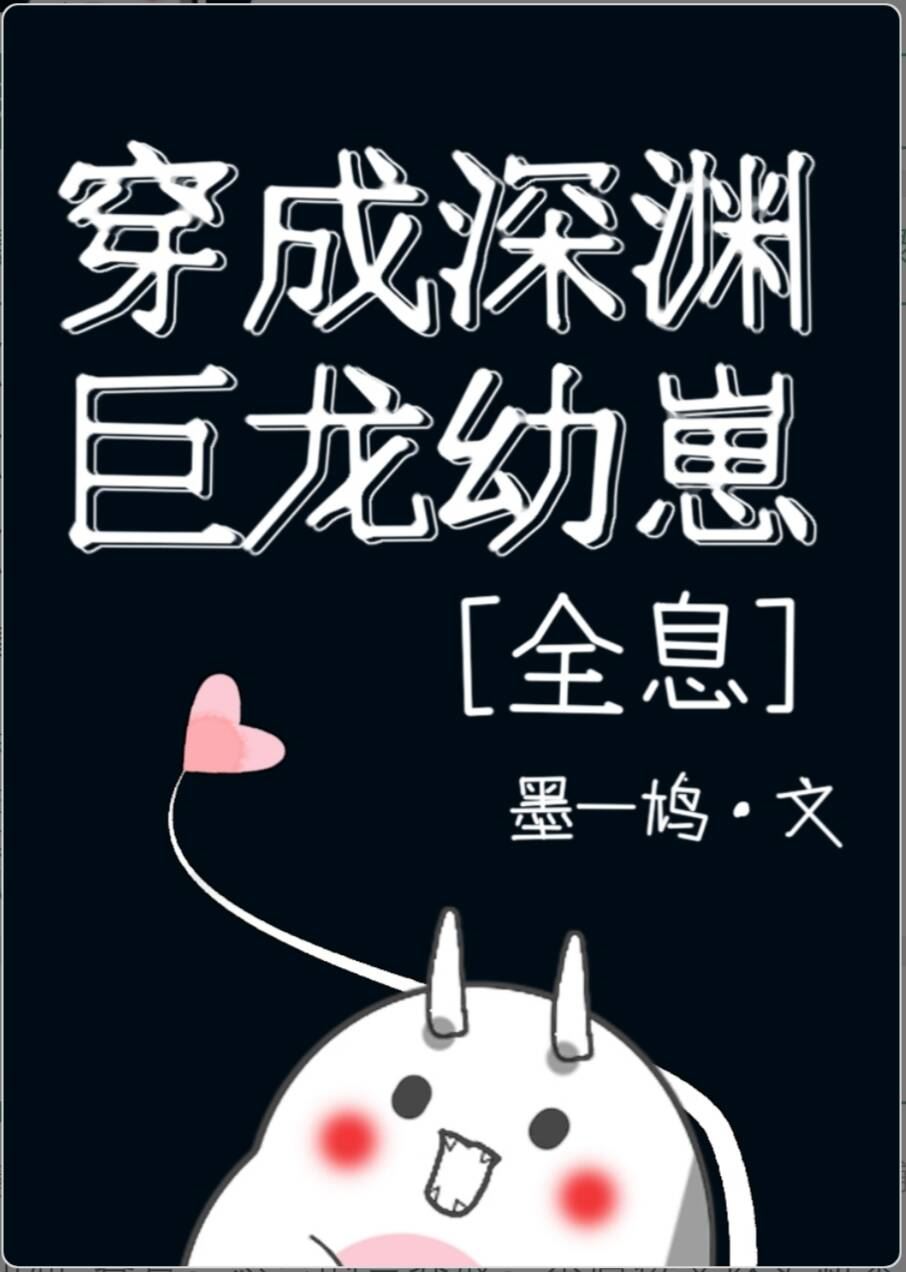
Dressed as an Abyssal Dragon Hatchling [Holographic]
+Add to Custom List
Sort
Add review
... Read More
'I—I don't have any secrets...' That line. Just that line. Two stammers, three words, and it contains more dramatic irony than an entire monologue would. Jing Nian's voice in this chapter is essentially a panic attack with punctuation. He tries to play it cool, he tries to be authoritative, he tries to give orders to a warrior and then immediately whispers to that same warrior about pufferfish like he's hiding something from the person standing two feet away. His speech patterns betray him at every turn. Huo Yi's dialogue is the perfect counterpoint—minimal, declarative, and devastatingly direct. 'Your suspicion is correct. This is my secret, so I won't reveal yours.' That's not a character who performs uncertainty. Every sentence is a statement of fact, delivered with the calm of someone who has already processed the consequences. The contrast between Jing Nian's verbal chaos and Huo Yi's verbal stillness is the dialogue heartbeat of this entire chapter. The system messages are another voice entirely—clinical, congratulatory, completely emotionless. '[Congratulations to player Jin Nian for obtaining 100 loyalty from the NPC Warrior of the Small Fishing Village!]' It reads like a receipt. And that clinical tone against the emotional turmoil happening around it creates this weird dissonance that makes the scene feel like a video game rendered through a human heart. I also want to talk about the silence. When Huo Yi removes his mask, there's no dialogue for paragraphs. Just Jing Nian seeing eyes and a nose and lips and then the recognition hitting. The author trusts the reader to sit in that wordless moment. No 'I can't believe it's you!' No dramatic exclamation. Just the face and the memory and the dread all arriving at once. That restraint is what makes the reveal land instead of just announcing itself. The overall voice of the narrative sits somewhere between witty observation and genuine terror, and it never lets you settle into one register for long. You're laughing at the absurdity of a pufferfish acquisition quest and then suddenly you're wondering if a mustached man from another world is standing in your kitchen. That tonal whiplash is the author's signature.
... Read More
'Ao wuu... ao wuu... Dagger, dagger~ gone~' I'm not okay. I am genuinely not okay. This little dragon character has completely stolen my heart and I didn't even sign up for this. The way it so eagerly offered its tail to Jing Nian, those big expressive eyes just desperately trying to be cute and win him over, and then the absolute devastation when the dagger disappears—it's like watching your kid get bullied at school except the kid is a literal baby dragon and the bullying is theft. And Jing Nian's reaction? He just immediately pulls the little dragon into his arms and calls the Sand Vulture. No hesitation, no 'you should've been more careful,' just pure protective energy. That bond they're building is everything. But what really got me was the guardian dragon's dilemma—should it console the young master or catch the thief? And then it just... tells all the other dragons instead of handling it itself. Those dragons went absolutely feral over a crying baby. 'A thief in blue-gray clothes, eh? You're in for it!' This isn't just loyalty, this is found-family-level devotion and I am HERE for it.
... Read More
I need to talk about the Dragon Blood Pool because this is peak environmental storytelling. The author takes a concept that could easily be generic fantasy warm-tub and makes it feel ancient, ritualistic, and biologically specific. The pool isn't just a basin—it's excavated into a smooth oval shape, slightly larger than a dragon egg. Old Hesse drains it deliberately, positions it, then opens a mechanism that channels scorching Holy Dragon's blood through a small channel. This isn't magic; it's engineering with teeth. The blood is described as scorching, flowing through precise conduits, controlled by mechanisms. You can feel the heat radiating off this description. And then there's Hesse himself. The author keeps returning to his wrinkled face and those ridiculous silly smiles that keep breaking through his dignified elder-dragon composure. When he walks away from the pool, he's apparently floating. Can't contain himself. Lost all dignity. This is a creature who should be terrifying—ancient, enormous, surrounded by younger dragons eager to see the hatchlings—and instead he's giddy like a grandpa at a birthday party. The lighting matters too. Jing Nian sees through the eggshell—there's light filtering in, he can sense the giant dragon outside, he watches the heat flow behind him have color and movement. The egg acts as both barrier and lens, refracting the world into something朦胧 yet vivid. When the blood rises above half the egg, the warmth becomes visible, directional, almost tactile. I also appreciate the spatial choreography. Hesse taps the egg, withdraws, drives the other dragons away, approaches the pool, opens the mechanism, closes it, sneaks back, taps again. Every movement has intention. The scene never feels static. Even when the dragons are standing guard outside, the internal action is rapid-fire: tap, respond, tap again, smile, float away. The world feels alive because every element has culture behind it. Dragon language incantations. Sibling absorption customs. Blood pool rituals. The kind of institutional knowledge that suggests this isn't the first double-yolk egg and won't be the last. The author trusts us to absorb implications without exposition dumps. Respect.
... Read More
This is absolutely heartbreaking in the best way. Jing Nian has no idea, but the dragons know everything - they saw his consciousness enter the baby dragon's body from the start. Think about that. These massive, powerful creatures could expose him instantly, but they choose to protect him instead. The Sand Sculpture King wasn't just a random gift; it was crafted with such intention - placed right there beneath the throne so he'd see it first thing upon waking. That's devotion. That's loyalty that goes beyond any biological tie. And then there's the baby dragon itself, sleeping peacefully unaware that its body is being piloted by another soul. There's this incredible tenderness in how Jing Nian handles the cub's body - so careful not to wake it, so gentle. Even when he tumbles off the nest landing on his adorable round belly, he's still worried about disturbing the real dragon inside. That's not just adaptation; that's the beginning of a bond that neither of them fully understands yet. The tension of the second young master situation adds another layer. The dragons were ordered not to acknowledge a replacement, but they're already choosing sides through their actions rather than words. Every glance, every suppressed emotion - they're navigating this delicate situation while pretending nothing is wrong. My chest actually tightened reading that final line about it being 'quite a challenge.' How long can they keep this up before something cracks? And what happens when the real young dragon wakes up and discovers its body was shared?
... Read More
There's this one line from Huo Yi that keeps echoing in my head: 'I didn't go through the divine consecration ceremony.' When pressed, he admits gods without it are weaker—but his natural cultivation speed is three times faster than faith-based power. This isn't just worldbuilding fluff. It's a statement about what kind of strength matters. Huo Yi chose the harder, lonelier path. No temple, no believers, no institutional backing. Just him and his cultivation. And somehow he's still overwhelmingly powerful. The author seems to be asking: what does it mean to be 'legitimate'? To be recognized? Jing Nian, meanwhile, has all the recognition in the world—three brothers who abandoned everything to find him, a dragon clan that reveres him as Lord—but his heart keeps pulling toward the small, vulnerable things. The baby dragon calling him 'Daddy' isn't just cute; it's the story's thesis statement in miniature. All this political intrigue, all these cultivators and gods and interstellar politics—and what actually moves Jing Nian is a crying child-dragon who just wants him to stay. The dragon egg motif ties into this beautifully. Huo Yi lost one egg. Jing Nian is raising one hatchling. Are they the same egg? The text refuses to confirm, and I think that's deliberate. The egg represents potential—something not yet realized, not yet hatched. It's about what we carry forward and what we lose. Both men are searching for something broken, and both are finding family in unexpected places instead.
... Read More
"The rules were also known as the world's power, a force that even the dragons feared." That sentence alone should be required reading for anyone who thinks this story is just about fighting monsters. The stakes have escalated past "bad guys are invading" into something far more existential. We're not talking about territory loss or political upheaval—we're talking about the fundamental fabric of reality itself destabilizing. The land's rules are CHANGING. What does that even mean for magic? For life? For the concept of cause and effect? The text doesn't spell it out because it doesn't need to. The collective pallor of every face in that room says enough. But what really gets me is how the stakes play out differently for different characters. For the Shadow Clan leader, the stakes are literal survival—his territory is already infected on the map. For Yorkshire, the stakes are leadership and the burden of truth—he has to present horrifying information in a way that unites rather than paralyzes. And for Jing Nian watching from the Dragon Soul Space? The text explicitly notes: "Unfortunately, the Grans Continent was not part of the interstellar society where Jing Nian originated from. Here, the law of the jungle prevailed, and the weak found it challenging to garner sympathy." This is a god-like being reminding himself (or us) that this world operates on pure ruthlessness. The stakes aren't just external—they're philosophical. What does it mean to lead when the universe itself is betraying you? And Yorkshire's plan to infiltrate the outsiders has just been neutralized by their "Viewing" ability. So the council is standing there with the world ending and their best tactical option declared impossible. That's not just rising stakes—that's the stakes slamming into a wall and refusing to bounce back.
... Read More
The Imperial Central Hospital scene is actually so detailed and I appreciate the author taking time to build this world properly. The intelligent detection machine outside the elevator — checking for Zerg blood contamination because high-level Zerg blood carries unknown pathogens with strong infectivity, dangerous specifically to patients with genetic defects. This is WORLDTEXTURE. The kind of detail that makes you believe in the universe. And the nurse! She spots Jing Xing and her curiosity is palpable — young, handsome, blond hair, green eyes, killed high-level Zerg, must be one of the two Jing family generals. She's basically doing detective work while trying to be professional. I love her energy. The hospital itself on the 25th floor — no other wards, just Jing Nian's room. Which means it's either a special wing or they cleared the entire floor. The author doesn't explain it, which is fine because the mystery adds to the atmosphere. Then there's the man in black robes with ankle-length black hair passing Jing Xing in the corridor. His attire is described as 'somewhat peculiar, a strange black robe' and they share exactly one glance before going separate ways. The visual contrast between Jing Xing's military bearing and this shadowy figure is cinematic. I can see this as a film.
... Read More
Okay so this chapter was such a rollercoaster. One minute we're getting a cool god-tier weapon reveal and the little dragon is doing its whole cute-selling-itself routine, and the NEXT thing I know the dagger is GONE. I literally said 'what' out loud to my phone. The setup is so smooth though—Jing Nian picks up the Severing Dagger, the little dragon gets excited, tests it on a tree, and all this warmth and wonder before BAM, someone swipes it while the kid's distracted by a fake noise in the trees. That's some next-level theft, honestly. The thief even had a diversion ready, which means this wasn't some random forest squirrel. This was planned. And then the chapter just cuts off while the thief spots a 'plump little creature' from behind, sees that red heart at the tip of a tail, and I'm sitting here like... who IS that? Who's the thief? Who's watching? The narrative layering here is actually really clever. We have three POVs happening at once—Jing Nian inside the Dragon Soul Space, the invisible guardian dragon reporting to the pack, and this thief dude whose backstory we're slowly learning through his own internal monologue. The plot isn't just moving forward; it's expanding outward in every direction simultaneously.
... Read More
There's a line in here that I've been turning over: "Interstellar people don't believe in gods." Huo Yi says it almost casually, but it's probably the most philosophically loaded sentence in the entire chapter. The whole concept of belief as power runs through this text like a current. Gods need faith to exist. Faith is currency. And the Interstellar World — with all its technology and progress — is fundamentally godless, which makes it both immune and vulnerable in equal measure. Immune because without belief, divine beings lose their power. Vulnerable because they have nothing to fight back with except the tools of a materialist civilization. But the deeper theme here is about perception and reality. The Jing brothers came into Grans thinking it was a game, a simulation, something safe and controllable. That belief — that framework — shaped everything about how they interacted with the world. And when Hesse shatters that illusion, he's not just revealing plot information; he's demonstrating how our beliefs construct our reality. Once they know it's real, they can't unknow it. The world doesn't change, but their relationship to it does. The dragon egg is also doing serious symbolic work, I think. It represents potential, inherited power, something stolen and redirected. Huo Yi's egg was taken — by whom, we don't yet know — and that theft became the catalyst for everything that's happening. The divine realm didn't just send representatives; it engineered the situation. Someone wanted Huo Yi here. That's a theme the book keeps circling around: agency versus manipulation, choice versus design. And Jing Nian himself — a person caught between two worlds, neither fully belonging to the game nor fully belonging to the real — he's the living embodiment of this threshold. He's the bridge. Whether he chooses to cross it or burn it is the question hanging over everything. The author doesn't preach any of this. It just accumulates, layer by layer, until you realize you've been thinking about philosophy while also being thoroughly entertained.
... Read More
Let's talk about that moment. You know the one. Jing Nian unfolds that little bundle, sees the badge fragment on the mushroom, and suddenly—tears. Just well up. No dramatic buildup, no speech, just his eyes filling and him having to FORCE himself to breathe. Because he was strong when things were hopeless, right? But hope? Hope is what gets you. That line about people becoming strong in desperation but crumbling when they realize they're not alone—I genuinely had to set the book aside. It's so painfully true. And then the mental sprint through possibilities: family? the beta tester friend? Yiqu Liushang? Na Yang? Each name carrying different weight, different history, different kinds of hurt and hope. This isn't just a plot device, it's a character study in how isolated someone can become and how devastatingly fragile hope can make you. Also—little side note but I LOVE that despite all this emotional turbulence, he still ruffles Rong Rong's head and agrees to help hide the candy. The man is falling apart internally and still being gentle. I can't.
... Read More
'Wuwuwu~ Li Li~ I can't avenge you~'—I read that line three times and genuinely felt my chest tighten. The River Clam King is possibly the most emotionally vulnerable creature I've encountered in this story, and I don't use that lightly. There's something achingly pure about how this enormous creature, capable of such intimidation earlier, breaks down into tears the moment it hears its childhood friend might have moved on. The author doesn't shy away from making us feel the weight of that innocence. When Jing Nian watches it cry and feels 'a slight sense of guilt,' that's the moment I knew I was going to ship whatever this weird friendship becomes. The tenderest moment though has to be when Jing Nian accepts those extra pearls—'Thank you, I really like them'—and the clam radiates satisfaction like a kid who finally got to give a present to someone they care about. And then the heartbreaking tag: 'If only I hadn't grown this big.' All of this is layered with the unspoken question of what happened between the clam and Li Li, and the bittersweetness of first friendships that maybe didn't understand each other's intentions. Huo Yi's guilt is also fascinating—someone caused this situation and now feels bad, but there's no redemption yet for him.
... Read More
I have never been more invested in a pants theft in my entire life and I need to explain why. The genius of this chapter is that it starts at the lowest possible stakes—someone stole an old lady's underwear—and escalates it to the highest possible level. We learn that this is the first large-scale Adventure Quest in the server's history, that players are flying in from across the newbie village, that guilds are recruiting dozens of level 25+ players, and that whoever completes this first could become famous on the StarBo. All of this builds on... stealing pants. The tension comes from the gap between the absurd premise and the serious reactions it generates. Every player treats this like a legitimate threat or opportunity. Even Jing Nian's initial bad feeling about the quest is validated when Aunt Wang's behavior becomes increasingly unhinged. But the real conflict isn't the quest itself—it's what's underneath it. The players are arguing about whether the thief is a secret lover. The chubby teammate's guild is recruiting. Aunt Wang is protecting the suspect while simultaneously wanting them caught. And Jing Nian stands apart from it all, quietly connecting the evidence to form a picture the others haven't seen yet. That's the actual stakes: being the one who knows the truth while everyone else is distracted by the spectacle. The suspense isn't 'will they catch the thief'—it's 'what does Jing Nian already understand that nobody else does?'

Leave a comment

You must be logged in to leave comments. or
