Despicable and Elegant - Reviews

Despicable and Elegant
+Add to Custom List
Sort
Add review
... Read More
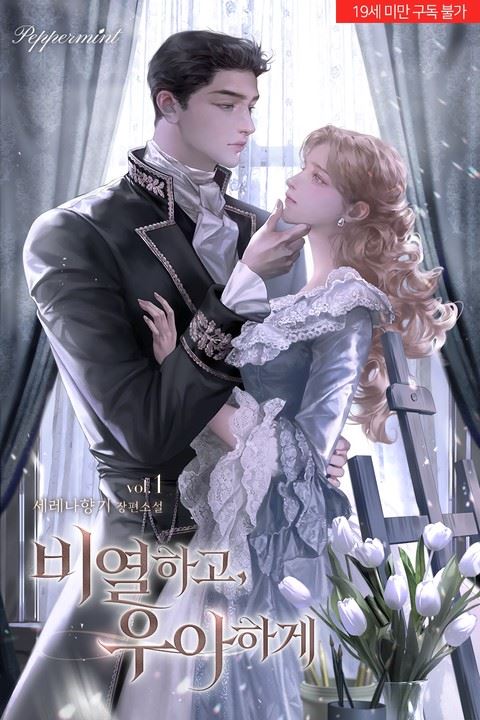
Okay, I need to talk about Carlisle because honestly this man is my new favorite disaster. So here's this guy who's been married for twenty years to a woman who 'couldn't even stand to be with me,' as he puts it, and you would think he'd just be cold about it all. And sure, he starts off drinking whiskey and being all detached, telling Hugo 'why should I?' when he clearly doesn't want to go check on Yvonne. Classic avoidant energy. But then—the moment he sees Ethan and Yvonne together at that café, his gaze just LOCKS onto them. Sharp. Fixed. And he has an entire untouched glass of whiskey sitting there that proves he's not as calm as he pretends to be. Hugo literally calls him out on it: 'So much for not caring.' And I love Hugo for that. He's been Carlisle's friend for twenty years and knows exactly when his best friend is lying to himself. But then there's this whole twist with the military scene at the end where Gilbert starts taunting him about Yvonne leaving him, and Carlisle's reaction is... complicated. His eyebrows twitch. He remembers Ethan's face in every photo. He feels this 'indescribable surge of irritation.' Is it jealousy? Is it hurt? Is it possession? I'm not even sure Carlisle knows what it is himself, and that's what makes him so fascinating to write about. He's not a sentimental man—he never was—but he's clearly not over her either. And that tension between who he thinks he is and what he actually feels? Chef's kiss.
... Read More
Let me break down what's happening here because the plot is moving in three different directions simultaneously and I'm here for it. First thread: Yvonne and Ethan at the café. They're performing this whole 'romantic couple' act for an audience—in this case, literally everyone in the restaurant across the street including Carlisle watching from a second-floor window. Ethan buys flowers, offers them, she has an allergic reaction, everything falls apart. It's chaotic and kind of funny but also deeply uncomfortable because we know neither of them is actually doing this for romance. Second thread: Carlisle at the military headquarters confronting Gilbert. This isn't just filler—it's political intrigue setup. Gilbert took something from Carlisle (the Commander-in-Chief position), and now he's weaponizing Carlisle's personal life against him. Classic power move. Gilbert is the type of villain who hides behind a smile and a glass of whiskey. Third thread: the backstory reveals. We learn through Carlisle's internal monologue that both he AND Yvonne were trapped in this marriage by family schemes—his by Earl Sellus's cunning, hers by the allure of the Polshared Duchy. Neither chose each other. Both found out too late. That's a gorgeous tragic setup. The café scene and the military scene are cross-cutting against each other here, which creates this amazing dramatic irony—we know Carlisle is watching Ethan and Yvonne while simultaneously we know Gilbert is probing for weaknesses. The plot is stacking pressure from every angle.
... Read More
This whole passage is obsessed with performance and authenticity, and I'm convinced it's the central theme. The opening scene is Yvonne performing composure for Carlisle while he performs indifference. She says 'We're still legally married' and he hears it as a challenge, not a statement of fact. Then at the theater, there's a literal play being performed, and the actors come into the audience and start accusing people. The actress accuses Yvonne of dating her husband—meta as hell. Ethan covers for her with a fabricated story about passion. Everyone is performing. The audience laughs at the performance while real drama unfolds in their midst. But then the most authentic moment happens: Yvonne admitting she's never held another man's hand. That's not performance. That's raw truth slipping out. It's the one honest moment in a passage full of masks. And the Luthers River itself—dividing the city into different districts, flowing past both the upscale restaurants where Carlisle sits alone and the humble park theater where Yvonne discovers warmth. The river doesn't discriminate. It just flows. Maybe that's the point—these characters are trapped in their social roles and transactions, but the world around them keeps moving regardless.
... Read More
There's a symbol hiding in plain sight here and it's the car. Three years of marriage and Yvonne has never ridden in Carlisle's car. 'For official events, they always left separately, and when busy with work, he often left her alone at the ballroom.' The author repeats this detail deliberately, making us feel the absence. And then—after she files for divorce, after she's legally free—the first time he offers her a ride is also the first time he physically grabs her. The car becomes this bizarre metaphor for the entire marriage: he controls movement, he controls proximity, he controls when she enters his world and when she's forced out. But it's also about visibility. In public, she's the Duchess. In his car, alone, with the windows up, she becomes someone he has to actually see. The Valley Lane visits mean something too—she goes to the most dangerous part of the city because somewhere in there, she can't be watched as a duchess. She can just be Yvonne. Even the painting lessons with Leblanc tie into this: art is about seeing things clearly, about capturing truth on canvas, and Yvonne is the only person in this story who seems to actually see Leblanc as a child rather than a royal accessory. The queen doesn't. Carlisle doesn't. Only Yvonne does—and maybe that's why the queen clings to her despite everything.
... Read More
Okay so let's talk about the triangle here because I am NOT okay. Yvonne visits Carlisle's weapon facility for twenty minutes, sees him inside, and leaves without saying a word. She tells the guard not to report it because 'you were busy.' TWO MINUTES. That's it. She could've knocked, could've told him she was worried, but instead she just… vanished. And Carlisle? He's sitting there lighting a cigar, trying to parse whether she tried to steal blueprints or what. He literally cannot compute that she might have just wanted to SEE him. Three years of marriage and he still thinks she's either a drama queen or a fool. Meanwhile Ethan finds her bleeding in an alley and his whole approach is: I need to figure out what to demand from Carlisle now. Like she's a bargaining chip. And yet—here's the thing that wrecked me—he leaves her alone when she's sobbing because he can't handle it. He closes the door and goes outside. Not because he doesn't care, but because caring is dangerous for a guy like him. His mother smiled when she miscarried. His father blamed everyone. Yvonne blames herself. And Ethan, who has spent his entire life armored against vulnerability, doesn't know what to do with a woman who's honest about her pain. The irony is suffocating. Carlisle thinks Yvonne is scheming. Ethan thinks she's a puzzle to solve. Neither of them sees that she's just… trying to survive inside a life she didn't choose. She confessed love to Carlisle a month into the marriage and he treated it like a joke. She ran to her family every time things got hard and he called her childish. But who taught her to do that? Who gave her a husband who treats affection like a liability? And Ethan—Ethan finds her broken and his first thought is leverage. That's not romance, that's commerce. But then she cries and something cracks open. I'm telling you, the way he watches her blame herself and thinks about his own family's cruelty—that's the moment the whole dynamic shifts. He's not her savior. He's not even her friend yet. But he's the first person who doesn't immediately try to use her suffering. Carlisle signed the divorce papers without hesitation. Ethan is already planning how to exploit the situation. And Yvonne? She's out there meeting with Ethan about Rein Kleint secrets while Carlisle suspects her of espionage. Nobody in this story is actually LISTENING to her.
... Read More
I need to talk about how this chapter moves because the pacing is absolutely surgical. It opens at maximum intensity—Carlisle destroying a glass, threatening his former commander, blood on the floor—and then it deliberately pulls back. We get this long, almost leisurely middle section with Yvonne and Ethan in the park, slow-burn dialogue, applying ointment, talking about the future. It feels calm. Almost peaceful. And then the final scene hits like a truck. She walks home tired, calls out to Jane, the house is dark and trashed, and suddenly her own father is there with hired men. The transition from the park's languid romance to violent abduction happens so fast that I literally gasped. One moment she's contemplating leaving for the New Continent, the next she's being dragged away from her own home by her father. The chapter structure here is basically: threat → intimacy → catastrophe. Three movements, each escalating the danger in a different direction. Carlisle is dangerous, Ethan is dangerous (in a different way), and her own family is dangerous. By the end, there's nowhere safe for Yvonne to go, and the pacing makes sure we feel that entrapment viscerally. Also—did you catch that the chapter ends mid-sentence? She's being grabbed, she's struggling, and the text cuts off at 'I won't go. I'll'. No resolution. No breathing room. Just pure cliffhanger energy.
... Read More
There are two spaces in this section that I can't stop thinking about. The first is Valley Lane, and Ethan's discovery that Yvonne goes there alone. 'Known for its poor reputation. It was a hotbed of crime, with illegal markets, gambling dens, and brothels operating in secret.' The author drops this description almost casually, but it reframes everything we know about her. She's not just a neglected duchess sneaking out—she's walking into the most dangerous part of the city by choice. And the second is the queen's palace, specifically that small white stone building where Yvonne teaches Leblanc. After the cold marble of Hardingham Palace and the suffocating ducal residence, this place feels like air. Yvonne and Leblanc sharing those moments, the princess ordering the maids to leave so they can be alone together—it's intimate in a way that contrasts so sharply with every other relationship in the story. Queen Louise, still frail from her four-year collapse, stepping back when Leblanc tries to hug her. 'Royals shouldn't embrace people so freely.' That single line builds an entire emotional geography. Love exists in this world, but it has to be performed, measured, controlled. Yvonne's gallery lessons are one of the few places where something real can happen.
... Read More
I can't stop thinking about the lily scene. Like, I've read it four times already. Ethan buys these white lilies specifically because she's called the 'Lily of Sellus'—it's supposed to be romantic, clever even. He's performing this whole gesture for an audience, trying to make a point to Carlisle watching from across the street. And Yvonne? She's having an allergic reaction so bad her eyes turn red and she's coughing like she can't breathe, and she still pushes his hand away and stumbles off. What breaks me is that Ethan's first thought isn't 'is she okay'—it's 'is she offended that I gave her street flowers instead of shop flowers?' He's so conditioned to reading social dynamics that he misses the actual emergency in front of him. Then when he finally realizes it's an allergy, his frustration comes out sideways: he's mad at the Earl for naming his daughter something that could kill her, mad at Yvonne for not going to the hospital, mad at the whole situation. And Yvonne, trembling in that alley, refusing help, just wanting to disappear—it's the most vulnerable she's been in this entire section. No performance, no audience, just a woman catching her breath while wearing his jacket over her face like a shield. Meanwhile Carlisle is up in that restaurant, watching all of it, unable to move, unable to speak, surrounded by people who talk about her openly but go quiet when he walks in. The emotional geometry of this scene is devastating.
... Read More
The pacing here is absolutely masterful. The chapter opens with high tension in the car—Carlisle slamming the door, Yvonne trembling, the divorce papers hanging in the air like a guillotine. Then it cuts to three days later and Ethan appearing at her door with roses, and the energy completely shifts. It goes from claustrophobic and hostile to this bright, almost giddy date energy. The contrast is jarring in the best way. But then—the play scene! This is where it gets really clever. The actors come off stage, an actress starts accusing Yvonne in front of everyone, and suddenly the fictional world and the real world collide. Yvonne squeezes Ethan's hand, terrified, and he covers for her with this ridiculous line about being passionate all day. The audience laughs. But you can feel the real tension underneath—the characters in the book are performing while the audience in the book is performing, and the reader is watching all of it unfold. Then BAM—chapter break, new scene, Carlisle at lunch with Hugo, whiskey, short clipped dialogue. The shift from the outdoor theater's warmth to the cold restaurant balcony is a perfect tonal pivot. Hugo's one-line question 'Are you alright?' and Carlisle's immediate defensive 'Why wouldn't I be?' sets up the next conflict perfectly. This author knows how to keep you turning pages.
... Read More
Okay, let me just say it—the transition from Ethan's club scene into Yvonne's palace visit is handled like a masterclass in narrative pivoting. We're deep in gossip and exposition, Ethan learning about Valley Lane and the ruined contract, and then *bam*—cut to Yvonne's carriage arriving at the palace. The pacing breathes differently here. After Ethan's slow, cigarette-filled revelations, the palace scene moves with a lightness that's almost disarming. Leblanc running to Yvonne, the princess's complaint about Lady Catherine's nagging, the painting lesson—none of it feels like filler. It's deliberate. The author is showing us what Yvonne has built outside of her marriage, what she stands to lose if the divorce goes badly, what she's fighting for. Then Queen Louise appears and the tempo shifts again. Cold, clinical, sudden. And the final beat—Carlisle's car pulling up behind her—lands like a hammer. Three years of emotional neglect compressed into one line: 'Get in while I'm being polite.' The chapter structure here mirrors Yvonne's entire situation: moments of softness constantly interrupted by the crushing weight of her reality. I read the Leblanc scenes twice because they felt so rare, so precious, and then Carlisle's arrival made me sit with my phone for a full minute before continuing.
... Read More
The rain in this book is not background. It's the background. It's the foreground. It's basically the main character at this point. Let me paint you the scenes because they're cinematic as hell: Carlisle in his office on Crown Avenue—darkness outside the window, cigar smoke curling up, the glow of his face half-lit like some kind of noir villain monologuing to himself. He's literally staring into the void trying to understand his wife, and the void stares back with gray clouds and approaching rain. Aerondo's weather is doing emotional labor here. Then cut to Ethan, two weeks prior. The rain is "growing heavier" as he walks through an alley toward the back entrance of a club. Drowning rain. The kind where you can't tell if water on your face is from the sky or from something else. And there she is—crouched in the corner, platinum hair soaked, lily-like appearance ruined by dirt and blood mixing with rainwater. The contrast between her public image (white flower, nobility, grace) and this image (broken, bleeding, invisible) is devastating visual storytelling. The doctor's room afterwards—strangely quiet. The rain has eased. A small lamp barely illuminates the edge of the bed. Yvonne sitting up, clutching her stomach, tears falling onto the blanket. Ethan standing in the doorway, caught between entering and fleeing. The entire scene feels like a Rembrandt painting: deep shadows, a single light source, figures suspended in moral ambiguity. And then we snap back to the present. Ethan in the car, watching Aerondo's sky turn gray again. "The sky was cloudy, as if rain was coming. As expected, night brought gray clouds and rain to Aerondo." This isn't accidental. The city itself is weeping. Every major emotional beat happens under water. What's brilliant about the worldbuilding here is how the setting mirrors the power dynamics. Carlisle's facility is locked down—soldiers, guards, private offices on the third floor. You need permission to enter. But Yvonne walks in for twenty minutes and nobody can quite explain what happened. The system fails to contain her. Meanwhile Ethan's club, Avandonasser, is where information flows freely. Different kind of fortress—not locked doors, but locked secrets. Aerondo feels like a place where everyone is performing. Parties, salons, business meetings, secret alley encounters. The rain washes away the performance sometimes. In the storm, Yvonne can't maintain the duchess facade. She's just a woman in pain. And Ethan—just a man who doesn't know whether to walk away or stay. The worldbuilding isn't in the maps or the history lessons. It's in the weather, the lighting, the spaces between rooms where people go when they think nobody's watching.
... Read More
The way this author builds atmosphere in these chapters is quietly masterful. Let me just talk about the spaces. We open in a restaurant with a second-floor vantage point overlooking an outdoor cafeteria across the way. It's May, spring sun, people drinking tea in the light—and from up above, Carlisle and Hugo are watching Ethan and Yvonne below like they're spectators at their own tragedy. The physical distance between the two groups, separated by a street and a window, is basically the entire emotional plot of this chapter compressed into geography. Then we drop down into the café itself—bright, noisy, full of people sneaking glances, the flower vendor hesitating near the entrance, sparkling water being poured. It's a public stage where everyone is performing. And then the scene pivots violently into an alley—dark, private, Yvonne crouched against a wall breathing hard, Ethan pacing like a caged animal. The contrast between the bright café and the shadowed alley mirrors the contrast between public performance and private suffering. And then—military headquarters. Different world entirely. Smoky rooms, cigar haze, soldiers snapping to attention, photos of war history lining the corridors. Carlisle in a black suit instead of uniform, moving through spaces where he used to command respect with his boots. The atmosphere here is thick with unspoken history and simmering resentment. Every location tells you something about the characters' inner states without the author ever having to explain it directly.

Leave a comment

You must be logged in to leave comments. or
