Despicable and Elegant - Reviews

Despicable and Elegant
+Add to Custom List
Sort
Add review
... Read More
That handkerchief. I keep coming back to it. The Polshared family crest embroidered in gold thread on Yvonne's handkerchief—something painstakingly made, something that represents her family, her identity, her history—and she hands it to Ethan like it's nothing. 'There's no owner.' But there IS an owner. There's always an owner. The question is who gets to keep it. Ethan taking it feels like a small theft, a symbolic taking of something that belongs to Yvonne's past. He's collecting pieces of her the way collectors collect things—beautiful, valuable, and entirely unaware of what they're actually worth. And then there's the house itself. Yvonne returns to her own home to find it emptied, gutted, turned into a hollow shell. All her dresses gone, her jewelry gone, the Wardrobe and drawers ripped open and bare. It mirrors her life exactly—someone has come through and taken everything that gave it meaning, and now she's standing in the wreckage wondering when it happened. The river they sit beside is another symbol I can't shake. It flows constantly, indifferent to everything, clear and beautiful and moving toward somewhere neither of them can see. 'Clearer than the river'—that's what her eyes are described as, and it ties Yvonne to this sense of流动, of movement, of going somewhere. She wants to leave for the New Continent. She wants to flow somewhere else. But the river doesn't stop for anyone.
... Read More
I have to talk about the sheer audacity of how the divorce unfolds here. The moment Yvonne submits the papers and walks out feels like a detonation, but what hit me hardest was the Carlisle scene at the end. Think about it—three years as strangers, and suddenly he comes for her right after she's declared herself divorced. Not as a husband trying to reconcile, but as a man who can't stand the idea of her moving on. 'Did you think I wouldn't know what you're plotting with that bastard?' That line—oh god, that line. He's not asking if she's happy. He's not asking if she's okay. He's immediately assuming she's weaponizing him. The structure here is brutal: Ethan learns she goes to Valley Lane, the queen approves the divorce and tells Yvonne she 'made the right decision,' then Carlisle physically grabs her wrist and forces her into his car. Every major character reacts to this divorce differently, and no one is actually talking to each other. That's the plot genius. Yvonne's quiet rebellion isn't just about leaving a toxic marriage—it's about being seen as a person for the first time, and everyone around her is still trying to catalog her as a threat, a scandal, or a bargaining chip.
... Read More
The dialogue in this section is so sharp I kept highlighting sentences. Let's talk about Carlisle's voice first—his lines are clipped, commanding, and laced with barely contained fury. 'Don't provoke me. This isn't over just because the divorce papers are filed.' That's not a threat, it's a declaration of war. And 'Our marriage was a transaction. The real party was Earl Sellus, not you.' Oof. That line reveals everything about his character and his understanding of their relationship in one sentence. Yvonne's voice has transformed so beautifully. She used to be the woman seeking affection, and now? 'It's not sudden. It should have happened long ago. You always hated me, just as I hated you.' So calm. So final. And then the most vulnerable moment in the entire passage—'Sorry. I was just startled. I've never held another man's hand before.' That line changes EVERYTHING. Her voice goes from steel to something achingly fragile in two sentences. Ethan's dialogue is lighter, playful, but with teeth underneath. 'Let's become lovers for real. I'll play the villain, but if I'm going to do it, I'd rather enjoy it.' He's flirting, he's manipulating, but there's genuine curiosity about Yvonne peeking through. And Hugo—his single function in this passage is basically asking 'Are you alright?' with the concern of someone who knows his friend too well. Perfect supporting character voice.
... Read More
Okay, I need to talk about this opening scene because it absolutely wrecked me. That hollow laugh? I literally paused the book. Yvonne laughs at the word marriage, at the idea that they were ever anything real, and it's just so devastating because we know from his POV that those eyes used to look at him hoping for love. Now they're just... empty. Like something died in them over three years. And then Ethan shows up with roses—of course he shows up with roses—and I was not ready for the hand-holding moment. She says she's never held another man's hand before and I just... what? She's been married for three years to a man who couldn't even look at her, and now this man who's supposed to be her fake lover is the first person she lets touch her? The irony is so thick you could cut it with a knife. Carlisle hearing the name Ethan Inglebert and instantly draining another glass of whiskey—Hugo even notices. That small detail tells us everything about these two men's history without a single word of exposition. The emotional complexity here is insane. Yvonne is navigating between a husband who sees her as property and a man she's using for revenge but who might actually see her for the first time. And I am HERE for it.
... Read More
I need a minute. "I'm sorry… baby… I didn't know…" She says it over and over. Like if she apologizes enough times, the universe might reverse course. Seven weeks. Most women don't even know at seven weeks, especially not someone sheltered enough to think the world is made of ballrooms and polite conversations. She's wandering dangerous streets at night, stomach cramping, and she has no idea why. When the blood comes, she doesn't scream. She just collapses and whispers to nobody. Ethan finds her and here's what hit me: he's seen women cry a thousand times. Casual encounters, parting tears, performative sorrow. Nothing touches him. But THIS—her raw, unguarded grief for a child she never knew existed—and his heart actually *aches*. Not pity. Something sharper than that. He recognizes something in her self-blame because his own family weaponized blame like a sword. His mother said it was a relief to miscarry. His father drank himself into ruin and pointed fingers. Yvonne does the exact opposite—she absorbs every ounce of guilt and makes it hers alone. "Who in the world notices their first pregnancy right away?" That line. That's Ethan realizing, maybe for the first time, that she's not foolish. She's *protecting* something. Even in her weakest moment, she's shielding others from her pain. Don't contact the ducal residence. Don't let that man know. She's standing in a dirty alley, bleeding, and her first instinct is to keep Carlisle out of it. And Ethan can't comfort her. Not because he doesn't want to, but because the usual scripts don't work. You tell a crying woman it's not her fault. But she's right—it IS kind of her fault, in the most unfair way possible. She didn't know. There's no villain to blame, no one to punish. Just rain and a empty space inside her where a life should have been. He leaves her crying and goes outside to smoke. That's the most Ethan moment ever—retreating into smoke and rain because human connection is too loud. But he doesn't abandon her. He stays. The doctor treats her. He waits. That's love, isn't it? Not grand gestures. Just… staying present when someone is falling apart and you have no idea what to say. I'm not even mad that this is a revenge plot dressed up as a romance. I'm just… deeply in love with the way this author writes grief. It doesn't look heroic. It looks like a woman in a dirty alley, apologizing to nothing.
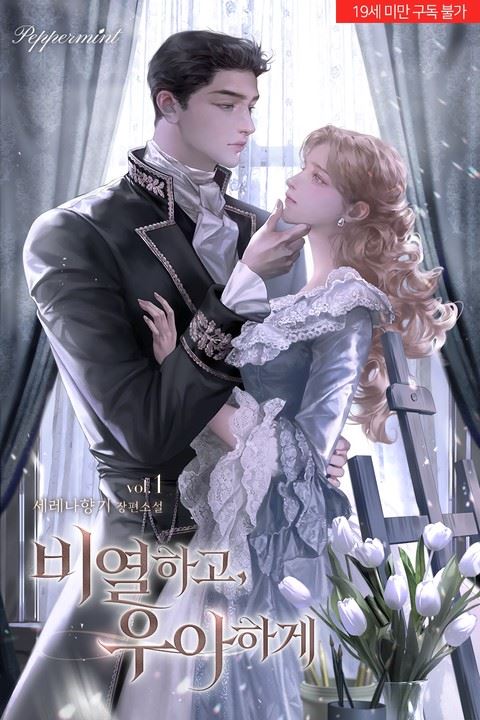
... Read More
The imagery in this section is chef's kiss. The Luthers River appears twice—once when Yvonne watches the bridge from the car during her confrontation with Carlisle, bathed in sunset light, and then again when she's riding with Ethan and the water sparkles along the road. The same river, different man, different emotional landscape. The author is doing something so deliberate with that water imagery. Federation Square split by the river into Sandiewood (upscale shopping) and Luna Street (cultural street with the opera house) is such a vivid, lived-in city. I can picture it perfectly. And then Ethan takes her NOT to the opera but to this open-air park theater with tiered stone seating—a detail I loved because it tells us everything about Ethan's character. He hates clichés. He'd rather be among the regular people, watching couples hold hands in a relaxed atmosphere, than sitting in some pretentious box seat. The restaurant scene with Carlisle and Hugo—silverware sparkling in the midday sun on a balcony overlooking the Luthers Bridge—is so visually striking. Two completely different worlds presented in parallel: Yvonne finding warmth in an unfamiliar, humble setting with Ethan, while Carlisle sits in polished isolation with his whiskey. The contrast is breathtaking.
... Read More
'Don't look at me like that.' / 'With eyes that seduce women.' This exchange between Yvonne and Ethan literally made me stop reading and just stare at my phone. Like, the way he looks at her—clearer than the river, that's what the text says—and she sees right through it, calls him out on it instantly. She knows exactly what he's doing. She's not falling for it. But then she blows on his cheek. She applies the ointment herself. She hands him her own handkerchief with the family crest embroidered on it. These are intimate gestures, small as they seem, and they're devastating in context because Yvonne just admitted to Ethan that she loved Carlisle. That she loved him before she even knew what he looked like in uniform. That her entire marriage was built on a devotion that was entirely one-sided in its origin. And yet—here she is, leaning over this charming, manipulative marquis in a public park, gently blowing on his wound like he's something fragile. The dissonance is incredible. Is she using him? Is she running from herself? Or is there something genuine blooming between them that neither of them can name? I keep coming back to that moment. It's either the most tender thing in this entire chapter or the most manipulative, and I still can't tell which.
... Read More
I need to talk about how different voices sound in this section because it's genuinely impressive. Ethan's dialogue is all sideways observation—he never directly addresses Yvonne, he gets information from the club manager in layered gossip. 'She seemed more frugal and neat than extravagant.' His voice is skeptical, curious, slowly dismantling the rumors. Then there's Queen Louise, who speaks in declarations, not questions. 'You're divorcing Duke Polshared.' 'You made the right decision. No one should share a bed with a devil like him.' 'Let's meet often from now on.' Not a single emotional qualifier. She's a woman who collapsed for four years and came back speaking in absolute statements. And Yvonne—her dialogue is mostly restraint. 'I am Yvonne Sellus.' 'I don't think I have any reason to get in.' Even when she's scared, she corrects titles. But then in the car with Carlisle, she finally says what she's been holding: 'I finally get to ride in your car—after we're divorced.' That line destroyed me. It's sarcasm on the surface but grief underneath, and Carlisle's response proves he still doesn't hear it. 'Interesting. This time it's quite refreshing. You made our divorce public just to catch a man, didn't you?' He translates her pain into manipulation every single time. That's the tragedy of their dialogue—it's not that they can't communicate. It's that he refuses to listen.
... Read More
"Lily of the Sellus Earldom." That's what they called her. White flower. Innocence. Nobility. Grace. And what do we find her doing two weeks before our present timeline? Crouching in a filthy alley, blood mixing with rain, apologizing to a ghost. The lily motif isn't just decoration. It's the central question of the entire novel: what happens when you force purity into a corrupt system? Carlisle's family saved him from treason charges. Earl Sellus testified on his behalf. The price? His daughter. Yvonne wasn't chosen for her beauty or her mind—she was chosen because she was *perfect*, and perfection is the most useful commodity in a political marriage. She's a white flower planted in dirty soil, and the novel keeps asking: will she wilt, or will she grow roots? Her miscarriage is symbolic in ways that go beyond plot. She loses the child she didn't know she was carrying—that child represents something bigger: the possibility of a genuine family, a real connection, something authentic in a life built on transactions. Seven weeks. Barely formed. Just like her marriage to Carlisle—three years, technically alive, but never really taking root. Ethan's mother is the dark mirror of this symbolism. She smiled when she miscarried. Said it was a relief. She rejected the very idea of motherhood, of vulnerability, of connection. Yvonne does the opposite—she grieves something she never knew she had. Two responses to the same biological reality, and they reveal everything about these women's relationship with power and pain. The weapon facility Yvonne sneaks into? Rein Kleint. Munitions. Death. And she's going there because she has information—information that could destroy Carlisle's empire or save it. But the real question is: whose side is she on? The novel won't tell us, and that's the point. Yvonne exists in the space between alliances. She's Carlisle's wife but meeting with his rival. She's a duchess but sleeping in alleys. She's innocent but carrying secrets. "I have no room in my heart. The one I'm waiting for is on his way from Karau." She says this on their first meeting and Carlisle dismisses it as a game. But what if she's not lying? What if the man from Karau represents something she can't yet name—freedom? Love? Escape from being a commodity? Every symbol in this text points to the same tension: the individual versus the system. Yvonne is the lily trying to survive in mud. Ethan is the man who finds her and doesn't know whether to pull her out or step over her. Carlisle is the garden itself—structured, controlled, indifferent to what grows within it. The rain keeps coming. It washes the alley clean every morning. But the mud always returns.
... Read More
Okay, I need to just sit with what we saw happen with Carlisle this chapter. Like, the man is absolutely unhinged and I'm both terrified and weirdly fascinated. He smashes a glass during a conversation and doesn't even feel the shards cutting into his hand—blood on crystal, Gilbert staring at him like he's watching a wildfire—and then just walks out like nothing happened? That's not confidence, that's something else entirely. But here's what haunts me: the contrast between the Carlisle we know as the Duke and this raw, barely-contained violence. His wife's reputation shifted a year ago, right? And he's been sitting on this quietly, letting rumors build while he watches from above like some kind of dark king. The fact that he's sending someone to investigate Yvonne while simultaneously trying to maintain control—it's so cold and calculated that it barely feels human. And then there's the layered betrayal with Gilbert. They were friends, weren't they? Friends don't make comments like that about your wife. But Carlisle's reaction—he could've had Gilbert killed. Instead he chose to humiliate him, to remind him of every hierarchy that exists between them. The fact that Gilbert swallowed his anger instead of fighting back says everything about what kind of man Carlisle really is.
... Read More
The stakes in this section are ridiculously high and I love it. On the surface, it's a divorce story—Yvonne wants out, Carlisle won't let her go easily. But dig deeper and there are SO many conflicts colliding. Yvonne's internal conflict: she wants freedom from a marriage that was never real, but she's also naive about the world. She's never held another man's hand. She's navigating revenge with Ethan, who is simultaneously her ally and someone with his own agenda. Can she trust him? The text subtly suggests she shouldn't fully—Ethan is enjoying this too much, treating it like a game. Carlisle's conflict is equally compelling. He's losing his wife, his control, and his sense of identity. When Yvonne says their eyes used to hold hope for his affection and now they don't, that's not just observation—that's panic disguised as coldness. His fist-clenching, the automatic reaction to the name Ethan Inglebert, the whiskey... this man is unraveling and refusing to admit it. And then there's the external conflict—her father Earl Sellus, the transaction that started all of this, society watching every move. The stakes aren't just emotional, they're social and financial. One wrong move and Yvonne could lose everything again. Hugo's quiet concern for Carlisle adds another layer—we're seeing the collateral damage of this conflict touching everyone around them. What happens when these two collide finally? I can't wait.
... Read More
There's a symbol running through these chapters that I can't get out of my head: the lily. Yvonne is called the 'Lily of Sellus'—a name that should be beautiful, poetic, fitting. But it's also a death sentence. Lilies trigger her allergy. The very thing she's named after could kill her. That's not subtle, it's almost brutal in its clarity. Her identity is wrapped around something that harms her, and she carries it anyway. Then there's the marriage itself as a kind of poisoned flower. Both Carlisle and Yvonne were trapped into it—by family schemes, by political convenience, by the expectations of nobility. The Polshared Duchy name that Yvonne wanted turned out to be gilded cages. Carlisle's twenty years of marriage weren't love, they were duty wearing a love mask. And the lilies Ethan buys are white—pure, innocent, romantic on the surface. But they're from a street vendor, imperfect and improvised, just like his gesture. He meant well in his own performative way, but the gesture itself was designed for an audience, not for her. The flowers become this metaphor for everything wrong with how people in this world treat each other: beautiful on the outside, potentially poisonous underneath, and never really seen for who they actually are. Carlisle's untouched whiskey glass is another symbol I keep coming back to—the alcohol he reaches for when his mood sinks, the prop he uses to look busy and composed while his friend watches him fall apart. The glass refills but his composure doesn't.

Leave a comment

You must be logged in to leave comments. or
