Demoting the Wife to a Concubine? I Remarried a Powerful Official and Teamed Up to Torture the Scum - Reviews

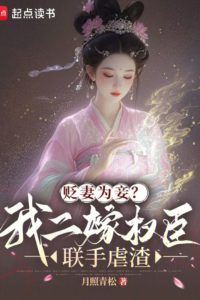
Demoting the Wife to a Concubine? I Remarried a Powerful Official and Teamed Up to Torture the Scum
+Add to Custom List
Sort
Add review
... Read More
This batch of chapters is a masterclass in controlled pacing. The author knows exactly when to slow down and when to accelerate. Let me break it down. The Tongque Alley carriage ride is deliberately slow—sunlight, willow trees, the Cenxi River, the camphor tree. It's atmospheric, almost meditative. But even in this quiet passage, there's purpose: Zhang Zhiyan is mapping the area, memorizing which houses have plaques and which don't. Nothing is wasted. The author could have rushed through this, but instead lets us breathe in the world. Then we cut to the outer study, and the pace immediately sharpens. The Duke's dialogue is rapid-fire, each line delivering new information about Liao Mingzhu's marriage, the Wenguo-gongfu troubles, the political stakes. No filler. Just plot advancing at speed. The Liao Chuan confrontation in Yu Qiong Yuan is the emotional peak of the chapter, and it's perfectly paced—starting with his awkward attempt at conversation, building to her devastating reply, ending with him slamming the door. The silence after he leaves is almost louder than his anger. And then the oilpaper scene—methodical, patient, almost clinical. She heats the paper, watches the wax melt, sees the cracks form. It's slow because the moment demands it. We're supposed to feel her careful concentration. The final beat—Liao Mingzhu's summons—is the chapter's hook. It comes right after a moment of relative calm, and it flips everything. The chapter ends not with resolution but with dread. Perfect structure.
... Read More
This opening chapter sequence is a brilliant example of how to establish stakes and propel a protagonist forward with purpose. The rebirth trope is handled with impressive narrative economy—Zhang Zhiyan doesn't spend chapters wallowing in confusion but quickly pivots to action, which immediately signals to readers that this is a story about agency and strategy. The plot structure here operates on multiple levels simultaneously. On the surface, we have a woman navigating dangerous political intrigue in a historical setting. Beneath that, there's the personal revenge arc—she's been poisoned in her previous life, her family was silenced, and now she's determined to turn the tables. The genius is how these threads are woven together through the assassination attempt at Ji Ming Si temple. What struck me most was the pacing of revelations. The author doesn't dump information but reveals it through action: the silk pouch, the golden peanut, the arsenic in the plum sauce. Each discovery propels the plot forward while simultaneously raising new questions. The assassination scene itself is a masterstroke—it's not just action for action's sake but a catalyst that forces Zhang Zhiyan into Liu Lang's orbit, setting up the central power dynamic of the story. The tension builds methodically. We start with Zhang Zhiyan recovering from fever, move through the temple visit, the assassination chaos, imprisonment, interrogation, and return home—only to discover another poisoning attempt. Each scene escalates the danger while revealing more about the political landscape. The Wenguo-gong-fu flower-viewing banquet mentioned at the end promises even greater conflict ahead. One plot element that particularly impressed me was the dual-timeline structure implied by the rebirth. Zhang Zhiyan's knowledge of future events gives her strategic advantages, but the author carefully shows the limitations of this knowledge—she doesn't know everything, and her actions in the present are creating new variables. This prevents the plot from becoming predictable despite the protagonist's foreknowledge. The narrative arc from victim to strategist is compelling. In her previous life, Zhang Zhiyan was poisoned after bearing a son—now she's already three steps ahead, collecting evidence, building alliances, and planning counterattacks. The plot doesn't just tell us she's changed; it shows her transformation through her decisions and actions. I found the temple assassination scene particularly well-constructed. The chaos serves multiple purposes: it forces Zhang Zhiyan to interact with Liu Lang, provides the golden peanut as a MacGuffin, demonstrates the political danger she's navigating, and creates an opportunity for her to pick up the pouch that becomes a bargaining chip. Every element of the scene advances the plot. The only concern I have is that the political intrigue is still being established—readers may need more context about the Wu De Si, the Tang Shi Jian Cha Si, and the various noble houses. But the author seems to be laying groundwork for a complex web of alliances and betrayals that should become clearer as the story progresses. Overall, this is a plot that understands its audience. It delivers immediate satisfaction through the rebirth fantasy while building toward larger conflicts. The pacing is tight, the stakes are clear, and the protagonist's agency is never in doubt. For readers who enjoy strategic protagonists navigating dangerous political landscapes, this opening delivers exactly what it promises.
... Read More
The worldbuilding in this novel is exceptional—not through exposition dumps, but through carefully observed details that make the setting feel lived-in and authentic. The author has created a world that feels historically grounded while maintaining the dramatic intensity of political intrigue fiction. The opening scene at Ji Ming Si is particularly vivid. The description of the temple 'looking like a celestial realm on earth, appearing and disappearing fitfully in the boundless haze' creates an almost dreamlike quality that contrasts sharply with the violence that follows. This juxtaposition of sacred space and bloody conflict is thematically rich—the temple should be a place of peace, yet it becomes a battlefield. The rain scene is masterfully executed. The 'fine, long threads of rain—not heavy, but very dense' sets the mood perfectly. Rain in Chinese literature often symbolizes cleansing or turmoil, and here it serves both purposes—the blood mixing with rainwater, the ground being 'washed clean by the downpour,' creating imagery that's both beautiful and disturbing. The Wu De Si interrogation scene is where the worldbuilding really shines. The description of winding through 'three main gates, three corridors, and a large passageway' to reach a 'quiet courtyard planted with dark bamboo' creates a sense of bureaucratic labyrinth that feels authentic to historical Chinese government structures. The guards 'wearing felt hats and solemn expressions' add to the atmosphere of controlled authority. Liu Lang's appearance is described with remarkable specificity—the 'black satin brocade robe' with 'Teng She outlined in gold thread,' the 'peach blossom eyes,' the 'thin lips curved into a slight smile.' These details create a character who is simultaneously attractive and threatening, which is exactly what a 'deadly treacherous official' should be. The Huguo Gongfu itself feels like a character. The 'eight red lanterns hanging under the corridors of the inner courtyard, Yu Qiong Yuan, had not yet been extinguished' creates an atmosphere of lingering presence—the household is still active even in the early morning hours. The contrast between the grand exterior and the intimate interior spaces (the inner chamber with the 'carved window opened only a crack') shows how the physical environment reflects the social constraints on women. The prison cell scene is brief but effective. Zhang Zhiyan's physical discomfort—'head throbbed with a splitting pain, and her throat was so sore'—grounds the political intrigue in bodily reality. The fact that she's not alone but has Lüyin and Lüzhu in the adjacent cell shows that even in confinement, relationships matter. The garden stroll between Madam Xia and Liao Mingzhu is a perfect example of how domestic spaces become political spaces. The 'strolling through the garden' while plotting murder shows how the private sphere of women is actually a arena of power struggle. What's impressive is how the author uses weather and environment to reflect emotional states. The spring rain that begins 'out of nowhere' mirrors the sudden disruption of Zhang Zhiyan's plans. The clearing sky after the dungeon scene suggests hope, even as new dangers emerge. The description of the Wenguo-gong-fu flower-viewing banquet, even though we haven't attended it yet, creates anticipation. The fact that it's 'specially arranged for the seventh young master' to meet eligible young ladies suggests that marriage politics will be central to the plot. The author's attention to material culture is noteworthy—the 'moon-white robes,' the 'jade spoon,' the 'blue-and-white porcelain teacup.' These details ground the story in a specific historical moment without overwhelming the narrative. One scene that particularly impressed me was Zhang Zhiyan examining the golden peanut. The description of it as 'small, exquisite' and her careful inspection shows how even tiny objects can carry enormous significance in a world where information is power. The worldbuilding serves the plot perfectly—every location has dramatic function, every detail reinforces the social hierarchy and political danger. The reader never feels lost because the physical environment is always clear and vividly described. Overall, the atmospheric depth of this novel is remarkable. The author has created a world that feels authentic, dangerous, and beautifully rendered—a perfect stage for Zhang Zhiyan's strategic maneuvers.
... Read More
Okay, let me just say—the oilpaper scene is genuinely brilliant plotting. Zhang Zhiyan finds this hidden message inside a book, realizes it's been sealed with beeswax and requires a special medicinal solution to reveal the text, and she literally has to wait because she doesn't have the reagents. That is such a smart way to create tension without resorting to cheap cliffhangers. The author doesn't just hand her the answers; she has to work for them. And then right when you think the chapter is winding down with her doing Buddhist scriptures, BAM—Liao Mingzhu demands to see her, threatening to dash her head against the wall. The pacing of revelations here is masterful. One secret uncovered, another one locked away, and a third one waiting in a dusty abandoned courtyard. Also, the subplot about Liao Mingzhu's forced marriage is getting darker by the chapter. She's bound, confined, and being sent away to marry someone she knows nothing about, and the Duke is just coldly calculating how to protect the family's reputation. The Wu De Si investigation at the beginning is another thread that's clearly building toward something bigger. I love how all these threads feel connected—the mistress, the secret marriage, the political troubles, the hidden messages. It's not just one plot; it's a web.
... Read More
I need to talk about Zhang Zhiyan and Liao Chuan because THIS is what I'm here for. The emotional dynamics between them are absolutely fascinating. She has zero feelings for him—like, physically and mentally uncomfortable, the text literally says. And he? He's trying so hard to provoke her, to get a reaction, and she just... doesn't give it to him. The scene where he comes to her room and she says, 'I'm afraid the heir has misunderstood. My wish is not for you to stay by my side, but for you to become a Qianhu in the Dianqian Si'—I literally screamed. That is the coldest, most devastating burn I've ever read. She wraps it in polite, gentle words but it's pure mockery. And he storms out. She doesn't even flinch. But what really got me was the maid conversation. Lüyin and Lüzhu talking about buying a house in Tongque Alley 'if one day our mistress leaves Huguo Gongfu.' They genuinely want her to be happy and free. And Lüzhu's line—'As long as our mistress is well, we will naturally be well too'—that hit me in a way I didn't expect. It's a different kind of love, not romantic but deeply loyal, and it makes the whole world feel more real. And then Liao Mingzhu at the end, with that 'sinister smile, somewhat terrifying, like the calm before utter madness'—chills. Absolute chills. She's been broken and twisted by everything that's happened to her, and now she's coming for someone.
... Read More
The dialogue in this text is genuinely exceptional, and I want to highlight why. Zhang Zhiyan's voice is her most striking feature. She speaks in a register of polite formality that masks razor-sharp intelligence. When she says 'Fine. The heir may take as many as he wishes' about Liao Chuan wanting another concubine, the flatness of it is devastating. She's not being submissive—she's being dismissive. And when she tells him to become a Qianhu, the soft, gentle tone that carries such venom? Chef's kiss. Liao Chuan's dialogue reveals everything about his character. He's loud, reactive, and constantly trying to assert dominance while clearly feeling insecure. 'Zhang-shi, are you deliberately provoking me?'—he can't conceive that someone might simply see through him. His father's lines are equally telling: 'A true man should not expend so much energy on such trivial matters of affection.' That's not just dialogue; that's a worldview laid bare. The Duke is a different creature entirely. His speech is economical, authoritative, devoid of emotion. 'Choose a day and speak with Zhang Shi about bringing the outside mistress into the estate.' He's not cruel; he's practical. That's what makes him terrifying. Even the maids have distinct voices. Lüyin is warm and hopeful ('I think this place is quite nice'), while Lüzhu is more grounded and realistic ('It's not so easy for a woman to establish her own household'). Two servants, two completely different ways of seeing the world. The narrative voice itself is restrained but observant—never telling us how to feel, just presenting the details and letting them land. 'Her skilled hands swiftly guiding the needle and thread.' That's it. That's all. And somehow it says everything about her composure.
... Read More
This novel operates on multiple thematic levels, using objects and settings as symbols for the larger power dynamics at play. The golden peanut is perhaps the most potent symbol in the opening chapters—a small object that contains enormous significance. The silk pouch itself is rich with symbolic meaning. In a world where women are confined to inner quarters and cannot move freely, a small pouch becomes a vessel of power. Zhang Zhiyan's decision to keep it rather than immediately return it represents her shift from passive compliance to active strategy. She's not just holding an object—she's holding leverage. The golden peanut within the pouch is fascinating as a symbol. Peanuts in Chinese culture can represent fertility and progeny—ironic given that Zhang Zhiyan's previous life was defined by her ability to bear a son, which ultimately made her a target. The fact that it's crafted from pure gold suggests that whatever secret it contains is valuable enough to kill for. This connects to the larger theme of how women's reproductive capacity is both their power and their vulnerability in this society. The rain at Ji Ming Si temple is another powerful symbol. Rain can represent cleansing, but it also represents chaos and disruption. The blood mixing with rainwater, the ground being 'washed clean'—this imagery suggests that the old order is being destroyed, making way for something new. Zhang Zhiyan's rebirth is itself a kind of cleansing—washing away the poison of her previous life. The temple setting is symbolically significant. Ji Ming Si is described as 'a celestial realm on earth,' a place of spiritual refuge. Yet it becomes a battlefield, a place of violence and political intrigue. This subversion of sacred space suggests that in this world, even spiritual refuge is not safe from political corruption. The assassination attempt shows that danger permeates every aspect of life. The dungeon scene carries heavy symbolic weight. Zhang Zhiyan's imprisonment represents the constraints placed on women in this society—confined, questioned, controlled. Yet even in confinement, she maintains her dignity and strategic thinking. The fact that she's not alone but has her maids nearby suggests that female solidarity is a source of strength. The contrast between the 'quiet courtyard planted with dark bamboo' and the violent dungeon above is symbolically rich. Bamboo in Chinese culture represents resilience and flexibility—bending but not breaking. This is exactly how Zhang Zhiyan is learning to navigate her dangerous world. The plum sauce with arsenic is a powerful symbol of domestic betrayal. The poison comes not from an external enemy but from within the household—from the kitchen that should be a place of nourishment. This reflects the larger theme that the greatest dangers come from those closest to us, disguised as care. The flower-viewing banquet mentioned at the end is symbolically significant. Flowers in Chinese literature often represent beauty, transience, and the constraints placed on women. A 'flower-viewing' banquet where young women are displayed for marriage is a perfect symbol for how women's value is tied to their appearance and reproductive capacity. Zhang Zhiyan's moon-white robes are worth noting as symbolism. White in Chinese culture can represent purity, but also mourning. Her clothing suggests she's in a liminal state—between her old life and new, between victim and strategist, between compliance and rebellion. The recurring motif of poison connects to the theme of betrayal. In her previous life, Zhang Zhiyan was poisoned after bearing a son. Now she's discovering poisoning attempts before they can harm her. This suggests a shift from being a victim of poison to being aware of it—a metaphor for her increased agency. The silk pouch's small size is symbolically important. In a world where women's power is limited, small objects can carry enormous significance. The golden peanut is tiny but valuable—just as Zhang Zhiyan, despite her constrained position, can still wield power through information and strategy. Overall, the symbolism in this novel is sophisticated and layered. Objects like the golden peanut and the silk pouch become vessels of meaning that connect to larger themes about power, gender, and survival. The author uses setting and objects not just for atmosphere but as active participants in the story's thematic development.
... Read More
Zhang Zhiyan is one of those protagonists who immediately commands respect—not because she's perfect, but because she's strategically brilliant. Her rebirth has transformed her from a victim into a calculated player, and watching her navigate the Liao household with cold precision is deeply satisfying. What makes her character compelling is the contrast between her outward compliance and inner ferocity. When she tells her mother-in-law she's relinquishing household authority, she's not showing weakness—she's making a strategic withdrawal to regroup. Her calm acceptance of Liao Mingzhu's mockery while secretly planning her revenge demonstrates emotional intelligence that many protagonists lack. The relationship with her maids Lüyin and Lüzhu is particularly well-drawn. Lüyin's devotion is genuine, and Zhang Zhiyan's gratitude is shown through her concern for their safety, not just through words. Lüzhu's medicinal knowledge becomes plot-critical when she discovers the arsenic—this isn't just convenient plot device but establishes her as a valuable ally whose skills matter. Liu Lang is fascinating as a character. He's introduced as the legendary 'deadly treacherous official,' and his interrogation scene with Zhang Zhiyan crackles with tension. What's interesting is that he's not simply an antagonist—he's a potential ally or at least a useful contact. His interest in the golden peanut gives him leverage, but Zhang Zhiyan's decision to withhold information about the pouch she found establishes her as someone who won't be easily manipulated. The power dynamic between Zhang Zhiyan and Liu Lang is the story's central relationship, and it's built on mutual assessment rather than romance. He's testing her, trying to understand what she knows and what she's planning. She's equally evaluating him—remembering that in her previous life, her husband Liao Chuan cursed him as narrow-minded and ruthless, yet now she's considering whether he could be useful to her cause. Liao Chuan, the husband, is sketched in as a villain through absence. We don't see him directly, but his neglect of Zhang Zhiyan and his indulgence of his mistress Lu Yao establish him as someone unworthy of her loyalty. The fact that Zhang Zhiyan feels 'more peace' when he's absent rather than distressed shows how completely her feelings have changed. The mother-daughter relationship between Madam Xia and Liao Mingzhu reveals something important about the family dynamics. Madam Xia's concern about reputation over her daughter-in-law's wellbeing shows how the Liao family values appearances over humanity. Liao Mingzhu's jealousy is genuine, but her suggestion that Zhang Zhiyan 'die of illness' reveals the depth of her ruthlessness. What I find most compelling is how Zhang Zhiyan's relationships are being rebuilt on her terms. In her previous life, she was isolated—poisoned after bearing a son, her family silenced. Now she's actively creating alliances: her maids, potentially Liu Lang, and she's positioning herself to use the flower-viewing banquet as a platform for her counterattacks. The scene where she retrieves the silk pouch and examines the golden peanut is a perfect character moment. She's not just hiding it for leverage—she's studying it, trying to understand what secret it contains. This shows her analytical mind at work, always gathering information, always planning ahead. Her emotional journey is subtle but clear. When she looks at Lüyin and her eyes grow moist, it's genuine affection—not the performative virtue she would have shown in her previous life. She's learning to value genuine relationships over social obligations. The story seems to be building toward Zhang Zhiyan using Liu Lang's interest in the golden peanut as a way to gain his cooperation. This would be a fascinating alliance—two strategic minds working together while maintaining their independence. If handled well, it could be one of the most compelling partnerships in recent historical fiction. Overall, Zhang Zhiyan is a protagonist who respects the reader's intelligence. She's not overpowered—she faces real dangers and has to think her way through them. Her relationships are complex and evolving, and her growth from victim to strategist is both satisfying and believable.

Leave a comment

You must be logged in to leave comments. or
