Summary

... Read More

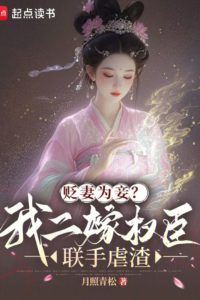
Zhang Zhiyan, the concubine-born daughter of the Jing'an Marquis mansion's second branch, is reborn three days after falling into a pond and suffering a high fever in her previous life. In that past existence, she was the virtuous wife of Liao Chuan, the heir to the Huguo Duke mansion, yet she was ultimately poisoned to death by her jealous sister-in-law, Liao Mingzhu, and her mother-in-law, Madam Xia, after her own legitimate son died. Now awake in the twenty-fourth year of Chong De, Zhang Zhiyan resolves to escape this toxic household and forge a path of survival for herself, her concubine mother, and her younger twin brother, Zhang Chengxiao. She immediately requests to visit Ji Ming Temple to offer incense, unaware that this decision will alter the course of her fate.

At the temple, an assassination attempt erupts, drawing the attention of Liu Lang, the stern and ruthless Zheng Shi of the Tan Shi Jian Cha Si under the Wu De Si. During the chaos, Zhang Zhiyan faints and is caught by Liu Lang, who recognizes her striking beauty. She is arrested along with other pilgrims for questioning. Inside the Wu De Si dungeon, Liu Lang interrogates her regarding a lost silk pouch containing a golden peanut, which he suspects contains critical intelligence. Zhang Zhiyan, having secretly retrieved the pouch, denies seeing it and is released under guard. Back at the Huguo mansion, she faces hostility from Madam Xia and Liao Mingzhu, who are plotting against her. When arsenic is discovered in her food, Zhang Zhiyan does not remain passive; she interrogates the servant who delivered the poison and uncovers a devastating secret.

Zhang Zhiyan confronts the Duke, Huguo-gong, with evidence that Madam Xia has been committing adultery for over a decade and that Liao Mingzhu is not the Duke's legitimate daughter but the product of that illicit affair. The Duke is furious and orders the punishment of Madam Xia and the confinement of Liao Mingzhu, effectively dismantling the power structure that had tormented Zhang Zhiyan in her previous life. Liao Chuan, her husband, returns home enraged and accuses her of framing his family, but Zhang Zhiyan coldly dismisses his accusations and declares her indifference to his affection. She also exposes that Liao Chuan is keeping a mistress, Lu Yao, in Tongque Alley, and deliberately leaks this information to her own aunt, the Marchioness of Jing'an Houfu, to create discord between the two noble houses.

Her plans are interrupted when her younger brother, Zhang Chengxiao, is arrested in connection with a imperial examination leak case and imprisoned in the Wu De Si. Realizing she needs external protection, Zhang Zhiyan returns to the Wu De Si to negotiate with Liu Lang. She offers him the golden peanut from the silk pouch in exchange for her brother's release. Liu Lang, intrigued by her boldness and beauty, accepts the trade but warns her to use his private residence in Tongque Alley for future communications. He also reveals that he knows about her illegitimate status and her complicated family dynamics, establishing a tense but mutually beneficial alliance. Zhang Zhiyan secures her brother's release but learns that another relative, Zhang Chengye, remains imprisoned, a complication she chooses to ignore.

Seeking to consolidate her position and prepare for her eventual departure from the Liao family, Zhang Zhiyan requests permission to take a concubine for her husband, elevating Liao Chuan's study maid, Wenhui. This move is calculated to drive Liao Chuan closer to his mistress, Lu Yao, and accelerate his desire for divorce. She also attends a flower-viewing banquet at the Wenguo mansion, where Liu Lang unexpectedly appears with his guards to conduct a search. In a daring public gesture, Liu Lang snatches Zhang Zhiyan's handkerchief as she passes, a subtle signal of their secret connection. Zhang Zhiyan uses the opportunity to scout Tongque Alley, locating Liu Lang's residence and identifying the area where her husband keeps his mistress. She returns home to examine the secret message hidden within the oil paper from the golden peanut, discovering that it requires a special medicinal solution to reveal its contents. As she delves deeper into the political intrigue surrounding the examination leak and the secrets of the noble families, Zhang Zhiyan prepares to use every advantage at her disposal to secure her freedom and protect those she loves, while Liu Lang watches her moves with growing interest.

Novel Items

More
Item
A small, exquisite silk pouch dropped by Liu Lang during the assassination at Ji Ming Si. It was half the size of a palm and appeared to be a woman's possession. It contained a golden peanut. Zhang Zhiyan picked it up from a puddle and kept it hidden, planning to negotiate with Liu Lang in the future.
Item
A valuable item used by Shen Yunying to bribe a little eunuch at the palace to secretly pick a small red peach for her.
Item
A lamp requested by Zhang Zhiyan at Ji Ming Si temple instead of a fortune stick. She wrote the birth characters of the legitimate son she had borne in her previous life on a slip of paper and asked an eminent monk to enshrine it under the lamp.
Item
A food item that Zhang Zhiyan often ate. Arsenic was discovered to have been added to the stone jar of plum sauce sent from the main kitchen. In her previous life, she had been poisoned only after giving birth to her legitimate son.
Item
A jade spoon used by Zhang Zhiyan to drink medicinal soup prepared by Lüzhu.
Item
A teacup used by Liu Lang in his office at Wu De Si. He picked it up and took a sip while questioning Zhang Zhiyan about the silk pouch.
Latest Release
DateGroupRelease
2026-08-11shanghai fantasy c10
2026-08-11shanghai fantasy c9
2026-08-11shanghai fantasy c8
2026-08-11shanghai fantasy c7
2026-08-11shanghai fantasy c6
2026-08-11shanghai fantasy c5
2026-08-11shanghai fantasy c4
2026-08-11shanghai fantasy c3
2026-08-11shanghai fantasy c2
2026-08-11shanghai fantasy c1

Community Reviews

Rating(4.1 / 5.0, 8votes)
5 stars
2(25%)
4 stars
5(63%)
3 stars
1(13%)
2 stars
0(0%)
1 stars
0(0%)

Popular reviews

... Read More
This batch of chapters is a masterclass in controlled pacing. The author knows exactly when to slow down and when to accelerate. Let me break it down. The Tongque Alley carriage ride is deliberately slow—sunlight, willow trees, the Cenxi River, the camphor tree. It's atmospheric, almost meditative. But even in this quiet passage, there's purpose: Zhang Zhiyan is mapping the area, memorizing which houses have plaques and which don't. Nothing is wasted. The author could have rushed through this, but instead lets us breathe in the world. Then we cut to the outer study, and the pace immediately sharpens. The Duke's dialogue is rapid-fire, each line delivering new information about Liao Mingzhu's marriage, the Wenguo-gongfu troubles, the political stakes. No filler. Just plot advancing at speed. The Liao Chuan confrontation in Yu Qiong Yuan is the emotional peak of the chapter, and it's perfectly paced—starting with his awkward attempt at conversation, building to her devastating reply, ending with him slamming the door. The silence after he leaves is almost louder than his anger. And then the oilpaper scene—methodical, patient, almost clinical. She heats the paper, watches the wax melt, sees the cracks form. It's slow because the moment demands it. We're supposed to feel her careful concentration. The final beat—Liao Mingzhu's summons—is the chapter's hook. It comes right after a moment of relative calm, and it flips everything. The chapter ends not with resolution but with dread. Perfect structure.
... Read More
This opening chapter sequence is a brilliant example of how to establish stakes and propel a protagonist forward with purpose. The rebirth trope is handled with impressive narrative economy—Zhang Zhiyan doesn't spend chapters wallowing in confusion but quickly pivots to action, which immediately signals to readers that this is a story about agency and strategy. The plot structure here operates on multiple levels simultaneously. On the surface, we have a woman navigating dangerous political intrigue in a historical setting. Beneath that, there's the personal revenge arc—she's been poisoned in her previous life, her family was silenced, and now she's determined to turn the tables. The genius is how these threads are woven together through the assassination attempt at Ji Ming Si temple. What struck me most was the pacing of revelations. The author doesn't dump information but reveals it through action: the silk pouch, the golden peanut, the arsenic in the plum sauce. Each discovery propels the plot forward while simultaneously raising new questions. The assassination scene itself is a masterstroke—it's not just action for action's sake but a catalyst that forces Zhang Zhiyan into Liu Lang's orbit, setting up the central power dynamic of the story. The tension builds methodically. We start with Zhang Zhiyan recovering from fever, move through the temple visit, the assassination chaos, imprisonment, interrogation, and return home—only to discover another poisoning attempt. Each scene escalates the danger while revealing more about the political landscape. The Wenguo-gong-fu flower-viewing banquet mentioned at the end promises even greater conflict ahead. One plot element that particularly impressed me was the dual-timeline structure implied by the rebirth. Zhang Zhiyan's knowledge of future events gives her strategic advantages, but the author carefully shows the limitations of this knowledge—she doesn't know everything, and her actions in the present are creating new variables. This prevents the plot from becoming predictable despite the protagonist's foreknowledge. The narrative arc from victim to strategist is compelling. In her previous life, Zhang Zhiyan was poisoned after bearing a son—now she's already three steps ahead, collecting evidence, building alliances, and planning counterattacks. The plot doesn't just tell us she's changed; it shows her transformation through her decisions and actions. I found the temple assassination scene particularly well-constructed. The chaos serves multiple purposes: it forces Zhang Zhiyan to interact with Liu Lang, provides the golden peanut as a MacGuffin, demonstrates the political danger she's navigating, and creates an opportunity for her to pick up the pouch that becomes a bargaining chip. Every element of the scene advances the plot. The only concern I have is that the political intrigue is still being established—readers may need more context about the Wu De Si, the Tang Shi Jian Cha Si, and the various noble houses. But the author seems to be laying groundwork for a complex web of alliances and betrayals that should become clearer as the story progresses. Overall, this is a plot that understands its audience. It delivers immediate satisfaction through the rebirth fantasy while building toward larger conflicts. The pacing is tight, the stakes are clear, and the protagonist's agency is never in doubt. For readers who enjoy strategic protagonists navigating dangerous political landscapes, this opening delivers exactly what it promises.
... Read More
The worldbuilding in this novel is exceptional—not through exposition dumps, but through carefully observed details that make the setting feel lived-in and authentic. The author has created a world that feels historically grounded while maintaining the dramatic intensity of political intrigue fiction. The opening scene at Ji Ming Si is particularly vivid. The description of the temple 'looking like a celestial realm on earth, appearing and disappearing fitfully in the boundless haze' creates an almost dreamlike quality that contrasts sharply with the violence that follows. This juxtaposition of sacred space and bloody conflict is thematically rich—the temple should be a place of peace, yet it becomes a battlefield. The rain scene is masterfully executed. The 'fine, long threads of rain—not heavy, but very dense' sets the mood perfectly. Rain in Chinese literature often symbolizes cleansing or turmoil, and here it serves both purposes—the blood mixing with rainwater, the ground being 'washed clean by the downpour,' creating imagery that's both beautiful and disturbing. The Wu De Si interrogation scene is where the worldbuilding really shines. The description of winding through 'three main gates, three corridors, and a large passageway' to reach a 'quiet courtyard planted with dark bamboo' creates a sense of bureaucratic labyrinth that feels authentic to historical Chinese government structures. The guards 'wearing felt hats and solemn expressions' add to the atmosphere of controlled authority. Liu Lang's appearance is described with remarkable specificity—the 'black satin brocade robe' with 'Teng She outlined in gold thread,' the 'peach blossom eyes,' the 'thin lips curved into a slight smile.' These details create a character who is simultaneously attractive and threatening, which is exactly what a 'deadly treacherous official' should be. The Huguo Gongfu itself feels like a character. The 'eight red lanterns hanging under the corridors of the inner courtyard, Yu Qiong Yuan, had not yet been extinguished' creates an atmosphere of lingering presence—the household is still active even in the early morning hours. The contrast between the grand exterior and the intimate interior spaces (the inner chamber with the 'carved window opened only a crack') shows how the physical environment reflects the social constraints on women. The prison cell scene is brief but effective. Zhang Zhiyan's physical discomfort—'head throbbed with a splitting pain, and her throat was so sore'—grounds the political intrigue in bodily reality. The fact that she's not alone but has Lüyin and Lüzhu in the adjacent cell shows that even in confinement, relationships matter. The garden stroll between Madam Xia and Liao Mingzhu is a perfect example of how domestic spaces become political spaces. The 'strolling through the garden' while plotting murder shows how the private sphere of women is actually a arena of power struggle. What's impressive is how the author uses weather and environment to reflect emotional states. The spring rain that begins 'out of nowhere' mirrors the sudden disruption of Zhang Zhiyan's plans. The clearing sky after the dungeon scene suggests hope, even as new dangers emerge. The description of the Wenguo-gong-fu flower-viewing banquet, even though we haven't attended it yet, creates anticipation. The fact that it's 'specially arranged for the seventh young master' to meet eligible young ladies suggests that marriage politics will be central to the plot. The author's attention to material culture is noteworthy—the 'moon-white robes,' the 'jade spoon,' the 'blue-and-white porcelain teacup.' These details ground the story in a specific historical moment without overwhelming the narrative. One scene that particularly impressed me was Zhang Zhiyan examining the golden peanut. The description of it as 'small, exquisite' and her careful inspection shows how even tiny objects can carry enormous significance in a world where information is power. The worldbuilding serves the plot perfectly—every location has dramatic function, every detail reinforces the social hierarchy and political danger. The reader never feels lost because the physical environment is always clear and vividly described. Overall, the atmospheric depth of this novel is remarkable. The author has created a world that feels authentic, dangerous, and beautifully rendered—a perfect stage for Zhang Zhiyan's strategic maneuvers.
... Read More
Okay, let me just say—the oilpaper scene is genuinely brilliant plotting. Zhang Zhiyan finds this hidden message inside a book, realizes it's been sealed with beeswax and requires a special medicinal solution to reveal the text, and she literally has to wait because she doesn't have the reagents. That is such a smart way to create tension without resorting to cheap cliffhangers. The author doesn't just hand her the answers; she has to work for them. And then right when you think the chapter is winding down with her doing Buddhist scriptures, BAM—Liao Mingzhu demands to see her, threatening to dash her head against the wall. The pacing of revelations here is masterful. One secret uncovered, another one locked away, and a third one waiting in a dusty abandoned courtyard. Also, the subplot about Liao Mingzhu's forced marriage is getting darker by the chapter. She's bound, confined, and being sent away to marry someone she knows nothing about, and the Duke is just coldly calculating how to protect the family's reputation. The Wu De Si investigation at the beginning is another thread that's clearly building toward something bigger. I love how all these threads feel connected—the mistress, the secret marriage, the political troubles, the hidden messages. It's not just one plot; it's a web.
... Read More
I need to talk about Zhang Zhiyan and Liao Chuan because THIS is what I'm here for. The emotional dynamics between them are absolutely fascinating. She has zero feelings for him—like, physically and mentally uncomfortable, the text literally says. And he? He's trying so hard to provoke her, to get a reaction, and she just... doesn't give it to him. The scene where he comes to her room and she says, 'I'm afraid the heir has misunderstood. My wish is not for you to stay by my side, but for you to become a Qianhu in the Dianqian Si'—I literally screamed. That is the coldest, most devastating burn I've ever read. She wraps it in polite, gentle words but it's pure mockery. And he storms out. She doesn't even flinch. But what really got me was the maid conversation. Lüyin and Lüzhu talking about buying a house in Tongque Alley 'if one day our mistress leaves Huguo Gongfu.' They genuinely want her to be happy and free. And Lüzhu's line—'As long as our mistress is well, we will naturally be well too'—that hit me in a way I didn't expect. It's a different kind of love, not romantic but deeply loyal, and it makes the whole world feel more real. And then Liao Mingzhu at the end, with that 'sinister smile, somewhat terrifying, like the calm before utter madness'—chills. Absolute chills. She's been broken and twisted by everything that's happened to her, and now she's coming for someone.
... Read More
The dialogue in this text is genuinely exceptional, and I want to highlight why. Zhang Zhiyan's voice is her most striking feature. She speaks in a register of polite formality that masks razor-sharp intelligence. When she says 'Fine. The heir may take as many as he wishes' about Liao Chuan wanting another concubine, the flatness of it is devastating. She's not being submissive—she's being dismissive. And when she tells him to become a Qianhu, the soft, gentle tone that carries such venom? Chef's kiss. Liao Chuan's dialogue reveals everything about his character. He's loud, reactive, and constantly trying to assert dominance while clearly feeling insecure. 'Zhang-shi, are you deliberately provoking me?'—he can't conceive that someone might simply see through him. His father's lines are equally telling: 'A true man should not expend so much energy on such trivial matters of affection.' That's not just dialogue; that's a worldview laid bare. The Duke is a different creature entirely. His speech is economical, authoritative, devoid of emotion. 'Choose a day and speak with Zhang Shi about bringing the outside mistress into the estate.' He's not cruel; he's practical. That's what makes him terrifying. Even the maids have distinct voices. Lüyin is warm and hopeful ('I think this place is quite nice'), while Lüzhu is more grounded and realistic ('It's not so easy for a woman to establish her own household'). Two servants, two completely different ways of seeing the world. The narrative voice itself is restrained but observant—never telling us how to feel, just presenting the details and letting them land. 'Her skilled hands swiftly guiding the needle and thread.' That's it. That's all. And somehow it says everything about her composure.
See all reviews

Characters

See all characters

Custom lists

Oops…There is nothing here.