Delicious Sweet Milk Baguette - Reviews

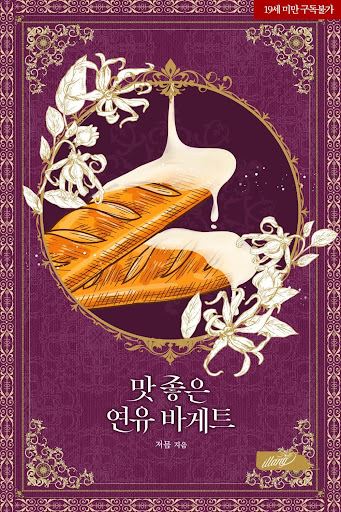
Delicious Sweet Milk Baguette
+Add to Custom List
Sort
Add review
... Read More
Let me just say—the bakery scene. THE BAKERY SCENE. The way the author describes that dark-tinted window where you can see silhouettes but not details? That's the kind of detail that makes a scene feel REAL. You can picture it. The frosted glass, the shadows of the Calantus ladies pressing their faces close, the contrast between the warm, private act inside and the casual daytime chatter happening just centimeters away. It's cinema-level writing. But what really stuck with me is how the world feels alive beyond just that one moment. The magic stone system in the palace—where Roa deposits her research materials through this portal-like device with a central administrator voice—is such a cool fantasy touch. It doesn't over-explain itself; we just see it functioning naturally, which tells me this is a well-established world the author has built. The dried parchment smell, the black ink on her fingertips, the half-cooled coffee. These tiny textures make Hilgrad feel like a place that exists. And the bath scene later! The green-tinted bath salts, the slightly warm champagne that's not properly chilled, the steam blurring her tired eyes—every sense is engaged. The author doesn't just tell us she's exhausted; we FEEL the languid, post-work exhaustion through the descriptions. Even Klimt's clothes carry this 'cool evening scent from standing outside too long.' That's the kind of detail that separates good worldbuilding from great worldbuilding. The world isn't just backdrop; it's breathing.
... Read More
This chapter is a masterclass in knowing when to accelerate and when to breathe. It opens at the emotional climax—the confession, the tears, the kiss—and instead of trying to top that with plot fireworks, the author simply lets the scene exist, lets it settle, then transitions into the epilogue with a softness that feels earned. A weaker writer would have kept building tension or thrown in some external complication. This author trusts the reader to sit with happiness for a moment. The week-long domestic montage is paced like a series of snapshots rather than a summary, which keeps it from feeling rushed or perfunctory. Each beat—the market visit, the park bench, the ice cream, the question about Joshie—gets its own room to breathe. The Joshie subplot is introduced as a whisper of suspicion and resolved through dialogue rather than exposition, which is the correct structural choice. If Klimt had simply announced, "I only ever loved you," it would have felt unearned. The misunderstanding gives Roa (and the reader) something to work through, and the resolution lands because it's discovered, not declared. The pacing of their conversation about Joshie is particularly well-controlled: Roa starts curious, slips into suspicion, watches Klimt's expression shift from calm to worried, and then experiences the relief-and-embarrassment cascade when she learns Joshie is a man. The laugh that comes after isn't mockery; it's the release of tension that every reader has been carrying without knowing it. The final exchange—the gentle scratching of palms, the playful exchange about hunger, the image of them rising to walk into the midday sun—feels like the author closing a book gently, not slamming it shut. Nothing is left hanging, nothing is over-explained. The structure serves the tone: tender, secure, complete.
... Read More
Klimt's voice is instantly recognizable, and it's one of the most distinctive character voices I've encountered in this genre. He speaks with a formality that borders on archaic—"Did you call, Roa?" "Please go ahead. I'm delighted that Roa has something she wants to ask me." But the formality isn't affectation; it's tenderness dressed in restraint. He doesn't say, "What's wrong?" He says, "I'm delighted you have something to ask." That linguistic choice reveals everything about who he is: he frames his entire world around her willingness to engage with him. Roa's voice, by contrast, is more direct, more playful, occasionally flustered. Her questions are sharp and curious—"Do you know Joshie?"—and her responses carry the weight of someone who has caught herself imagining worse than what's true. The dialogue between them crackles with a specific energy: the kind that exists between two people who have moved past performance and into comfort. When Klimt says, "I couldn't possibly serve something I've already eaten to someone as distinguished as you," it's bold, almost brazen, and Roa's reaction—spluttering black coffee—is the perfect comedic beat that grounds the romance in physical reality. Their exchange about the tasting bread is structured like a mini-detective story: Roa pieces together clues, Klimt hesitates, the tension peaks, and then the absurdly simple truth collapses the entire mystery. The humor comes not from punchlines but from the gap between Roa's dramatic imagination and Klimt's literal sincerity. And the final lines—"Aren't you hungry?" "I am a bit hungry..."—are deceptively simple. On the surface they're about food. In context, they're about everything else. The dialogue never over-explains; it trusts the reader to feel the subtext. Even the narrative voice, which occasionally dips into first-person interjections like "Delicious bread. Klimt's delicious sweet milk baguette," feels like an interior monologue rather than authorial intrusion—a character thinking out loud, finding her words through association rather than logic.
... Read More
"Joshie… you fraud! Claiming to be a baguette expert!" — I screamed this internally. Roa's internal monologue is SO much fun. She's this serious, accomplished herbalist who rejects suitors and takes herself seriously, and then the moment something goes wrong she completely loses composure. Her inner voice is a masterpiece. The dialogue between Roa and Klimt is equally sharp. Watch how Klimt speaks — calm, measured, almost scholarly in his delivery, which makes his actions all the more shocking. "To let you taste the tasting bread." He says this with complete conviction, like he's discussing a wine pairing or a recipe. The contrast between his refined vocabulary and what he's actually proposing is comedy gold. "Actually, that's perfect! I love it when it's rich." This line hit me so hard. Roa literally says this about sweet milk and then the whole scene pivots and your brain goes "WAIT WHAT ARE YOU TALKING ABOUT" and it's brilliant. The author is playing with double meanings at a level that makes you feel dirty for understanding them immediately. Roa's attempts to protest are adorably ineffective. "Wait… I can't… breathe…" and then later "It seems there's been a misunderstanding… This can't continue, Klimt." But Klimt just… doesn't listen. "If Roa doesn't want it, I won't impose any further. But… if it's not that, may I continue?" The casualness of that question is absolutely devastating. His voice never wavers even when the situation is escalating wildly. Both characters have distinct rhythms. Roa stammers, interrupts herself, gets flustered. Klimt speaks in complete sentences with warm confidence. The dialogue tells you everything about their dynamic without the narrator needing to explain it.
... Read More
Can we talk about how vividly this world comes alive in just a few paragraphs? The heat. The scorching sun in Southern Calantus described almost like a character itself — 'a veritable inferno compared to the capital.' I felt that sweat on my own skin. The author doesn't waste words on description but every sensory detail lands. The bakery scene is cinematic. You've got these young ladies lined up with parasols, the clock striking four, the doors opening and that moment of hope crashing into disappointment. It's almost like a film sequence — wide shots of the queue, close-ups of Roa's desperate face, then the door opening and HIM stepping out. I can't believe how visual this is for a text-only medium. Inside the bakery is where things shift completely. The cool air hitting Roa after the inferno outside, the contrast of temperatures mirroring the shift from public desperation to intimate tension. And the detail about the buckles — subtle sound cues that build dread and anticipation. The spatial arrangement matters too: the counter, the apron, the physical distance closing between them. It's choreographed like a dance. What struck me most is how Calantus itself feels like a force pushing Roa into this situation. She's not from here — the climate, the heat, even the language of bread terms — it all isolates her, making her vulnerable to this misunderstanding. The city doesn't care about her plans or her schedule. It just happens. I love settings that do this kind of work.
... Read More
Okay I know this sounds weird but let's talk about the symbolism here because this text is WAY deeper than it appears on the surface. The bakery and bread as symbols—obviously, right? But it's not just romantic flavor text. Klimt is introduced as a baker. His 'sweet milk baguette' becomes this recurring motif that ties the entire chapter together. Even when Roa is back in the capital, alone in her bath, what does she crave? Not wine, not luxury, not anything fancy. She craves BREAD. And specifically KLIMT's bread. The food becomes a vessel for longing, a tangible representation of everything she misses. 'It was delicious, so that's enough'—but it's clearly NOT enough. She wants more. Of the bread, of him, of that moment. Then there's the WINDOW itself. That dark-tinted glass between Roa and the outside world—it's the perfect symbol for her entire existence. She's always performing, always maintaining propriety (the 'dignified young lady from a respected family'), always separated from genuine feeling by layers of expectation and glass. Behind that window, she finally lets go. The silhouette she sees reflected—'oddly foreign and unsettling'—is the real her, the one she rarely allows herself to be. And Klimt? He's the only one who gets to see it. Even the rolling pin Klimt carries to her door is symbolic. He didn't come with flowers or jewelry. He came with the tool of his craft, the extension of himself, as if to say 'I am what I am, and I'm bringing it to you.' The domestic intimacy of it all—bread, baking, showing up unannounced at someone's door in a bathrobe—this story is about how love strips away our performances and leaves us raw and real. Chills.
... Read More
I need to talk about the bread metaphor because this thing is running DEEP and I'm not sure the author even realizes how loaded it is. On the surface, it's just dirty jokes. Klimt talking about dough, kneading, prepared bread, sweet milk—that's the comedic layer. But peel it back and the symbolism is almost mythological. Bread is sustenance. Bread is life. In almost every cultural and religious tradition, bread carries sacred meaning. Klimt doesn't just sell bread—he transforms raw grain into something that sustains people. And in his confession, he tells Roa that baking was never about the craft. It was about becoming worthy of her. He kneaded himself—the same word he uses for his act of love—into someone she would recognize, someone she would want. "My beautiful Messiah"—he doesn't just call her pretty. He names her as a savior figure. And the text supports this. When Roa first encounters him as a child in the cage, the narration emphasizes her mercy as something almost divine: "it might be seen as a divine mercy to save a wandering soul." She buys his freedom without hesitation, gives him her name, and sends him toward a future she will never see. To a broken child, that isn't just kindness—that's miracles. The physical transformation mirrors the spiritual one too. Klimt goes from "a bastard child of a third-rate dancer in the filthy backstreets" to a muscular bakery owner who moves with "noble grace." His body becomes proof that mercy isn't wasted. The fighting dog didn't stay a fighting dog. He chose something else, and he chose it because she showed him there was another way to exist. And Roa's arc here is equally symbolic. She begins this chapter telling herself she's just an adult woman having consensual sex with no strings attached. But by the end, she's being called a Messiah and feeling something dangerously close to guilt that she doesn't remember him, followed by shame that she did. She thought she was just passing through Calantus. Instead, she's the reason a boy grew up to become a man who built his entire life around her memory. "Two doughs were kneaded together into a single whole." The author writes this right after their emotional reunion and it's the thesis of the whole story. They weren't just two people who happened to meet again. They were unfinished something, waiting to be pressed together.
... Read More
I have never laughed and blushed this hard at the same time in my life. The author has crafted this absolutely filthy double-entendre system throughout the entire scene and I am HERE for it. Let me just lay out the best examples: "It will be delicious. I promise you." "I don't think it will all fit…" "Well, you won't know until you try, right?" "No, it will definitely tear!" "Don't worry too much. I'll make sure you're sufficiently prepared so that you can enjoy it." And then the masterpiece: "Do you know what's most important for making delicious bread, Roa?" ... "It's all about the dough." ... "I'm going to knead Roa's body now." I actually said out loud "OH MY GOD" when that came up. The way Klimt delivers these lines—completely deadpan, like he's genuinely discussing baking techniques—is perfection. He's not even being dirty on purpose. He's being sincere about his baking vocabulary while simultaneously saying things that are wildly inappropriate in context. But then the dialogue shifts and gets genuinely beautiful: "I've been waiting for you here all this time." "You've been like a dream or an unattainable longing for me." "Someday, we will meet again. My beautiful Messiah, Roa Eckladen." These lines land so differently from the bread puns. One moment he's a goofy baker making double entendres, the next he's this deeply wounded person who has carried one memory like a sacred flame. The contrast between those two voices within the same conversation is incredible. And Roa's lines! Her hesitant "Uh…ha…uh?" when he confesses, her flustered "No, no. The tasting bread was a real misunderstanding!"—she sounds like a real person caught between horniness and genuine emotional overwhelm. Not a polished love interest, just someone whose brain is short-circuiting.
... Read More
Let's talk about Roa. She's someone who carries herself with practiced composure, and the text explicitly notes how subdued she becomes when Klimt strips that away. That vulnerability isn't weakness—it's the opposite. She's allowing herself to be seen. And then there's this incredibly telling observation about Klimt's eyes: "Despite his large, robust frame, there was an irresistible desire to protect him whenever she faced him." I love that she doesn't describe maternal instinct here; she describes *recognition*. This isn't a woman looking at a child. This is a woman looking at someone who has chosen her, entirely and without reservation, and feeling that fierce, sudden need to shield *him* from a world that might not deserve him. Their physical language says more than their dialogue ever could. The hand-knuckle tap, the face-enveloping grip, the vanilla ice cream wiped from the corner of his mouth—he lets her do it, leans into it, then playfully turns the tables by licking her thumb. That moment is so perfectly balanced between sweetness and flirtation it's almost unfair. Klimt's devotion isn't performative. When he says, "I couldn't possibly serve something I've already eaten to someone as distinguished as you," he's not being formal—he's revealing that every gesture toward Roa is treated as sacred, singular, new. The Joshie misunderstanding works because it's so petty and so human. Roa's suspicion isn't about betrayal; it's about comparison. Could she measure up to someone Klimt had shared something intimate with before her? The text makes it clear: there is no before. Joshie was a customer who happened to praise the bread. Klimt's entire architecture of affection was built around one person, and that person turned out to be Roa all along. What stays with me is the epilogue image—Klimt hugging her as if he found her lovely. Not as if he owned her, not as if he needed her, but as if discovering her was the greatest accident of his life.
... Read More
Let's talk stakes, because this story is quietly stacking them higher than you'd expect. External conflict is obvious — Roa needs to leave tomorrow. She has academic work waiting, a homeland to return to, a career she built from scratch. Every hour she spends in Calantus is an hour stolen from her life. And yet here she is, locked in a bakery conversation with a man who doesn't understand what she's trying to say. The time pressure creates this constant background hum of urgency. But the internal conflict is where this story really earns its keep. Roa spent years building herself into someone who doesn't need anyone. She rejected suitors, prioritized her work, chose isolation over compromise. And then Klimt appears and completely dismantles her defenses without even trying. His confidence, his warmth, the way he pays attention to her — it's everything she claimed not to want. The real tension isn't whether she'll sleep with him. It's whether she'll admit to herself that she might WANT to. "Despite being certain she had never met him before, Roa felt an odd sense of familiarity." This line haunts me. The story is hinting at something deeper — a connection that predates this moment, something that makes this encounter feel fated rather than accidental. The stakes just multiplied. And then there's the humor stakes — the comedy of errors is so well-calibrated that every wrong turn raises the tension instead of diffusing it. When Roa says she wants "generously sprinkled" sweet milk, the reader knows exactly where this is going but she doesn't. That dramatic irony is exhausting in the best way. I was literally holding my breath through the buckle scene.
... Read More
External conflict is virtually absent here, and that's intentional. The stakes are entirely internal, which means they're harder to write well—because you can't rely on explosions or villains to carry tension. What we get instead is the quiet, corrosive power of a minor suspicion. Roa doesn't suspect Klimt of cheating; she suspects him of having shared intimacy with someone else before her. It's a different anxiety, one rooted in the fear of comparison rather than betrayal. And the text makes it clear: this isn't irrational jealousy. It's the natural response of someone who has been alone, who has waited, who is suddenly being offered something precious and wondering if it was always meant for someone else first. The stakes are high precisely because they're invisible. Klimt's response—immediate, earnest, almost panicked denial—reveals the true weight of what's at risk. Not just the relationship, but his sense of having found her. When he says, "When I first saw you, I thought it was a dream. I was so surprised that I almost forgot how to breathe," the entire emotional architecture of the story collapses into that single moment of recognition. He wasn't searching for *anyone*; he was searching for *her*, and he didn't even know it. The Joshie misunderstanding works as conflict because it forces both characters to articulate what they've never fully named: that their connection is singular, irreplaceable, and built on a foundation of mutual recognition that predates their conscious awareness of each other. There's no third act breakup, no grand gesture, no external threat. The conflict is resolved through conversation, through the simple act of asking a question and receiving an honest answer. And yet the emotional payoff feels enormous, because the reader has been carrying the same anxiety Roa carried—the fear that happiness this complete might be too fragile to last. The final image, of them walking into the midday sun together, isn't a resolution of plot; it's a resolution of trust. And that's the highest stake this story ever aimed for.
... Read More
A nice written story, love the characters too

Leave a comment

You must be logged in to leave comments. or
