Summary

... Read More

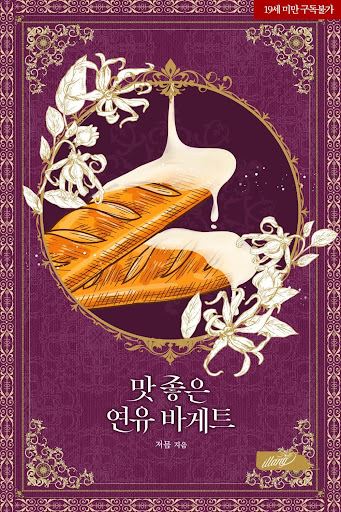
Roa Eckladen is a distinguished herbalist and the Chief Researcher at the Hilgrad Pantheum, the royal academic institution. Born into a powerful noble family from the central region, she possesses a natural talent for herbalism that allowed her to carve an independent path contrary to the traditional expectations placed on young women of her station. She refused an arranged marriage and chose a life of rigorous scholarship over social convention. Despite her high status and striking appearance, marked by silver hair and a cold demeanor, Roa leads a solitary existence consumed by late-night conferences, experiments, and endless paperwork. Her only indulgence is a deep passion for bread, particularly sweet milk baguettes, which serves as a rare escape from her demanding career. When a food column by the renowned critic Joshie King highlights a bakery in the southern city of Calantus, Roa travels there specifically to taste the famous loaf, driven by anxiety that she might miss this opportunity until her next annual conference.

Upon arriving in Calantus, Roa endures the scorching heat and a long queue of local young ladies eager to buy the limited daily supply. By the time she reaches the front, the bakery has sold out of its standard baguettes. Disappointed but lingering, she is approached by Klimt, the bakery owner, who notices her distress. Reminding her of a detail from Joshie’s column regarding special tasting breads offered at the owner’s discretion, Roa asks to sample it. Klimt recognizes her immediately, referring to her as his beautiful Messiah, and invites her inside. There, he reveals that the tasting bread is a euphemism for his own body, initiating an intense sexual encounter. During their intimacy, Klimt discloses his identity as the fighting dog of Calantus, a title earned through his history in underground human fighting arenas.

Klimt’s backstory reveals that he was born to a disgraced dancer and a wandering knight, leading to a life of poverty and theft. As a child, he was destined to be sold as a fighting dog after being caught stealing. Roa, traveling in Calantus years prior, purchased his freedom out of compassion, an act that saved his life. She gave him her name and a pouch of gold before departing, leaving him with a singular devotion. Klimt spent years rising through the ranks of the fighting pits, using his earnings to reinvent himself. He learned baking, trained his physique, and adopted noble manners, all with the goal of becoming someone worthy of Roa should they ever meet again. The bakery in Calantus was opened specifically because it was a place he knew she might visit, serving as a beacon for their reunion.

After their passionate encounter, which includes a scandalous moment where they are nearly observed by other patrons through a frosted window, Roa returns to the capital, Hilgrad. She resumes her exhausting work schedule but finds herself distracted by memories of Klimt. Shortly after her return, Klimt arrives at her residence with a rolling pin, having traveled to the capital and waited days for her answer after she failed to respond to his initial letters. He had prepared to break into her home out of desperation when she finally returned. Roa accepts his presence, suggesting he stay with her while he finds permanent lodging.

Klimt integrates himself into Roa’s life, cleaning her home and preparing meals. He bakes mini baguettes using a small oven, delivering a taste that surpasses even the renowned shop in Calantus. The relationship deepens as they navigate domestic intimacy, with Klimt continuing to serve Roa both culinarily and sexually. A brief moment of jealousy arises when Roa questions whether Klimt had shared his intimate services with the critic Joshie, who wrote the column that brought her to the bakery. Klimt reassures her that Joshie is male and had only tasted the bread, not the tasting bread, and that Klimt used the column’s reference to the special tasting as a coded signal to guide Roa toward him. The story concludes with Roa and Klimt establishing a shared life in the capital, blending her professional independence with his devoted companionship, set against the backdrop of their intense physical and emotional connection.

Latest Release
DateGroupRelease
2026-09-27citrus aurora c18
2026-09-27citrus aurora c17
2026-09-27citrus aurora c16
2026-09-27citrus aurora c15
2026-09-27citrus aurora c14
2026-09-27citrus aurora c13
2026-09-27citrus aurora c12
2026-09-27citrus aurora c11
2026-09-27citrus aurora c10
2026-09-27citrus aurora c9
2026-09-27citrus aurora c8
2026-09-27citrus aurora c7

Community Reviews

Rating(4 / 5.0, 25votes)
5 stars
9(36%)
4 stars
7(28%)
3 stars
8(32%)
2 stars
1(4%)
1 stars
0(0%)

Popular reviews

... Read More
Okay, I know this sounds ridiculous but hear me out — this story is doing something clever with bread as a symbol and I can't stop thinking about it. On the surface, bread represents desire, access, longing. Roa wants the sweet milk baguette the way other women want marriage proposals or social status. Both are scarce resources in Calantus — twenty loaves a day, limited availability, things you have to wait in line for. The hunger motif runs throughout: hungry bellies sticking to backs, mouths watering, desperation that borders on starvation. The bread isn't just food; it's fulfillment. But then the misunderstanding reframes everything. What Roa thought was literal nourishment turns out to be something entirely different — sustenance of a different kind. The 'tasting bread' that Joshie wrote about becomes code for intimacy, pleasure, connection. And Roa's rejection of arranged marriages and traditional female roles takes on new meaning when she's put in this position where a man assumes she wants something she didn't ask for. She spent her life saying no to men who wanted her to conform — and now she's in a situation where a man heard exactly what he wanted to hear. The sweet milk detail is also interesting. Roa loves coffee paired with sweet milk — bitter and sweet together. That's essentially her relationship philosophy, isn't it? She chooses intensity over convention. And Klimt notices this about her instantly, even before the misunderstanding deepens. "Women from the central regions seem to have a bolder approach." He's reading her, testing her, seeing if she'll match his energy. There's also the bread-under-the-apron image that appears twice — once physically (the actual item) and once metaphorically (his body). The repetition creates this parallel that's almost too on the nose, which is exactly why it works.
... Read More
So the dialogue here is doing SO MUCH work and I need to unpack it. First, Klimt's voice—he speaks in this earnest, almost simple way. 'The goal of opening the shop had already been achieved, so there was no reason to continue.' That's not romantic, that's practical. But then it IS romantic because he means SHE was the goal. The author writes him like he's this giant gentle man who communicates through actions mostly. His lines are short, direct. 'It's dripping.' 'You're wet, Roa.' Not filthy, just... observational? Statement of fact. And Roa? She's all flustered half-sentences. 'Klimt, should I—' 'Don't move right now.' The way she trails off, gets cut off, gets overwhelmed—that's her voice. Physical response overriding speech. But then there's the bread dialogue! When she says 'I want a baguette. With plenty of sweet milk'—that IS the dialogue doing its job. Two people speaking literally and figuratively at the same time without anyone breaking character. The author never makes it cringe because both characters treat it as normal. Even after she passes out and wakes up, their exchange is just... domestic. 'I'm starving!' 'I'll bring it out with some soup.' No big declarations, just... this is what we do now. That's how you write intimacy. The humor lands because neither character is performing for the other. He's earnest, she's overwhelmed, and somehow that balance feels incredibly real.
... Read More
Let's talk about how this chapter manages to do THREE completely different things back-to-back and makes it all work. Act One is pure erotic tension. We're in Klimt's bakery, two strangers (allegedly) circling each other, the bread metaphors escalating, the physical description of Klimt's body, the negotiation of consent, the actual encounter. This section is paced like a slow burn—every line building toward something, every touch earning its escalation. The author doesn't rush any of it. Klimt asks, Roa agrees, Klimt thanks her. The pacing here is almost reverent despite how explicit the content is. Then Act Two hits—right after the sexual climax, when Roa is lying there in the afterglow—and the author drops a full backstory chapter titled "The Fighting Dog of Calantus." This is a structural gamble. You could easily imagine a reader bouncing off a tonal whiplash like this. But instead, it works because the emotional thread connects them seamlessly. Klimt is trembling, his eyes full of desperation, and the narrative follows his internal state into the past. The flashback itself is efficiently devastating. We go from the merchant's description of Klimt as a child—"crammed into a cage meant for beasts, his green eyes staring back with an empty void"—straight to Roa's intervention, straight to the moment she gives him her name and tells him to leave. No filler. The author trusts the reader to feel the weight without over-explaining. Act Three returns to the present and we get the reunion confirmation and Klimt's declaration that opening the bakery was solely to see Roa again. Then it cuts off right as things are escalating again—"I want to be closer to Roa"—with a hanging "She shyly" trailing off. That cliffhanger ending is MASTERFUL. The chapter gives you the romantic payoff you've been waiting for, then pulls the rug out right when it's about to get spicy again. I need the next chapter immediately. I am not okay.
... Read More
The chapter opens at peak emotional temperature. Roa, usually composed, finds herself disarmed by Klimt's raw, unguarded declaration: "I'll stay by your side, Roa. Always." What makes this moment land isn't just the words—it's the image of him, large and robust, eyes glistening with tears, offering her something so vulnerable it feels almost dangerous to receive. The narrative then pivots sharply into an epilogue that could have felt like filler but doesn't, precisely because it earns its sweetness through contrast. The week-long slice of domestic life—breakfasts, market visits, park benches—grounds the earlier intensity in something tangible. The Joshie subplot, initially planted as a tiny spark of suspicion, becomes the emotional keystone: it forces Roa to confront her own insecurities and Klimt to articulate his devotion in a way that would have felt hollow without it. The resolution—that Joshie was merely a bread columnist who happened to taste the baguette and praised it, and that Klimt had only used that same baguette on Roa—is a quiet triumph of narrative economy. One misunderstanding, resolved through dialogue, reveals the entire architecture of their relationship: Klimt saw Roa first, recognized her, and spent months finding his way back. The plot doesn't twist or turn dramatically; it spirals inward, deepening rather than advancing, which is exactly what this story needs. I kept thinking about how the bread metaphor threads through everything—Joshie's column mentioning it, Klimt's hesitation, Roa's imagination running wild. Food as romance, food as fate. That final line, "A day as sweet as the sweet milk and crisp as freshly baked baguettes," feels like the author winking at us, confident the meal has been properly served.
... Read More
Let's talk about stakes for a second because this scene is built on genuine danger and I love it. Klimt is LITERALLY about to commit a crime. Breaking and entering. In the capital. If guards had caught him, he'd be arrested. And she knows this—'you do know breaking and entering is a crime, right?' But then she also knows WHY he did it. 'I was so afraid I might never see you again.' The fear is the stake. What if she'd rejected him? What if she'd moved? What if she was dead? He knocked for a WEEK. Seven days. No answer. The rolling pin wasn't a joke, it was a tool. That's obsession wrapped in devotion and I'm here for it. On her side, the stakes are about control. She's a high-paid palace worker, independent from her family, owns property—she has everything figured out. Then he shows up and completely dismantles her composure physically and emotionally in under two hours. She can't even stay conscious. The conflict isn't good versus evil, it's two people who clearly belong together colliding after years of separation. The external conflict (almost getting arrested) is tiny compared to the internal one (her realizing she never wants him to leave). When she offers him to stay, that's the resolution. He's not leaving. She's not letting go. The bread becomes this symbol of permanence—daily, recurring, something he provides. The stakes were life-or-death levels of missing each other, and the payoff is domestic bliss with a side of felony attempted.
... Read More
I need to talk about how this chapter manages TWO completely different moods and pulls off both effortlessly. The first half is pure, unrelenting tension. Every moment with Klimt at the window is building and building—will someone see? Is the glass thin enough? What if those ladies hear us? The pacing here is almost suffocating in the best way, and I found myself reading faster and faster as the anxiety mounted. The author knows exactly how to stretch those seconds. Then—plot twist—the ladies leave and the scene flips entirely. The tension releases into something warm and tender. Klimt's whispered compliments, the way his 'gaze curved up like beautifully kneaded croissant dough'—the pacing breathes here. It's a controlled exhale after holding it for twenty pages. And then ANOTHER shift. The calm domesticity of Roa's bath, champagne, and bread cravings gets absolutely demolished by thunderous door-banging. Bang bang bang. I actually jumped. The author went from languid relaxation to 'who is destroying my peace' in one sentence, and it worked perfectly because we were JUST as relaxed as Roa was. The structural choice to end on Klimt arriving at her door is brilliant. It reframes everything that came before—he wasn't just a fleeting romantic encounter. The whole chapter is basically a setup for that reunion, and the structure makes you realize you should have connected those dots sooner. This author understands suspense like nobody's business.
See all reviews

Custom lists

See all custom Lists