Dark River, Ever Bright - Reviews

Dark River, Ever Bright
+Add to Custom List
Sort
Add review
... Read More
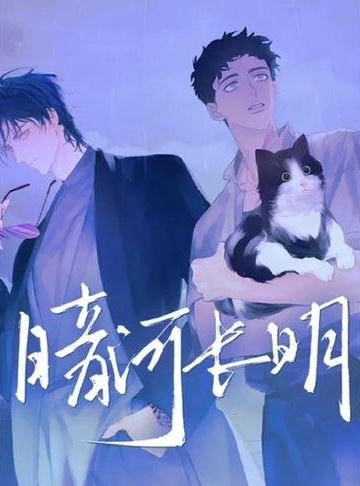
Chen Miao is the most fascinating character right now and I need to talk about it. Here's this guy who gets absolutely wrecked by Lu Lianning—not just physically but emotionally, I think—and the next morning he's up making breakfast like nothing happened. The bloodstains on his underwear, the pain he's hiding, the fact that he scrubs his pants by hand in the dark to save electricity... and then he still bikes over to Lu Lianning's place the next day. What kind of person does that? I keep going back to that scene where he's bent over the washboard in his tiny apartment, moonlight streaming through the window, rubbing soap against those bloodstains. It's almost poetic in how brutal it is. He could walk away. He has nowhere else to go probably, but still—he's not trapped by circumstances, he's trapped by choice. And that makes me respect him so much more. Lu Lianning though... ugh. He's terrible. Absolutely terrible. He notices Chen Miao is a Beta and immediately thinks about how convenient that is because Betas don't whine and complain like Omegas. He decides to bring him to Europe because it's "convenient." This man has no idea what he's doing to this person. And yet... there's something almost tender about the sunscreen scene, even if it quickly escalates into sex. The way Lu Lianning rubs sunscreen on Chen Miao's back, the intimacy of it—it's clear this isn't just physical for him anymore, even if he'd never admit it. And Gu Chen! He's the voice of reason here, warning Chen Miao not to get in over his head. But even he seems conflicted, like he understands the hunger to climb but knows this path will destroy you. Their car conversation felt so real—you can tell Gu Chen has seen this play out before with other people and he's trying to prevent history from repeating itself. The dynamic between all three of them is giving me major headaches in the best way.
... Read More
I want to zoom in on how the author uses physical spaces to tell the story, because it's genuinely impressive. The basketball gym in Chapter 17 is all light and sound—the 'light brown floor gleamed under the bright lights,' the echoing bounce of the ball, the aggressive energy of Alphas taking up space. But it's also where Li Yan starts to feel safe enough to engage. There's something almost surreal about Du Lin's crew choosing the city gymnasium over their own university court just to practice, which signals that these characters exist in a world where resources and social dynamics shape their movements. Then Chapter 19 drops us in a restaurant, and the atmosphere shifts completely. It's tighter, hotter, pressurized. When the Omegas arrive and someone opens the windows and turns up the AC after the pheromone leak—that's worldbuilding through environmental reaction. The air conditioning isn't just ambiance, it's a practical response to an ABO world where scents are physical forces. The fact that the Alphas' expressions 'changed multiple times' from that brief whiff tells us so much about how this society works without any exposition dump. I also love the detail about University C's gym being passable but the city gymnasium being chosen instead. These small geographical choices ground the story in a real-feeling city with institutions that have hierarchies.
... Read More
Okay so I need to talk about this one detail because it genuinely made me pause mid-chapter. Chen Miao used to call him Mr. Lu—formal, distant, proper—and then one day he just doesn't anymore and switches to Lu-ge, which is the same term Xiao Ming used. That comparison hit me like a truck. It's such a small thing but it means everything. It's not just about getting casual, it's about Chen Miao filling a space that was left empty after Xiao Ming. He's becoming the person who anticipates Lu Lianning's needs before he even speaks them, just a single glance is enough. That's not employee behavior, that's... something else entirely. And Lu Lianning? He notices but pretends not to. He sulks, he throws tantrums over boxed lunches, he's insufferable on set—but then he accepts those stupid colorful hand warmers without complaining because he's genuinely freezing. The fact that his face took on a blue tinge and he still swallowed his pride just to get warm? That's a man who has nobody else but this guy who follows him around like a shadow. Ye He's assistant whispered something discontented about Chen Miao's special treatment and Ye He shut it down. Did you catch that? He's not happy about the favoritism but he's protecting Chen Miao anyway. Meanwhile Lu Lianning refuses to build relationships with anyone else on the crew. His world is shrinking to just Chen Miao and nothing else. What happens when that becomes the only thing holding him together? Because right now it feels like it already might be.
... Read More
I need to talk about this car scene because it is literally the most loaded twenty pages in the entire book. Lu Lianning snaps at Chen Miao with this barely-controlled rage — "Who told you to eavesdrop?" — and then immediately bolts out of the car like he can't even stay in the same zip code as his own assistant anymore. The worst part? Chen Miao doesn't even understand why Lu Lianning is upset. He just watches him retreat and thinks, "He'd get over it soon." No. No, he wouldn't. That right there is the tragic core of this whole storyline — Chen Miao genuinely believes Lu Lianning's moods are temporary weather systems that pass, when really they're eruptions of something much deeper. And then the plot slams us with the wrap party skip. Of course Lu Lianning skips the celebration. Of course he drags Chen Miao to some underground den instead. The narrative is building this tension like a slow-burn fuse and I am HERE for it. The way Yu Ren casually reveals to the assistant director that Lu Lianning is "loved by someone" — that subplot thread is being planted so subtly but it's going to cut deep later. Every plot point in this batch feels intentional, like the author is laying trap after trap and none of the characters see them coming.
... Read More
I keep coming back to the word 'owe.' It appears like a recurring motif throughout these chapters, and it's not accidental. 'You won't owe me anything anymore' — Lu Lianning offers this like it's a gift, like clearing a debt is somehow equivalent to earning freedom. But Li Yan immediately sees through it: if he doesn't owe anything, then he should be able to leave. The entire relationship has been structured around debt and payment, and neither of them can imagine love existing outside of that economy. Even Lu Lianning's wish for a child is tied to this logic—he believes that creating a family will somehow settle the account, that parenthood will transform their transactional bond into something else. And the belly itself is the ultimate symbol here. It's growing while everything else withers. It's the physical manifestation of Lu Lianning's desire made flesh, but also the proof of Li Yan's destruction. A Beta cannot carry a child. This pregnancy is biologically impossible, which means it's either medical manipulation or something beyond the story's established rules—and either way, it represents Lu Lianning's complete disregard for Li Yan's bodily autonomy. The child is growing inside a body that was never meant to hold it, just as their relationship was built on foundations that were never meant to support it. Then there's the crayfish. 'When Li Yan would buy him crayfish late at night' — this detail surfaces when Lu Lianning is trying to articulate what 'the way things used to be' means. Not grand romantic gestures, not declarations of love. Late-night snacks. Small, careless acts of kindness that Lu Lianning only recognizes as precious after he's nearly destroyed them. The crayfish symbolizes everything their relationship could have been—if Lu Lianning had paid attention when it still mattered.
... Read More
"Thank you, Xiao Yan-ge." That's it. That's all Chen Yu says. Three words and I'm completely wrecked. The fact that he calls him 'Xiao Yan-ge' instead of just 'Xiao Miao' or 'brother'—it shows how much respect and love this kid has for his sibling, even lying pale and terrified on an operating table. And Chen Miao's response? Just 'Mm.' He watches the doors close for TEN MINUTES before leaving. Ten. Minutes. That man is standing there processing that his baby brother is about to go under anesthesia alone while he goes to sell himself for money, and all he can do is stare at a hospital door. But then what happens next absolutely shatters whatever emotional stability was left. Chen Miao walks into that hotel room thinking he signed up for one night, three hundred thousand, and suddenly it's THREE men, drugs, and devices on the walls. The panic is so viscerally written—you can literally feel his heartbeat through the page. 'Three Alphas playing with him for three nights—even if he got the three million, he wouldn't live to spend it!' This isn't romance or friendship warmth; this is survival terror, and the author doesn't soften it at all. Chen Miao trying to negotiate, trying to run, getting dragged back—it's brutal. I'm still not over it.
... Read More
The sensory details in these chapters are doing so much heavy lifting. Let's talk about the bar scene. “The air in the bar felt suffocating, and the chaotic lighting was overwhelming.” You can feel the noise, the heat, the discomfort. Then Chen Miao shields Lu Lianning's eyes with his hand, and there's this “red light with a hint of ambiguity” sweeping across it. It's such a specific, cinematic moment—protective gesture, colored light, the contrast between the loud environment and this tiny pocket of quiet. Later, the car ride is all quiet and slow. Then home: the domestic comfort of four dishes and soup, the ringing phone, the frantic dash to the bathroom, and finally… the burnt food. “One of the dishes had burned.” It's perfect. The tension of the personal world collides with the mundane reality of a ruined meal. It grounds the high-stakes drama in something smellable and tangible.
... Read More
Let me stack up the threats in this chapter because they're piling up fast and I'm not okay. First: the weather. Late autumn turning to first snowfall. Director Ren Qi is terrified heavy snow will make the mountain impassable. They're racing against nature and losing. Every outdoor scene is a gamble. Second: the equipment failure. Those hand warmers Chen Miao bought—cheap, obviously, because he's spending out of pocket for his boss—and one LITERALLY EXPLODES. Scorch marks on the power strip, acrid smoke. The other one was a dud. This isn't inconvenience, this is a safety hazard on a remote mountain set with freezing temperatures. If the heating fails completely and snow blocks the roads, people could get hurt. Third: Ye He's resentment. His assistant made a snide comment about Chen Miao's special treatment and Ye He visibly soured before silencing her. He's the award-winning male lead sharing the project with a scandal-plagued actor who gets personal catering and a devoted assistant. That ego is a loaded gun. Fourth: Lu Lianning himself. He's professional in character but his off-set behavior is volatile. One wrong move, one breakdown, and Ren Qi's patience—which is already thin—could snap. Chen Miao is literally being split in two trying to hold all of this together. And the chapter ends mid-sentence, hanging on an unfinished thought about the broken warmer. Whoever wrote this wanted me to panic.
... Read More
The opening of this batch moves at this slick, almost too-comfortable pace. Packing luggage. Giving instructions. Walking through the airport in sunglasses and a mask at midnight. It feels like a normal day, or as normal as days get when your boss is a diva actor. Chen Miao is efficient, Lu Lianning is commanding, everything is under control. Then we hit the mountain and the tempo shifts. The mist, the cold, the filming scenes—they slow everything down, almost meditative. We're watching art being made, scene by scene, day by day. Late autumn bleeds into first snowfall. Time passes in this beautiful, deliberate way. And then BOOM. The hand warmers explode. The prose stutters. The sentence cuts off mid-thought. The author deliberately breaks the rhythm right when the situation starts breaking around them. It's a structural mirroring that's honestly impressive—the form itself becomes unstable at the exact moment the content does. What I love most is how the author uses the drama-within-the-drama as a pacing device. The backstory of Ye He's character—privileged youth losing everything over a year—is compressed into a few paragraphs that accelerate the emotional tempo right when the real-world plot needs breathing room. It's like the inner story breathes in while the outer story holds its breath, and then both release at once when the cheaper-than-cheap hand warmers fail catastrophically.
... Read More
The sensory worldbuilding in this text is INSANE and I need everyone to understand how good it is. Let me just... walk through it with you. The gymnasium — renovated, always free, basketball court requires reservations three months out. This is a WORLD where sports matter, where competition is fierce, where University C dominates because of money AND skill. The squeaking sneakers, the rhythmic thud of the ball, the swish — the author paints this entire arena with sound. I could literally hear it. Then we cut to the house. The long dining table. The second-floor hallway. The butler who 'wisely stepped away.' This is a mansion — Lu Lianning has power, wealth, status. The contrast between the public gym and the private mansion is doing so much thematic work. One space is where Li Yan can blend into crowds; the other is where he is utterly visible and exposed. And the pheromone worldbuilding! It's not over-explained — we learn about blocker patches, Alpha/Omega/Beta dynamics, marking, scent fading — all through action and implication rather than infodumps. The citrus scent filling the bedroom after Lu Lianning removes his patch. The way Li Yan's body has adapted over years. This world feels lived-in because the rules are shown through consequences, not exposition. The author trusts the reader.
... Read More
The contrast in this batch between the street-level grit and the mansion's polished oppression is actually insane. You've got Lao Yue bleeding from a scraped calf wound, Li Yan bargaining down from 800 to 500, the whole scene smelling like desperation and cheap tactics. Then—bam—cut to Min Lingyu bringing out freshly baked cookies and dinner prepared exactly to Lu Lianning's preferences. The same chapter. Same evening. What's wild is how the worldbuilding doesn't need any infodumps. The social hierarchy is visible in everything: Lin Sheng's high-tier Alpha authority making Lao Yue shudder, the Omega catalyst being casually discussed as a medical option at the dinner table, the way Du Lin's drunk sister and friends point and laugh from the background at the winery party. This isn't a world where you need exposition to understand who has power and who doesn't. My favorite visual though has to be Li Yan squatting by the fence feeding that cat. "His thin spine and the marks on his waist that Lu Lianning had left two nights ago"—visible, exposed, like the bruises are just another part of his landscape. And Lu Lianning watching from a distance before walking over. That framing, that distance, it's almost cinematic. The little tassel lamp detail too—a souvenir from Europe that became a nightly ritual. Small objects becoming emotional anchors. The citrus scent clinging to Lu Lianning after his dinner with his father. All of these sensory details pile up and make the world feel lived-in without ever stopping the plot to describe it.
... Read More
Okay can we just talk about how Qi Zhen just casually rolled into this entire catastrophe because he was trying to patch things up with Lu Lianning? Like bro came out with a gift basket for his therapist, felt normal, started whistling in the elevator—and then immediately became a plot device in someone else's hostage situation. The universe does not give a single fuck about Qi Zhen's emotional well-being. The chase sequence is where everything collides literally and figuratively. Li Yan makes the call to stay behind while everyone else escapes—that's a genuinely good beat because it shows he's been calculating even in his condition, knowing Lu Lianning would track him. Then the Bentley blockade, Chen Yu flooring it at the last second, the scrape past each other... that scene had me holding my breath. I swear I could hear the metal screaming. But then Qi Zhen. Of all people. Smacks into them like a goddamn deus ex machina made of poor decisions. And Lu Lianning sprints toward Qi Zhen ready for gratitude and instead finds a pool of blood and his missing property half-conscious in the wrecked car. The irony is so thick you could cut it with a knife. What I love is how the author uses the crash as the hinge point. Up until then it's escape thriller. After? It becomes survival drama. Li Yan doesn't get freedom—he gets surgery. The plot doesn't let him win cleanly. That's not sloppy writing, that's intentional cruelty that serves the story.

Leave a comment

You must be logged in to leave comments. or
