Dark River, Ever Bright - Reviews

Dark River, Ever Bright
+Add to Custom List
Sort
Add review
... Read More
Five minutes. That's how long Lin Sheng waited before his phone rang. Five minutes after he told Li Yan he'd find him anyway, and bam — Du Lin calling with news that shakes everything open. Li Yan's name. Li Yan. No social connections, no resume, no family history. A complete blank. The guy didn't even bother fabricating a fake background — he left everything empty. Is that confidence? Or is it a warning? I love how the author paced this reveal. We spent the entire hospital scene wondering who Li Yan is, watching him deflect and dodge and refuse to give his number, and then Du Lin just hands Lin Sheng the answer on a silver platter. But the answer is worse than a name — it's a void. A Beta with no past. And simultaneously, we're cutting to Lu Lianning on an arranged date that's going nowhere, which contrasts beautifully with Lin Sheng's aggressive curiosity. One man is being pushed toward someone he doesn't want, the other is chasing someone he barely knows. Both are controlled by forces bigger than themselves — family expectations for Lu Lianning's side, whatever Li Yan is running from on his side. The structure here is doing a lot of heavy lifting. Three threads — Lin Sheng chasing Li Yan, Lu Lianning playing house with Song Ruan, Li Yan rushing home to whatever life he actually lives — and they're all converging without touching yet.
... Read More
This chapter is a masterclass in pacing variation. Let me break down why it works so well. It opens IN MEDIA RES — already deep in a conflict that we're only partially understanding. That's a bold choice. We don't get the setup, we get the explosion. And it pulls us in immediately because the stakes feel huge even though we're just watching a kid argue with adults about school behavior. Then it pulls BACK. Li Yan leaving, walking away into the chill evening, the physical distance mirroring the emotional distance. That walk is pure breathing room — the chapter exhales for a moment. Then NIGHT. Insomnia. Overthinking. And that's where the pacing gets brilliant — instead of resolving the conflict, it deepens it. Li Yan lying awake, questioning everything, wondering if he's qualified to parent this kid. The chapter doesn't give us the answer we want; it gives us the question we need. And then — Lu Zerui appears at the door. Resolution, kind of. But not the neat bow you'd expect. He apologizes, Li Yan forgives, but the bigger questions remain unanswered. Then the weather description. The greenhouse. The news report. And THAT'S when the genre shifts entirely. The chapter doesn't just end — it detonates. From domestic drama to whatever the hell is happening with Lu Lianning and that beggar, all in the span of a television screen flickering to life. The pacing here is almost cinematic. Wide shot, close-up, fade to black, CUT TO NEWS BULLETIN. I couldn't look away.
... Read More
Li Yan's internal calculation during the escape is the most tense thing I've read in ages. He's swollen, bleeding, barely breathing—and he's still running numbers in his head. He knows Lu Lianning won't let him die right now. Why? Because of the suicide attempt. That single detail changes everything about the power dynamic. Think about it: Lu Lianning went from captor to someone terrified of loss. Li Yan figured that out. He used his own vulnerability as leverage. That is some next-level survival instinct. He's essentially saying, 'You can't kill me yet, so my suffering buys me time.' And it worked—he got to the car, he got away, he got intercepted by fate in the form of a Land Rover. The stakes keep escalating too. First it's just 'can we escape?' Then it's 'can we evade the pursuit?' Then 'can Chen Yu survive driving while his friend is about to give birth in a moving car?' Each question raises the temperature. By the time they're T-boned, I genuinely didn't know if Li Yan was going to make it. And Lu Lianning? God. The man who never bows, who slams Chen Yu against a wall screaming 'MY FAULT?'—he's standing outside an operating room covered in someone else's blood, and for the first time he looks genuinely undone. That's the real stakes here: two people who thought they controlled everything, watching their lives crack apart in the span of one afternoon.
... Read More
The stakes in this chapter operate on three simultaneous levels, and the author refuses to let us prioritize one over the others. First, there's the immediate physical danger: Li Yan is trapped in a car driven by an unstable man, heading toward an unknown destination. Second, there's the institutional danger: Lu Lianning is planning major medical interventions on Li Yan's body without his knowledge or consent. Third, there's the existential danger: Li Yan has no agency in any of his relationships—neither the one who claims to love him nor the one who clearly doesn't. What makes the tension so unbearable is that both dangers feel equally real and equally inescapable. Qi Zhen is unpredictable and potentially violent. Lu Lianning is calculated and permanently present. Running to one means surrendering to the other. The author forces us to sit with this impossible choice, making us feel Li Yan's paralysis. The party scene raises the stakes dramatically. Li Yan walks into a room where every Omega is being touched, kissed, used, and nobody is stopping it because nobody can. These aren't victims fighting back—they're performing compliance. The conflict here isn't between good and evil; it's between different degrees of harm. Lu Lianning's love hurts differently than Qi Zhen's predation, but both hurt. By the final lines, with Li Yan seated among smoke and chaos, the reader is left with a single terrifying question: what does freedom even look like for someone who has never been allowed to want anything for himself?
... Read More
Let me start with the most obvious symbol in this passage and then dig deeper, because this text is layered with imagery that refuses to let you look away. The pregnancy. It's everywhere. Li Yan's growing belly is the physical manifestation of everything that has happened to him—everything he's endured, every compromise he's made, every boundary that's been crossed. And Lu Lianning's reaction to it is perhaps the most chilling detail in the entire passage: the hand placed on the stomach, the recognition that inside that swelling is his child, and yet the immediate pivot to control—"don't try to lose weight." The child is both a connection and a leash. But the pregnancy symbol operates on multiple levels simultaneously. It represents biological fate—something that cannot be wished away, negotiated, or escaped. It represents the ultimate consequence of a relationship built on power imbalance. And it represents the paradox of creation within confinement: something alive and growing inside someone who has never been truly free. Then there's the snow. The thin layer of winter snow that finally arrives late, the footprints Li Yan leaves behind, the way the wind tugs at his scarf. Snow is a classic symbol of erasure—blanketing everything, making paths disappear, turning the world white and featureless. Li Yan walking alone in the snow is almost visually perfect: a dark figure disappearing into a white landscape, his footprints already being pulled apart by the wind. The thick cotton coat that hides his belly is another layer of symbolism. Li Yan is wrapped in layers—literally and figuratively. Nothing about him is visible. Not his condition, not his pain, not his true self. He's been packaged into something soft and shapeless, like a present nobody asked for. And the ramen. Oh god, the ramen. This recurring motif of the greasy corner shop where Li Yan used to eat before Lu Lianning replaced it with nutritionist-prepared meals is a tiny but devastating symbol of autonomy. The ramen represents the last trace of a life where Li Yan made his own choices about what to consume, when to go out, who to be with. When Lin Sheng says "have Lu Lianning take you for ramen," he's not just being cruel—he's naming the replacement. The ramen is no longer Li Yan's. It belongs to the relationship, to the routine, to the control system. The body as battleground. The belly as evidence. The snow as erasure. The coat as disguise. The ramen as lost freedom. This passage is a masterclass in symbolic density.
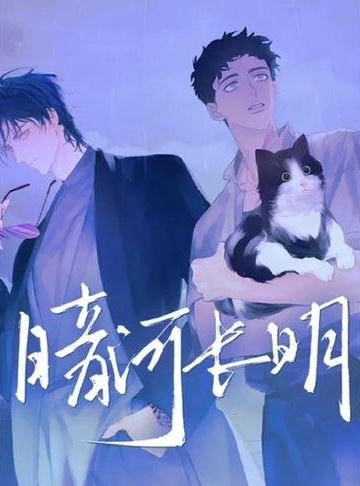
... Read More
The pacing in these chapters is masterful in the way it mimics the feeling of suffocation. You know how sometimes when you're in a truly bad situation, time doesn't feel fast or slow—it just feels thick? Like moving through water? That's what reading this feels like. The chapter opens with Li Yan and Lu Lianning in bed, and the domestic stillness is immediately undercut by the revelation that Li Yan's stomach is growing. The author doesn't rush this. We get the gradual realization—the swelling, the uncertainty, the panic—layer by layer. It mirrors how real life unfolds. You don't discover a life-altering fact all at once. You notice things slowly, deny them, then face them. Then there's the jump to the gym. Winter has arrived. The snow has fallen. Time has passed. And suddenly we're in a completely different emotional temperature—cold, public, charged with history. The transition from the intimate bedroom scene to the basketball gym is jarring, and that's deliberate. It's the difference between Li Yan's private suffering and his public performance. The confrontation with Lin Sheng is where the pacing really earns its keep. Notice how the author stretches out every beat. Li Yan calling after him. The teammates glancing over. Lin Sheng stopping. The awkward small talk that immediately fails. The question about the loan. The organ-selling revelation. The tamed comment. The ramen request. The curfew jab. Each exchange is a tiny hammer strike, and the reader has no choice but to sit with each one. There's no rushing. No summary. No "and then they fought about it." We get the full scene, minute by minute, and by the time Lin Sheng delivers that final line about the curfew, we're already bracing for impact because the pacing has trained us to expect more. The ending—the image of Li Yan walking alone in the snow—is the perfect release valve after all that tension. The author could have ended on Lin Sheng's cruel line, but instead they give us this quiet, almost cinematic moment. Footprints in thin snow. Wind pulling at a scarf. A bundled figure who looks like a child. It's a breath after a scream. This is how you pace emotional devastation. Not with explosions, but with accumulation. Every sentence adds weight. Every silence adds pressure. And by the end, you're not just reading about Li Yan's situation—you're feeling its gravity.
... Read More
This passage is dripping with symbolism and the author isn't even trying to hide it, which I respect. The injection site itself — the ankle instead of the arm — is a choice loaded with meaning. An ankle bruise is easy to hide under pants, easy to dismiss as accidental. It's the body's most concealed vulnerabilities being weaponized. And Li Yan notices but says nothing during the meal, just whispers to the butler while Lu Lianning watches with deliberate calm. His body has become a site of quiet surveillance. Then there's the heat. Waking up burning from the inside, not knowing why, attributing it to Lu Lianning holding him too tightly. The heat is the catalyst working, yes, but symbolically it's arousal and anxiety and violation all collapsing into one physical sensation that Li Yan can't name. When he finally wakes Lu Lianning and presses against him, breathless and confused, he mistakes biological manipulation for intimacy. That's the tragedy layered into that scene. The wardrobe — this is the big one. A cramped, dark space filled with someone else's clothes. Li Yan pulling Lu Lianning's garments close for comfort. It reads like a regression to the womb, but twisted: he's seeking safety in the very person who's endangering him. The pheromones are the amniotic fluid in this sick metaphor. He doesn't know he's dependent until he's already inside. "Subconsciously, Li Yan was dependent on Lu Lianning's pheromones, though he seemed unaware of it himself." The word subconscious is doing heavy lifting here. How much of Li Yan's desire for closeness is actually desire, and how much is biochemical programming? And pregnancy as the finale of this symbolic arc — the catalyst that was supposed to fix something has instead created something new inside him. His body, already a battleground, becomes a vessel. The domestic setting (dinner table, bedroom, wardrobe) turns every intimate space into a prison.
... Read More
Ramen. Of course this entire emotional crisis revolves around a bowl of noodles. Let's unpack that because it's not accidental. That first request—for someone to share beef ramen—was about connection. It was about normalcy. About wanting something simple and sweet before Lin Sheng ruined it. Now, with a personal chef installed and Lu Lianning watching every bite like a hawk, the ramen can't taste the same. The ingredients aren't right. The color is lighter. It's a perfect metaphor for how pregnancy and protection can strip life of its spontaneity. The snow operates on multiple levels. It's isolation—Li Yan trapped outside, glove lost, cheeks wet. It's emotional numbness. But also purity, a blanketing force that makes everything feel quiet and suspended. When Lu Lianning sarcastically says 'it must've snowed so much it turned your eyes red too,' he's accidentally admitting he knows the truth but can't acknowledge it. Food as control. Food as love. Food as battleground. Lu Lianning providing supplements, ordering chefs, demanding Li Yan eat—these are attempts to manage fear through administration. Meanwhile, Li Yan's refusal of the ramen is his only act of defiance left. 'It doesn't taste the same' becomes code for 'this life doesn't feel like mine anymore.' And Zheng Zhi's dozen pregnancy books—ordered, delivered, received in silence—symbolize the community of care that surrounds these two but never quite reaches them directly. The butler catching scarves. The nurse teasing about dating. The shrimp counts and calf measurements. It's a whole ecosystem of people trying to help, circling like satellites around a planet that refuses to acknowledge it's in orbit. What is this chapter really about beneath the surface? It's about how love sometimes looks like supervision. How care can feel like confinement. And how sometimes the person who notices you ate one extra shrimp is the only one truly seeing you.
... Read More
This part? It wrecked me. Not the big dramatic moments, but the quiet ones. Like when Li Yan hides the photo album under the bed, kneeling with his butt sticking out, thinking he's being discreet. Lu Lianning sees him through the crack in the door but doesn't push it open—just lets him believe he's hidden it well. That's mercy, pure and simple. And then the hospital scene—Li Yan trying to flee during the blood draw, needing to be held down, burying his face in Lu Lianning's chest like a child. The medical staff almost comments but gets shut down by Lu Lianning's glare. That's not just protection; that's someone who's learned to defend this person despite everything. But the moment that actually broke me was the tassel nightlight. Lu Lianning brings it back from Europe, beautifully designed, and Li Yan spends time tinkering with it before Lu Lianning comes home. Then when he does, Li Yan stops touching it. But he can't resist for long and starts braiding the tassels again. That's love, isn't it? Someone making something precious for another person, hesitating to use it in case it feels too much, then giving in anyway. Lu Lianning notices this. He senses Li Yan liked it. The author never writes 'I love you' in this whole section—they show it through what Li Yan hides under his bed and what he can't stop touching. Meanwhile Lu Lianning is waking up at night, watching Li Yan sleep, remembering asking Gu Chen why he chose Li Yan as his assistant. Gu Chen said 'Because Li Yan looks like someone who can endure hardship.' Now Lu Lianning sees the opposite—that the same man who endured hardship is terrified of needles and afraid of the dark. There's this line: 'At 26, Lu Lianning felt he had to do things differently than he had at 22.' But is that really possible? Can you undo twenty years of belief in five minutes?
... Read More
I need to talk about the weather in this novel because it's doing so much emotional work. We start with bows hitting the floor like gunshots, move through the cold room where tension could cut glass, and then—rain. Not a light drizzle, not atmospheric mood lighting. The rain finally pours down heavily in the second half of the night. And Li Yan is huddled in the backseat, trying to keep distance from the man who just publicly dismantled his life. The emotional whiplash is insane. One moment he's being forced to confront debt, the next he's being dragged upstairs into something physical that feels more like punishment than intimacy. But here's what got me: Lu Lianning isn't even pretending anymore. No more masked cruelty, no more corporate posturing. In that villa, with everyone apparently waiting up, the real personality comes out. Cold eyes, unconcealed anger, the kind of patience that's almost unnerving. When Li Yan realizes too late what's happening and thinks "at worst, another beating or another round of being fucked"—that's not resignation. That's trauma talking. And the worst part? He's probably wrong about it being worse. The emotional core here is that these two have been tangled for nearly two years, and Lu Lianning knows every sensitive spot, not just physically but psychologically. He knows Li Yan would sacrifice everything for Chen Yu. That's the real binding agent between them—not love, not hate, but knowledge of exactly where each other hurts.
... Read More
Let me dig into something that's been haunting me since I finished this chapter: the symbolism of that hat. Li Yan removes his cap and places it on the pearwood table before kneeling. Think about it. The hat represents his identity out there in the world—his disguise, his armor, the persona he wears when he's just ‘Li Yan' hanging out with friends at the bar. But when he enters that room, he takes it off. He's shedding that version of himself. He's not the carefree card player anymore. He's something else. And the cigarette—half smoked, half not. He presses it into the ashtray like he regrets wasting it. It's such a small detail but it says SO much about this character. He's practical. He doesn't like waste. Even in the face of a life-altering confrontation, he's thinking about the cigarette. It's almost comedic, but it's also deeply humanizing. He's not a dramatic hero about to give a speech. He's a guy who happens to be in a very dramatic situation. The pearwood table too—Qin Liu sits on a carved pearwood chair, and Li Yan places his hat on a pearwood table. Wood from trees, rooted in the earth, something natural and solid. It contrasts with all the violence happening around them. The chandeliers are smashed, the wine racks are rubble, but the furniture remains. There's something almost sacred about the domestic objects in a space of chaos. And then there's the rain—the clean Lu Lianning versus the muddy everyone else. Purity versus chaos, control versus surrender. Li Yan comes down those stairs and he's neither clean nor dirty. He's just… there. Authentic. And when he kneels, he's choosing his loyalty over his comfort, his family over his freedom. That's the theme, isn't it? Where do we belong? Who do we owe?
... Read More
I need to talk about the visual storytelling in these chapters because it's absolutely killing me. The contrast between spaces tells the whole story without a single line of dialogue. First there's the bathroom at night—small, confined, Li Yan curled up on the floor with his head against the toilet lid, shivering in thin cotton pajamas buttoned all the way to the top. This image is so specific and so wrong in the most devastating way. A grown man sleeping on a bathroom floor because the bedroom is too dark. You can feel the cold tile through the page. And Lu Lianning standing over him, hungover and furious, before his anger shifts into something softer that he'd never admit to. Then there's the greenhouse—a whole new space that appears after Li Yan's fever. Lush, vibrant, spring trapped inside glass while the rest of the world endures bitter winter. Lu Lianning builds it for him. Hires nutritionists. Has the butler supervise every meal. But also forbids him from going outside anymore. The greenhouse is both sanctuary and prison, and I couldn't stop thinking about how literally perfect that is. The large Lu family house itself is another character. Empty corridors, servants who won't speak to Li Yan, the constant warmth that keeps him comfortable but never free. Spring arriving outside while Li Yan can't even feel it because he's trapped inside this climate-controlled box. And the recurring detail of the flowers—they're everywhere. Watering them, tending them, watching them bloom in the greenhouse. There's something almost religious about how carefully they're described, especially that moment where Lu Lianning notices Li Yan poking at flower roots in the garden and immediately interrupts whatever the butler was saying. His focus snaps to Li Yan like a compass needle finding north. The visual language here is so precise. Dark bedroom versus nightlit bathroom. Cold bare house versus warm greenhouse. Pale, gaunt Li Yan versus vibrant flowers. Every scene is composed like a painting, and the colors tell you exactly how to feel.

Leave a comment

You must be logged in to leave comments. or
