Crossover Actors - Reviews

Crossover Actors
+Add to Custom List
Sort
Add review
... Read More
Okay I need to talk about this moment between Lu Wen and Qu Yanting because it is EVERYTHING. The whole scene where Lu Wen blurts out "You are definitely not like my father" and Qu Yanting fires back with "I don't want to have a son like you" — and then Lu Wen just deadpans "Damn, my dad said the same thing" — this is the kind of exchange that makes you put the book down and just stare at the ceiling. The layered tragedy here is brutal. Qu Yanting immediately regrets saying that line when he sees Lu Wen's expression shift from defiance to something smaller — hurt, confusion, helplessness. Because of course he knows. He knows about the single-parent family, he heard it during the toast earlier, and he still let it slip. This is a man who uses his words like weapons without always meaning to, who wants to be kind but can't figure out how to do it without sounding cruel. And Lu Wen — this kid walks into the hallway with a whole script of apologies ready to go, rehearsed and earnest, but the thing that actually comes out is the thing he needed to say all along. Not the car, not the water, not the mistaken identity. The father thing. That's what was eating at him. That's what he was really afraid of — that Qu Yanting would see him as just another disappointment, another failure to measure up. The fact that they end up leaning against the same door frame, mirroring each other in the corridor like some Wong Kar-wai frame, makes it even more poetic. They're close enough to touch but worlds apart emotionally. And yet both of them are trying, in their own broken ways.
... Read More
I keep coming back to this one detail and I need to unpack it because the way it's planted is so deceptively casual. Lu Wen's speculation about Qu Yanting's future amnesia — "If Qu Yanting never had a car accident and hit his head in this life" — reads like throwaway dialogue on first pass. But the past tense is WRONG if the accident hasn't happened yet. This is either foreshadowing of catastrophic importance, or Lu Wen knows something the reader doesn't yet. Either way, it reframes every interaction between these two characters going forward. Consider the book's central conflict architecture: we have Qu Yanting, a director who clearly carries trauma (his hands used to draw storyboards, now type scripts — what changed? When did he stop creating visually?), and Lu Wen, an actor who keeps making mistakes that could end his career. Their paths are crossing at exactly the right moment for a collaboration that could define both of them. But then there's the script issue in the morning scene — scenes and lines that need adjustment before broadcast, the threat of post-production deletion or dubbing affecting the final product. This isn't just bureaucratic plot mechanics. This is the story literally arguing with itself, fighting for survival in a censored environment. Qu Yanting is dealing with external pressure while carrying internal pressure. The man is drowning on two fronts and he's doing it silently while pouring tea for a drunk friend. The novel is building toward something and I have a very strong feeling that something is going to break.
... Read More
Okay hear me out because I want to talk about the broccoli thing but also about something much bigger. On the surface, it's a joke. Lu Wen reads that some actor likes broccoli and goes "Should I give them a plant?" It's funny. But the fact that this level of personal detail – dietary preferences, divorce history, alleged promiscuity – is considered essential intelligence before a professional meeting says something deeply uncomfortable about the entertainment industry. The dossier Sun Xiaojian compiled isn't just helpful; it's almost satirical in its comprehensiveness. These are grown adults treating social interaction like a military operation. The industry itself is described literally as a pyramid. Wang Mingyu at the top, then Qu Yanting, then all these connections flowing downward like a hierarchy of influence. Zeng Zhen produces movie emperors and empresses – that's not metaphorical language, that's the author telling us directly: this is a system of power and patronage. You don't succeed here; you're elevated by someone above you. The metaphor of upward mobility through connection is woven into nearly every paragraph. Qu Yanting himself functions as a kind of symbolic figure throughout this passage. He's mysterious, reclusive, barely visible – and yet everyone wants his approval. He represents the gatekeeper archetype, the person whose recognition transforms careers. The fact that most people in the industry have never seen his face, only his work, adds this almost mythological quality. He's less a person and more an institution at this point. The banquet setting itself is worth considering. Hotels with banquet halls, waiters serving snacks, people arriving in sequence – it's a ritual space, a stage within the stage where professional performances happen. Everyone is performing: Lu Wen with his mint tablets and rehearsed smiles, Sun Xiaojian with his dossiers, the other actors hoping to leave good impressions. Authenticity seems almost impossible in this environment. And yet, beneath all this institutional machinery, there are real human desires. Lu Wen's nervousness is genuine. His hope is real. The friendship with Sun Xiaojian, with all its absurdity, is genuinely affectionate. The system may be a pyramid, but the people moving through it are still human.
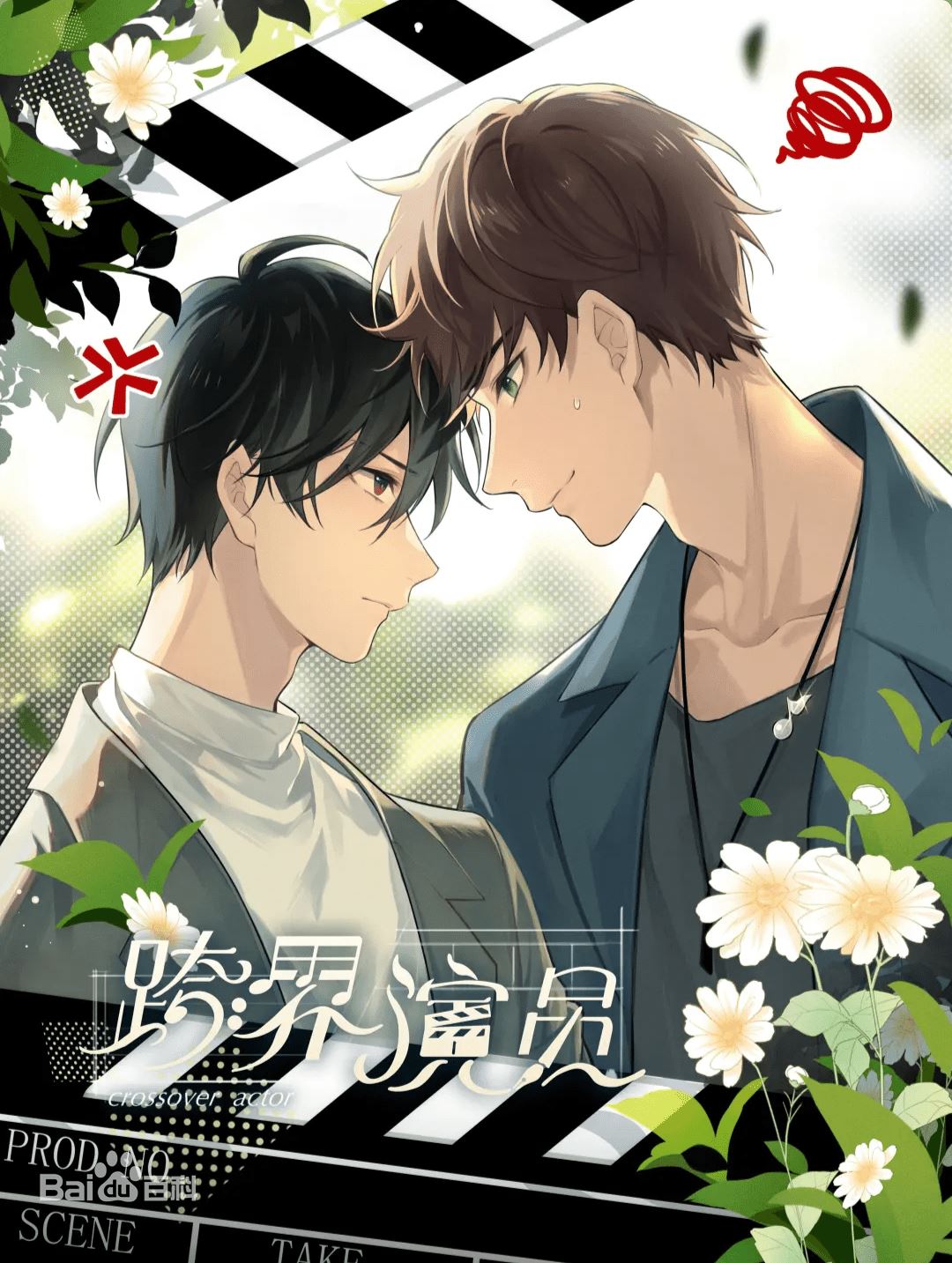
... Read More
I need to talk about the atmosphere this chapter builds, because it's doing something really clever. The whole opening is framed around travel and transition — Qu Yanting in the car, then the airport, then the plane. There's this persistent sense of movement, of people suspended between places. The description of the city condensing into an integrated circuit below the clouds? That line stuck with me. It's such a specific, almost clinical image that makes the ordinary act of flying feel cinematic. And then Chongqing as a destination — mountain city, humid, crowded — it already feels like a character in its own right. The hotel room arrangement is interesting too. Room 6206 on the top floor, sparse occupancy. The author is building a world that feels transient, liminal. These are people who don't really belong anywhere yet. Even the details about Qu Yanting's plants and cats at home — that's worldbuilding through obsession with routine. The man who can't be bothered to reply to a phone call but has emailed detailed care instructions for over ten houseplants? That's how you establish a person.
... Read More
Okay, I need to talk about Sun Xiaojian because honestly he made me feel something I didn't expect from a side character. This guy gives Lu Wen like actual survival tips for set life - boiling water room location, rinsing oil off the greasy lunch boxes, where the medicines are kept in the RV. And Lu Wen's reaction? "Isn't this all your job?" HA. I literally laughed out loud. But then Sun Xiaojian says the thing that actually hit me: "What if I'm not here?" That one line. Just sitting there on the set, putting his cheek on his hand, completely casual about it but underneath it was like... he really meant it. He knows this industry eats people alive and he's making sure Lu Wen is set up for success whether he's around or not. And then the whole audition flashback hits different too. Lu Wen consciously abstained from carbs for a week out of guilt over Sun Xiaojian's efforts. That's not nothing. That's someone who actually carries the weight of another person's belief in them. The narrator says if it weren't for the face value difference, passersby would think they were "bursting with love." I know that's supposed to be humorous observation but it also just... captured something real about how these kinds of bonds look from the outside. Eight hundred celebrations together. Eight hundred times. That number stuck with me.
... Read More
Let's be real - Qu Yanting's dialogue voice is incredibly distinct and I love it. The man says things like "Should I buy you a house in Chongqing?" as a JOKE and Ren Shu immediately fires back "As expected of Editor Qu, the thing that came out of your mouth is a house." Their banter is smooth, fast, and feels like two people who've known each other for years because THEY HAVE. The author never makes them sound like they're explaining things to each other - they just talk, they interrupt each other's energy without needing to, they tease and deflect. Compare that to Lu Wen's voice. Completely different register. When he tells the director he's "a person of Buddhism, so I'm content with fate," that's lazy confidence masking actual nervousness. He's performing chill. The author writes his dialogue with this underlying current of someone who's smarter than he lets on but doesn't want to seem like he's trying too hard. "I am a person of Buddhism" - I cannot stop thinking about this line. It's hilarious and also somehow profound? This guy walked into an audition where dozens of popular actors with connections were competing and he just... brought a comic book and memorized lines by reading them a few times. His dialogue throughout this section has this effortless quality that the author sustains really well. No performative swagger, just plain statements that land harder than any dramatic speech would. Ren Shu's voice is warmer, more direct. He complains about spice, he offers Qu Yanting his meat, he keeps the conversation moving with questions. Each character occupies a completely different conversational space and the author never blurs them. That's skill.
... Read More
"Do you want to eat or not?" Lu Wen shook the box. Three times. Three times Qu Yanting said no and three times Lu Wen just... kept offering. This is the most romantic thing that has ever happened to me in fiction and I will die on this hill. Think about it. Lu Wen gets praised by the director, gets recognized for his performance, and his FIRST instinct is to BUY BREAKFAST FOR QU YANTING. He runs halfway across the set carrying a pastry box like it's the most important thing in the world. He's not doing it for credit. He's not doing it because anyone told him to. He's doing it because he saw Qu Yanting didn't come to breakfast and his entire being went: MY BOSS IS HUNGRY AND I NEED TO FEED HIM. And Qu Yanting? "Your salary is not enough to treat others." Harsh, right? Wrong. That's him deflecting. That's him not knowing how to receive kindness without turning it into a transaction. He says no to the pastry but he doesn't throw it away. He doesn't tell Lu Wen to stop caring. He just... keeps walking. Keeps pretending this is normal. "If yes, why did Qu Yanting lie to him that day?" Lu Wen wonders about the salary thing and I literally screamed. The man is obsessed and he doesn't even realize it's obsession. He thinks it's confusion. He thinks he's just trying to understand why the person he looks up to treated him badly. He has no idea that the bad treatment was love in disguise. And then—the hospital scene. Lu Wen with a bloody forehead going to see the person he's clearly in love with. The author doesn't even NEED to say it. The bread crumbs in Lu Wen's hand. The way he can't find the word "concerned" and settles for something softer. The fact that he shows up at 5 AM like this is just... I can't. My heart cannot handle this. "Using the phrase 'concern about' was a bit clingy, but with his language level, he couldn't find a more appropriate word." THIS IS THE MOST LU WEN SENTENCE EVER WRITTEN. He's so awkwardly honest it destroys me.
... Read More
Let's talk dialogue because this scene is a dialogue workshop. Sun Xiaojian's instructions are spot-on practical fiction—his advice to 'add an exaggerated, sensational, and distinctive sentence at the end' reads like someone who's actually navigated these social labyrinths. But Lu Wen's actual speech? Perfect. The halting 'You probably know my name, I can't help but...' shows genuine nervousness, not performed humility. And then he completely loses the script with 'Teacher Qu, I grew up in a single-parent family. Seeing you today is like seeing my father.' What genre even is that sentence?! It's so abruptly personal, so wildly off-script, that it becomes memorable in the best way. Qu Yanting's response is equally perfect—just that flat 'hey' before delivering the reveal. No theatrical anger, no elaborate correction. The author lets dialogue carry the humor and tension without ever tipping into slapstick. Even the narrator's internal commentary feels distinct from the spoken words, giving us Lu Wen's frantic calculations ('Is the director's assistant color-blind?') right alongside his performed polite fiction. This is how you write voice.
... Read More
Let me just say this out loud: Sun Xiaojian is my favorite character in this entire passage and I'm not even being dramatic about it. The guy handed Lu Wen a dossier covering age, representative works, awards, marital status, AND hobbies like it's some kind of intelligence briefing, and honestly? I respect it. This is the kind of friend who shows up and does the work, not just gives vague pep talks. Their dynamic is genuinely interesting though. Sun Xiaojian clearly sees himself as Lu Wen's manager/strategist in this moment, and there's this beautiful asymmetry in their friendship where one person is all "seize the opportunity" and the other is like... fine but also maybe slightly overwhelmed? When Lu Wen asks if he really has to meet all these people and Sun Xiaojian responds with pure conviction that he "must seize the opportunity," it reveals so much about both of them in one exchange. But the real character moment for me was Sun Xiaojian warning Lu Wen about the divorce-twice guy who's a known cheater. In that single warning, the author shows us that Sun Xiaojian isn't just an enthusiasm machine – he understands the dark side of this industry too. He's seen the traps. And he wants to protect his friend from them. Then there's the Lu Wen angle. The passage mentions how in the past, as a minor supporting actor, directors couldn't even remember his name after his scenes were done. And now? Now he's the male lead and he's sitting in a hotel room obsessively memorizing other actors' life details. The character growth here is subtle but real – he's not arrogant about it, he's actually a little nervous about being noticed by Qu Yanting. That vulnerability makes him sympathetic, not pathetic. I also can't ignore the humor in their conversation about suffocating Teacher Qu with mint tablet breath. Lu Wen's response – "it's not like I'm going to kiss him" – then Sun Xiaojian being completely thrown by that, is absolutely perfect character writing. It tells us Lu Wen has this dry, slightly chaotic energy, while Sun Xiaojian is genuinely wholesome in a way that's endearing.
... Read More
Let's talk about the stakes here, because they're not about life or death—they're about something worse. Trust. This entire scene is built on what Lu Wen isn't saying. He mentions Ruan Feng awkwardly, lies about fainting, and Qu Yanting almost senses it but doesn't press. The conflict isn't external; it's this terrifying tightrope both of them are walking. If Qu Yanting asks too many questions, Lu Wen might crack. If Lu Wen pushes too hard, he might reveal things he's not ready to share. So they settle for persimmons and polite smiles. But the stakes escalate with that movie detail. Echoes of Heaven 3—the ticket his father bought for Ye Shan on the day of the car accident. Suddenly the personal becomes historical, the present becomes haunted by the past. What does that mean for Qu Yanting? Is Ye Shan okay? Was that accident connected to something bigger? The author raises the stakes quietly, without fireworks. Just a title card, a subtitle, and a realization that hits different because it's attached to something Lu Wen cared enough to gift. I keep thinking about what each character stands to lose. Lu Wen risks losing Qu Yanting's trust if his lies unravel. Qu Yanting risks confronting whatever trauma that car accident brought up. The sweetness of the persimmon at the end isn't just about the fruit—it's about how small comforts matter when everything else feels uncertain. How do you maintain tension when there's no villain, no ticking clock, just two people afraid of breaking something fragile? That's the real suspense here. I need to know what happened to Ye Shan, and I need to know if Qu Yanting will ever find out what Lu Wen's really hiding.
... Read More
The hallway between 6206 and 6207. The cracked door. Paper slipping through like a modern-day semaphore system. The peephole where Qu Yanting checks and sees nothing. These images stuck with me for days. What's brilliant is how the author grounds this intimate moment in the actual infrastructure of a hotel. The floor butler. The waiters on night patrol. The checklist. The vase with a narrow neck on the porch cabinet that just happens to be the perfect size for a carnation stem. Every detail feels lived-in, not set-dressed. And then the butler notices a missing carnation from the main room's floral arrangement and the waiters do a whole investigation. "Maybe someone took one." "It was just a small problem." This subplot about the flower is hilarious because it shows how much attention to detail exists in this world—someone counted every single carnation, and now one is unaccounted for. Meanwhile Qu Yanting is standing inside his room with that exact carnation in water, having no idea his theft has been noticed. The sunset lighting, the makeup being applied, the transition from exterior warmth to interior fluorescent practicality—it all flows like a camera movement. I kept visualizing this as a shot tracking from the notes under the door, up to Qu Yanting's face, then through the peephole to Lu Wen squatting on the floor. Pure cinema.
... Read More
I literally had to stop reading mid-chapter because my jaw hit the floor. So here's what just went down: Lu Wen, some mid-tier actor, lands at Jiangbei Airport and basically stumbles into the A1 crew car—a fancy-ass Porsche Cayenne—assuming it's his ride to the set. Sun Xiaojian, his companion, goes along with it. Director Liu shows up expecting a VIP (Qu Yanting) and catches two unknown actors chilling in THE car. What makes this scene absolutely brutal is the power play: Liu could've just politely corrected them, but no—he had to publicly dismantle Lu Wen's dignity. He calls his subordinate on speakerphone like a boss, scolds them within an inch of their life, then casually drops the bomb that the car isn't even theirs. And the kicker? Director Liu literally steps aside and reveals Qu Yanting standing behind him—the REAL owner of that car—while Lu Wen is still standing there like a fool who just got dressed up for a party he wasn't invited to. This is such a clean, cruel subversion. The narrative sets you up to root for Lu Wen thinking he's finally gotten a break, then WHAM, reality check. Cinderella in crystal shoes but the pumpkin carriage says NO. Absolutely devastating plot turn that immediately recontextualizes EVERYTHING about the power hierarchy in this industry.

Leave a comment

You must be logged in to leave comments. or
