Chang’an’s First Beauty - Reviews

Chang’an’s First Beauty
+Add to Custom List
Sort
Add review
... Read More
The dialogue in these chapters is deceptively simple. On the surface it reads almost plain, but every line is doing double or triple duty. Take Shen Shu's explanation to Qingxi: 'The people don't worry about scarcity but inequality.' That's not just practical advice, that's a thesis statement on human nature and power. She's naming something most people feel but few articulate, and she does it while dressed in goose yellow and gold, walking past starving children. Then in the palace, the Emperor's questions are so clipped they nearly bounce off the page. 'So what are you trying to say?' after the physician trails off. That's not impatience, that's a man who has spent his whole life reading between lines. And his exchange with Xu Yiqing — short, testing, almost casual — but the subtext is screaming. He's evaluating her the way a general evaluates a weapon. Meng Suxi's moment is the most interesting voice choice. 'Your Majesty, this concubine is stupid. She accidentally fell down while trying to catch the cat.' She's bleeding and immediately taking blame for something that wasn't her fault. That's not modesty, that's survival vocabulary. Every word she says is a negotiation for her place in this room
... Read More
The dialogue in this passage is razor-sharp, and I want to highlight a few moments that absolutely destroyed me. Madam Wen's threat: 'You have been married to our Li family for five years and you couldn't even get pregnant. You dare to say anything to me?' This is perfect characterization in one sentence. It reveals everything about her values - fertility as currency, marriage as transaction, women as breeding stock. The fact that Shen Shu has been called a joke for five years and still managed to outmaneuver her is delicious. Shen Shu's response is equally brilliant: 'If he wants to divorce me, he will have to go to court. At that time, you can ask the Governor of Jingzhao Prefecture to judge whether it is a serious crime to contradict my mother-in-law or a serious crime to abandon your wife to marry someone else?' This is her turning point - the moment she stops being passive and starts wielding information as a weapon. But the dialogue that haunts me is Li Di's confession. 'Shen Shu, there are always winners and losers in party struggles.' That clinical, almost bored tone when discussing the destruction of her family - it's the most evil thing a character has ever said to me. He's not even passionate about his betrayal. It's just business to him. And then his final ultimatum: 'According to the laws of the Jin Dynasty, anyone who participates in cheating in the imperial examination will be forbidden to participate in the imperial examinations for three generations of the family.' Delivered like he's reading a weather forecast.
... Read More
The stakes in this segment are escalated to visceral levels. We've got literal daggers at throats, tendons severed with machetes, and threats against families. But the real tension isn't just physical—it's temporal. Lu Yan gives them seven days. 'Within seven days, your promotion order will reach Zhao Chong's ears.' That countdown is ticking. Every hour, Pang Shu's loyalty becomes less valuable and more dangerous. Nie Yuan has to decide: trust the man who just threatened him, or trust his bond with Zhao Chong? The conflict is multidimensional—personal (brotherhood vs. survival), political (capital vs. province, law vs. corruption), and romantic (how does a man who manipulates everything handle someone he can't manipulate?). And what's at stake if Lu Yan fails? Not just his mission, but potentially his life in Yangzhou. Zhao Chong controls everything. The fact that he's operating inside enemy territory, using misinformation about Twenty-Four Bridge as a diversion, shows how precarious his position is. One misstep and he's not the hunter anymore. Also, the stakes for Shen Zhen are implicit but huge—she's the prize everyone wants, the reason for the affair, the emotional vulnerability in a game of ruthless politicians. When she wakes up confused and asks why he didn't wake her, she has no idea how close to death she was last night, or how close he came to crossing some line himself. The suspense isn't just 'will he find Bai Daonian?' It's 'what will it cost him, and what will it cost her?'
... Read More
There are three symbols running through these chapters that I cannot stop thinking about and they keep coming back to me like ghosts. The first is the COLD WATER. Shen Zhen prepares a bath for Lu Yan, falls asleep waiting, and when he tests it—"It was cold." This isn't just a practical detail. The cold water represents everything unsaid between them, every feeling that hasn't been allowed to warm up, every conversation that was abandoned before it started. She literally prepared something warm for him and fell asleep before it could be used. The bath goes unused. Their intimacy goes unconsumed. And yet—he carries her anyway. He doesn't need the bath to take care of her in his own fractured way. The second is the NECK MARKS. Nail scratches. Red, three of them, undisguised. In a culture where a woman's reputation is everything and a man's honor is tied to female purity, these marks are a scandal written on flesh. But here's what's interesting: Lu Yan didn't even notice them. He walked right into his grandmother's courtyard with visible evidence of his passionate encounters and had no idea. Who did this? Whose nails left these traces? The text never tells us explicitly, and that deliberate absence is the point. The marks belong to someone whose identity matters less than what they represent: desire that cannot be controlled, intimacy that leaves permanent evidence, a body that speaks even when the mouth stays shut. Meng Suxi interprets them as betrayal. His grandmother interprets them as impropriety. But the text itself seems to be asking: what do marks mean when no one agrees on their language? The third symbol is the CURTAIN. Shen Zhen grips it, watches the world shift backward, lets go. She pulls it closed and pretends nothing happened. The curtain is the boundary between memory and present, between the person she was and the person she's become, between the Li Mansion and wherever she's supposed to be going with Lu Yan. Every time she touches it, something changes. Every time she lets go, she chooses survival over longing. "Just don't look at it, don't think about it, don't reminisce about it, then everything will be fine." This is the thesis statement of the entire novel, wrapped in one desperate sentence. The architecture of repression as a survival strategy. And Lu Yan? He's the building code that enforces it. Cold, structural, impenetrable. But even buildings crack.
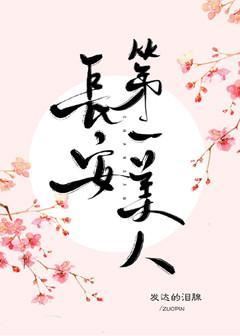
... Read More
"There was heavy snow in Chang'an in October. The snow fell on the ground and turned into ice, chilling the hearts of many people." That single sentence. That's it. Three lines, and I'm frozen. The author doesn't need fifty paragraphs of description here. The plague has moved through the city, the Emperor has lost his mind building altars, the political landscape has shifted, and now — snow turning to ice, chilling hearts. The external weather mirrors the internal state of everyone in Chang'an. It's not just cold. It's desolation. Earlier, the scene of Taoist Master Ge bowing deeply to Emperor Chengyuan — "I came to the capital this time with my whole heart for the Great Jin Dynasty" — felt theatrical, almost ceremonial. Then the Emperor's descent into Taoist ritual, stewing eagles to achieve immortality, the Empress kneeling in plain clothes crying in the snow... these scenes build a world that's increasingly desperate, increasingly absurd, increasingly heartbreaking. The North Mountain altar construction is such a vivid image — the Emperor spending treasury money on a holy altar while his people suffer plague and flood. And then the scene transitions to Lu Yan's study, candlelight flickering, Shen Zhen grinding ink. Two worlds exist simultaneously: the Emperor burning his life away on a mountain, and this quiet domestic moment in a scholar's study. Both are acts of devotion, just different kinds. The contrast makes both hit harder.
... Read More
Okay I need to talk about this wedding scene because honestly it wrecked me. Everyone is cheering and saying auspicious words, and Sui Yu is drowning in wine, but you can SEE it in his eyes — that forbearing loneliness. He married his teacher's daughter, everyone thinks he won, but the whole time he hasn't let go of SHE NAO. Three years ago he was ready to propose, betrothal gifts packed, matchmaker found, and then the second prince from Uighur shows up at a hunting banquet and falls in love with her at first sight. The emperor issues an order and that's it. Game over. No one can change it. And the most brutal line is when he says to Lu Yan before entering the bridal chamber: "Shi Yan, actually, I envy you the most. Being unmoved and emotionless is the most free thing." FREE THING. He thinks Lu Yan is free because he doesn't feel anything, but we know Lu Yan isn't unmoved at all. He's just... contained. And Sui Yu is out here mourning someone he can't have while sitting at his own wedding. I literally had to put the book down after this.
... Read More
Okay so this entire sequence from 157 to 160 is a masterclass in controlled escalation. You have the initial encounter where Lu Yan and Pang Shu's eyes meet — tiny moment, but it sets everything off. Then comes the reveal of Nie Yuan, the snitch, the guy who sold out his own brother officers for a promotion. The text literally says he is willing to throw away his own mother-in-law and children, which is peak betrayal energy. But here is where it gets really interesting: Lu Yan stops Pang Shu from just stabbing the guy. He has a plan. That moment where he turns the ring on his finger before saying Lord Pang Shu — you know something is about to go down. And then the teahouse scene! Longjing tea in a dilapidated shabby place, the shopkeeper immediately understanding the code, closing the doors and windows. It is so obviously a setup. Lu Yan feeds the poisoned tea to Shen Zhen first as a test, watches her drink, then waits for the moment when Pang Shu is also affected. The whole gambit is calculated. He is not just a playboy pretending to be one. The revelation at the very end where he identifies himself as a Junior Magistrate of the Jingzhao Prefecture completely reframes everything you thought you knew about him. The pacing within those four chapters is tight — every paragraph pushes the scheme forward. No filler.
... Read More
There's a contraceptive sachet beside her pillow and I need to talk about what that means because the author is stacking symbols so carefully I'm amazed nobody else has noticed. Let's start with the obvious reading: this is a woman who is deliberately avoiding pregnancy with a man she's entangled with against her will. The sachet represents agency — however small, however fragile — in a situation where she has almost none. She chose this. Or rather, she chose survival. But she's still here, five days later, and the sachet sits on her pillow like an accusation or a promise depending on how you read it. Then there's the five bags of candied fruit. Five days. Five iterations of a gesture that says nothing and everything. Candied fruit is sweet, yes, but it's also preserved — something meant to last, to endure. He's not sending her fresh flowers that wilt. He's sending her something that stays good. Is that a metaphor for how he sees her? Or for how he wants to be seen — as someone who provides, who remembers, who persists? The sandalwood scent is the third symbol, and it's the most devastating. Incense burns and fills a room even after the candle is extinguished. That's what he's become to her — present even in absence. The scent lingers. It invades. It's in the quilt she grips like an anchor. And beneath all of it: the reddish-purple marks on her chest that won't fade. Physical evidence of intimacy that existed before emotion had any claim to the word. Marks that prove something happened, that can't be denied, that time hasn't erased. The story isn't just about a woman caught between fear and desire. It's about how evidence of a past encounter becomes the very thing that makes absence unbearable. She wants him to stop being nice — not because she doesn't want kindness, but because kindness implies he CHOSES her, and that's far more dangerous than coercion ever was.
... Read More
Can we talk about how An momo sounds? This woman has been with the family since she was fifteen, raised Shen Zhen from a baby, and in one line — "Miss, let me tell you, instead of pawning all the things and not being able to pay back the money, it would be better not to repay it" — she sounds like every practical, tired, loving older person who's seen too much but still shows up. No melodrama. Just a woman giving her best friend's sister the only advice she has. And then she kneels down and holds her. That shift from pragmatic to soft is *chef's kiss*. Shen Lan's dialogue is a completely different flavor. She slides in wearing red and ivory fox fur like a villain who happens to look good, and immediately starts with the guilt trip disguised as concern: "Would you rather sell yourself than believe your aunt?" Right. Because that's not manipulative at all. But Shen Zhen plays along perfectly — she knows how to perform vulnerability when she needs to. The acting note hit me hard: "A month ago, Shen Zhen would not believe that she actually had the talent of an actor." Who is she becoming? I need to know. And the footnote about 小祖宗 being an affectionate term — yeah, that's the kind of thing that changes everything when you understand it. It's not derogatory. It's the kind of name you give someone you'd die for. That contextual knowledge makes every interaction in the novel feel richer.
... Read More
I need to talk about this dream sequence because it hit me differently. Lu Yan dreams about Shen Zhen pushing him away while kissing him, and she says 'My Lord, today is the seventh day of March, and is the death anniversary of my mother.' When he wakes up, he hears those two sentences echoing: 'It's my fault, I was ignorant.' 'My Lord, today is the seventh day of March...' The author doesn't explain much, but you just know this is some kind of memory from her past life or a parallel timeline. And look at Lu Yan's reaction – his heart 'suddenly felt extremely miserable.' He's looking at himself from a bystander's perspective and realizes how desperate she must have been. That moment of empathy changing everything for him? Chef's kiss. It's the emotional pivot point of this whole arc. He goes from being annoyed at her seduction-rejection cycle to understanding she's carrying some deep trauma. And Shen Zhen? She's so flustered after waking up, blaming herself for being imprudent, worried about what her sister would think. Meanwhile he's sitting there rubbing her ankles like some creepy romantic lead but also genuinely concerned. The tension between them isn't just sexual anymore – it's layered with guilt, understanding, and this painful awareness that they're both trapped in roles they didn't choose. I'm obsessed with where this is going.
... Read More
I want to address something that happened across these chapters and it is honestly impressive. The author takes a situation that could easily become exposition-heavy — explaining Lu Yan's true identity, the political hierarchy, the backstory of Zhao Chong's faction — and wraps all of it inside action instead. The whole chapter sequence moves on two tracks simultaneously: the external threat of Nie Yuan the informant who needs to be dealt with, and the internal reveal that Lu Yan is not who he pretends to be. Every time you think we are getting a rest, bam, another piece of information lands. Chapter 157 establishes the confrontation. Chapter 158 the poisoning begins in that teahouse. Chapter 159 the ring turn and the command to wait. Chapter 160 the identity drop that rewires everything. The transition between the violent open air scene and the claustrophobic teahouse is especially well done because the shift in space mirrors the shift in power. Out in the open, Pang Shu is in charge physically. Inside, Lu Yan controls everything. The cliffhanger at the end is perfection — Junior Magistrate of the Jingzhao Prefecture. Just enough to make you immediately open the next chapter. No dragging, no padding, no false breaths. This is how you structure a chapter arc. Read it straight through and you will not notice where one chapter ends and the next begins because the momentum never drops.
... Read More
Okay let me just... process the pacing of these chapters because it is MASTERFUL. We open with a scene that's already at maximum tension. Lu Yan walks into a room, Yunzhi is already crying with a visible scar, and within seconds we're in the middle of an emotional confrontation. No warm-up, no setup — just drop the reader into the deep end. 'My Lord,' she says, and we're already invested. Then — right when Yunzhi is about to make her biggest emotional play, right when the scene could peak — Lu Yan walks to the window and deflates everything. The tension releases but it doesn't resolve; it pivots. And then he leaves, and the author does this brilliant thing: he has Lu Yan PAUSE at the door. Just pause. And overheard a single sentence: 'You mean, Taoist Master Ge will come to Chang'an next month?' And suddenly the entire chapter shifts gears. The Taoist Master Ge section is paced like a campfire story within a story — the man in blue revealing secrets, the painting, the earthquake, the crowd reacting one by one. Each detail builds on the last. The old man refutes, the blue-robed man counters, the evidence mounts, and by the time 'Lu Yan's heart tightened,' we know this changes everything. And then — BAM — we cut to Shen Zhen in the summer heat. Completely different tone, completely different pace, almost lethargic and lazy after the intensity of everything before it. But it's not boring; it's a breath. A recalibration. And the last line — 'Miss, the Heir Apparent told you not to drink cold drinks' — it's so casually domestic that it almost slips past you. But it connects to everything. The Heir Apparent. The rules. The discipline. This is a different kind of power than Prince Teng's violence, and I have a feeling it's going to matter. The author knows exactly what they're doing. Every transition is deliberate. Every tonal shift is a choice. And I cannot look away.

Leave a comment

You must be logged in to leave comments. or
