Chang’an’s First Beauty - Reviews

Chang’an’s First Beauty
+Add to Custom List
Sort
Add review
... Read More
"My body was already dehydrated. It can be said that she is as light as a butterfly." I just—how is she still walking? She vomited all night and they haven't stopped traveling for ten days, and Lu Yan is basically carrying her half the time. But here's the thing that actually made me mad, not sad but genuinely angry: when she grabs his sleeve because she can't take it anymore, he doesn't even hesitate. He grabs her waist and takes her straight upstairs without a second thought about anyone watching. But then—AND THIS IS THE THING THAT KILLS ME—he had her call him "Master" earlier with his fingers on her throat. One moment he's protecting her from the cold, the next he's reminding her who owns her. And she whispers "I understand" like it's normal. Like she's grateful for the cloak but still has to submit to the power dynamic every single second. "Bear with it." Two words. That's all he says when she's clearly suffering. Not "are you okay?" Not "do you need rest?" Just bear with it. And she covers her mouth, tears welling up, thinking about how if she vomits on him he'll literally abandon her because of his mysophobia. She's physically falling apart and her biggest fear is being a nuisance to the man she's attached to. I cannot— I genuinely cannot. The daughter at the inn says she saw that Shen Zhen had "an extraordinary bearing" and the mother dismisses it like she's nothing but a cheap concubine. Meanwhile Lu Yan is down there casually chatting with this young girl about something, looking calm and elegant in navy blue, and Shen Zhen is up on the second floor dying. The contrast is brutal. But also—I know this sounds crazy—there's something genuinely tender underneath all this control. He covered her with his cloak. He paid extra at the inn. He carried her upstairs. He chose this inn knowing she needed rest. He's just... Lu Yan. And I hate that I simultaneously want to shake him and root for them both.
... Read More
Lu Yan. Oh my god. Let me just sit with this character for a second because he is absolutely *ruthless* and I am here for it. Yunzhi throws herself at him — literally and emotionally — and his response is basically: 'If you like Prince Teng, just let me know.' Like. WHAT. She has a THREE-INCH SCAR on her face, she's crying, she's telling him she did this to stay pure for HIM, and he looks at her like she's discussing the weather. Then he walks over to the window and says 'Come here. Look.' Pointing at all the other girls in the brothel like a guy at a buffet showing you there are other options. This man is NOT heartless — he's worse. He's *calculated*. The text explicitly says 'the man's eyes were colder than his words.' He's not emotionally absent; he's making a point. Every single thing he does in this scene is designed to shut her down, to remind her of where she stands. 'Between you and me, it is just a transaction, so where does the affection come from?' And yet — and this is what gets me — Yunzhi doesn't walk away. She stays. She tries again. She even hints at playing the pipa, almost threatening him with her value as a courtesan. And he just... opens a window. Walks past her. Like she's furniture. But here's the thing that makes me keep re-reading their scenes: Lu Yan spent a 'huge sum' to keep her, never touched her, barely spoke to her, and required no perfume in that room. That's not indifference. That's... protection? Or something else entirely? I genuinely cannot tell if he's a monster or if he's protecting her in the only way he knows how.
... Read More
I need to talk about this scene for a second because it completely wrecked me and I don't even know why. "As Shen Zhen wrote, he said, 'If you are tired, just go and rest. You don't have to wait for me.' After saying that, he looked up at Shen Zhen. This time, Lu Yan raised his head and realized that she was rubbing her waist every few minutes..." That right there. That observation. He notices something's wrong before she says anything. And then — the beatings. He remembers the six beatings she received. He thinks about her injuries first. His hand goes to her waist and he's worried about her health, and she's sitting there trying not to burden him, biting her lip, saying she's fine. And then when she finally tells him it's her period, his reaction isn't awkwardness or dismissal — it's concern mixed with this quiet anger that she didn't tell him sooner. "Why don't you tell me it hurts?" he asks, with displeasure between his brows. Not anger at her. Anger that she suffered in silence. And the way the narrative frames it — he's calculating two things at once, her cold injury AND her menstrual weakness. He's thinking about her body in a way that's clinical but deeply intimate. Compare this to Empress Xu screaming and crying outside the temple, desperate and loud, and Shen Zhen just sits there quietly grinding ink, hurting, and telling her lord she's fine. I love this contrast. It makes the small moment between Lu Yan and Shen Zhen hit even harder because it's so understated.
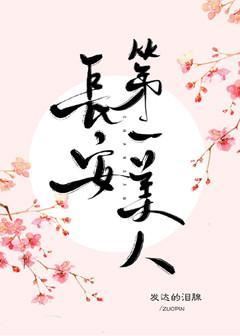
... Read More
Okay so the family politics in this section are absolutely delicious and I need to talk about it. You've got Old Lady Lu, who is clearly the matriarch pulling strings, immediately sizing up Meng Suxi like she's shopping for a wife for her grandson. The woman notices the little things — how the girl looks, how she blushes when Lu Yan leans in — and she's clearly already won over. Meanwhile, Madam Wen is out here giving Suxi the side-eye advice: don't hold back, be straightforward with the eldest princess. Classic supporting adult trying to help but also kind of manipulating the situation. But the REAL plot twist hit me when Lu Yan said 'I'll try.' Like, he just... agreed? After clearly being reluctant this whole time? And then the narrative drops this bomb: he remembered 'that capricious dream' where he died with no wife or children, and he saw his mother breaking down at his mourning hall. This changes EVERYTHING. It means Lu Yan has been having visions or memories of a past life or some alternate timeline, and he's making a decision not out of love for Suxi but out of fear of losing his mother to grief. That is such a messy, human motivation and I am HERE for it. The author is playing with fate vs. free will and I'm already suspicious that whatever Suxi is hiding (which we know from Madam Wen's scene — that sudden smile drop after her aunt leaves? Suspicious as hell) is going to collide with Lu Yan's secret knowledge.
... Read More
Okay so let's talk about Shen Zhen, because this character is doing SOMETHING. She's in this precarious position where everyone thinks she's 某家 daughter or some kind of legitimate spouse, but she's clearly an outsider trying to survive. The most heartbreaking detail is that even people around her — Lu Yan, Tangyue — they're all covering for her, enabling her to avoid growing up, and she doesn't even realize she's being protected. She whispers "this is against the rules" like that's the real worry, when literally everyone else is just trying to keep her safe. And then there's Fuman, the "thin horse" who apparently set up that fall. Like, intentional? The power dynamics here are insane. You've got Shen Zhen walking around in someone else's life while actual enemies are playing chess behind her back, and she's just over there worrying about tea rituals and gift exchanges. Lu Yan though — the man sees everything. He doesn't just help her; he goes home and starts reconstructing the scene in his head, figuring out whether Fuman did this on purpose. That's not a casual guy. That's someone who's already all in.
... Read More
The longest five minutes of the chapter aren't even inside the cell — they're the fifteen minutes Shen Shu waits outside while Li Di goes in after her. The text says: 'She doesn't know why, just now a quarter of an hour was so short inside, but now when she is outside, a quarter of an hour feels extremely long.' That contrast is everything. Inside, she had purpose — she had questions, she had her father's voice, she had the desperate need to extract information about those construction drawings. Time collapsed under urgency. Outside, stripped of action, she just... waited. And waiting is where the anxiety lives. But the real emotional gut-punch comes from the father. When he touches his sideburns and points to the medicine jar, he's performing normalcy for his daughter. He's saying 'I'm fine, don't worry' without actually saying it. And then when she whispers 'Don't believe anything Li Di says' — that's not a daughter talking to her father. That's an ally passing intel. The Marquis knew exactly what she was doing and didn't stop her. That moment of silent complicity between them, in front of everyone else, is the most intimate scene in the chapter. And Zhou Shu'an asking 'Don't Madam Li also owe me a favor?' while his eyes darken — that's not a business question. That's a man testing whether there's room for something more between them. The romance here isn't declared, it's squeezed through subtext so tight you can barely breathe.
... Read More
This chapter is basically a masterclass in layered romantic and relational tension, all packed into a prison visit. Let's break it down. Li Di — her husband — bribes the warden to go in with her, holds her waist outside, calls her 'Xiao Shu' in that practiced affectionate way. But internally, the narration tells us his hand tightens, she stiffens, and he's fully aware that Zhou Shu'an was looking at her with interest. This man is possessive but also clearly insecure underneath the authority. The irony of 'Shen Wenqi's son-in-law, Li Di' — the warden saying it while they walk into a prison together? The text itself calls it 'extremely ironic.' What does that irony even mean on a deeper level? Is Li Di complicit in something? Is he protecting her or imprisoning her? Then there's Zhou Shu'an. Calm, unperturbed, returning the bribe without a word. Flipping through case files while a woman he clearly cares about stands a few feet away. When he mentions the medicine shop — the place where she may have poisoned Li Di — he doesn't expose her. He just asks 'Really?' and lets it hang. He owes Lu Yan a favor, he helped smuggle a doctor into prison for the Marquis, and somehow Shen Shu owes him too. This man collects debts and favors like other people collect emotions, and his interest in her is unmistakable but restrained to the point of agony. And the father-daughter dynamic between Marquis Yunyang and Shen Shu is achingly tender. He doesn't want her to see him broken. He asks about Shen Zhen first — not about himself. He's still thinking of her even in chains.
... Read More
There are so many symbols stacked in these chapters it's almost suffocating. Let me just pick the ones that wrecked me. First: the soft hair line. 'They say people with soft hair have soft hearts. Why are you so obtuse?' This is Lu Yan's projection of his own desire—he wants her to be soft, to let him in, to understand him without words. But the irony is that HE is the one who has hardened, not her. Her heart isn't obtuse; it's just locked behind a door he refuses to open. Second: the poisoned tea. The medicine Fuman prepares is literally the symbol of their entire relationship—bitter, necessary, Lu Yan feeding it to her spoon by spoon, her taking it because she has to, not because she wants to. Third: the unfinished Night Banquet Picture. She's only painted half of it. Their marriage is only half-painted. The full picture exists in Lu Yan's mind—his knowledge of their past life, their shared future dangers—but Shen Zhen only sees the sketch. Fourth and most haunting: the 'Yao' poison and the arrow wound. These aren't just plot devices; they're symbols of inevitability. The past is literally poisoning the present. Lu Yan carries the ghost of his dead self like a toxin in his blood, and it's only a matter of time before it kills him again—or kills them both. The seventeenth year of Qingyuan isn't just a date; it's a deadline stamped on their marriage. And the dream itself—where he spoke in his sleep and she found out about Fuman—is the central symbol: his subconscious is the only place where the truth escapes, and even there, it only causes more damage.
... Read More
I keep coming back to this image of Lu Yan rubbing his chest and taking a painkiller before walking out to face the world. It's such a small detail but it feels loaded with meaning. The mask he wears for society—the handsome, solemn, dignified official—exists alongside a body that physically hurts when certain names are spoken. What does it mean to maintain a mask when your own nervous system won't cooperate? There's also the mask of the legal system itself. Jingzhao Prefecture "only talks about the law, but it can't save anyone's life." That line feels like the thesis statement for the whole book. The law is a mask too—a structured, rational facade that pretends justice is blind when really it's just indifferent. Qingxi comes begging for salvation and gets told to focus on the receipt date instead. The loan dispute itself is another layer.六十 percent interest in less than a month. This isn't just a plot device—it's a commentary on how power operates in this world. The Jin family doesn't need to break the law because they ARE the law, or at least they've figured out how to weaponize it. The receipt, the stamp, the deadline—these are the tools of oppression dressed up as order. And then there's Shen Hong, mentioned only in passing, already being treated as currency by the shopkeeper. The text mentions missing arms and legs and opera troupes. These details aren't decorative. They're the world telling you exactly what happens to people who can't protect themselves.
... Read More
There's a drum near the judicial office where people go and beat it if they have a grievance that they want justice for. Lu Yan feels like going up to beat it himself. But he doesn't. Because he is the magistrate. Because justice is his job, not his right. Because the man who feels like going up the stone steps and banging the drum is the man who has nowhere to go to redress his grievances. Twenty paintings. Shen Zhen sells them to earn money for incense. She knows they're not masterpieces. “Let alone twenty paintings, even if it were forty paintings she would not be able to sell for this price.” But she tries anyway. She dips the brush in ink. She paints. She sells. She donates sixty copper coins to the temple because that's what the money is for—not for herself, but for incense, for prayers, for debts to be repaid. The Longye Pagoda—nine stories high, octagonal body, gates on each floor, wind chimes ringing under the eaves. Sacredness. Transcendence. But also imprisonment. Nine stories you can climb but never leave. Like the temple. Like the marriage. Like the city. Six family members dead. Heads cut off, hung on beams. No money missing. No traces of rape. An enemy. The governor bedridden. The magistrate out. Lu Yan sending Shen Zhen to the temple because someone has to accompany her and he can't go. The female pilgrim offended that sixty copper coins isn't enough to meet Master Yuan Chen in person. The novice asking if sixty is really enough. The monk saying “it's all merit” while thinking “even if you added another zero, it's still not enough.” What is merit? What is enough? How many paintings must she sell before he stops laughing? How many dead bodies must they find before he stops walking away? The drum sits silent. The wind chimes ring. And Shen Zhen donates sixty copper coins and adds another debt to be repaid.
... Read More
'A gold bottle of sake is worth ten thousand.' I read that line and immediately thought — what is this story actually about? It's not really about wine, is it? The whole business scheme is a metaphor for control. Grain controls wine. Wine controls profit. Profit controls people. And Zhao Chong controls ALL the grain in Yangzhou, which means he controls everyone who wants to play in this city. Lu Yan thinks he's being clever by proposing the wine business, but he's walking into a trap he helped dig. And that's the theme, isn't it? The illusion of autonomy. Everyone in this story is playing chess, but the board itself belongs to someone else. Even the 'thin horse' girls — they're literally called horses, trained from childhood, displayed like livestock. They have zero agency. And Lu Yan is being asked to 'choose' one, which is supposed to be an act of dominance, but it's actually him being reduced to the same commodity status. He's not the buyer. He's also for sale. He just has to decide which master gets him. 'The drinker's heart is not in the cup' — that footnote is not incidental. It's the entire thesis of this scene. Nothing is what it appears to be. Every transaction is a trap. Every smile hides teeth.
... Read More
The way the author paints Yangzhou's Twenty-Four Bridge is absolutely cinematic. This isn't just a backdrop; it's a character in itself, a living, breathing entity of vice and power. The translator's note about the 'Wine pool and meat forest' idiom is a brilliant piece of contextual layering—it immediately roots the scene in a historical tradition of decadent corruption that parallels the political maneuvering happening in the shadows. You can feel the heavy, perfumed air, see the hundreds of courtyards lit up at night, hear the crush of bodies in the narrow alleys. It's oppressive yet electric. The contrast between the elegant, taste-conscious brothels of Chang'an and this raw, 'flesh and blood business' in Yangzhou tells you everything about the moral landscape these characters inhabit. Power isn't just exercised in government offices; it's flaunted here, on boats swaying gently on dark water, surrounded by colorful lights and whispered deals. When Lu Yan and Shen Zhen descend from the carriage into this world, the reader physically feels the shift in atmosphere—the humidity, the smell of oil and desire, the underlying threat. The setting is meticulously crafted to feel alive and dangerous. It's a masterpiece of environmental storytelling. Every cobblestone and paper lantern reinforces the theme that in this world, intimacy and danger are inextricably linked. You don't just read about the corruption; you smell it on the wind.

Leave a comment

You must be logged in to leave comments. or
