Chang’an’s First Beauty - Reviews

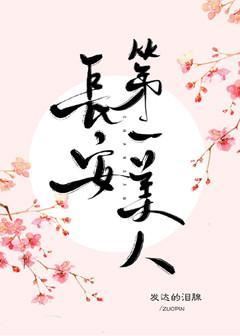
Chang’an’s First Beauty
+Add to Custom List
Sort
Add review
... Read More
The imagery in these chapters is absolutely cinematic. Starts with Lu Yan kneeling down touching the 'blue-grey stone steps' outside, rubbing them, finding nothing unusual—that's such a small detail but it immediately puts you in his headspace, paranoid and meticulous. Then you're transported to Dongli Garden where Liu momo drops her charcoal mid-task just to greet him. The whole atmosphere of these inner chambers feels suffocating in the best way, like every conversation is happening behind closed doors with servants pretending not to listen. And then there's the dinner scene—'dim light shone on her body through the window and her black silk hair hangs down obediently.' This woman looks like a painting. But the contrast is what gets me: warm candlelight with Shen Zhen applying medicine to herself, hissing through her teeth, versus the cold night breeze outside as Lu Yan heads toward Dongli Garden where Liu momo is 'waiting at the door with a lamp in her hand' like some kind of ominous foreshadowing. The sensory details make this world feel lived-in and real.
... Read More
I need to talk about this moment where Lu Yan sees Shen Zhen's injured legs and just... breaks a little. I know this is supposed to be a light moment between them — candles out, changing positions, breathing even — and then BAM she's covered in bruises and he loses his composure. The text says "he almost fainted from the pain" and I'm sitting here like EXCUSE ME. This man has been cool and collected through everything, but seeing her hurt on HIS watch, by someone operating in HIS household? That's when the mask cracks. And then he examines her injuries, moves her leg to check for bone damage, and she whispers something in his ear and he says "You mean it was that thin horse that connected your bones?" My heart. He knew. He already suspected. But it's the tenderness underneath — he could've been angry at her for getting hurt, for causing drama, but instead he's gentle, checking her wounds himself. And she TRUSTS him enough to whisper in his ear like that. That level of intimacy isn't built overnight.
... Read More
Old Lady Lu's reasoning for picking Meng Suxi is actually the most realistic matchmaker logic I've ever seen in fiction. Let me explain why this hits different: 'The Meng family's daughter is gentle and considerate, filial to her elders... can ordinary people tolerate your temper?' — This isn't just pragmatism, this is someone who has WATCHED Lu Yan destroy every other relationship and made a calculated decision. Wen's temperament suited him because Wen knew how to keep her head down, how to coax people, how to advance and retreat. The old lady literally ran through a failure log of Lu Yan's past relationships and chose the one candidate most likely to survive him. And Meng Suxi? She gets it immediately. When Lu Yan comes home cold and gives her no face, the old lady expects conflict. Instead, Meng Suxi chases after her eagerly—not aggressively, not confrontationally, just present. The old lady notices this and thinks: *Ah, this one understands the script.* But here's where it gets complicated. Meng Suxi sends someone to follow Lu Yan. That's not the behavior of someone who fully understands the script—it's someone who cares enough to worry, to investigate, to cross a boundary. And Lu Yan catches her at it. His response isn't gentle. He doesn't protect her secret from his mother either. He lets the damage happen. And yet—he's still going back to that woman in the brothel. Night after night. Because she's 'sincere and passionate,' because she doesn't play the game of advance-and-retreat the way Meng Suxi has been trained to. The contrast between these two women isn't just romantic—it's a collision of two completely different ways of surviving in this world.
... Read More
Okay so let's talk about the chess game happening here because the layering is actually insane. On the surface you've got the harem drama — Meng Suxi thrown into the palace, the Empress Dowager falling ill, cats going rogue — but underneath all of that is this massive political stratagem. Empress Xu lays it out so cleanly: the Emperor doesn't actually want any of his sons to win. He wants them fighting each other so he stays in power forever. Every prince, every rivalry, it's all designed to keep the throne secured indefinitely. And then — immortality techniques. Master Ge is coming to the capital specifically to give the Emperor what he wants most. This isn't just a side plot, it's the key that unlocks everything. If the Emperor achieves immortality, the entire succession struggle becomes irrelevant. All those princes, all that scheming — meaningless. That's why Empress Xu says "we should help him" — because in helping him achieve eternal life, she gets exactly what she needs. The timing around the Empress Dowager's illness is perfect manipulation. It's brilliant narrative design where a health crisis becomes a political opportunity. And then you've got the Shen Zhen thread on the quiet side — her getting measurements taken for Lu Yan, which seems like fluffy romance but is actually another vector of alliance-building. Every plotline is connected. I read the Empress Xu and Sixth Prince scene three times because it's that dense. The author doesn't tell you the plan explicitly — you piece it together from subtext and implication, and that's what makes it satisfying.
... Read More
I need to talk about this one moment because it completely wrecked me. Lu Yan finding that moon-white sachet — the one with his name embroidered on it — and his hand literally trembling? That is THE moment. Because think about it: she was crying, freshly rejected and humiliated, and all she could do was clutch onto this stupid little embroidered thing she'd made him over two nights. And he sees it and ALL THAT COLD ANGER just melts. "Then why didn't you give it to me?"bro. He wrote three sentences on the way back asking if he was okay, offering to rub his temples, and he couldn't even look at her. The fact that she still MADE HIM A GIFT despite being treated like garbage says everything about how deeply she cares. But also — she's STILL holding onto pride. "How dare I disturb you?" as if HIS cold silence is something SHE needs permission for. These two are going to drive each other crazy forever and I am HERE for it. The previous life detail about her leaving him for someone else makes every interaction so much more painful though, doesn't it? He remembers. She remembers. And they're both too proud to just... talk about it.
... Read More
Okay so let me just say — this chapter is a MASTERCLASS in parallel tension. You've got TWO threads running simultaneously and they're feeding off each other in the best way possible. Thread one: the almost-invisible setup at the beginning. Tang Yue helping Shen Zhen out of the carriage at dusk, and THere's another person watching from the corner of Chengyuan alley. ONE SENTENCE. That's it. One sentence and I immediately sat up straight. Who is it? Why are they watching? What do they know? The author doesn't even try to hide the mystery — they just drop it and move on, like 'oops sorry not sorry you won't know yet.' And honestly? That's the most effective suspense technique there is. Thread two: Lu Yan's confrontation with the eldest princess. This isn't just a boring 'mom wants son to marry' scene — oh no. The author layers it with political stakes (General Mu in Dali Temple, the third prince grounded, court in turmoil), emotional stakes (grandmother sick and chanting sutras for him), and personal stakes (his secret dream connection to Shen Zhen, his unacknowledged attraction). Every line of dialogue is doing triple duty. And the ending? Cut off mid-thought right when Lu Yan is about to reveal something crucial about WHY he saved Shen Zhen? Brutal. Absolute brutal. I had to immediately open the next chapter. The plot here is tightening like a vice. Every subplot — the marriage pressure, the political chaos, the mysterious watcher, Shen Zhen's own arc — all converging. This is the kind of chapter that makes you forget to eat dinner.
... Read More
I have been sitting with the imagery in these chapters for a good long time, and honestly, the author is playing a deeper game than just romantic drama. Let me unpack what keeps coming back at me. The white moonlight. It appears right at the start of Chapter 38 — "The white moonlight dragged the man's silhouette long." This isn't accidental. In Chinese literary tradition, the white moonlight is the ultimate symbol of something beautiful but unattainable. Shen Zhen is literally walking under this moonlight, and Lu Yan watches her from behind. She is his white moonlight — beautiful, distant, and fundamentally unreachable no matter how many times he shares a bed with her. The fact that she wears a contraceptive sachet while he knows about it? That's the cruelty of their positioning. She is physically near but emotionally and romantically distant by design. Then there's the boat. "It was the boat that burned." The Emperor's words in the dream, the account books, the evidence — all consumed by fire on water. Fire and water. Destruction and concealment. The boat burning in his dream is clearly a metaphor for how the political truth will be destroyed before anyone can use it against whoever is hoarding weapons. But it's also about Lu Yan himself — his past life ended in flames at twenty-seven, and his present efforts to change fate are themselves moving toward some kind of conflagration. And the light going out. When Shen Zhen falls asleep and the candle in Chunxi Hall dims, Lu Yan stands outside and watches the shadow disappear. This is such a quietly devastating image. He is a man who once had everything — power, position, a throne potentially within reach — and yet here he is, powerless to make one sixteen-year-old girl see him the way he wants her to. The light goes out and he is left in darkness. What really gets me though is the recurring motif of cages and birds. Lu Yan thinks about how he could make her "behave like a caged bird" if he wanted to. But he can't bring himself to do it. Meanwhile, Shen Zhen is the one who has made herself the caged bird by choice — accepting the role of outside mistress, staying in Chunxi Hall, wearing the sachet that keeps her permanently barred from true legitimacy. Neither of them is free. And that's what the whole story is really about, isn't it? Not romance. Not politics. But freedom — or the lack of it — in a world that gives you no choice but to play the roles assigned to you.
... Read More
What happens if Shen Zhen gets hurt badly? What happens if someone SAYS something? The entire house is built on her pretending to be someone she's not — "Young Master Wei's" concubine, the honored daughter of the Shen family — and one accident could unravel everything. That's the underlying terror running through every scene. Even the small things are loaded: the Zhou family gifts, the careful return gifts that can't be too expensive or too cheap, the social performance she's maintaining while secretly terrified. And then Fuman — who clearly knows more than she's saying — takes advantage of her vulnerability. The physical stakes are real (bruised legs, possible bone damage), but the social stakes are catastrophic. If anyone discovers who she really is, she doesn't just lose face — she loses everything. Lu Yan suspects Fuman orchestrated this deliberately. If he's right, there's a predator in the house who knows exactly how fragile Shen Zhen's position is. And he's going to do something about it.
... Read More
Let's talk atmosphere. The author doesn't just describe settings; they *breathe* into them. The opening night scene: 'The silver moonlight was obscured by dark clouds, the bare sycamore trees in the yard were rustling, the bell above the eaves rang twice.' Whoa. That's not just weather; that's mood. Clouds hiding light = uncertainty. Bare trees = exposure. Bell ringing twice = a count-down, a ritual. Shen Zhen's hand frozen on the door knocker? That's not hesitation; that's the whole world pressing down on a single moment. And the bedroom? Darkness, then light, then darkness again. It's like they're living inside a painting that keeps getting wiped and repainted. Then morning: 'The sky turned white, and the soft morning light filtered in through the window.' Soft! After last night's violence, the light is gentle. Irony. And the food—'clear porridge, pickled winter mustard, three fried fruits with soy sauce, a plate of steamed rolls, and a bowl of winter melon soup.' That's not a menu; that's a poverty line. You can taste the difference between her past (momo and Qingxi's craftsmanship) and this (hard rolls, tasteless pickles). The world-building isn't in epic descriptions; it's in what's missing. Where's the charcoal? Where's the warmth? Where's the dignity? Even the empty kettle tells a story. This setting is a character itself—cold, hungry, and slowly, slowly waking up.
... Read More
There's this recurring symbol of medicine — not just physical medicine for Shen Zhen's injuries but emotional healing that neither character knows how to access yet. Lu Yan sending Yang Zong to buy medicine is a pivotal moment. He can't say 'I care about you' directly, so he expresses it through action. The medicine represents his attempt to care without vulnerability, without breaking character. Then there's the portrait scene which is almost symbolic in itself. Everyone is trying to capture an image of someone — the kidnapper, the missing girl, the traumatic event — but they keep getting it wrong. The official portraits look like apes. The painter couldn't capture the truth. It mirrors how these characters can't see each other clearly either. The purple marks on Shen Zhen's body are another symbol — physical evidence of what happened, visible proof of intimacy and pain intertwined. When she rubs them and her nose gets sour, it's not just about physical discomfort. It's about shame, confusion, maybe even a complicated gratitude. The title 'Lanyue Pavilion' — orchid moon pavilion — evokes fragility and beauty. Orchids are delicate, they require care. Moonlight is beautiful but cold, distant. The setting itself comments on the relationship. And that line about Song Ling'er: 'when a woman was raped, if she did not die, she would end up as a living corpse.' It's brutal but necessary context for understanding the social world these women inhabit.
... Read More
I need to talk about the way Lu Yan looks at Shen Zhen in this segment—specifically, that moment after he's dealt with Nie Yuan and Pang Shu. He carries her upstairs, places her on a couch, and then just... sits there. The narrator notes he's 'completely different from his usual calm, confident, and shrewd demeanor.' It's so telling. All this political maneuvering, all this cold calculation about antidotes and secret rooms, and then with her, he's just quiet. When she turns over in her sleep and he touches her hair only to feel nothing when she moves away, 'His hand suddenly felt empty.' That's not just physical emptiness; that's the whole history between them—the betrayal, the misunderstanding, the lingering something neither will admit. And then he stays up all night watching her? That's a man who claims to be playing a long game but gets completely unmoored whenever she's near. Meanwhile, look at how he handles Nie Yuan. Instant knife at the throat. Zero hesitation. With Shen Zhen, he can't even wake her up without being sarcastic ('I called you but did you hear me?'). The contrast is staggering. It makes me wonder what that previous life was like if it left him this permanently tangled. He's supposed to be the strategic mastermind, but around her, he's just a guy who can't sleep and keeps rolling someone's hair between his fingers. Pathetic. Or maybe just painfully human.
... Read More
The pacing here is deceptively slow, and that's exactly why it works so well. We open with a quiet morning scene — Shen Zhen dressing, Lu Yan arriving, soup being discussed. It feels almost domestic, almost gentle. But the underlying tension is always there, simmering. She puts on clothes too fast. She can't meet his eyes. She offers tea as a shield. Then we jump to night. The transition is smooth but significant — Lu Yan returns tired, asks her to change his clothes, and the power dynamic shifts again. She's serving him even in intimacy. The pacing moves from public decorum to private vulnerability without ever breaking character. The chapter structure itself mirrors the relationship: measured, controlled, with moments of unexpected intensity. The birthday question drops in the middle of an intimate scene — that's a pacing masterstroke. It's not foreshadowed, it's not earned through buildup, it just appears, and it changes everything. He's been keeping track of her age. He was paying attention all along. "I checked your household register." This line lands with the weight of a plot twist despite being delivered in the most casual way possible. The author doesn't announce it dramatically — she just places it there, and suddenly the reader understands the full scope of Lu Yan's investment. The final scene — her pinching his arm, his promise not to tense, the mutual locking of eyes — ends on a note of almost comedic domesticity. After all the tension, the nightmares, the fear of exposure, we end with two people bickering in bed. That's brilliant pacing. It says everything about what this relationship actually is: complicated, dangerous, but undeniably real.

Leave a comment

You must be logged in to leave comments. or