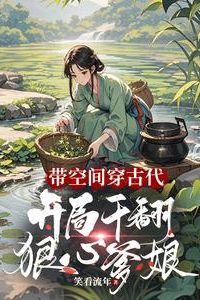
Carrying a Space Dimension to Ancient Times Starting off by Taking Down Cruel Parents
+Add to Custom List
Genres:
Novel Info

Summary

... Read More

Qin Nian, a skilled doctor in her previous life, dies of a heart attack after discovering her fiancé’s infidelity. She transmigrates into the body of a sixteen-year-old girl in Dawapo Village, a remote settlement in the Daliang Kingdom suffering from a devastating three-year drought. The original host had starved to death while foraging for wild vegetables. Qin Nian wakes up in a mountain cave to find Lin Cuizhi, a neighbor, in a compromising situation with a man named Dong Biao. Rather than exposing her, Qin Nian keeps the secret to protect Cuizhi, whose children depend on her survival, and returns to her home with a basket of greens.

Upon returning, Qin Nian confronts her biological parents, Qin Rongsheng and Li Dahua, who have abandoned her sixteen years ago after attempting to dump her in the woods as a baby. They are now desperate to sell her to survive the famine. Qin Nian’s grandmother, Granny Li, fiercely defends her, wielding a wooden stick against the intruders. Qin Nian uses a heavy oak shovel to strike both parents, driving them away with threats of further violence. Though physically weak from malnutrition, her modern medical knowledge and combat skills from her past life as a Muay Thai practitioner give her the confidence to protect her new family.

Shortly after, Qin Nian demonstrates her medical expertise when her neighbor, Geng Zhenhai, suffers a severe leg wound from a wild boar attack. With the village doctor dead and no time to fetch help, Qin Nian stitches the wound using sterilized needles and thread, stopping the bleeding and saving his life. In gratitude, Geng Zhenhai’s family, including his son Geng Feng and daughter-in-law Ye Meizi, pledge to share half of all their hunted game with Qin Nian and her grandmother. This alliance provides a crucial source of protein and income.

Qin Nian and Geng Feng hunt the injured wild boar the next day, successfully killing it and selling the meat in the county town. The transaction earns them several taels of silver, which they use to buy cornmeal, salt, and medicinal salve. This success marks the beginning of Qin Nian’s efforts to stabilize her living conditions. During this period, she discovers a spatial dimension linked to her previous life’s home, containing spiritual spring water that accelerates healing and improves physical health. She uses this water to treat Granny Li’s burns after a subsequent altercation with her abusive parents, who return to attack the grandmother in a fit of rage over the meat.

The conflict with Qin Rongsheng and Li Dahua escalates when they intentionally scald Granny Li with boiling soup. Qin Nian tends to the injury, applying badger fat ointment and bandages, while Geng Feng provides immediate first aid. The incident deepens the rift between Qin Nian and her biological family, who view her as a commodity rather than a daughter. Meanwhile, romantic tensions emerge when Geng Feng’s cousin, Tang Xiaomei, arrives and displays jealousy toward Qin Nian’s close relationship with Geng Feng, attempting to sabotage their interactions.

Qin Nian continues to forage in the mountains, discovering a potential water source that could benefit the entire village if tapped. She balances her growing medical practice with hunting and trading, gradually improving her family’s nutrition and health. The spiritual water from her space plays a pivotal role in recovery, allowing Granny Li to heal faster than expected. As the drought persists, Qin Nian’s resourcefulness and medical skills establish her as a vital figure in the village, while her determination to escape the cycle of poverty and abuse drives her to seek long-term solutions for survival.

The narrative follows Qin Nian’s adaptation to ancient life, leveraging her modern knowledge to overcome immediate threats from hostile relatives and environmental hardships. Her bond with Geng Feng strengthens through shared hunts and mutual support, contrasting with the antagonism from her biological family and the jealousy of Tang Xiaomei. With each challenge, Qin Nian asserts her independence, using her medical talents and strategic thinking to secure resources and protect her grandmother. The story sets the stage for her continued rise in status and influence within the drought-stricken region, as she works to secure a sustainable future for herself and her community.

Latest Release
DateGroupRelease
2026-08-11shanghai fantasy c47
2026-08-11shanghai fantasy c46
2026-08-11shanghai fantasy c45
2026-08-11shanghai fantasy c44
2026-08-11shanghai fantasy c43
2026-08-11shanghai fantasy c42
2026-08-11shanghai fantasy c41
2026-08-11shanghai fantasy c40
2026-08-11shanghai fantasy c39
2026-08-11shanghai fantasy c38
2026-08-11shanghai fantasy c37
2026-08-11shanghai fantasy c36

Community Reviews

Rating(3.5 / 5.0, 10votes)
5 stars
2(20%)
4 stars
1(10%)
3 stars
7(70%)
2 stars
0(0%)
1 stars
0(0%)

Popular reviews

... Read More
I need to go back and trace the pacing here because the structure of these chapters is genuinely masterful. Let me start from the end and work my way backward. The chapter about selling meat and buying rice — this is where everything clicks into place. You've just finished the intense boar hunt (Chapters 5-6), and instead of lingering on the aftermath, the author immediately pivots to the practical consequences: how do they get this massive animal down the mountain? How do they preserve it? How do they turn it into something that actually keeps them alive? That transition is seamless. The carrying-dragging-cart sequence with Qin Nian and Geng Feng is perfect pacing — it's physical labor, it's character interaction, it's worldbuilding all at once, and it doesn't drag because every beat serves multiple purposes. Then the return to the village, the sharing of meat with neighbors, the salted preservation at night — this is the quiet before the market day storm. And the next morning chapter? "Before dawn, while Qin Nian was still fast asleep, Grandma got up quietly." This line is everything. It establishes routine, warmth, and the new family dynamic in a single sentence. The market scene is where the pacing really shines. Qin Nian and Geng Feng separate into two stalls, the pricing strategy unfolds in real time, the lewd customer scene provides comic relief without slowing things down, and then — sold out. Both of them. In about an hour. The author doesn't pad this. They don't add unnecessary haggling or fake tension. It's efficient, satisfying, and then they move on. The pharmacy, the grain shop, the return home — each stop is a beat in the rhythm. And the final image of the wells, cutting off mid-thought about water shortages, is a classic chapter-end hook that makes you immediately want to read the next batch. The only moment I'd flag is the transition between the boar death and the water rest scene — it's slightly abrupt. But honestly, in a story this tight, I'd rather have a minor pacing hiccup than a single wasted paragraph. The overall arc from hunt to home to market to earnings to reflection is as clean as it gets.
... Read More
Let me just say this: the opening scene is unhinged in the best possible way. You wake up, hear some very explicit sounds, sit up, and there they are. A man and woman, mid-act. And Qin Nian's first instinct isn't to scream or faint — she SMILES and leans in. Like, what kind of chaotic energy is this? I love it. It immediately tells you this protagonist is not your typical fragile transmigrator. Then the real plot hits. She died from a broken heart over a cheating fiancé, and the very next breath she's in a new body in a famine-stricken ancient village. The transmigration mechanism is clean — no confusing time loops, no magical artifacts, just straight soul swap. Efficient. But what really grabbed me was the dual structure of the first two chapters. Chapter 1 gives us Cuizhi's scandal as the opening hook — a woman caught in a compromising position, desperate, with three starving children. It's a microcosm of the world Qin Nian has entered: brutal, survival-driven, morally gray. Then Chapter 2 pivots hard to the family conflict, and suddenly we're watching a 16-year-old girl with a wooden shovel take on her biological parents. The plot doesn't waste time. Every scene pushes her deeper into this hostile world while simultaneously showing us she's not going to be a victim. The subplot threading through is the famine itself — three years of drought, wild vegetables as currency, people selling children. It's not just backdrop; it's the engine that drives every conflict. The parents aren't evil for fun, they're evil because starvation makes monsters of people. That's the kind of plot logic that makes you keep turning pages. One thing that made me do a double-take: the original Qin Nian starved to death in that cave. She found dandelion greens, ate a few, collapsed, and died. Then the modern doctor's soul floats in. That image — of a girl dying alone in a cave with a basket of vegetables — is haunting. It sets the stakes for everything that follows: survival isn't guaranteed, and the world is indifferent.
... Read More
I need to talk about Granny Li because this woman has more personality in her pinky finger than most protagonists have in their entire body. She comes out of the house chewing on a strand of dandelion — literally eating while watching her granddaughter beat up strangers — and says: "When it's time to strike, strike hard — beat the beasts till they crawl. Xiao Nian, raising you wasn't in vain. You've got your grandma's fire when it counts!" And then she stuffs freshly washed dandelion leaves into Qin Nian's mouth and says "eat some too — build up your strength to whack them harder." This is comedy gold. This is the kind of grandmother you'd die for. She's seventy-six, barely alive, held together by a wooden stick and pure spite, and she's the most formidable person in this entire village. The dialogue throughout these chapters is sharp and distinct. Each character has a voice you can identify without tags. Qin Rongsheng barks and roars — "You wretched girl — are you rebelling!?" — full of empty authority. Li Dahua puts on fake smiles and manipulative tones, calling herself "Mom" while planning to sell her daughter. But Granny Li? She speaks in proverbs and insults like they're the same thing. Cuizhi's dialogue in Chapter 1 broke my heart. "My life doesn't matter, but if I die, my three children won't survive either. They're still so young… So very young!" The repetition of "so young" — it's not polished, it's raw, and it works because it sounds like a mother actually speaking. Qin Nian's voice is the most interesting because it's a hybrid. She has the modern doctor's directness — "Get out of here. If you try anything again, I'll beat the both of you" — but she's also adapting to this world's social rules, catching herself before saying things like "you're a strong and noble mother" and switching to "niang" instead. The author's narrative voice has this great dry humor woven in. Describing the man who ran away naked: "His butt was big and flat, like a poorly shaped cow pat." I literally laughed out loud. That kind of tonal shift — from devastating famine to comedic observation — is what keeps the reading experience from becoming exhausting.
... Read More
I keep coming back to salt in these chapters. It's everywhere. Qin Nian and Grandma salting the wild boar meat into strips at night by moonlight, preserving what they've hunted because they know one meal won't last. Salt is survival. Salt is the difference between eating today and eating next week. And then they spend their hard-earned silver on more salt at the grain shop. It's this circular economy of preservation — you preserve meat to survive, you sell preserved meat to buy more preservation tools. There's something almost philosophical about it, though I don't think the author is being heavy-handed about it. The water motif is equally persistent. From the shared water bag during the boar hunt — two people too polite to let their lips touch the same opening — to the village wells where people fight hourly over access, water is both civility and conflict. It's what binds people together and what drives them apart. And then there's the weight theme, which I never expected to find in a novel about hunting boars and selling meat. Qin Nian weighs herself in squirrels. Geng Feng says she's "at most 60 jin" and she protests. The boar is 300 jin. The cart becomes 500 jin with her on it. Every object in this story has weight, and weight is survival. You need strength to carry it, strength to sell it, strength to live with it. The pig liver — offered and refused and insisted upon until accepted — is another symbol I can't shake. It's the most nutritious part, the part you'd save for the injured man, but Geng Feng and Ye Meizi insist on sharing half with Qin Nian's family anyway. It's kindness as currency in a world where kindness is a luxury. And the bronze mirror that doesn't exist — Qin Nian looking at her reflection in a water jar and seeing only a vague outline — this feels like the central metaphor of the whole crossing-over premise. She can't see who she's become yet. She only sees what she needs to become. The story doesn't spell any of this out. It just lets salt, water, weight, and reflections do their work.
... Read More
Okay, the physical conflict in these early chapters is absolutely wild and I need to talk about it. Qin Nian's biological father — Qin Rongsheng — shows up at her door with her mother, both of them looking like wandering beggars, and their plan is literally to sell their own sixteen-year-old daughter for food. Let that sink in. These are people who tried to abandon her in a wolf-infested forest when she was a baby, and now they're back because they're hungry. And Qin Nian? She doesn't cry. She doesn't beg. She grabs a wooden shovel and cracks both of his ears. "Crack!" goes the first one. "Crack!" goes the second. The man stumbles back ten steps. This is the kind of scene where you're sitting there like — she's malnourished, she's sixteen, she should be terrified — but she's not. She's cold. She's precise. She's saying things like "Qin Rongsheng is not my father" with the kind of calm that makes your blood boil in the best way. The stakes are layered. On the surface, it's a girl fighting off her abusive parents. But underneath, the famine means everyone is one bad day from desperation. The grandmother is so weak she can barely stand. The biological parents are so hungry they're willing to commit human trafficking. And Cuizhi — who Qin Nian helps in Chapter 1 — sold herself to keep her three children alive. Every character in this story is standing on a ledge. What I found most tense about the fight scene is that Granny Li joins in. This seventy-something-year-old woman, barely holding herself up with a wooden stick, swings it at Li Dahua's ankle and takes her down. Two against two, but the defenders are old and starving and the attackers are in their prime. The physics don't add up, which is what makes it so nail-biting. You're waiting for the other shoe to drop. "Let's take down these two she-devils together!" — the father's line before charging. And I was right there with him, wondering how this ends.
... Read More
I started reading this at 10 PM. It is now 11:47 PM and I have read seven chapters and I need to sleep but I cannot stop. The pacing is relentless. Chapter 1 opens with an explicit scene, transitions into transmigration, introduces the famine, the Cuizhi subplot, and ends with Qin Nian leading a broken woman home. That's a lot of ground to cover, and the author does it without a single wasted sentence. There's no exposition dump about the Daliang Kingdom's political system or the history of Yizhou province. We learn about the drought because Qin Nian is hungry and walking through a starved landscape. Chapter 2 shifts gears but doesn't slow down. We go from the cave to the courtyard, from Cuizhi's shame to Qin Nian's family trauma, and the confrontation with the biological parents happens within the first three pages of the chapter. No warm-up. No "let me explain my family situation." They show up, they threaten, she hits them with a shovel. Boom. Done. What I appreciate most is how the author uses scene transitions as breathing room rather than pauses. The walk back to the village after the Cuizhi scene gives us a moment to process what we've seen — the famine, the shame, the desperation — before the next explosion. Granny Li emerging from the house mid-fight, chewing dandelions, is both comic relief and a reminder that this world has its own dark humor. Chapter 3 continues the fight scene without letting up. The father gets hit twice. The mother gets taken out by the grandmother's stick. And just when you think it's over, the chapter ends and you realize there's more to come — the parents aren't defeated, they're just wounded, and they'll be back. The structure follows a clear escalation pattern: personal shame (Cuizhi) → family violence (parents) → physical confrontation (the fight). Each scene raises the stakes and deepens our understanding of the world. By the end of Chapter 3, we know: this is a famine year, people are desperate, blood family is dangerous, and Granny Li has a wooden stick she's not afraid to use. I want more. That's the only review I have.
See all reviews

Characters

See all characters

Custom lists

See all custom Lists