Be Good, Put Out the Cigarette - Reviews

Be Good, Put Out the Cigarette
+Add to Custom List
Sort
Add review
... Read More
"Not doing it?" "Doing it." Two words. That's it. That's the entire conversation arc and I am SCREAMING. The way their dialogue dances around what they're actually saying—especially the whole negotiation sequence where Ji Wenzhen is making these increasingly ridiculous promises ('I'll be gentle,' 'I'll leave as few marks as possible') and Bo Xinghang keeps saying no until he literally can't anymore? This is comedy gold wrapped in romance. And the voice distinction between them is SO clear. Ji Wenzhen speaks in low, measured, almost lazy tones—'Hold me tighter,' 'Actually, you look best without anything on'—this calm, controlled menace. Meanwhile Bo Xinghang is all flustered protests and bitten-back sounds. 'Let the fuck go—' right before his voice pitches up several octaves? I cannot. The author's sense of humor here is absolutely immaculate. Even the author's note at the end, with that deadpan 'As long as someone's reading, I'll keep writing'—there's a warmth to the authorial voice that matches the tenderness underneath the comedy. The whole thing reads like two people who know each other SO well, which is exactly what makes it work.
... Read More
The entire chapter builds on one question: what happens when two people who want to be open can't afford to be? Every glance, every touch under the table, every whispered conversation with someone ten feet away who doesn't understand the language they're speaking—that's the tension. "Bo Xinghang pressed his lips together, double-checking that Xu Yi was still focused on his work. Then, standing up, he quickly tossed out a single sentence before turning to leave." That moment—hesitation, verification, escape—contains the whole conflict in three beats. The stakes aren't life or death; they're reputation, propriety, the fragile architecture of their shared life. But then comes the bit with the matching marks: "Now they're a pair, a matching set." Doctor Ji feels "a slight sting on his lip, where it was likely broken." Physical pain as proof of existence. The injury becomes a secret badge. The conflict doesn't resolve—it transforms. What was hidden becomes worn openly, if quietly. And the final image—"Bo Xinghang let out a small sigh of relief" after Xu Yi leaves—isn't relief from danger. It's relief from performance. The stake here isn't exposure; it's authenticity. Can they be themselves without the audience? The answer, finally, is yes. But only when the door is locked.
... Read More
The dialogue in these chapters is doing some serious lifting and I want to talk about how the author uses silence and implication as much as actual words. Take Nurse Zhang's interaction with Doctor Ji: "Doctor Ji, is this handsome young man feeling unwell? Do you need my help?" On the surface, it's standard nurse concern. But the subtext is wildly different — she clearly suspects something, she's testing the waters, and she's wrapping it in professional courtesy because she knows better than to push. And Doctor Ji's response? "No need, his leg is just uncomfortable. I'm taking him back to my office to rest." Polite, plausible, and completely transparent in its deliberate misunderstanding. He lets her think what she wants because honestly, she's not wrong. Then there's the exchange between Doctor Ji and Bo Xinghang after the kiss. "Numb?" "Yeah." "Just my legs." The author could have gone melodramatic here — long confessions, heavy emotional declarations. Instead we get this clipped, almost comedic back-and-forth that somehow says more than any speech could. Bo Xinghang is too embarrassed to admit his mouth is numb from the kiss. Doctor Ji notices immediately and absolutely loves it. "How could I pay attention to anything else at that moment!" — this line! Bo Xinghang's defensive outburst is so genuinely flustered and human. He says it, realizes he's confirmed everything, and then catches Doctor Ji's amused expression. The reader can practically hear him thinking "I shouldn't have said that." And Doctor Ji's teasing response: "Oh, you were that engrossed?" The light laughter in his voice, the tightening of his grip around Bo Xinghang's waist — it's playful in a way that feels completely earned. This isn't a joke between strangers; it's intimacy disguised as banter. The woman who wanted to greet Nurse Zhang but stopped when she saw the couple — her internal monologue is entirely absent, but the author communicates everything through action. She hesitates, stares, blushes, looks away. No dialogue needed. That's craft. Even Nan Ming's backstory is delivered without any dramatic monologue. Just facts, stated flatly: he was muddled, he picked up the child, he raised her. The grief and redemption are implied in the barest language possible. The author trusts the reader to feel the weight. This is how you write dialogue that breathes. Not with grand statements, but with the spaces between them.
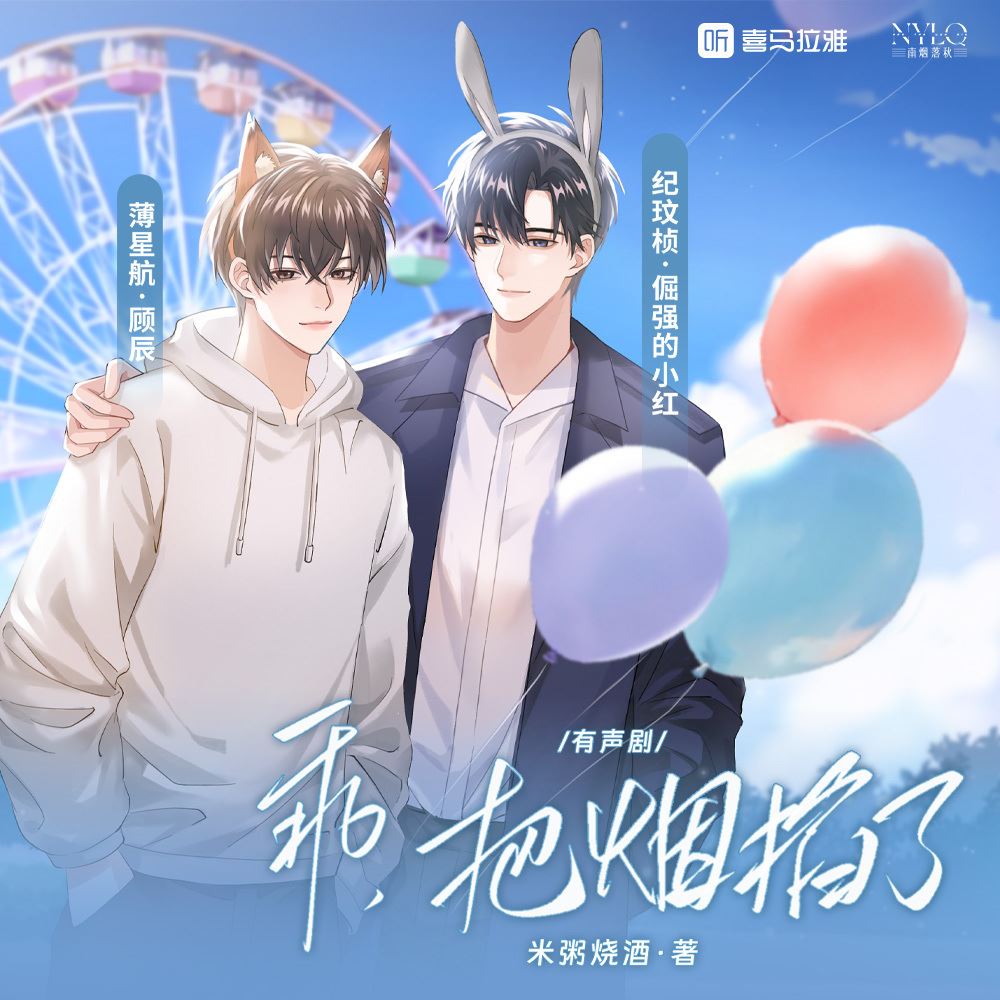
... Read More
There are multiple layers of conflict operating simultaneously in these chapters, and the author never lets you settle into just one emotional register. On the surface, there's the immediate crisis: Grandma has been attacked. The attacker was forceful enough to knock her unconscious. Doctor Ji emerges from emergency surgery composed but clearly affected. Bo Xinghang is outside in a stairwell, smoking, unable to process what happened internally. The stakes are real and urgent — Grandma's health, the unknown identity of the attacker, the aftermath that's about to unfold. But beneath that surface conflict is something deeper and more insidious. Nan Ming's backstory reveals a man who once stood at the edge, ready to jump. He found Qian Qian in the rain — a child also abandoned, also invisible — and in saving her, he saved himself. Five or six years of raising her became his tether to life. But what happens now that she's older? What happens when the person who gave you reason to stay becomes the person you're most afraid of losing? The attack on Grandma might not be random. The implications are there, lurking beneath the text, and they're terrifying. Bo Xinghang's internal conflict is equally gripping. He's in a hospital, surrounded by chaos, and his instinct is to isolate himself in a stairwell and smoke. He's not processing; he's numbing. And Doctor Ji finds him there — not with advice, not with demands, but with presence. The kiss isn't romantic spectacle; it's an anchor. "Ge's here to take care of you" is both promise and plea. The external conflict (the attack, the unknown attacker) and the internal conflict (trauma, grief, the fear of losing people) feed each other. Every time the author raises the stakes on one front, they deepen the other. Grandma faints → Bo Xinghang retreats → Doctor Ji pursues → Nan Ming's past haunts the narrative. And then Nurse Zhang calls Bo Xinghang "sister-in-law," and for a single, hilarious moment, the tension breaks. Not resolved — just... deflected. Because sometimes the only way to survive mounting dread is to let yourself laugh at the absurdity of being caught in a stairwell kiss by a nosy nurse. The author knows exactly how to pace this. When do you tighten the screw? When do you let the reader breathe? These chapters master that rhythm.
... Read More
This batch had some of the most quietly gorgeous scenes in the whole book. Not in a flashy way—more like the author just lets the moment sit there and breathe. Take the rain clearing scene: "the rain stopped, leaving trails of water streaming down the glass, creating transparent streaks. Cars outside splashed through puddles, sending water spraying high into the air." I love how this reads. It's simple observation but somehow cinematic—the water on glass, the headlights cutting through the wet street, the sound of tires on puddles. You can literally see it. It's the kind of detail that doesn't shout "look at me" but stays with you. Then the kitchen scene: "the oil still sizzled. The fish was fried to a golden brown on both sides, drizzled with a savory sauce, and garnished with coriander." Full sensory hit—sound, color, smell. The coriander detail is such a small thing but it grounds the whole scene in reality. This isn't some generic meal; it's someone's actual home. The domestic atmosphere here is everything. The fact that they locked the door, came back to the living room, had dinner, watched TV without watching it—it feels like life, not a romance novel. The author trusts us to feel the warmth without spelling it out. "Even though he knew Doctor Ji was just teasing and wouldn't actually follow through, a part of him secretly wished… maybe, just maybe, it could happen." That line sits perfectly between the playful tension and the real emotional truth underneath it. It's not dramatic; it's honest.
... Read More
I've been turning over this one image in my head ever since I finished these chapters and I think it's actually the key to understanding what the story is doing on a structural level. The hickey. It's such a small, seemingly incidental detail but it's carrying so much narrative weight. Let me trace its function: First, it's proof of the relationship. Doctor Ji left it — it's a physical mark of possession and intimacy, the kind of thing people do when they're comfortable claiming someone. It exists as evidence that this romance is real and embodied, not just emotional. Second, it's a plot device that creates immediate conflict. Bo Xinghang can't exactly hide it forever, and in a school environment where his reputation already makes him a target, any sign of vulnerability becomes ammunition. The hickey is a ticking bomb. Third, it's dramatically ironic because the person who notices it first (Xu Yi) misunderstands everything about it. This creates a comedy of errors that could easily escalate — what if someone else notices? What if the school forum gets the photo? What if Doctor Ji's identity becomes public knowledge through some accidental exposure? Fourth, it ties into the larger structural tension of the novel — the collision between Bo Xinghang's private life and his public persona. The four-school competition subplot adds another layer: third year is supposed to be about academic focus, but Bo Xinghang's emotional life is pulling him in a completely different direction. The narrative arc in these chapters moves from security (Doctor Ji's apartment, the spare key, the promise of "our home") to anxiety (the hickey, the school rumors, the unspecified future threats). That's a classic tension-building structure and it works because the emotional foundation is already so strong. We care about what Bo Xinghang stands to lose, which is why the potential loss feels threatening. I'm genuinely invested in finding out how this resolves. The hickey isn't just a plot point — it's the physical symbol of everything Bo Xinghang is navigating.
... Read More
This chapter has more cinematic set pieces than most films I've seen this year, and it achieves them with a spareness that's almost brutalist. Let me walk through the shots: The alleyway. Bo Xinghang brushing against the cigarette pack, pulling his hand back, fiddling with the silver stud, walking into shadow to light up. The worn wall he leans against. The darkness pressing in. This is an establishing shot that does triple duty — it establishes mood, character habit, and emotional state simultaneously. The hospital lounge. Yellowish streetlamp glow. The contrast between the clinical fluorescent interior and the dim, almost theatrical light from outside. When Doctor Ji emerges at 11:30 PM, "his emotions were under control" — but the interns are crying twenty minutes before their birthday. The birthday girl who will never have hers. The clinical world and the personal world colliding in that corridor. Bo Xinghang's apartment. This is the most devastating scene spatially. Lights off. Yellowish glow from street lamps. No pedestrians for an hour of watching. A young man sitting alone by the windowsill — the classic romantic image, yes, but stripped of its romance by the emptiness around him. The city center is absent; what remains is just a void he's filling with cigarette smoke and voice messages. The staircase descent. Pressing the elevator button, growing impatient, choosing stairs instead. Wind rushing past his ears. Arms on knees, panting. Looking up to see the person he's been longing for, smiling. Every scene is framed like a movie still. The author doesn't describe — she frames. Light falls. Bodies occupy space. Silence does the work that dialogue can't.
... Read More
"Xiao Xing." Three letters in pinyin, one syllable in English, and it completely undid him. Let me tell you about this dynamic because it's everything. Bo Xinghang has built this whole persona - the rebellious kid, the guy who leaves exam papers blank, the one people call 'Hang-ge' by his friend Xu Yi. He performs fearlessness. But Doctor Ji sees through it. When Ji Wenzhen slips and calls him 'Xiao Xing' during a moment of distraction, it's not accidental - it's his subconscious acknowledging what Bo Xinghang has buried. That nickname belongs to a time before the trauma, before he had to become 'cool' and invincible. The scene where Bo Xinghang demands Ji Wenzhen repeat it, threatening to quit studying (which is pathetic and adorable and completely transparent - he's actually studying FOR him), shows how much he craves this softness. And Doctor Ji? He chuckles. He plays along. He has this quiet power in their relationship where he never forces anything but always knows exactly what to do. Pinching the bridge of his nose, tapping the desk, shifting positions when his arm gets sore - these micro-details make Ji Wenzhen feel real. He's patient but not passive, kind but not weak. The power balance keeps shifting. Bo Xinghang thinks he's the one in control with his threats, but really Doctor Ji holds all the cards because Bo Xinghang keeps revealing himself voluntarily. That's vulnerability, not dominance. And the moment when Bo Xinghang says "It's alright" about the nickname? His own narration screams the opposite. The gap between what he says and what he feels is where the entire relationship tension lives.
... Read More
Let me just say — the plot mechanics in these chapters are quietly brilliant. On the surface, nothing "happens." They go to a bookstore. They eat dinner. They talk about grades. But the underlying current is absolutely ferocious. The central conflict isn't some grand external drama — it's THIS. Two people who clearly want something but can't have it right now. Ji Wenzhen has drawn a line (age, professionalism, ethics) and he's clinging to it. Bo Xinghang is oscillating between rebellion and vulnerability, between wanting to be seen and wanting to hide. The plot doesn't need explosions when you've got this kind of emotional landmine ticking under every interaction. What really sold me was how the author structured the emotional beats. Chapter starts with physical tension (Ji Wenzhen almost losing control), moves to comedic relief (the bookstore scene), then lands the emotional bomb (the grade conversation), and ends on this devastatingly hopeful note with "I'll teach you." The progression from Bo Xinghang being a rebellious slacker to someone who suddenly CARES about impressing Doctor Ji? That's character-driven plot at its finest. The author doesn't tell us "he fell in love" — they show us through the zeros on his report card, the way his throat tightens, the fact that he notices shop closure signs and feels失落. And that ending — "I'll teach you" — is basically a plot device disguised as a simple sentence. It promises future development, it deepens their bond, and it gives Bo Xinghang a reason to keep going. One sentence and the entire trajectory of their relationship shifts. That's how you write plot.
... Read More
Okay so let me just say this out loud — the bookstore scene in chapter 80-84 is absolutely one of the best-written sequences I've read in a long time. It starts with such a simple premise: they walk past a bookstore, Ji Wenzhen stops, and suddenly we're watching this deliciously awkward charade unfold. Ji Wenzhen, a man who "rarely lies," comes up with this completely flimsy excuse about looking at medical books. But NO — he leads Bo Xinghang to the "third year in high school" section and starts THROWING practice exams into a basket like he's clearing out a clearance rack. The visual of this tall, austere-looking doctor guy aggressively shopping for high school mock exams is both hilarious and oddly tender. He's trying to take care of this kid in the only way he knows how. And then the imagery — Bo Xinghang after his buzz cut is described as "a fierce and wild hunting dog" but now he's "hanging his head low, his long, thick eyelashes drooping like a little puppy caught stealing food." I'm not crying, you're crying. The contrast between his tough exterior and his actual emotional state right there? The Qingming Festival detail also adds such a specific atmosphere. Most shops are closed, the streets are quiet, and it's just these two alone together. It creates this bubble of intimacy that makes everything feel more charged. When Doctor Ji suggests "how about we go back and study?" and Bo Xinghang actually considers it — that's the world building working in overtime. This isolation, this quietness, it amplifies every unspoken feeling between them. The dinner table scene too — Ji Wenzhen tapping his fingers, the way Bo Xinghang shovels food while hiding his face. Every setting choice serves the emotional core of the story.
... Read More
I need to talk about this SCENE because it is a MASTERCLASS in dramatic irony and I'm still not over it. So we have a proposal happening at a barbecue restaurant. A guy gets down on one knee, the lights dim, everyone's chanting 'Marry him!' and right next to this very public, very romantic moment, Ji Wenzhen is trying to manage a drunk Bo Xinghang who won't stop whining about not getting a kiss. The contrast is almost comical—and then it hits. Bo Xinghang leans in, kisses Ji Wenzhen, and whispers 'Okay~ I'll marry you.' A public proposal is happening right there, complete with ring and confession and chanting strangers, and our boy—probably still slightly drunk, definitely not thinking clearly—kisses the doctor and says those exact words. The author is playing with us here. Is it accidental? Is it deliberate? Is Bo Xinghang subconsciously saying what he actually means while his conscious mind is busy being cute and drunk? And Ji Wenzhen's reaction is everything. 'Ji Wenzhen's whole body stiffened, but the young man didn't seem to notice.' He freezes. He doesn't pull away. He doesn't confirm or deny. He just… stands there while this boy smiles innocently and breathes alcohol-scented air on his face. Then we cut to the next morning and the plot keeps movin'. Bo Xinghang wakes up at Ji Wenzhen's place (how did he get there? Did he carry him? Did he stumble and Ji Wenzhen caught him? The text doesn't say but I HAVE QUESTIONS). There's breakfast. There's a note. There's a weekly exam he's missed two of. And now a girl is asking Xu Yi about Bo Xinghang because 'he's so handsome… and such a gentleman.' The story is building this web of connections and I'm HERE for it. The public kiss, the morning after, the school subplot, the girl with the crush—all of it threads together toward something bigger.
... Read More
Let's talk about stakes for a second because this text is FULL of them, even when it's not obvious. On the surface: Bo gets accepted to his dream university. Great ending, right? But the text keeps circling back to what it COST him. The multiple part-time jobs. The nights when Dr. Ji comes home at midnight and Bo has already left for work. "Their schedules rarely lined up." That line HURTS. All this effort, all this sacrifice, and he's barely seeing the person who's been supporting him through it. The smoking scene at the beginning — we don't know exactly WHY he was smoking, but it's clearly tied to stress about his future, about his relationship, about everything. And Dr. Ji knows this: "knowing part of it had to do with him." That's a gut-punch. Even his best friend is a source of stress, even as he's also the source of support. The bigger conflict though — internal, not external — is Bo's own self-doubt. He says himself: "He had never dared to dream of being accepted to this school." The entire arc from not believing he could make it to actually HOLDING the acceptance letter is the real victory. The external reward (the university admission) is just proof of something he had to conquer inside himself first. And then the cliffhanger — the supermarket, the box, the unspoken tension between them — is it romantic tension? Awkwardness? Something else entirely? Whatever it is, the stakes have shifted from academic struggle to... something messier, more complicated, and honestly more interesting. I am obsessed.

Leave a comment

You must be logged in to leave comments. or
