Be Good, Put Out the Cigarette - Reviews

Be Good, Put Out the Cigarette
+Add to Custom List
Sort
Add review
... Read More
I need to talk about Xu Yi's internal monologue because it was the most unhinged thing I've read all week and I LOVED IT. The fact that he's sitting there thinking about his best friend's secret wife like it's some kind of national security issue — 'Hang-ge had a little wife he was hiding! They were in the midst of a passionate romance!' — while simultaneously getting scolded by the teacher for saying puppy love out loud? This boy is living for drama and I respect him. But honestly, the real character moment is Bo Xinghang after the fight. The guy who storms into a hallway to defend someone, who throws himself into broken glass without hesitation — then gets in a car with Doctor Ji and becomes this pathetically cowardly shadow. He can't look directly at him. He's stealing glances from the corner of his eye like a guilty dog. The contrast is everything. The physical bravery, the moral clarity about the sports rep getting harassed, and then absolute paralysis in front of the person he actually cares about most. Who is that kid, really?
... Read More
“Snap out of it.” Three words from Ji Wenzhen, and Bo Xinghang is back in reality. That's the power of dialogue done right. It's not about what's said; it's about what's left unsaid. Look at Bo Xinghang's speech: “Ah?... Yeah.” “Huh? What's wrong?” “No…” “Maybe he is.” “You fucking shut up.” “Shut up.” He's terse, fragmented, often trailing off. It mirrors his internal confusion—he doesn't even know what he's trying to say. Ji, on the other hand, speaks in complete sentences, but sparingly. “It's nothing, let's go.” “Who's this guy?” “I'd like to ask you the same question.” Polite, measured, but with an edge when needed. Zhang Jian's voice is all noise: “OMG—it really is you! You haven't changed a bit since middle school. Still just as handsome!” “Hey!” “You can't just pretend you didn't hear me!” He's loud, informal, aggressive. Each character has a distinct verbal fingerprint. And then there's the narrative voice, which slips into Bo Xinghang's head seamlessly. We get his thoughts in real-time: “His mind wandered back to the past.” “He needed some quiet.” “His mind was a tangled mess…” The dialogue feels natural because it's interspersed with these internal fragments. It's how people actually think and speak. I digress: this reminds me of how real conversations interrupt each other. Just when Bo Xinghang is about to say “Actually, I—”, Zhang Jian bursts in. That's life. The author captures the rhythm of interrupted thoughts, the hesitation, the sudden outbursts. Even the diary entry—“Human genes are so fucking powerful that it makes me sick.”—is raw, unfiltered, a moment of pure honesty. It's not dialogue, but it's voice. The contrast between Bo Xinghang's sparse words and his prolific internal monologue tells us everything about his character. He's guarded outwardly but turbulent within. And Ji's few words carry more weight than paragraphs. “Snap out of it.” “Doctor Ji gently flicked Bo Xinghang's forehead.” That's care in action. The dialogue here is minimalist but devastating. I love it.
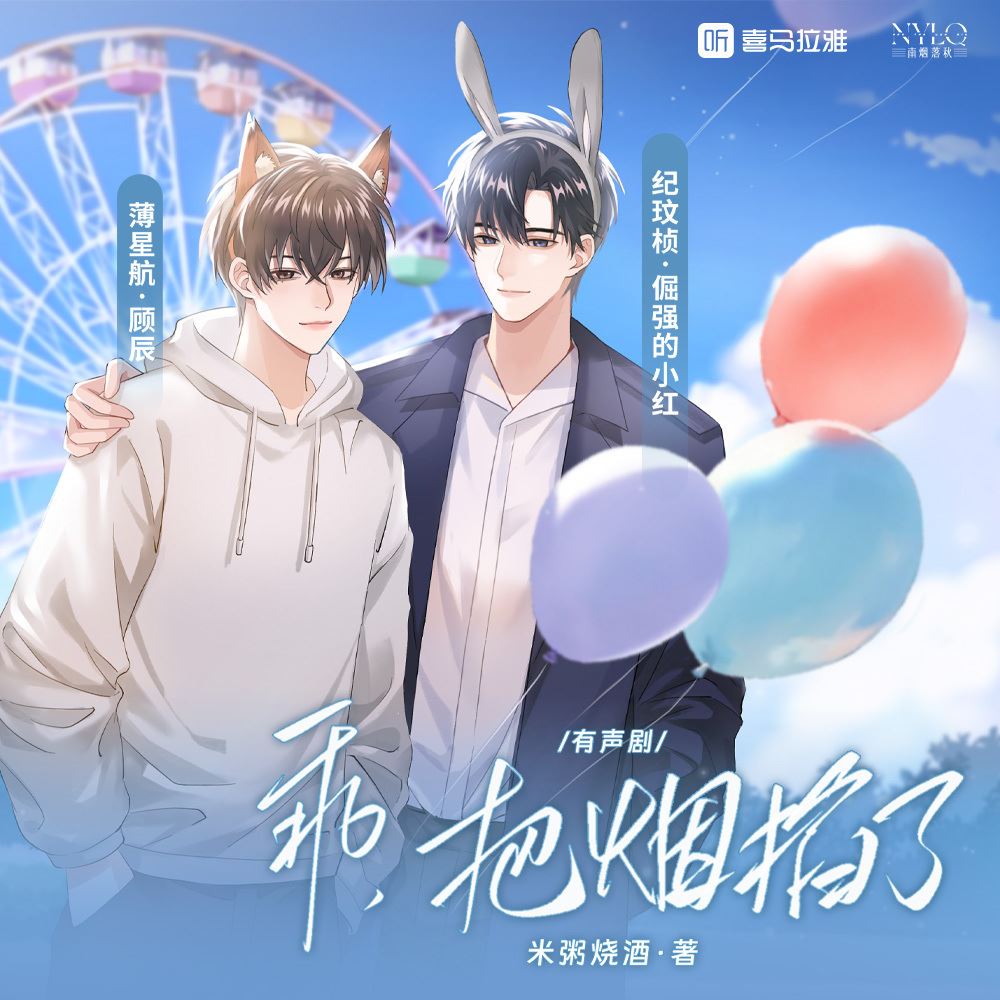
... Read More
The opening scene hooks you immediately—not with action, but with contrast. You have this mock exam, the most high-stakes moment for a final-year student, and the protagonist couldn't care less. He falls asleep, gets kicked out, and walks out like it's nothing. The teacher's outrage, the classmates' fear, the careless exchange between Bo Xinghang and Xu Yi—all of it establishes a world where the system means nothing to these kids. But here's what I love: the plot doesn't stay in the classroom for long. It moves to the bar, a second life that exists parallel to school. The bar scenes feel different—slower, quieter, layered with unspoken meaning. Bo Xinghang's habit of zoning out behind the storage room, his appreciation for solitude—it tells me this story is about someone who plays a role. The arrival of the mysterious man in a tailored suit is the first real pivot. He's not from this world. The way he describes the area as “shabby” and notices the underage boy—both observations land like a mirror reflecting two completely different lives colliding. The plot builds tension through what isn't said. Bo Xinghang lies about the location. He watches the man leave. And then the chapter cuts off mid-sentence. That deliberate incompleteness makes me want to read the next part desperately. The structure works because every scene does double duty—the school scenes establish character through rebellion, while the bar scenes establish character through silence. When the two worlds collide at the end, I felt that click of “now something will change.”
... Read More
Let me just say this: the author knows EXACTLY what they're doing with pacing. Start with the bare-bones inn description—three rooms, remote, enough—and you're already in a confined space with two people who can't escape each other. Then the author's note breaks the fourth wall briefly (thank you for reading, sorry for the delays, I won't disappoint you) which actually works AS pacing because it creates this breath, this pause, before diving into the extra content. And then BAM—Bo Xinghang refusing advances while trying on clothes. Comedic, light, almost domestic. Then the shower scene with the floral scent, the nibbling, the gradual escalation. The pacing here is like a slow burn that becomes an actual burn. Every paragraph adds temperature. The bathroom flashbacks interrupt the flow deliberately—remember when they tried it by the sink and he got bruised? That's backstory woven INTO the moment, not dumped earlier. It grounds the scene in history. And then the study scene, the panic, the surrender, the aftermath with the concealer. Eight paragraphs total but it spans an entire evening. The author doesn't rush any of it. Every beat lands. The transition from comedy to vulnerability to heat to aftermath is seamless because each section earns the next. This is how you write a finale that feels earned.
... Read More
The contrast between spaces in this passage is remarkable. You have two very different worlds coexisting: the cozy, sunlit study session with cross-legged positioning at a desk, and the violent intrusion of a traumatic memory that paints a house in absolute nightmare colors. Let me paint you the scene that haunts me. Bo Xinghang opens the door expecting to share his exam results. Instead he finds: clothes on the sofa including an unfamiliar man's suit, a white plush carpet stained with something unidentifiable, glass shards everywhere, and his mother transformed from gentle to frenzied. The author uses domestic space as emotional landscape. A home should be safe. A clean, cozy home should be the ultimate sanctuary. But this house becomes a crime scene of family destruction. The most cinematic moment? The mother pointing at the fleeing man and saying "He'll get what he deserves" - and Bo Xinghang mishears 'he' as a woman because of some homophonic thing in the original language. That mishearing is crucial because it shows how his mind tries to protect him from the full truth before the truth hits anyway. Meanwhile, the present-day scene is intimate in a completely different way. Arm's length distance, shared desk space, the sound of pen tapping, the visual of Ji Wenzhen's long fingers. These are sensory details that ground the romance without being explicit. The window light, the scattered textbooks, the casual physical proximity - this is what healing looks like visually. A safe space where a broken kid can sit and actually learn something because someone is willing to sit with him.
... Read More
"he resembled a cold, ruthless killer doctor." First line energy. First line IMMEDIATELY sets the tone. We're not in a cozy romance anymore, friends. We're in something sharper, colder, with clinical precision hiding underneath. The hospital setting is doing SO much heavy lifting here. Doctor Ji's office is described as "overly monotonous, cold, and lacking warmth" with "black accents in the decor." But then Nurse Zhang barges in—literally physically wedging her hand through the door gap—and suddenly this sterile space gets invaded by humanity. She wipes sweat off her face and keeps smiling. The contrast between the clinical environment and these chaotic human moments is what makes the world feel alive. I need to talk about the car accident scene though, because the imagery is Cinematic. The headlights cutting through darkness, thick ice on roads, a pedestrian with leg issues suddenly stumbling toward the center, the screech of brakes, someone rolling on the ground leaving "a shocking trail of blood." This isn't just plot device—it's visual storytelling at its finest. The driver didn't notice immediately because of the ice and dim lights. Everything lines up to create this moment of pure vulnerability. And the underground parking lot! "surrounded by neatly arranged cars" while Nurse Zhang is sprinting around in panic. Order versus chaos, literally parked next to each other. The hospital corridor where staff stare at Bo Xinghang in that white coat creates this weird theater effect—he's an outsider performing in someone else's space, wearing someone else's skin, becoming someone else's story. The contrast between Doctor Ji's controlled surgical environment ("fully focused," placing instruments precisely) and the messy randomness of the accident outside creates this tension that runs through every scene. Medicine tries to impose order on chaos. Love—well, we're not there yet—but it might do the same thing.
... Read More
Okay so I need to just talk about this moment because I literally screamed when I read it. Bo Xinghang is basically living this double life — working at the bar, trying to make money for his grandmother's hospital bills, and then he gets taken to the hospital by Doctor Ji and the hospital is... his grandmother's hospital. The universe has absolutely no chill. But what I love is how the author sets this up. It's not just a random twist — there's this whole sequence where Bo Xinghang is drinking heavily, we learn he needs money because his grandmother's condition is improving and they need to cover bills, and then he tells himself he has to make the most of these days before he changes jobs. The author is basically building this tension like... just wait for it, just wait for it. And then BOOM. Q University Hospital. No wonder the route seemed familiar. And the irony! He was already worried about accidentally missing the 8:30 visit time, checking his watch nervously, and Ji Wenzhen delivers him right to the entrance of that exact hospital. This is really good plotting — not coincidental coincidence, but earned dramatic irony. I also love the little subplot with Qian Qian getting introduced. The author is layering things in. Who is this girl? Why does she call the wheelchair man 'Dad'? And the timing — just as Bo Xinghang is about to ask — it cuts off. Classic. Also, the fact that Doctor Ji feels a pang of regret for making Bo Xinghang drink? That's a plot thread I want to follow. Something's going on between them.
... Read More
I just re-read the part where Ji Wenzhen asks Bo Xinghang to meet his parents and I have no adequate emotional response. The text literally says: "For once, his voice carried a rare hint of uncertainty as he asked, 'After your college entrance exams… would you like to meet my parents?' And I just—I can't. This man, who has been presented as this composed, unflappable figure throughout the entire narrative, who probably never raises his voice or shows vulnerability, is standing there with a HINT of uncertainty. That's the romantic equivalent of a nuclear explosion. Then Bo Xinghang's response—the fact that he grabs Ji Wenzhen's hand and shakes his head like a rattle, eyes shining—that's the kind of raw, unguarded emotion that doesn't get written often. So many romance novels have the younger partner be hesitant or proud, but here it's just pure, desperate want. He wants this. He wants ALL of this. The scene before it, with the sleepy morning routine, the TV noise, the gentle wake-up kiss—it all builds this domestic intimacy that makes the proposal hit even harder. It's not a dramatic, candlelit confession. It's two people in a quiet apartment, and somehow that's more powerful than any grand gesture. Also? The line about Ji Wenzhen's emotional life being a 'flat plain' before meeting Xiao Xing and then turning into 'towering mountains'—that's one of the most beautiful descriptions of falling in love I've ever read. It's understated, it's not flowery, but it conveys everything about how this relationship has fundamentally rewired someone who thought they were emotionally done.
... Read More
"Xiao Xing, be good and finish your homework first, then we'll talk later." This voice message is the quietest emotional bomb I've encountered in fiction this year. Three simple sentences, spoken in a gentle low register because it's late at night, and they contain an entire universe of domestic intimacy that Bo Xinghang is now starving for. Read the progression. "Finish your homework." "You can do whatever you want." "What do you want for dinner?" "I'll be back late tonight." "Don't stay up late." Five messages. Five different registers of care — instruction, permission, solicitude, obligation, protection. This is a man who has built a life with someone through accumulated micro-gestures, and now those gestures are the only evidence that the life ever existed. The line that undoes me completely: "Don't smoke, don't drink, don't stay up late. But today, he had broken almost all those rules. Yet it didn't seem to matter because Doctor Ji wouldn't be coaxing him with that gentle voice anymore." He broke the rules precisely because the person who enforced them is gone. That's not rebellion — that's grief. The rules only had meaning when Doctor Ji was there to speak them. And then the ending. The elevator feels too slow. He runs down stairs. His heart races. And Doctor Ji is standing there with a beautifully wrapped gift box and a smile. After everything — the running, the silence, the failed surgery, the child who died — he chose to appear at midnight with a present. That's not reconciliation. That's something more complicated. That's two people who love each other deeply refusing to say the words that would make it real. The emotional tension here is unbearable because neither character will cross the threshold into vulnerability. They perform instead. Gifts instead of conversations. Cigarettes instead of confessions.
... Read More
This chapter raises the stakes from awkward crush to life-altering realization. Let's talk conflict. On the surface, it's a boy trying to confess his feelings and getting interrupted by an ex-acquaintance. But underneath, it's about identity, trauma, and the courage to be vulnerable. Bo Xinghang's internal conflict is visceral: he's realized he likes men, but past shame (his father's scandal, his own self-hatred) makes him panic. The external conflict arrives via Zhang Jian, who represents everything BXH wants to forget. Zhang Jian's provocation—mentioning his dad—threatens to drag BXH back into that old pain. The stakes are huge: if BXH falls apart, he loses the fragile peace he's building with Ji. But watch how the author escalates tension. It starts with awkward silence, then a physical gesture (head pat) that BXH dodges, then Zhang Jian's loud entrance. Each beat raises the temperature. BXH's grip on Ji's wrist becomes “scorching hot”; when he releases it, “there was a sense of emptiness.” That emptiness is the stakes made physical. The flashback deepens the internal conflict: we see BXH alone, smoking, writing filthy diary entries about his genes. He's fighting himself. And now, with Zhang Jian's words echoing, that old fear resurfaces. But this time, BXH doesn't collapse. He tells Zhang Jian to shut up. He protects Ji. He chooses connection. The hug is the climax of all that conflict resolution. It's not a grand gesture; it's a boy clinging to warmth. The author makes us care because we've witnessed BXH's loneliness. Every skipped heartbeat, every hesitant step, every memory of smoking alone—the stakes feel personal. When BXH finally realizes “He truly liked Doctor Ji,” it's earned. The conflict isn't resolved with words; it's resolved with action. That's powerful storytelling. I'm left breathless.
... Read More
Okay I need to address the Xu Yi situation because this character just appeared and already changed the entire reading experience for me. Let's look at the dialogue first. Ji Wenzhen speaks in short, controlled bursts. 'Mm.' 'Don't be silly.' 'I'll take the call.' Even when he's being affectionate, it comes out clipped, almost accidental—as if he's surprised by his own words. '…I just want to spend a little more time with you.' The ellipsis does so much work there. It's not hesitation, it's more like he let something slip and is already regretting it. Bo Xinghang is the opposite—more words, more energy, more neediness on the page, and it's gorgeous. 'But I wanted to see you off.' 'Were you really going to sneak away without waking me?' This is someone who has spent years building walls and is now, in real time, taking them down brick by brick. But Xu Yi—oh my god. Xu Yi is the narrator we didn't know we needed. His internal monologue is pure chaos: 'Damn. Xu Yi shuddered, horrified by his own thoughts.' 'The only person who could make Hang-ge react like this had to be that sister-in-law he kept so carefully hidden away.' 'I even felt that, apart from their gender, Hang-ge and Doctor Ji seemed… quite a good match.' 'This precious friendship was on the verge of collapse.' This is the funniest character writing in the entire book. Xu Yi is sitting there having a full existential crisis over a realization he's not even allowed to voice, while Bo Xinghang is just... folding a shirt into a shopping bag like it's artifacts from a sacred temple. The contrast between Xu Yi's internal panic and Bo Xinghang's quiet devastation is comedy gold and I'm genuinely grieving for their friendship already.
... Read More
I am completely obsessed with the dynamic between these two and I need to scream about it. Ji Wenzhen is described as 'a cunning, abstinent old fox' — and this is the man who asks a female colleague for DATE ADVICE on WeChat. The contrast between his calculated, controlled exterior and the fact that he's basically a helpless romantic virgin in disguise is everything. He plays it cool, he's composed, he's the one giving reassurance — but internally he's just as flustered and invested as Bo Xinghang. Bo Xinghang though. Oh my god. The way he nuzzles into Ji Wenzhen's neck 'much like a lazy cat' while simultaneously being so painfully self-aware about his own needs... He's eighteen but carries himself like someone who's already lived three lifetimes. The line 'You can act spoiled with me, make unreasonable demands' from Ji Wenzhen is basically the most loving thing anyone has ever said to this character. And Bo Xinghang's response — covering Ji Wenzhen's eyes and whispering 'don't look' — is the most vulnerable he's been in the entire book. What breaks me is the backstory implication with Xu Yi. Bo Xinghang thought he was drunk- texting his OLD figure of authority/approval, and the text says 'still foolishly thinking of someone who had already discarded him.' But then the realization hits: maybe it was never about that specific person. Maybe it was just about HAVING someone to share things with. That's not a plot twist, that's a CHARACTER REALIZATION, and it changes everything about how we understand Bo Xinghang's attachment to Ji Wenzhen. Ji Wenzhen watching him in the sunlight — 'wanted to capture this image exactly as it was and store it in his mind' — this man is already in too deep and he knows it.

Leave a comment

You must be logged in to leave comments. or
