Be Good, Put Out the Cigarette - Reviews

Be Good, Put Out the Cigarette
+Add to Custom List
Sort
Add review
... Read More
Let's talk about Ji Wenzhen because this man is dangerous in the best way. The author has spent the entire novel building him up as this precise, controlled, almost clinical figure—a doctor, composed, professional—and every single interaction in these chapters chips away at that exterior just a little more. Watch how he behaves around Bo Xinghang. He notices the boy is sleepy and kisses him to wake him up. He ruffles his hair. He massages the boy's aching fingers after the proposal scene. These are tiny gestures but they're TELLING. A man who has never felt anything, who describes his emotional life as a 'flat plain,' is learning to be tender through this boy. And Bo Xinghang! Oh my god, the way he reads this man. When he says 'You don't need to keep me company. You've already had a long day'—he KNOWS. He sees through the excuse about watching him study. That's not naive teen behavior, that's genuine emotional intelligence. He recognizes the reluctance in Ji Wenzhen to leave, the fear of the boy being alone before exams. The power dynamic is fascinating too. On paper, Ji Wenzhen is the older, established professional. But emotionally, Bo Xinghang holds so much space. He's the one who chose the pajamas. He's the one who grabs the hand first. He's the one who says 'not too soon' without hesitation. Xu Yi's observation that they're 'too close' also hits different when you consider the friendship angle. Their bond isn't threatened—it's observed from the outside as something remarkable. I love that the author includes that friend's-eye view.
... Read More
This chapter is all about stakes, and not the dramatic kind. No one's life is on the line (yet), no secrets are being revealed, no betrayals happening. Instead, the conflict is internal and devastating: Bo Xinghang spent years building walls so he wouldn't have to depend on anyone, and now he's standing in a dark office letting someone hold him. That's the real tension here. The external stakes are simmering underneath—his grandmother's surgery, the college entrance exams, the teacher's threats to show up in person—but none of those drive this chapter. What drives it is Bo Xinghang's need to not fall apart in front of other people, and his failure to maintain that at the hospital when he sees Nan Ming through glass. His chest tightens, his heartbeat pounds, he can't breathe. That's not drama; that's a genuine psychological crisis. And the resolution isn't 'everything is fine now.' The surgery went well, yes, but he still has to deal with missing school, with his teacher's expectations, with the fact that he's wearing someone else's clothes and can't stop smelling them. The stakes remain real even in the comfort. That's what makes this satisfying rather than saccharine.
... Read More
I need to talk about how the author set up this entire convenience store scene. Like, we start with Bo Xinghang walking through the school — South Campus vs North Campus, the whole geography of it. The third-year students having to trek across campus just to buy snacks? That's such a small, specific detail but it immediately made me feel like I was actually there. Then Bai Muyang appears, gesticulating wildly at the checkout. 'Jiejie! I really do have money; I just forgot to bring it.' And the cashier auntie is just absolutely over it. The whole exchange has this almost sitcom energy to it — the loop of 'No way! You must—' / 'Jiejie! Jiejiejiejie!' I could literally hear the voices. And the other students piling on! 'How did Blabbermouth let him in?' 'Maybe he sneaked in.' That casual cruelty of high schoolers is so accurately captured. They're not even malicious about it, they're just... bored and impatient and lashing out. But then the twist — Bo Xinghang sees the box of band-aids, hesitates, and decides to step in. 'Jie. I know him. He's from my class.' In that one moment, the entire scene shifts from comedic to something else. He could've walked away. He could've ignored it. But he didn't. And when he pays for the guy's stuff? The cashier goes full mom mode: 'You kids really are... so hard for parents to worry about.' And Bo Xinghang just... pauses. '...Okay.' That word carries so much weight. Like, who was the last person to scold him with that kind of warmth? The infirmary scene at the end with the iodine and the wound description was beautifully visual too. 'The contrast between his fair skin and the dark red gash was striking.' Cinematic as hell.
... Read More
The dialogue in this chapter is interesting precisely because it's so thin on the page and so loud underneath. Almost every exchange is performed between people who cannot say what they actually mean. Grandma Bo's dialogue is the only fully realized conversational voice — loud, affectionate, scolding, practical. "Did you crawl through a coal mine?" "Always in black. You look so lifeless!" She's the only character speaking in complete sentences about complete feelings. Everything else is subtext masquerading as dialogue. Bo Xinghang's whispered "Thank you" to Xiao Meng. Two words carrying an ocean of gratitude he couldn't articulate to the person who matters. His muttering to himself — "You're not a little girl" — is the most honest thing he says all chapter, and he's saying it to empty air. Doctor Ji's dialogue is a masterclass in minimalism. In the entire chapter, his spoken words total approximately thirty-five words across three scenes. Yet they carry the weight of the entire emotional arc. "Let's call it a day." "Mm." "Happy birthday, Xiao Xing." The voice messages — these are the real dialogue. Five separate recordings, each one a fragment of a domestic conversation that happened in another timeline. "Xiao Xing, be good and finish your homework first, then we'll talk later." The passive future tense is key. "We'll talk later" — a promise of continuation that no longer exists. Even the intern girls' dialogue, with all its "waaah" and tearful chaos, serves as counterpoint — raw, unfiltered emotion contrasting with everyone else's restraint. Their grief is honest. Everyone else's is performative. The author's voice is dry, observational, almost unsentimental — which makes the moments of feeling hit harder precisely because they're understated.
... Read More
"You look handsome." — three words and I lost my entire mind. Because we spent the entire chapter watching this man try NOT to say anything meaningful, and then when he finally does? It's devastatingly simple. The dialogue in these chapters works on two levels simultaneously. On the surface, it's mundane — conversations about books, grades, where to go next. But underneath, EVERY line is loaded with subtext. When Bo Xinghang says "your technique is too advanced," he's not actually talking about buying practice exams. He's talking about how Doctor Ji keeps catching him off guard, keeps making him feel things he can't name. Ji Wenzhen's voice is so distinctly restrained. He barely speaks, and when he does, it's usually short and practical. But those moments when he opens up — like explaining the meaning of "Hang" in Bo Xinghang's name — the prose transforms. "Your small strength is enough to navigate through challenges. To you, everything is just a ripple on the sea." This is the most poetic thing either character has said, and it comes from the most emotionally restrained man in the story. That contrast? Perfect. The humor also lands really well. Bo Xinghang's internal monologue — "Brutal, too brutal. Not only did he want to murder him, but he also added slow suicide to the mix" — gives us such a vivid window into his personality. He's dramatic, he's self-aware, and he's completely at the mercy of Doctor Ji's every word. And can we talk about how natural the silence feels? The ellipses, the pauses, the moments where characters just look at each other without speaking. "Bo Xinghang: '…'" repeated multiple times. Sometimes the best dialogue is what's NOT said.
... Read More
I need to talk about the rooftop scene because the author really did something special there. So the ladder's in a corner on the sixth floor. Very remote. No light bulb installed. Pitch black. No one ever comes up there. This is Bo Xinghang's PRIVATE SPACE, established since he started at Provincial Experimental School. The description of it being dark, isolated, exclusively his—it immediately made me feel like I was standing right there in that blackness with him, cigarette in mouth, looking out over the school he apparently claims as his territory. "Enjoying the breeze and smoking, looking quite relaxed." Despite everything—the forum drama, the staged apology, the whole sibling charade—he found this one quiet spot. The contrast between the chaos below (the assembly, the students gossiping, the teacher panicking) and this dark, empty rooftop is chef's kiss. What I love most is how the setting itself becomes a character. That red banner with bold letters: "High School Second Mock Exam Results List." Over a thousand names, dense text, impossible to read—until you get to the LAST sheet. Only a dozen names. And there it is, standing out significantly, Bo Xinghang's name with zeros across the board. The visual composition of that scene—Ji Wenzhen walking past, glancing casually, then STOPPING—was so cinematic I could see the camera panning in the novelist's head. The security guard character too! Brief but effective. He sighed quietly, lamenting the school's tarnished reputation, and grumbled again when they walked off. Little details like that make the world feel inhabited, you know? Like there are people watching, judging, existing beyond just our main characters.
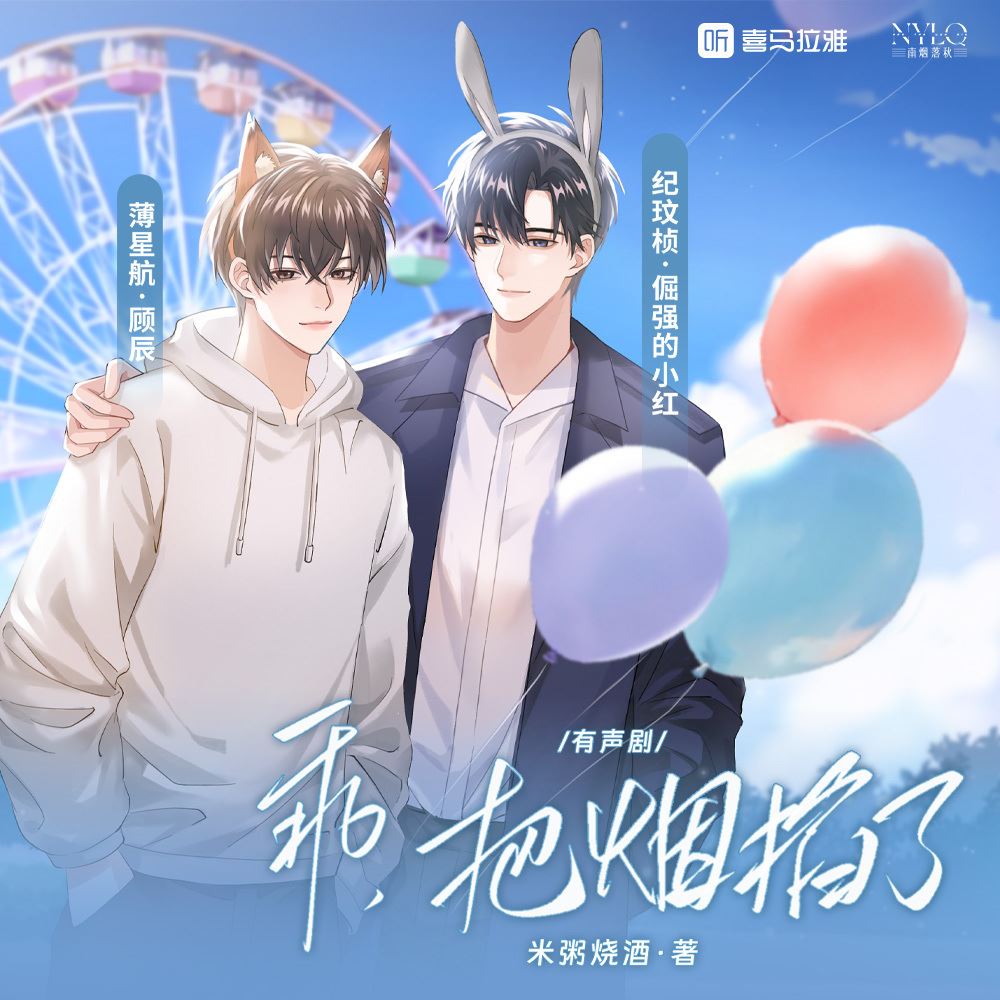
... Read More
I just have to say — the atmosphere in this chapter is *chef's kiss*. The author really knows how to paint a scene without over-explaining everything. Let me walk you through why this works so well. We start with Bo Xinghang standing outside, smoking, legs numb from sitting too long. The time is 6:50 PM. Then he goes inside and the place is PACKED — 'nearly every table was full,' almost every seat taken. The bar booked the whole place for the director's daughter's coming-of-age celebration. And then Doctor Ji walks in and suddenly the entire room goes silent. Not just quiet — SILENT. Like the music didn't even matter anymore. The lighting shifts later too. The text says 'the music shifted to a beautiful, lingering melody that softened the lighting and made it less glaring.' You can feel that moment, right? The whole bar transforms from loud and cluttered to something more intimate, more charged. It's like the environment itself is reacting to the tension between these two characters. And the detail about the silver stud on Bo Xinghang's ear gleaming under the light when he stands up? Small but it sticks with you. These are the kinds of visual moments that make you feel like you're actually there. The author doesn't need to tell us this is a special night — we just KNOW because of how everyone reacts, how the room goes quiet, how even the nurses steal glances. The world feels alive and the setting does so much heavy lifting here.
... Read More
I need to discuss the escalating tension in this chapter because it is absolutely DELICIOUS. On the surface, the stakes seem small — two guys at a bar, one trying to get the other to drink. But the author keeps raising the temperature through these micro-moments of conflict. Let me trace it: First, Doctor Ji walks in and the room goes SILENT. That's immediate external stakes — everyone knows this is a significant person. Then Ji directly challenges Bo Xinghang about being at the wrong bar. Bo Xinghang's internal reaction? 'Tsk, so petty.' The reader immediately picks a side. Then comes the actual confrontation: Bo Xinghang sits down, offers wine, Ji refuses. Bo Xinghang pours anyway. Ji pushes it back with his finger. Bo Xinghang downs his own wine, eyes turning pink, and offers again: 'Two of my drinks for one of yours.' This is essentially a power struggle played out through alcoholic beverages and nobody is backing down. The text says 'Ji Wenzhen's gaze darkened' — that's the moment I knew this wasn't going to end quietly. And then it cuts off right there, with Bo Xinghang's eyelashes hiding his expression after he's already shown physical signs of being affected by alcohol. The stakes here are layered: personal pride, unspoken history (they clearly HAVE met before), class dynamics (hospital staff vs. bar worker), and this underlying sexual tension that makes every refusal and counter-offer feel loaded. What happens next? I need to know. The chapter ends on a knife's edge.
... Read More
The sensory details in this chapter are what make it breathe. Let me start with the weather. The opening line—“In the north, the weather began to warm up after March, but the wind remained bitterly cold”—sets the tone immediately. This isn't a cozy spring. It's a transition season where warmth is promised but not yet delivered. And then you have snow still falling in March, branches shaking under the weight of it. I could feel the chill through the page. Later, when Bo Xinghang squats against the storage room door, “feeling a slight chill through his back,” the cold becomes physical. It's not atmosphere—it's texture. The school itself feels claustrophobic. Foggy clouds blocking the light. The teacher “making two laps around the room” like a guard patrolling a prison. When she turns on the lights, Bo Xinghang is “blinded by the harsh light” and mutters a curse. I'm not used to authors making the lighting hostile, but here it works. The light is an invasion. It reveals too much. It forces everyone to perform. Then the bar. June Bar—the name itself sounds cheap, but that's the point. Dazzling lights when Bo Xinghang opens the door. Neon reflections off silver chains. The contrast between the bright interior and the dark exterior creates a threshold effect: stepping into the bar is stepping into another world. And that back door behind the storage room—oh, I love this space. Shabby. Hidden. Even regular employees wouldn't know it exists. Bo Xinghang discovered it by accident. It's his private corner of the world, a place where he can zone out, smoke, and disappear. When the man in the suit steps into the “line between shadows and dim light,” that single sentence rewrites the geography. This hidden place is no longer just Bo Xinghang's. The light catches the man's face with “striking clarity” while Bo Xinghang remains partially obscured. The visual composition here is cinematic—dark foreground, lit background, two figures separated by inches but belonging to different worlds.
... Read More
Okay so I need to talk about this plot twist because honestly it came out of nowhere and I was not ready. We've been reading for chapters and chapters about Bo Xinghang grinding on worksheets, studying, preparing for the college entrance exam—this whole pressure-cooker setup—and then boom, Ji Wenzhen just casually drops "would you like to meet my parents?" like he's asking if he wants tea. I love that the author built this entire section around the ticking clock of the exams, the weight of final stretch preparation, and then used that tension to make the proposal even more seismic. It's not a typical romance beat at all—it's a life-altering question hanging over the most stressful period of a high schooler's life. The contrast between "I need to finish these worksheets" and "meet my parents after exams" is honestly peak storytelling. And the fact that Bo Xinghang freezes mid-stretch with his arms in the air is such a perfect physical beat. The comedy of it grounded the emotion so well. He wasn't overthinking it, he wasn't playing hard to get—he was genuinely caught off guard, and then his immediate reaction was pure, unfiltered enthusiasm. "It's not too soon!" he says, and I swear the author painted that moment like a painting. I also appreciate how the subplot with Xu Yi and the school timeline anchors everything. The half-day class, the countdown to the bell, the rush out the door—all of it makes the stakes feel real. This isn't some disconnected romance floating in a void. The plot has its feet on the ground even when the emotions are soaring. What's next though? Now that this bomb has been dropped, how does Bo Xinghang handle the pressure of exams plus meeting the parents? I'm emotionally compromised and I need answers.
... Read More
So let me just say this upfront: the line that broke me in these chapters is when Bo Xinghang thinks to himself, “All he did was go to work, drink too much, and get dragged by Doctor Ji to the hospital?! But how could he explain that…” That ellipsis says everything. No one understands what happened to him. He got dragged to a hospital by a stranger who somehow saved his life, and the closest he can get to explaining it is nodding along to a teacher who's already decided he's trouble. The emotional violence of being misunderstood when you genuinely have no one to turn to—that's the core feeling of this entire passage. And it's wrapped in such understated prose. He doesn't cry. He doesn't have a dramatic meltdown. He just… stands in the office for a couple of minutes in a daze. The homeroom teacher sighs at him. That's it. That's the whole scene. But I was sitting there like my chest was caving in. There's also this tiny moment with Xu Yi where Bo Xinghang internally debates whether to tell him the truth about the fight, then decides against it, and instead just smiles and apologizes. “Sorry about that, ge.” He's protecting his friend from the chaos in his life. That's love. That's care. And the text never once calls it that.
... Read More
Let me just say this once: the dialogue in these chapters is a masterclass in what NOT to say. Doctor Ji's voice—when he speaks at all—is economy itself. "Mm, you're very good." Three words. That's it. But look at what it does. It establishes him as someone who rewards obedience, who appreciates Bo Xinghang's effort, who holds all the cards without ever raising his voice. The Adam's apple bob. The silent草莓-feeding ritual. The kiss that replaces words entirely. Doctor Ji communicates through ACTION and near-silence, and it's devastatingly effective. Bo Xinghang is the opposite—impulsive, verbal, wearing his heart on his sleeve. "I've always listened to you." Said with red-tinged eyes, defending himself with conviction. And later, mouthing "It's Xu Yi" while gesturing to his ear, completely comfortable in this silent language they've built together. His dialogue is teenage energy: sarcastic to his friend, breathless during the kiss, reduced to mumbled "Yeah, I can hear you" while his entire nervous system short-circuits. Then there's Xu Yi—the comic relief whose dialogue is pure id. "Hang-ge! Are you home?" "Send me your address. I want to come over and mooch off your homework~~~" The tildes. The casual cruelty of someone who senses something is wrong but can't articulate why. "Oh. So you're at home?" Ignoring the sarcasm. Just existing in his own wavelength, blissfully unaware that he's about to walk into the aftermath of a very specific kind of violence. The author's narrative voice is also doing serious work—those parenthetical author's notes at the end, where Bo Xinghang is blushing and Doctor Ji is playing innocent and Xu Yi is losing his mind. The meta-commentary adds this layer of warmth and humor that keeps the piece from becoming too precious. It's like the author is sitting with you, nodding along, whispering "yes, this is chaos and I love it."

Leave a comment

You must be logged in to leave comments. or
