Be Good, Put Out the Cigarette - Reviews

Be Good, Put Out the Cigarette
+Add to Custom List
Sort
Add review
... Read More
Not gonna lie — I squealed when Bo Xinghang thought "Whoever holds it in is a grandson." That line is EVERYTHING. It sounds exactly like what a teenage boy would mutter to himself in a moment of dramatic frustration, and it immediately humanized him after all that desolation. His internal monologue throughout this chapter is gold. The contrast between how quiet he is with OTHER PEOPLE versus how loud his thoughts are internally is the whole joke. He stands outside his mom's door and doesn't say a word. He barely speaks to Ji Wenzhen. But inside his head? He's a whole mess. "Tsk." "Damn it." "Say—" He literally stops himself mid-sentence and the reader is LEFT HANGING. The author knows exactly what they're doing with this pacing of silence. And Ji Wenzhen's dialogue is so minimal it cuts deep. "Mm." "Oh." "Kid, was that intentional?" Three words and you can tell he's concerned without him ever saying "are you okay." The subtext DOES the heavy lifting. Even the text message exchange at the beginning is telling. Ji Wenzhen typing "Mm, very handsome" while Bo Xinghang sends four messages and gets one reply? That power dynamic is so subtly established. He's trying to keep up with White Rabbit's energy and failing gloriously. The author's voice in narration is equally distinct — dry, observant, occasionally brutal. This line especially: "All he saw was a boy who couldn't be separated from his cigarettes and alcohol." That's not judgment from the narrative voice, that's just cold, clinical observation. It stings MORE because it isn't trying to be emotional.
... Read More
There's a thread running through this entire section that I can't quite shake — it's about hunger. Not just the obvious kind, though Ji Wenzhen not being able to eat the barbecue food is definitely part of it. I mean hunger as a metaphor for everything these characters are starving for. Bo Xinghang is drinking himself into oblivion because he's hungry for something he can't name. Maybe it's approval. Maybe it's connection. Maybe it's just... this moment with Doctor Ji. The alcohol gives him courage that sobriety denies him, and suddenly the walls come down. "You really are so handsome." "You must be mine, right?" These aren't the words of a drunk fool — they're the words of someone whose feelings are finally loud enough to override his fear. Ji Wenzhen is hungry too, just in a different way. He's abstinent, repressed, carefully maintaining boundaries that he knows are fragile. The trench coat covering his lap isn't just practical — it's symbolic of everything he's hiding, everything he's refusing to indulge. And yet. His hand trembles. His grip tightens. He smiles despite himself. The hunger is there. Zhang Jian represents another kind of hunger — the hungry ghost of someone who wanted Bo Xinghang and got rejected. His bitterness isn't just about love lost; it's about pride wounded. "You used to say that to me! Now I'm throwing it back at you." He's hoarding memories of affection like a dragon with gold, and he can't understand why Bo Xinghang would give it to someone else. The barbecue stand itself is a liminal space — not quite home, not quite public, somewhere in between where normal social rules temporarily dissolve. It's the perfect setting for people to reveal what they've been hiding. The fire, the smoke, the cheap beer, the fluorescent lights — it's all gloriously unromantic, and yet that's what makes the romance feel real.
... Read More
Can we talk about the WeChat conversation between Bo Xinghang and Xu Yi because it is the comedic highlight of these chapters and it does THREE jobs at once. First, it gives us Xu Yi's voice, which is loud, dramatic, and instantly lovable. 'The one typing now is Xu Yi's body. His soul has long since departed.' This man is clearly running on zero sleep and maximum chaos energy, and I adore him. Second, it reveals Bo Xinghang's character through how he treats his friend. He teases, he withholds the promise of a meal as leverage, he calls Xu Yi a simp—all while clearly caring. The fact that he's guilty enough about Xu Yi covering his shift to offer to buy him a meal shows his moral center, even when he's being selfish. Third, and this is the best part, it shows us what Bo Xinghang's internal world looks like when he's not performing. With Xu Yi, he's relaxed. He laughs. He's comfortable enough to be a menace. This makes the contrast with how he behaves around Doctor Ji even more telling—because with Ji, there's this tension, this awareness, like he's always one step away from saying the wrong thing. With Xu Yi, he's just... himself. And Ji's dialogue? Minimal. 'It's so late. Come home with me?' 'I added you on my personal WeChat. I don't discuss personal matters on my work account.' This is a man who speaks in facts and invitations, never explanations. Every line carries weight because he doesn't waste words. The author has given each character a distinctly different voice and I can tell who's speaking without a tag. That's craft.
... Read More
Okay so let me just say RIGHT NOW - the virgin-to-virgin kiss scene?? I cannot even. Bo Xinghang's internal monologue throughout this whole chapter is everything. He's sitting there thinking things like 'it proved they hadn't done this sort of thing with anyone else before' and I'm literally on the floor. The way he tries to be mature about it, telling himself 'you could always improve with practice' while clearly flustered? Chef's kiss. But then Doctor Ji just pulls him into his lap and says 'I'm not very skilled at this since it's my first time. I'll get better with a few more attempts' - BOOM. That line alone made me scream. The restraint, the dark eyes, the corners of his mouth hinting at a smile? Ji Wenzhen is written as this composed, controlled character who still manages to be devastatingly sweet in these moments. And then the author note literally just says 'Big~~pieces of candy' after ALL THAT TENSION. I needed a minute. The whole 'Never date a straight-A student. They'll drive you crazy. When Grandma Bo came back...' transition is so jarring in the best way possible. One second you're in this heated intimate moment and the next you're having dinner with grandma. Bo Xinghang's panic about Doctor Ji visiting too often because 'What if Grandma suddenly barged in?' is both hilarious and kind of heartbreaking - he wants this so badly but feels guilty about keeping secrets. The part where Bo Xinghang is so proud telling Grandma 'Don't be fooled by his young age—he's really amazing!' while Doctor Ji is sitting right there? That's the kind of wholesome domestic moment that makes me软弱. They're both so nervous and genuine about this. I'm wrecked.
... Read More
I keep thinking about the white shirt at the end of this section and I think it's one of the most quietly powerful symbolic moments I've encountered in recent reading. On the surface, it's just a shirt—ordinary, versatile, worn under a white coat. But it carries so much weight. It's the shirt Ji Wenzhen wore the night before when he was with Bo Xinghang, and he forgot to wash it. In a story about two people navigating a relationship that exists in the margins of their daily lives, the unwashed shirt becomes a symbol of intimacy so casual it's almost invisible—yet it's the thing that makes Bo Xinghang stop his companion mid-packing. The color white matters too. White coats, white shirts—clinical, sterile, professional. But Bo Xinghang sees it differently. Where Ji Wenzhen sees a uniform, his Xiao Xing sees personal history, touches, moments. The boy reclaims the ordinary object and makes it intimate. There's also the symbolism of the college entrance exam itself. It represents the looming separation, the future pulling Bo Xinghang in a different direction. Meeting Ji Wenzhen's parents becomes the emotional counterweight to that institutional pressure—a personal milestone that asserts: this relationship matters beyond the exam, beyond the timeline, beyond the structure of his life. And the business trip? Another form of forced separation that the narrative keeps circling back to. Every departure the story presents only deepens the stakes of every attachment. The whole section feels like it's asking: what do we hold onto when everything else is about to change? And the answer, apparently, is each other—and the unwashed shirts that prove it.
... Read More
Let's talk about what's actually at stake here because it's layered in ways that would be hilarious if they weren't so stressful. On the surface: Bo Xinghang got hurt shielding someone else, Doctor Ji is mad, there's a rival for attention in the form of the sports rep who looked at Bo Xinghang in a way that was 'unmistakable, clear to anyone who saw it.' That's the romantic tension thread. But then the text drops 'less than sixty days until the college entrance exam' and suddenly everything gains weight. This isn't just a fluffy romance—there's a deadline hanging over their heads. Bo Xinghang's basics are weak, he's studying past midnight, his head is aching, and he's guilty about wasting Doctor Ji's time because he went an hour over the limit. Doctor Ji stayed up late despite having a 'regular biological clock' just to help him. The stakes aren't life-or-death in the traditional sense but they feel just as urgent. A failed exam changes everything. And the injury happened while 'playing the hero'—which raises the question of whether Bo Xinghang's tendency to throw himself into danger for others is going to become a pattern Doctor Ji can't survive. Every time Bo Xinghang gets hurt, Doctor Ji has to sit with the fear that he might lose him. That's a slow-burn tension that doesn't need explosions to work.
... Read More
So this chapter is basically three movements and I'm here for it. It starts slow and mundane — Bo Xinghang needs band-aids, goes to the store, there's a ridiculous argument at the checkout. You're thinking 'okay, slice-of-life, chill vibe.' Then BOOM — the scene pivots into something almost confrontational with the other students judging Bai Muyang, and Bo Xinghang has to make a choice about whether to intervene. I love how the author uses that hesitation moment. 'After a moment's hesitation, he approached the cashier.' One sentence. That's it. But it changes everything about who this character is. Then comes the Bai Muyang reveal, which is funny and light, and just when you think the chapter is winding down with some wholesome senior-junior energy... they're suddenly in the infirmary and Bo Xinghang has a TEN CENTIMETER WOUND on his arm and he's been hiding a HICKY. The tonal whiplash is incredible. The ending question — 'How did this happen?' — is such a clean cliffhanger. Not overly dramatic, not melodramatic, just a simple question from a doctor who's clearly worried. It makes you want to turn the page immediately. What's interesting is that the author doesn't rush any of these moments. The convenience store scene breathes. The interaction with Bai Muyang has room to develop naturally. And the final infirmary scene lands harder because we've earned the quiet intimacy of it. No info-dumping, no exposition dumps about Bo Xinghang's life — just a guy sitting on a stool while someone tends his wound. That's when you know the author trusts the reader enough to let silence do the work.
... Read More
OK SO. Xu Yi. Of all the characters in this book, Xu Yi is the one who made me laugh out loud on the toilet. Which is not a dignified place to have a literary breakthrough but here we are. Let me walk through this absolute trainwreck of a conversation because it deserves to be analyzed properly. Xu Yi spots the hickey. Xu Yi loses his MIND. And the BRILLIANT part — the genuinely clever part — is that Xu Yi has NO IDEA what's actually going on. He assumes Bo Xinghang has a girlfriend, that they've been intimate, and launches into the most earnest, concerned-big-bro energy about how he needs to "really care for her" and not let her get pregnant. All while Bo Xinghang is sitting there thinking 'What the actual f*** is this man talking about?' This is comedic gold but it's also character-revealing gold. Xu Yi comes from a place of genuine care — he's worried about some poor girl Bo Xinghang might be hurting. That says everything about Xu Yi's heart even if his brain is running on zero information. And Bo Xinghang? His internal monologue is priceless: "What on earth is he talking about?" followed by the almost-violent thought about wanting to "open this guy's head and see what wild ideas could come up." But the real character moment here is Bo Xinghang's restraint. He could just... tell him. He could say "actually, it's a man, and it's not what you think, and also I'm deeply in love with him." Instead he takes the blame implicitly and just shooes Xu Yi away. That tells you something about where he is emotionally — he's not ready to come out, or at least he's protecting this private thing between him and Doctor Ji. The dynamic between these three — Bo Xinghang carrying this huge secret, Xu Yi being adorably misguided, and Doctor Ji existing somewhere in the background as this warm, steady anchor — it's a whole emotional ecosystem and I'm here for it. Also can we talk about how Bo Xinghang transforms from "cool guy around others" to "blushing puppy around Doctor Ji"? That contrast is chef's kiss.
... Read More
I've been thinking about this passage for hours and the symbolism is hitting me in ways I didn't expect. Let's start with the eyes. When Bo Xinghang is fighting, "the corners of his eyes turned red, as if they were dripping blood." Later, when Ji Wenzhen comforts him, "Bo Xinghang's red eyes drooped slightly." Red eyes — rage, yes, but also grief. The same eyes that later go soft, even if just for a moment. The color red is his entire emotional vocabulary in this book, isn't it? Anger, pain, love, all indistinguishable. Then there's the blank report card. The homeroom teacher is FUMING about it — "he writes nothing but his name!" — but what does that blank page actually mean? It's not laziness. It's a refusal to participate in a system that measures worth. Bo Xinghang's father is dead. His mother is gone. His brother is a doctor who hasn't slept in weeks. And the school wants him to fill in bubbles on a piece of paper? The report card is a symbol of institutional indifference, and Bo Xinghang's blank answers are the only rebellion he has. But the deepest symbol — the one I can't stop thinking about — is the DATE. June 29th. The author gives us the exact date and makes it crystal clear: "His dad had committed suicide." This isn't backstory. This is the ground zero of everything. Every fight, every silence, every cigarette on the rooftop traces back to that single day. And then there's the forum post. "I heard BXH's dad is gay, fell in love with a disabled man, and still married BXH's mom, resulting in such a wuss…" The internet reduces a complex human life — a man who loved someone society wouldn't accept, who chose to raise a child alone — into a punchline. The word "wuss" isn't just an insult; it's erasure. It's the public destroying a private tragedy for entertainment. But the most powerful symbol might be the trench coat. Ji Wenzhen is described as "aloof" in it, hands in pockets, looking "quite handsome." It's professional armor — the doctor's identity — but underneath, he's just a brother who hasn't slept, who saves blurry photos of people he cares about, who runs across campus in a suit. And Bo Xinghang saves the photo anyway. Secretly. Because admitting he finds someone attractive or interesting or worth keeping is apparently dangerous. This book is about people who can't stop caring, wrapped in armor they didn't choose, trying not to drown on a date that keeps coming back.
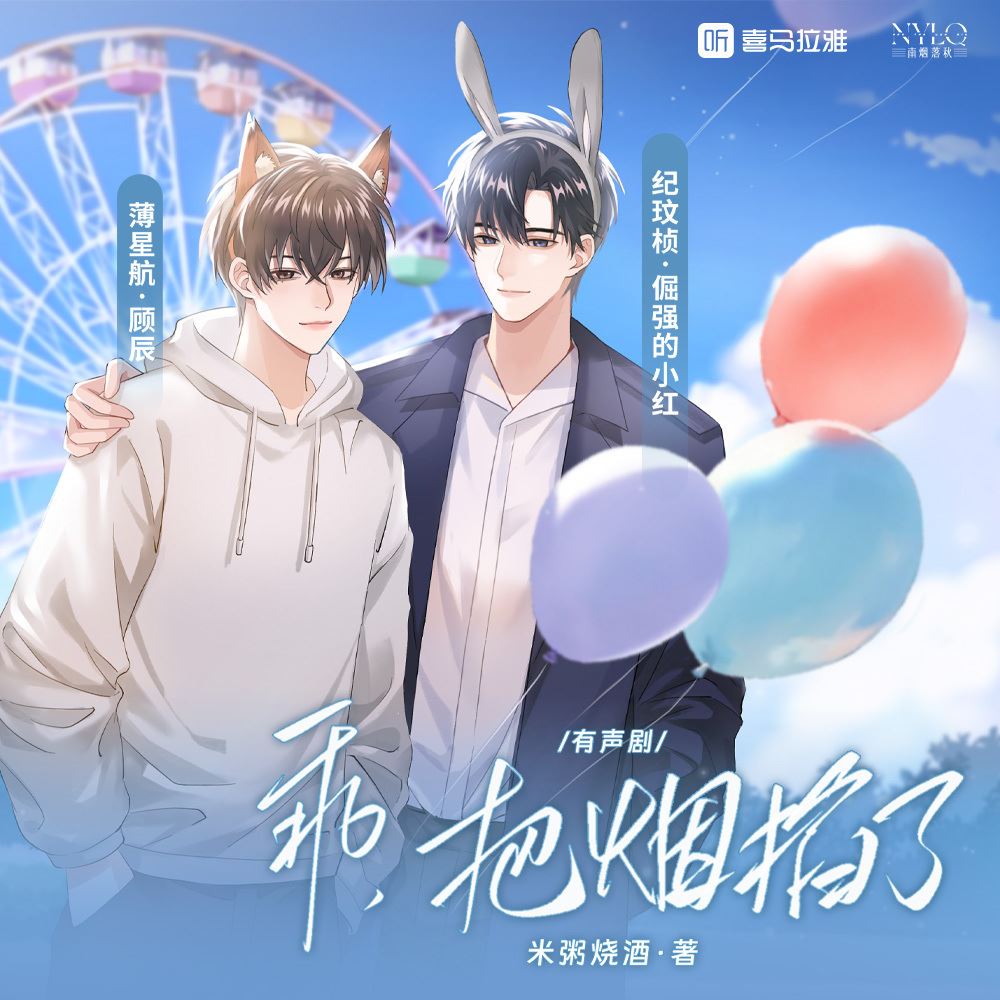
... Read More
Okay, I need to just... sit with this moment for a second. Because this is the kind of scene that just wrecked me and I can't even process it properly. So Bo Xinghang is standing outside this parent-teacher meeting, right? And he's got this whole internal monologue about how pointless it is, how he already knows his grades, why even look. He's putting up this wall - music in his ears, acting like he doesn't care. Classic Bo Xinghang energy. But then he glances inside, sees his own empty seat, and something shifts. And then Doctor Ji walks in. Like, actually walks in. Not as a friend, not as a random classmate - as a PARENT. The brother role. The one Bo Xinghang has been missing since he said "I don't have a dad anymore, and I don't have a home." The line hits you out of nowhere: "My brother is here." Xu Yi says it so flatly, but it carries SO much weight. Bo Xinghang looks through the window and sees Doctor Ji sitting there - back straight, long fingers holding his test papers (ALL THE ZEROS), occasionally glancing up at the teacher. This man who didn't have to be there IS there. And Bo Xinghang's entire physical reaction - he can't hear the noise around him anymore, gets nervous, actually WANTS to huddle by the wall like the other kids. The boy who was mocking everyone else for being desperate is now desperate for this moment too. "Everything will pass," Ji Wenzhen told him the night before. And somehow, some way, his good fortune had already arrived. That line - "In fact, his good fortune… seemed to have already arrived" - it's so quiet and understated but it's carrying the whole emotional thesis of their relationship. The spring has arrived, good fortune isn't far behind. It's a whole season of hope packed into one paragraph. The girls gushing about how handsome and gentlemanly his brother is? I hated them for ruining the moment but also I understand why they existed - they're the outside perspective that makes you realize how extraordinary this is. Of COURSE a stranger attending a parent-teacher meeting is newsworthy. Of COURSE it's romantic in the way that makes your chest hurt. Because it's not romantic in a traditional sense - it's something deeper. Someone choosing to show up for another person when that person has nowhere else to go. I'm just sitting here thinking about that empty seat that was suddenly occupied. The loneliness of it in the first description versus the warmth of it in the second. One chair, two completely different energies. That's all I have. My hands are literally shaking.
... Read More
Okay, let's talk about how this sequence builds, because the pacing here is genuinely smaug. The fight incident opens with this weirdly casual energy — Bai Muyang applying iodine, the "accident" deflection, the slow drag of a confession. And then Bai Muyang says the word and BOOM, Bo Xinghang physically leaps up. That reaction IS the confession. The plot knows what it's doing. Then the scene shifts to the hallway, those boys surrounding the sports representative, and the plot thread we dropped in the clinic explodes back into view. The push, the shattered glass, the falling backward — it's not random. The story gives us cause and effect like a loaded gun in act one going off in act two. And the quietest moment in the entire batch? Bo Xinghang sitting obediently in that car. After all the noise, the violence, the dramatic shattering — he just sits there, glancing, scared. The narrative pulls the camera back and suddenly everything feels smaller, heavier. The tension doesn't resolve; it just changes shape. That's sophisticated storytelling.
... Read More
'Hug me, and I won't hurt anymore.' That line. That actual line. I need to talk about it separately because it ruined me in the best possible way. Everything leading up to that moment—Bo Xinghang waking from the dream, staring at Ji Wenzhen's face, feeling his nose sting—builds this incredible emotional pressure. He's been through something traumatic, he's injured, he's been alone, and Ji Wenzhen has returned. And what does he ask for? Not an explanation. Not apologies. Not even "I missed you." Just a hug. Something so simple and basic that it feels almost too small for the magnitude of what he's feeling—which is exactly why it hit so hard. And Ji Wenzhen's response? He sits down, carefully avoids his own wounds, and holds him. The text describes his emotions as a roller coaster going from bottom to top to plummeting back down, and then at that moment it just… stops. Everything quiets. That's the description of someone who has been running on adrenaline and guilt and finally gets to just exist with the person he loves. But then the second layer of emotional complexity: Bo Xinghang asking to stay permanently, refusing to sleep in the guest room, and then the adult conversation about intimacy. This isn't just a sweet romance—it's a relationship navigating real boundaries, real care, real desire. Ji Wenzhen saying "wait until you graduate" isn't a rejection. It's protection. It's saying "you're healing, focus on yourself first." And Bo Xinghang hearing that and still feeling safe enough to ask? That's the mark of genuine emotional intimacy, not just dramatic tension. The summer breeze at the gate scene at the end had me genuinely emotional. It's soft. It's quiet. It's earned.

Leave a comment

You must be logged in to leave comments. or
