Be Good, Put Out the Cigarette - Reviews

Be Good, Put Out the Cigarette
+Add to Custom List
Sort
Add review
... Read More
Okay so the pacing in this chapter is absolutely masterful, and I need to unpack why. The moment Bo Xinghang calls out to Ji Wenzhen and gets no response — that's where everything shifts. First he yells once, then again louder, and then he's already running down the hallway shouting. The narrative shortens its sentences right there, mirroring that rising panic. And then he bursts into the bedroom and finds Ji Wenzhen asleep. Breath held. Heart pounding. And THEN — knock knock knock at the door. But it's not a knock, it's a vibration. A phone. Doctors have conditioned reflexes, right? So Bo Xinghang freezes because he's certain Ji Wenzhen will wake up instantly, and he doesn't. The silence stretches. That phone vibrates again. The pacing here is genius because the author could've just had Ji Wenzhen answer, but instead we get this excruciating wait, this breathless counting of heartbeats, and then Bo Xinghang answering the door himself. The tension releases but immediately redirects — now it's him eating noodles he can't taste, haunted by a coworker's comment. The story never lets you settle. One moment you're watching someone sleep peacefully, the next you're trapped in Bo Xinghang's chaotic mind. No dragged-out chapters, no filler scenes. Just pure momentum.
... Read More
The white coat. Let's talk about the white coat. It's not just clothing—it's identity, authority, protection, intimacy all wrapped in one garment. Bo Xinghang puts it on and literally transforms. Nurse Zhang's entire perception shifts. The text says his "aura shifted from that of a delinquent student to—an intern who seemed youthful and inexperienced." One piece of fabric changes how the whole world sees him. And Doctor Ji? He CLenches his palm after touching Bo Xinghang's hair. Physical reminder of contact. Memory of softness. He carries that sensation into surgeries, into the cold operating room, into the rest of his night. The body remembers what the mind tries to categorize as accidental. Then there's the cigarette. Removed twice. First by narrative implication, then explicitly. "Stop smoking; it's bad for your health." This isn't just concern—it's control. It's the language of someone who wants to manage another person's body, their choices, their health. Doctor Ji doesn't ask. He takes. He extinguishes. He commands. And Bo Xinghang... accepts it. Reclines back. Decides he's "still a grateful and well-behaved kid." The blood-stained clamp at the end is such a perfect closing image. After hours of sterile white, of clean offices, of orderly parking lots—surgery leaves evidence. Reality leaves evidence. Doctor Ji says "We're done" but his hands are probably still shaking. His palm is still remembering soft hair. The clamp sits on the tray as proof that somewhere out there, someone got hit on icy roads, and now someone else is going to fix them, and nothing is ever just clean anymore. Cold weather, warm coats, hot cigarettes, cold dismissals, warm cars, cold doctors. Temperature is the real language here. Everyone's trying to regulate heat, to control it, to share it, to deny it. Bo Xinghang sighs "Comfortable—" and Doctor Ji thinks about soft hair. Two people warming each other without knowing how.
... Read More
I want to talk about how distinct the voices are here, especially across different modes of communication. The school dialogue feels stiff and formal—the principal adjusting his glasses, the English teacher pointing fingers fearlessly—which makes Bo Xinghang's informal, almost disrespectful internal voice feel like a release. Then when he's at the bar with Hong-ge and the other employees, the banter is completely different: quick, crude, joking about adulthood and preferences. That shift in register is seamless. But the WeChat exchanges are where it gets really interesting. White Rabbit's message about not being called White Rabbit shows this self-aware, slightly exasperated energy. And Doctor Ji—oh man, Doctor Ji's voice is fascinating because we're getting it in two layers: his terse, formal WeChat responses versus the internal reactions the narrator describes. The nurse scene where he laughs after reading Bo Xinghang's message, then recomposes himself to look expressionless? That's voice through action, not dialogue. And Bo Xinghang's own voice throughout—the 'what nonsense,' the muttered curses about his name being hard to read, the cheeky '[Your Hang-ge]' message—feels authentically young, confident, and slightly chaotic.
... Read More
Can we talk about how this whole setting makes you feel it in your bones? The broken hallway light, the worn-down sign at Xiao Li's barbershop, the elevator out of order forcing him up dark stairwell. You don't need a fantasy world to give me chills. This single building, this single floor, this single apartment does MORE atmospheric work than half the novels I've read this year. The stairwell description particularly got me — 'no light penetrating it, as if nothing could be reached.' That's not just a dark hallway. That's Bo Xinghang's entire emotional landscape mapped onto architecture. Dark. Uninviting. He doesn't even try to fix the light anymore. And then coming inside to find his mother sitting in the moonlight, barely visible — she might as well be a ghost haunting his home. The detail that he 'barely glanced around' because he's lived here so long is the saddest line in the entire passage. He knows every crack in every wall. This place has shaped him. It's still trying to absorb him, even as he's trying to escape it. The neighborhood itself is an antagonist.
... Read More
These chapters are doing something really interesting with spatial contrast and I want to unpack it. We start in what feels like this incredibly intimate, almost claustrophobic space — Doctor Ji's apartment. Fluffy pajamas, bare skin, the kind of place where you leave keys for people you trust. The lighting in these scenes feels warm and golden, late evening or early morning light coming through windows. It's a private world, coded as safe. Then BOOM — we cut to the classroom. And the difference is staggering. Where the apartment is soft and private, the classroom is exposed and public. Where Doctor Ji holds Bo Xinghang, the classmates are hunched over desks in collective academic suffering. The apartment has personal history (Grandma moving out, the spare key ritual); the classroom has institutional pressure (four-school competition, college entrance exams looming). But here's what's brilliant — the two worlds DON'T stay separate. They collide through the hickey. That red mark is literally the evidence of the private world invading the public one. It's a physical mark from Doctor Ji's apartment that becomes a source of terror in the school setting. The body carries the secret even when the mind is trying to compartmentalize. The description of the classroom itself is sparse but effective — students who normally "bounce around and make noise" are now silent and studying, which immediately tells you the stakes without exposition dumping. The four-school competition is mentioned almost as background radiation, but it raises the temperature of the entire environment. Even the school forum becomes a kind of digital panopticon — Bo Xinghang's worst fear isn't face-to-face confrontation, it's "360-degree photos uploaded to the school forum." The physical world of this novel feels very grounded and real. You can smell the textbooks in the classroom, feel the cold metal of the key in Bo Xinghang's palm, see the flush on his neck. Nothing floats in abstraction — it's all anchored in sensory detail.
... Read More
Let me just talk about the spatial choreography in this section because WOW. The author is doing something really interesting with how they position bodies in space to communicate emotional states. Start with the first scene - Ji Wenzhen comes home from washing dishes and finds Bo Xinghang curled up in the corner of the sofa. "Curled up" is such a specific word choice. It's not just sitting, it's not just lying down. It's the posture of someone making themselves small, protecting themselves. And Ji Wenzhen's reaction - he wants to laugh. Not at him, but with affection. The domesticity of dishwashing juxtaposed with this heavy emotional moment is chef's kiss. Then the parent-teacher meeting. The classroom door is CLOSED. Soundproofing isn't great. And you get this incredible image of students lining up against the wall like they're peeping on something they have no right to see. The narrator compares them to "a bunch of peepers sneaking glances at the village beauty taking a bath" and I absolutely lost it. The humor grounds the scene so it doesn't get too heavy. But then the WINDOW shot. Bo Xinghang is tall, sits in the back row, and when he turns his head he can see into the classroom through the back window. This is such a deliberate visual setup. He sees Doctor Ji sitting in HIS seat - his empty, lonely seat from moments before. The composition of that image: Doctor Ji with his back straight, long fingers holding exam papers, the papers covered in zeros, occasionally glancing up. It's almost portrait-level detail. You can see this like a painting. The contrast between the crowded door (all the parents and kids pressing against it) and this singular image through the window is brilliant framing. Bo Xinghang is outside looking in, and Doctor Ji is inside looking at his papers. Two worlds separated by glass. Then the transition to the office - the door closing, the teacher's face lighting up, the intimate space of just two people talking. The shift from public to private spaces mirrors the emotional shift from public performance to private care. The whole sequence moves from living room corner → classroom door → classroom window → office. Each space is more intimate, each transition draws us closer to the emotional core. The environment itself is doing emotional work here.
... Read More
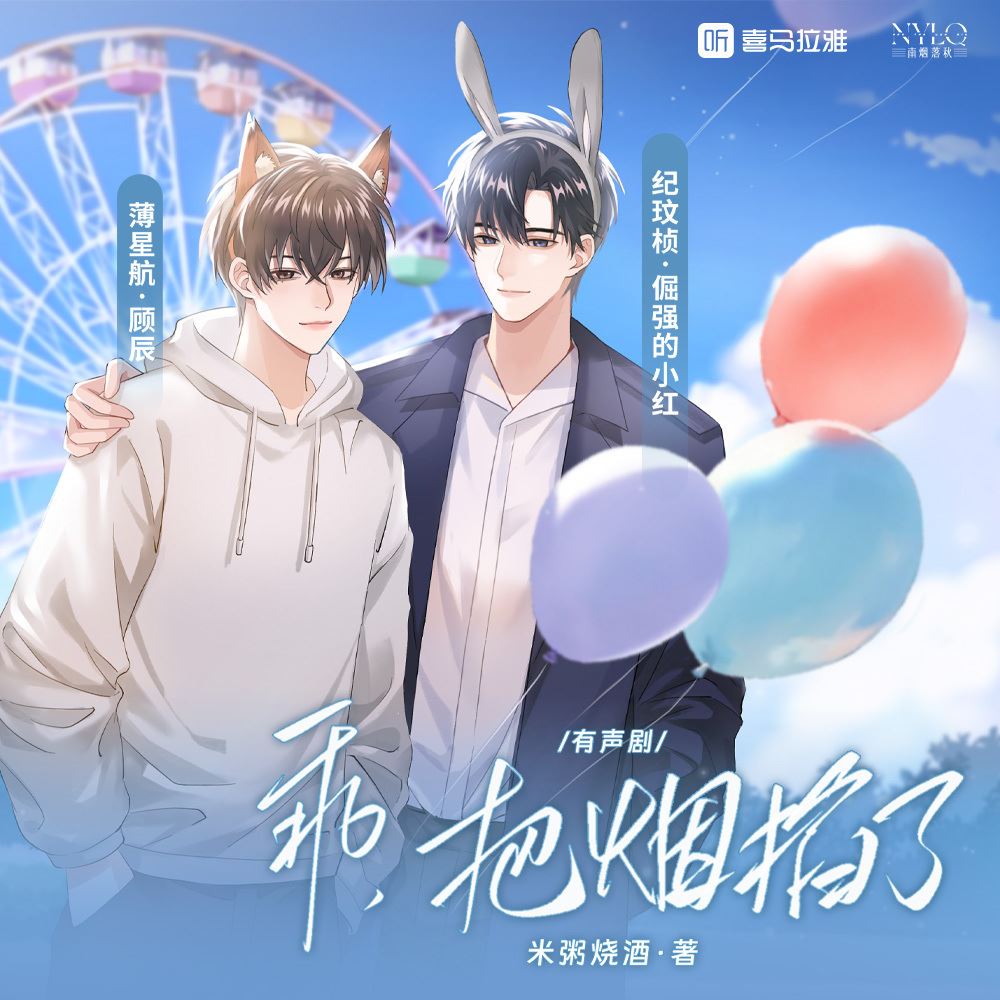
Okay so let me just say—the Ferris wheel moment is genuinely one of those scenes that recontextualizes everything about Ji Wenzhen. Up until this chapter, he's been all cool, controlled, barely-reacting type, right? But then he basically manhandles Bo Xinghang into a queue, drags him onto a ride, shuts the door, and just—kisses him like he's drowning. And here's what kills me: it's not portrayed as some grand romantic gesture. It's framed almost as desperation. 'Ji Wenzhen's movements were both fierce and gentle.' That word 'fierce' does so much work. He's leaving. The chapter right after confirms it—he packs at 5am with a suitcase. The Ferris wheel kiss isn't celebration, it's something closer to a goodbye disguised as possession. And the author doesn't even make it clean. Bo Xinghang ends up 'slightly weakened' afterward. This isn't a happy milestone moment, it's a pressure valve blowing. Also the structural choice to follow it immediately with 'Author's note: Girl: I've lost my true love.' is... is that them? Because if it is, what a gut punch to sandwich between a climax and a quiet morning departure scene. I'm not even sure how to feel about that interjection yet.
... Read More
"I like you?" —Bo Xinghang's voice was barely a breath, but it hit like a freight train. Suddenly every nerve ending in my body was tuned to the frequency of this hospital corridor at night. The author didn't just write tension; they bottled it. "The hospital was quiet at night, so quiet that you could hear the sound of a heartbeat, pounding rhythmically, echoing from the chest to the tips of their hair, crackling like fireworks." Fireworks in a silence that thick you could choke on. What's gorgeous is how neither of them runs from it. Ji Wenzhen's reaction — tapping that forehead, saying "Snap out of it" — isn't rejection. It's a lifeline thrown in a language both of them understand but won't name. And then the masterstroke: "Oh, kid, focus on your studies and don't get distracted by other things." Said like a shield, but heard like an invitation. Bo Xinghang's furious internal scream about studying? Perfect. That's the sound of a teenager whose entire universe just tilted on its axis and his only defense is… homework. And the home he returns to, dark and empty, his mother gone for a week. Where does that loneliness go when you're suddenly the object of Doctor Ji's restrained attention? It doesn't disappear. It just gets complicated. I'm not crying, you're crying.
... Read More
There's a line in here that keeps echoing in my head: "It was because of those experiences that he met the light in that dark garbage dump." A garbage dump. That's what Bo Xinghang's life felt like for three years—a place where things go to rot, where nothing has value, where you're just trying not to suffocate. And into that dump comes Doctor Ji, not as a savior narrative but as someone who simply saw him and offered a shirt, a promise, a presence. The shirt itself is such a loaded symbol. It's not romantic in some conventional sense—it's practical, worn, given casually. But it becomes sacred because of what it represents: being chosen, being thought of, being held onto. When his mother destroys it, she's not just trashing cloth. She's attacking the one thing that proved to him he existed in someone else's world. And then there's the blood. So much blood in this chapter. His blood, his mother's blood, the confusion between whose is whose. Blood as consequence, blood as consequence of loving the wrong people and loving too little the right ones at the same time. The grandmother's house as setting matters too—it's her house, not his mother's, not really his. Bo Xinghang asserting "this is your last chance" over a property that was never hers to begin with is the smallest act of reclaiming ownership in a life where he's had none.
... Read More
I need to talk about how this chapter plays with pacing because it's honestly masterful and I'm still recovering. We open with this incredibly slow, intimate morning scene—Bo Xinghang waking up, sending those embarrassingly cheesy text messages with hearts and roses, the author even noting this is the first time he's ever sent anything this soft after playing the cool guy for years. You can feel the time stretching out, lazy and warm. Then Doctor Ji showing up with lunch, all the little domestic details—the two toothbrush holders placed closely together, the three favorite dishes, the stomach massage. This section could have dragged if the author wasn't so careful with the beats. Every tiny action serves the mood. And then BAM. "The person who attacked Grandma Bo is being transferred to another hospital this afternoon." One line. That's all it takes to pivot the entire chapter. The softness doesn't disappear but it gets layered with tension now. Even holding hands in the empty corridor feels different after that revelation. Bo Xinghang asking Doctor Ji to wait outside the door—that pause before he walks in, shedding his smile like a mask—is such a clean structural beat. The author doesn't rush this at all. They let you sit in that threshold moment. Nan Ming's monologue at the end about his era being different, about thinking of himself as a freak... the chapter doesn't resolve anything. It just opens a door and leaves you staring into it. Perfect cliffhanger energy.
... Read More
Can we appreciate how distinct every character sounds? Because I can tell them apart without any dialogue tags and that's a skill. Bai Muyang: 'Jiejie! I really do have money; I just forgot to bring it. Could you please give me the stuff first? I need it urgently. I'll come back with the money later!' â†' This guy talks in paragraphs. Full sentences. Exclamation points everywhere. He's clearly the type who processes his thoughts out loud. Cashier Auntie: 'No! Put the items down and go get the money. Only then will I let you take the items!' â†' Short, sharp, no nonsense. Three sentences max before she's done with you. Bo Xinghang: 'Jie.' '...Okay.' 'No, thank you.' 'Forget it.' â†' The man speaks in monosyllables when he's uncomfortable. His entire personality is revealed through what he DOESN'T say. The best exchange is probably when Bai Muyang tries to connect and Bo Xinghang is internally screaming but externally polite. 'If you have time, you can come hang out in the infirmary!' vs '...Who would hang out in an infirmary for fun?' This gap between thought and speech is where the humor lives. And the narration itself has this wry, observant quality that I'm really vibing with. 'Bo Xinghang found Bai Muyang's way of speaking odd' — said the narrator who just witnessed Bai Muyang call a forty-something cashier 'beautiful and lovely Wang Tong's mom.' The author is clearly in on the joke. One line that stuck with me: 'Though he wasn't usually nervous around strangers, this was his first encounter with one of Doctor Ji's friends. Despite his calm appearance, he was secretly quite anxious.' This is such efficient characterization. One paragraph and we learn that Bo Xinghang has social anxiety masked by coolness, AND that Doctor Ji is apparently a person of significance.
... Read More
On the surface, this chapter is about buying band-aids. Literally. But underneath? There's so much tension layered in. The most obvious one: Bo Xinghang has a ten-centimeter wound on his arm and a hickey on his neck, and he's clearly trying to keep both hidden. The hickey moment when Bai Muyang asks 'Why did you buy band-aids? Did you get injured?' and Bo Xinghang immediately covers his neck? That's not just privacy — that's protection. He's protecting something, or someone, and the reader is left wondering what. Then there's the external conflict at the convenience store — Bai Muyang trying to buy medicine without paying, the other students judging him, the disciplinary director (Blabbermouth, I love this name by the way) looming in the background. It's low-stakes drama on the surface but it reveals something important: Bo Xinghang chooses to intervene. He risks his own social capital ('the school bully') to vouch for a stranger. What does that say about him? And the stakes are raised again in the infirmary scene. Bai Muyang is now looking at this wound with professional concern — 'They had barely been apart before Bo Xinghang got injured.' Barely been apart from WHO? The implication is hanging in the air. Something happened. Something we haven't been told yet. The conflict between what Bo Xinghang wants to hide and what the people around him are trying to uncover is what drives this chapter forward. Every interaction is loaded with unspoken questions. Bai Muyang suspects something. The readers are suspicious. And Bo Xinghang is just... trying to get through the day. 'I'd rather not.' Four words that contain an entire universe of refusal. This is conflict at its most economical and effective.

Leave a comment

You must be logged in to leave comments. or
