Bai Li’s Dream - Reviews

Bai Li’s Dream
+Add to Custom List
Sort
Add review
... Read More
There are so many symbols packed into these chapters that I need to untangle them. The 'solitary tree growing in the wilderness' comparing Zhuang Li is the most obvious one, but it's also the most honest. A tree in the wild isn't decorative — it survives through independence, through deep roots in bad soil, through weathering storms no one sees. It's also untamed, which is exactly what makes people uncomfortable in a society that values cultivated beauty. Then there's the house itself. The Marquis of Dongyang's Residence is described as 'vast' but in the 'remote northwest corner.' The first Marquis rose from 'humble beginnings' and built strict family rules. Three generations later, they've survived where 'newly rich and old aristocratic families' have been 'confiscated and exterminated.' Survival as the family legacy. Not glory. Not power. Just... endurance. That's the thesis statement of the whole novel, I think. The 'Demon Empress' is referenced again and again as a symbol of how fragile everything is. 'Being a good person has become a crime,' Madam of Dongyang recites — and this line hits differently every time it appears. It's Buddhist prayer, but it's also political commentary. In this world, virtue isn't rewarded. Caution is. Obedience is. Invisible is. And the name 'Zhuang Li' — 'Li Niang' as her mother calls her — literally means 'beautiful woman named Li.' But the text keeps insisting she's NOT stunning, NOT remarkable-looking. So the name becomes ironic, almost cruel. A girl named beauty who doesn't fit the category. A girl whose identity was given to her by a dying man's last wish, not by her own choice.
... Read More
I need to talk about the lotus. This symbol appears at the most strategic moment and it's doing SO much work. A lotus bud is given by Lu Jin to a servant girl. Days later, the bud hasn't wilted. In a room where a girl supposedly saw Guanyin Bodhisattva, a miracle fragrance fills the air, and that same lotus is sitting there like a prop in a staged divine intervention. The Old Madam sees it and her face lights up because it CONFIRMS her religious framework. She wants this to be a miracle, so the universe (or Lu Jin) provides the evidence. But here's what's really interesting—the actual miracle Cuier experienced wasn't divine at all. She dreamed of her DEAD MOTHER. Not Guanyin. Not a bodhisattva. Her mother, holding a lotus bud, singing a lullaby, rubbing her belly, saying there there it doesn't hurt anymore. The comfort she needed came from human love, not divine intervention. And yet the entire household interprets it through the lens of religion and piety because that's the only language they have. The fragrance is another layer. Servants can't use incense—that's a class restriction. But somehow this miraculous fragrance permeates a servant's quarters and EVERYONE smells it. Is it real? Did Lu Jin plant something? Or did the author just decide the scene needed atmosphere? Either way, it reinforces how perception is controlled by those who understand what people want to believe. The broken porcelain vase holding the lotus is also worth noting. Something beautiful sustained by something broken. That feels like a statement about this whole world—these households run on fractured foundations holding up delicate performances.
... Read More
Okay can we just take a moment to appreciate Lu Jin because this girl is absolutely ruthless in the best way possible? On the surface, she's the sweet adopted daughter massaging her godmother's shoulders and calling her "Godmother" with those big innocent eyes. But read between the lines and she's running an entire operation. She knows exactly what to say to Madam of Dongyang—"Being able to repay debts is also a blessing"—a line so perfectly calibrated it could only come from someone who understands grief and guilt at a granular level. She reframes the Madam's sorrow as gratitude, and you can see the woman visibly soften. Then she pivots to the most dangerous topic in the room: the deceased sister. She doesn't tiptoe around it. She says it straight—"Third Sister is gone, Uncle can't bear to let her go, so that's why he's clinging to Madam." She names the elephant, but she does it in a way that makes Madam of Dongyang feel understood rather than exposed. That's not just emotional intelligence, that's combat-level social navigation. And the scene with Zhuang Li? Chef's kiss. Lu Jin immediately reads the room—she sees Zhuang Li as a threat to her position, possibly even to the memory of her sister, but she plays it so gracefully. She calls her "Sister-in-law" with a smile, asks her age, makes light of the gift situation when Zhuang Li presents that ridiculous dried lotus flower, and diffuses what could have been a brutal power struggle into a polite exchange. But watch Xueliu's reaction—she's the one who fully grasps what just happened. She thinks Lu Jin is "kind and good-natured" when really, Lu Jin just neutralized a potential rival without anyone at the table even realizing a battle took place. The relationship between Lu Jin and the late Third Sister is the emotional bedrock of everything. Lu Jin isn't just some political pawn—she genuinely loved her brother's wife, and her entire motivation in these chapters is protecting that memory while simultaneously ensuring the living are okay. That duality makes her one of the most complex characters in this novel.
... Read More
Okay so this whole sequence is genuinely wild and I need to unpack it. The marriage between Zhou Jingyun and Miss Zhuang was set up as a sham — a cover story for Duke Ding'an's family to avoid the Demon Empress's arrangements — but now it's turned real, and the political fallout is cascading. What makes this chapter stand out is Lu Jin's pivot from frustrated bystander to active schemer. She doesn't just accept that her family is being discarded; she engineers a solution that puts her inside the Marquis's household as a concubine, under imperial decree. That's not a desperate move — that's a calculated land grab. And the layering is what gets me: she frames it as devotion to the dead Third Sister, but the narration keeps reminding us that she's an outsider, raised in the duke's home but never fully part of it, and every word she speaks is calibrated. The scene where she hands the stolen box back to Lu Wenjie without exposing him is a masterclass in showing how much she understands about power. You don't expose a thief — you own him. I keep coming back to that moment because it recontextualizes everything she says afterward. The plot here isn't just about marriage arrangements; it's about who gets to define reality when everyone's lying, and Lu Jin is the one learning to do it best.
... Read More
Okay, let me just unpack the character dynamics here because this scene is genuinely fascinating from a relationship perspective. We have four women in that room and the tension between them is absolutely electric. First, there's Zhuang Li, who walks in looking fragile but operates like a seasoned diplomat. What struck me most about her is how she reads the room instantly. She understands that these women aren't just being cruel—they're performing. They're testing her, measuring her, looking for weaknesses. And she doesn't take the bait. When they try to trap her with questions about filial grief, she doesn't get defensive. She gets philosophical. This is a woman who has survived enough to know that fighting fire with fire doesn't work—you fight it with water. Then there's Madam of Dongyang, and I find her character so complicated and interesting. On one hand, she's clearly not thrilled about this marriage. She called it 'just for people to see us as a joke.' She sighs with relief when Zhuang Li leaves the house. But—and this is the thing that caught me off guard—she also arranged the whole meeting, prepared gifts, and genuinely seems relieved that Zhuang Li handled herself well. Her relationship with her husband is clearly strained (he's the 'heartbroken heir' who needed to move on), but she's doing her duty. And somehow, watching her internally celebrate Zhuang Li's victory felt surprisingly warm. Old Madam Xue is the villain of this scene, and I love how the author writes her. She's not cartoonishly evil—she's sharp, wealthy, connected, and genuinely believes she has every right to interrogate this girl. Her relationship with her nephew Zhou Jingyun is interesting too; she claims to have raised him like a grandson, but the text makes it clear she's more interested in controlling the family narrative than in his happiness. The moment she tries to extract a meeting gift from Madam Xue instead of giving one herself? Chef's kiss. That single detail tells you everything you need to know about her character. And then there's Madam Xue—the visiting elder who actually likes Zhuang Li. She gives her a proper gift, speaks gently, and seems to genuinely welcome her. I'm already sensing a potential alliance between these two that could become really important later.
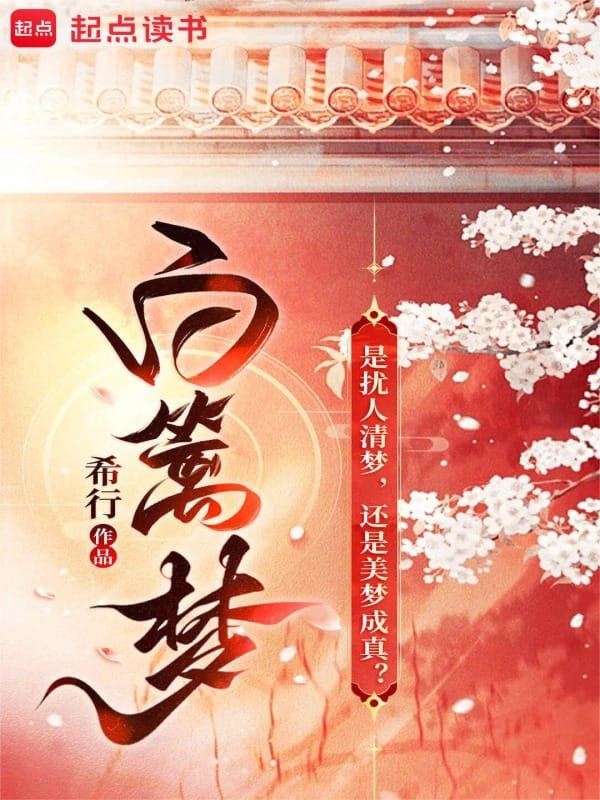
... Read More
What got me about this passage isn't any grand romantic gesture — it's the devastating quietness of so much unspoken emotion. Xueliu looking at the direction of the Young Master's courtyard and thinking about Third Miss Lu, who died suddenly and apparently held Xueliu's hand before passing. That single detail — a dying woman gripping her maid's hand — carries more weight than any funeral scene could. And the Marchioness, who throughout the concubine confrontation shows genuine warmth (that smile in her eyes despite the harsh words), then turns to Xueliu and says something vague but profoundly tender: "Don't worry, I'm here." She doesn't specify what she's protecting Xueliu from, but Xueliu understands completely. There's this entire history between them that the author never spells out. Then Zhuang Li comes out pale the next morning, and her maids react with genuine concern — Chun Hong offering to fetch the doctor, Chun Yue already diagnosing poor sleep. For a moment, just a moment, it feels like Zhuang Li might actually have people who care about her in this house. And then Xueliu walks in and kills the whole thing with cold practicality. The emotional whiplash is brutal.
... Read More
The dialogue in this section is doing some absolutely filthy work and I need to appreciate it. Let me start with Mama Hu's performance. The woman enters and essentially delivers a monologue that's equal parts testimonial and theater. She slaps her thigh for dramatic effect, she swears she's not lying, she says if you don't believe her call the girl in—she's building suspense like a storyteller at a tavern. And the best part? We KNOW she's fabricating because the narrative has already shown us the truth. But she's so good at it that even the quick-witted senior maids get swept up. That's voice. That's characterization through speech patterns alone. Then there's Xueliu, who operates on a completely different frequency. She's delivering devastating gossip—Zhou Jingyun beat his brother, there's a gambling boat, an illegitimate son connected to the imperial family—while maintaining the politest tone imaginable. Every sentence starts with a sigh or a lowered voice. She's weaponizing propriety. When she says things like I overheard and these words broke the silence, she's carefully positioning herself as a harmless messenger while dropping information that could reshape alliances. Ninth Miss is probably my favorite voice in this passage. She's young, outspoken, and completely unaware of how dangerous some of these topics are. Who is Shangguan Yue? Isn't that the same Shangguan as the Imperial Consort's Husband? Her innocence isn't naive—it's strategic. She asks the question everyone is too afraid to voice, and then immediately shrinks when the room goes cold. And the Marchioness? Three lines and you know exactly who she is. You seem very familiar with the pleasure gambling boat—her voice turns to ice so fast it's alarming. She doesn't need to yell. One question and every young master in the room is on his knees apologizing. The author doesn't waste a single word on her. The narrative voice itself is also worth praising. It moves between close third person and a more omniscient observer without ever jarring you. You're always with someone—Lu Jin's calm calculation, Cuier's private truth, Xueliu's careful observations—but the camera pulls back just enough to show you what each character is missing. That's the kind of writing that makes you want to reread passages because you caught something the characters didn't.
... Read More
I'm not even going to pretend I didn't choke up at Cuier's dream sequence. Everyone around her is KNEELING and KOWTOWING and crying about Guanyin's mercy, and the actual truth is so much simpler and more devastating: a terrified girl near death hallucinated her dead mother singing her a lullaby. Think about that for a second. This is a servant girl—probably orphaned or sold into service at a young age, living in cramped quarters, under constant threat of being dismissed or worse. When her body was failing, her mind didn't reach for Buddha or heaven. It reached for the one person who ever held her and made pain stop. That image of her mother with a lotus, patting her belly, singing—that's not religious ecstasy. That's a child's desperate need for comfort, and it's breathtakingly human. And then the worst part: she CAN'T tell anyone the truth. If she says she dreamed of her mother, the mamas will think she's homesick and complaining about her treatment. So she twists her memory into something palatable, something that serves the household's beliefs. The lie protects her. But it also erases the real thing—the actual love that saved her. Meanwhile, Lu Jin watches all of this unfold with complete calm, feeding melon to the Old Madam like she's dining, not presiding over a manufactured miracle. There's something both impressive and unsettling about her emotional control. She understands people's desires so well she can feed them exactly what they want to believe. Is that manipulation? Or is it survival, the same way Cuier's false testimony is survival? I keep thinking about that lotus bud on the stool. It's been ten days and it hasn't wilted. Xueliu notices it. She says nothing, but she's clearly wondering. Some people see the miracle. Some see the prop. And some—the quiet ones—see both at once.
... Read More
The dialogue in this text is absolutely razor-sharp, and I want to focus on how the author uses formal address as a weapon and a shield. Look at Zhuang Li's opening speech: 'Master Zhuang has shown me immense kindness... Even if I serve as their caretaker for the ancestral shrine, I can never repay his kindness.' She repeats the word 'kindness' twice in three sentences. That's not natural conversation — that's a performance. She's saying exactly what she thinks Madam of Dongyang needs to hear, and it's devastatingly effective because it also reveals everything. Then there's Madam of Dongyang's response: 'It is fate that brought you together.' Four words. Polite. Empty. She's testing this girl, and Zhuang Li passes by not pushing back, not over-explaining, just... accepting the frame her mother-in-law gives her. But the real masterpiece is the dialogue between the gossiping ladies at the banquet. 'Yuniang, don't forget what I told you about our two families.' This is friendship as transaction, concern as competition. They're literally grabbing Madam of Dongyang's wrists while discussing her son's marital prospects like he's a commodity. And the joke at the end — 'you only have one daughter, and she's still young' — is cruel humor masking genuine malice. The narrative voice itself is also doing something special. It's omniscient but deeply intimate, slipping into characters' private thoughts without warning. One moment we're observing a banquet from the outside, the next we're inside Madam Dongyang's head remembering the concubines' children she had to raise. The transitions are seamless, and it makes the whole thing feel less like a story being told and more like eavesdropping on a world that doesn't know it's being watched.
... Read More
Okay so let's talk about this first wife, right? Because EVERYTHING in this story is built around her absence. She literally doesn't appear in a single scene, yet she dominates every decision Jingyun makes. Six months of marriage and then — dysentery, dead. Jingyun observes three full years of mourning. Three years! That's not just grief, that's performance as survival. He throws himself into exile after that, becomes an Educational Inspector in some remote corner of the empire. And now, at twenty-seven, he remarries without telling his own mother. I keep going back to the word 'dysentery' — it's such a mundane, almost clinical way to describe the death of someone so young. It feels intentional on the author's part. Like, she wasn't killed in dramatic fashion; she just... stopped. And that makes it feel even more cruel, somehow. Then there's the political backdrop. The previous emperor was 'reckless,' there was a 'Demon Empress' who 'mismanaged government,' half the court officials have been replaced, couples were dragged away and executed. The Marquis of Dongyang family survived by staying low, by being 'simple and honest.' And now Jingyun has gone and done the most conspicuous thing possible — secretly married a commoner orphan and brought her back under the banner of his mother's household. In this political climate? That's not naivety. That's either genius or self-destruction, and I can't tell which. The structure also does something really clever: we get the gossip at the banquet FIRST, before we see Zhuang Li at all. So we're already primed with rumors, speculation, judgment — all the noise of the capital — before we meet the actual person at the center of it. It's like the story is telling us: this is how a woman's life gets reduced to conversation before she even opens her mouth.
... Read More
I am genuinely impressed by how the dialogue functions in this passage. Let me tell you—most authors would have made Zhuang Li's speech either too modern-sounding or too stiff and archaic. But here, every character has a distinct voice, and the dialogue does double duty: it reveals personality AND advances the conflict simultaneously. Zhuang Li's dialogue is perhaps the most remarkable thing about this scene. When she speaks, she is always calm, always measured, always precise. Listen to how she opens: 'I am already sixteen years old.' No hesitation, no apology, no softening language. She states facts. And when she deploys the Lao Dan reference, the dialogue shifts from defensive to offensive in real time. The author writes her speech in a way that feels almost performative—like she is giving a lecture—but that's exactly the point. She is using their own rules (classical education, canonical authority) to defeat them. But let's talk about the supporting characters for a moment, because their dialogue is equally telling. The gossipy woman who asks about Zhuang Li's parents? Her line 'Wasn't it said that both her parents are deceased?' is delivered with this delicious hedging—'wasn't it said'—she's testing the waters, pretending she's just curious. And when Madam of Dongyang glares at her, she backpedals immediately: 'I just heard it from others. Heard it from others?' This is such natural dialogue. Real people do this. They throw out invasive questions wrapped in false innocence. Old Madam Xue's dialogue is written with such sharp, curt energy. 'She doesn't look it; she appears younger.' Short sentences. Dismissive tone. The rhythm of her speech tells you she's used to being obeyed without question. And the young woman next to Old Madam Xue who translates Zhuang Li's philosophy into plain language—'She's saying that we're foolish'—this is such a perfect character moment. She's the translator, the bridge between Zhuang Li's intellectual world and the room's understanding. Her whispered translation is almost comical in its bluntness, and it makes me laugh every time I reread it. The narrative voice itself is also worth praising. It moves fluidly between external dialogue and internal observation, giving us access to Madam of Dongyang's panic, Old Madam Xue's indignation, and Zhuang Li's serene composure—all without ever feeling crowded or confused.
... Read More
I need to talk about Zhuang Li because something about her broke my heart in the most beautiful way. She arrives at this enormous, hostile residence with one bundle of belongings. One. Bundle. Everything she owned in the world fits in a single package, and she starts unpacking it with this quiet determination. She burns incense. She practices calligraphy. She arranges a lotus bud in a simple vase. These are acts of someone building a home from nothing, of saying 'I am here, I exist, this is my space now.' And she does it all while knowing exactly how everyone in this house sees her: an orphan, a convenient marriage, a placeholder wife. Madam of Dongyang won't even look at her. The maids spit behind her back. Her husband is away and apparently married her for reasons that have nothing to do with love. But here's what gets me — she doesn't perform grief. She doesn't wail or beg for affection or try to win people over. She just... arranges her room and goes about her business. 'No matter how calm she appeared on the surface, Zhuang Li was still a young woman in her teens.' That narrative aside though — that tiny admission that underneath all that composure, she's just a girl who might be terrified. The most painful moment for me was when Xue Liu praised her handwriting and Zhuang Li 'smiled but didn't say anything.' That smile — it's the smile of someone who's used to being evaluated and found wanting, and who has learned to accept praise without believing it. And Jingyun... 'Jingyun said he will only cherish the memory of Lu for the rest of his life.' That was his promise. To another woman. To a dead woman. And Zhuang Li has to live with that. I just — I don't know what to do with that feeling.

Leave a comment

You must be logged in to leave comments. or
