Bai Li’s Dream - Reviews

Bai Li’s Dream
+Add to Custom List
Sort
Add review
... Read More
The atmosphere in these chapters is absolutely palpable, and I need to talk about how the author uses sound—specifically laughter—as a recurring atmospheric device. When Zhuang Li first enters Madam of Dongyang's courtyard, the author paints this vivid picture: maids coming and going, chatting and laughing, Lu Jin drawing flower patterns while Xueliu advises her on embroidery technique. It's warm. It's domestic. It's the sound of a household that has found some version of peace. And then—"The laughter and conversation ceased abruptly." One sentence. That's all it takes to shatter the entire atmosphere, and the contrast is devastating. The physical spaces are also incredibly specific and telling. The east side room with the arhat bed where Madam reclines, the desk covered in messy paper and brushes and ink where Lu Jin draws, the doorway where Zhuang Li hesitates before entering—you can see every frame of this like a film. The author doesn't over-describe; she gives you just enough sensory detail to build the world and then trusts you to fill in the rest. The mention of the Spring Water Pond's lotuses, the embroidered socks, the white fungus soup—all of these tiny details construct a lived-in aristocratic household that feels real. But the most striking atmospheric choice is the contrast between the outward warmth and the underlying chill. Madam of Dongyang is laughing, making plans for dinner—"I'll have them steam your favorite pigeon"—but the reader knows, and Zhuang Li knows, and even Lu Jin knows, that beneath this harmonious surface, people are grieving, calculating, and bracing for impact. The house is full of ghosts, and the warm light makes them more visible rather than less.
... Read More
The stakes in this section keep escalating in ways that are genuinely worrying. First you've got the Old Madam of Ding'an, who is clearly frustrated that Zhou Jingyun rejected her choice of another granddaughter and instead married Lu Jin. She says it out of pity—not because she wants anything from him—but he treats her kindness like a trap. That's not just a family disagreement; that's isolation. He has no one genuinely on his side inside his own household. Then there's Wenjie, who got whipped by his own father for visiting a gambling boat run by an illegitimate half-brother. The stakes here are physical and social—Whipping broke the instrument, which means it was severe. But more importantly, what is Wenjie actually risking? He's a legitimate young master of a noble house, and he's hanging out on a pleasure boat with Shangguan Yue, who is basically untouchable despite being illegitimate. That's not recklessness; that's either genuine friendship or something more calculating. And the Marchioness of Dongyang—oh, she's playing a different game entirely. She's not just scolding her sons about the gambling boat; she's asserting control in a household where power is clearly shifting. Her snapping at them, the whip reference, the way she redirects the conversation—it's all about maintaining authority when the ground beneath her feels unstable. The most suspenseful moment for me was when Ninth Miss asked who Shangguan Yue was and the answer dropped like a bomb. One second it's a light family scene with gifts and soybean paste, the next everyone's kneeling and the atmosphere freezes. That transition—from warmth to tension in three lines—is pure storytelling craft. It made me actually sit up straighter.
... Read More
There's a dead woman holding court in this entire chapter and no one seems to notice except Lu Jin, who is using that ghost like a weapon and possibly like a comfort. The Third Sister died young. She was supposed to marry Zhou Jingyun. He married someone else instead, and the Ding'an family is devastated — not just politically but emotionally. The Madam of Ding'an sobs openly. Her father slams tables and paces. Even Lu Jin, who is usually composed, frames her entire proposal around the idea that she's doing this for her sister's memory. "In the future, when I bear children, they will be under Third Sister's name, providing her with descendants to continue her lineage." That line. I keep coming back to it. It's either the most touching expression of sibling loyalty I've ever read, or it's the most chilling rationalization for inserting herself into a man's bed. Maybe it's both. The text deliberately leaves that ambiguity open, and that's what makes the emotional landscape so complex. What's haunting me is the contrast between how the living treat the dead and how Lu Jin treats the memory. Everyone else is performing grief — their grief is loud, performative, tied to loss of status and face. Lu Jin's grief is private, practical, and dangerous. She doesn't wail; she acts. And somewhere between duty and calculation, you can't tell where one ends and the other begins. The scene with Cuier almost mirrors this thematically — a servant girl kicked and bleeding, tended to by another servant, given a wilting flower as consolation. Two different kinds of harm happening in parallel, one aristocratic, one common, both unacknowledged by the people causing them.
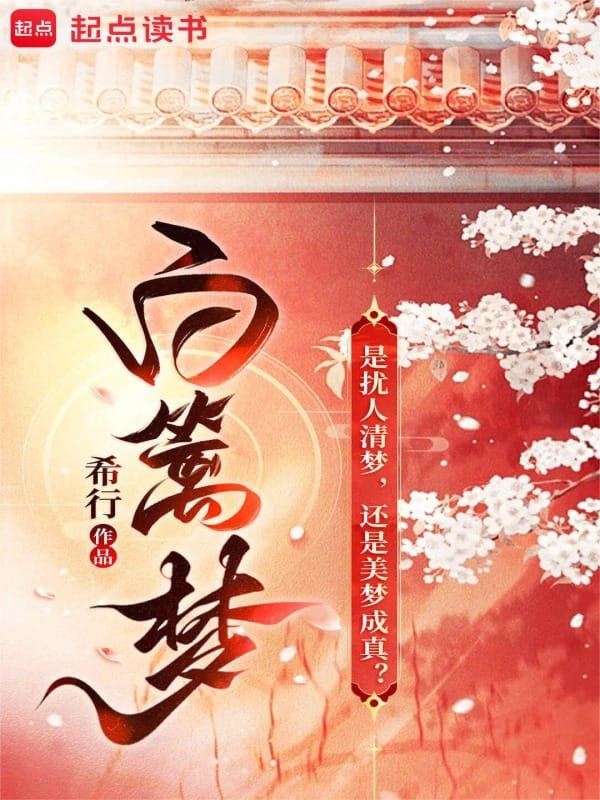
... Read More
There's this one scene that just stays with me. Zhuang Li entering her new quarters and rearranging them. Not with grand gestures, but with this quiet, deliberate act of claiming space. The green glazed lotus incense burner. The bamboo flute on the wall. The plain gauze replacing whatever ornate bed curtains were there before. The earthenware vase — simple, unremarkable, but perfectly matched to everything else she brought. And then: 'She only brought one bundle.' One bundle. Everything she owns in this massive, intimidating Marquis's Residence fits in one bundle. A flute, dishes, a sachet, a box. When Chun Yue asks about lotuses, Zhuang Li doesn't ask for something extravagant — she asks for a lotus bud. Not even a full bloom. A bud. Because she understands that in this house, showing too much taste would be dangerous, but showing no taste at all would make her look like the 'poor orphan girl' they all think she is. The visual contrast is everything. The opulent main hall where Madam of Dongyang sits surrounded by concubines and laughter versus Zhuang Li's simple room where she burns incense and practices calligraphy. One space is performance; the other is sanctuary. The orchids get removed and replaced — that detail alone tells you the previous Young Madam's presence is being carefully erased, like she never existed. I also love how the courtyard itself feels alive. The maids gossiping, Mama Lu spitting when she thinks no one's looking, the weight of 'years of rules' pressing down on a new mistress. Every corner of this residence has history and hierarchy embedded in its walls. It's not just a setting — it's a character.
... Read More
I need to talk about Madam of Dongyang because she is NOT the villain this setup wants you to think she is. Let me rephrase that: she's being set up as the potential obstacle, the traditional mother-in-law who might mistreat the young new wife, but the text keeps pulling back the curtain on her. When she trips on the steps after receiving the news, it's not composure breaking — it's genuine shock. And then her internal monologue? Brutally honest. 'I never pressured him. If he had only said he didn't want to marry, I could have refused anyone on his behalf.' She's not angry about the marriage itself. She's hurt that he didn't include her. But then we learn WHY she's so fiercely devoted to Jingyun — and it changes everything. She lost two children. She had to raise another woman's son because her husband asked her to. She was mocked for her humble origins. Her entire life has been about holding onto what little she had through competence and endurance. Of course she's protective. Of course she reads 'Countless eyes are watching' as a threat. And Jingyun's letter to his mother — explaining that he did this 'for your well-being, Madam, and that of the Lord Marquis' — this is a man who has spent his entire life trying to keep his family safe from court politics. He left the capital to survive. He's now bringing home a wife because his master is dying. The question that keeps haunting me: did he choose this woman, or did he choose the only option that would keep everyone alive? There's a line where Mama Huang says 'The Marquis's Heir is always measured in his actions. He wouldn't act recklessly.' But is that loyalty speaking, or is it someone who's also seen the cost of questioning her son's choices?
... Read More
This passage is layered with thematic depth that I think deserves serious attention. The central theme that emerged for me is the performance of grief—and how society polices not just what we feel, but how we feel it. Old Madam Xue and her circle represent a world where emotion is public property. A daughter-in-law must grieve in the right way, display the right expressions, and perform the right amount of sadness at the right moments. Zhuang Li's smile—the 'faint smile' that the gossipers fixate on—is treated as a moral failing. But the author is asking us something uncomfortable here: why is Zhuang Li's happiness at her parents' release from suffering considered unnatural? The text gives us her reasoning—prolonged illness, constant pain, release—and asks whether we should still demand theatrical mourning. There's also this fascinating theme about the power of texts and classics as armor. In a world where Zhuang Li has no family backing, no parents to advocate for her, no social capital—her education becomes her weapon. The Lao Dan story isn't just a clever quote; it's a thematic statement about how knowledge can protect the vulnerable. She quotes the Holy Ancestor, and suddenly Old Madam Xue—the imperial relative, the matriarch, the woman with all the social power—can't respond without offending a deity and, by extension, the Emperor. The clothing and appearance symbolism is also rich. Zhuang Li wears clothes prepared for someone else—'Eldest Daughter's' pomegranate-red dress—and pearl earrings chosen from Madam of Dongyang's cosmetic box. She is literally dressed in the remnants of another woman's identity. This mirrors her social position: she is occupying a role that was prepared for someone else (the grieving widow's replacement), wearing a life that wasn't originally hers. Yet she makes it work. She transforms borrowed finery into something radiant. And the carriage scene at the beginning—Zhuang Li lifting the curtain to see the world outside, contrasting it with 'the night and the dream world'—this feels symbolic of her entire journey. She is transitioning between different realms, different versions of herself, moving from obscurity into the spotlight of a powerful family.
... Read More
There are so many symbols packed into these chapters that I can't stop thinking about them. The Boshan burner in Zhuang Li's room — it produces white smoke that rises in a perfectly straight line, motionless even when the curtain sways. The text literally says "there was no smell." Is that incense at all, or is it something else? The smoke seems to act as a threshold, a veil between her waking world and whatever vision she enters. Then there's the concubines crying on command — tears as performance, as currency. Concubine Yang shed real tears but also calculated words: "It's a blessing that we've cultivated for several lifetimes to meet the Madam." Nine-year-old Ninth Miss almost speaks truth but gets physically silenced by her birth mother. The theme of muted voices runs through everything. And Xiaolang — who watches from the pleasure boat, seeing through mist and fog — is described as someone who senses ghosts on empty streets when others see nothing. Maybe he's the only one who can truly perceive what's real. The marriage itself is symbolically hollow: Zhuang Li married elsewhere, hasn't performed proper rites, hasn't met any relatives. She exists in this household as a rumor, afait accompli, something already done that no one agreed to.
... Read More
I need to talk about Lu Jin because this character is deeply layered and honestly kind of terrifying in the best way. She walks into her uncle and aunt's room, hears them ranting about Zhou Jingyun's betrayal, and instead of joining the emotional spiral, she immediately starts mapping out how to turn this loss into an advantage. The author gives us this incredible interiority — her thoughts while walking back at night, watching her brother steal from his own grandmother, reflecting on how every generation is worse than the last. She sees the rot. She sees it clearly, and instead of being paralyzed by it, she decides to exploit it. What makes her compelling is that she's not cold — she genuinely seems to believe her offer is the noble thing to do. She tells her aunt, "I'm her younger sister, it's better than the offspring of others." Is that sincerity? Is it manipulation? The genius is that the text won't let us decide. Even her treatment of the servant Cuier is ambiguous — she gives her a lotus bud from the Marquis's residence, which is a small gesture, but it's also a reminder that Lu Jin moves through different worlds and can dispense kindness like currency. The relationship with her uncle Duke Ding'an is the most interesting thread. He looks down on her — openly, in the text, noting she's his second brother's girl, that she caused embarrassment, that she shouldn't be trusted — yet he agrees with her plan because it serves his interests. That power dynamic is so rich. She needs his influence with the emperor; he needs her loyalty. Neither of them is honest about what they're getting from each other, and that's exactly what makes their relationship feel real.
... Read More
There are two objects in this stretch that just WON'T leave my head, and I think they're doing heavy symbolic work. First: the calligraphy scroll. Zhuang Li spends what feels like forever writing the Xiaoyaoyou — her handwriting small, careful, almost childlike despite being gorgeous. She hangs it up like it matters. And then in the morning, Chun Yue finds it SMUDGED. Wet. The characters blurred as if stained by water. Dewdrops on the banana leaves outside suggest rain drifted in, but honestly? It felt like the dream itself leaked into reality and eroded her work. The thing she carefully constructed in the waking world got undone overnight. Is that on purpose? The text says 'just a piece of calligraphy' but of COURSE it's not just a piece of calligraphy. Zhuang Li is trying to pin something down, anchor herself, and the dream world keeps washing it away. Then there's the book she picks up after. The characters on the page start looking like they're burning like fire, turning into sharp arrows piercing her eyes. She forces herself to keep reading anyway — 'using her gaze to gather the jumping characters into shape.' This is Zhuang Li at her most desperate and determined. She will absorb this knowledge even if it blinds her. Even if it hurts. Both images scream at me about the tension between what she can CONTROL and what keeps slipping through her fingers. The dream gives her answers but takes things away. Knowledge is painful but she can't stop seeking it. The smudged scroll and the burning pages are two sides of the same coin — both represent the cost of her pursuit.
... Read More
That lotus flower. I need to talk about that lotus flower because it is possibly the most thematically loaded object in these entire chapters, and the author barely even acknowledges it as symbolism—which is exactly why it works so well. Zhuang Li takes a lotus that's been sitting in a vase for three or four days, treats it with incense, and presents it as a gift. It will "never wither." On the surface, this is either thoughtfulness or social disaster, depending on how you read it. But symbolically? This flower is everything. It's an attempt to preserve something fragile, to arrest decay, to make the temporary permanent. And what is it preserving? A relationship that hasn't even properly begun. A connection between two women who are barely acquaintances. A gesture of goodwill in a household where everything feels like it's held together by duty and grief. The theme of preservation runs through every layer of these chapters. Madam of Dongyang is trying to preserve her family's face. Lu Jin is trying to preserve the memory of her deceased sister while making peace with her living brother-in-law's new marriage. Zhuang Li is trying to preserve her dignity as a newcomer in a house full of established relationships and unwritten rules. Even Xueliu is trying to preserve her status, her sense of belonging, her position as the late mistress's faithful servant. And then there's the image of the Duke of Ding'an, "clinging" to the new Marquess's wife because he can't let go of the dead third daughter. The author explicitly states this: "in Uncle's heart, it's as if Third Sister is still here." The entire novel seems to be about what happens when people try to preserve the past in the present, and how those attempts both sustain and suffocate them. The everlasting flower is a beautiful, tragic symbol of exactly that impulse.
... Read More
This chapter does something I rarely see done well — it moves through three distinct emotional registers without feeling disjointed, and each transition pulls you deeper into the moral ambiguity of the world. It opens at full political heat: the Duke slamming tables, the Madam weeping, Lu Jin cutting through the noise with a proposal that changes everything. This is the action phase, fast and tense. Then it shifts — almost imperceptibly — into Lu Jin's private walk home, where the pace slows and the narration turns inward. We get her reflections on her family's decline, her brother's theft, her own position as an outsider. This is the contemplation phase, and it's where the chapter earns its depth. The third act arrives with Cuier's scene in the servants' quarters, and the pacing does something remarkable here: it drops us into an entirely different social stratum, far removed from the political machinations upstairs, yet somehow more emotionally honest. The lotus bud wilting in a broken vase is the chapter's final image, and it lands with devastating quiet after all the earlier drama. No one in the noble households notices what's happening belowstairs. No one notices their own rot either, for that matter. The structure mirrors the theme — descent, literally and figuratively, from the polished drawing rooms to the dark gravel paths to the cramped servant quarters. Each level is worse than the last, but each level also sees more clearly. The chapter doesn't rush. It lets the silence between scenes do the work.
... Read More
Okay so let me just say—this whole Cuier miracle storyline is one of the most brilliantly layered sequences I've read in a while. On the surface, it's a servant girl gets hurt, almost dies, miraculously recovers, and everyone credits Buddha. But read between the lines and it's pure chess. Lu Jin clearly engineered this. She fed melon to the Old Madam at just the right moments, stayed completely calm while everyone else was panicking, and let Mama Hu tell the story exactly how she wanted it told. The lotus bud from Lu Jin? That's the smoking gun. It ties the whole thing together—a planted symbol that makes the "miracle" feel divinely orchestrated rather than manufactured. And then right after this entire spectacle resolves, Bam—we cut to Xueliu returning to the Marquis of Dongyang's residence and dropping the Wuhan news about Shangguan Yue. The pacing here is masterful. The author uses the fake miracle as a breather, letting us exhale, and then immediately yanks the rug out by introducing this whole gambling boat subplot. It's like the story is saying: fine, you thought that was the big drama? Here's something bigger. The structure also mirrors something important. Inside the Duke of Ding'an's residence, everyone is performing piety and miracles. Outside, in the real world, real corruption and danger exist—the gambling boat, the illegitimate son, the family tensions. The fake sacredness indoors contrasts sharply with the messy reality outdoors. It's a structural metaphor that doesn't shout but whispers.

Leave a comment

You must be logged in to leave comments. or
