Back To Sixty: Almighty Military Wife - Reviews

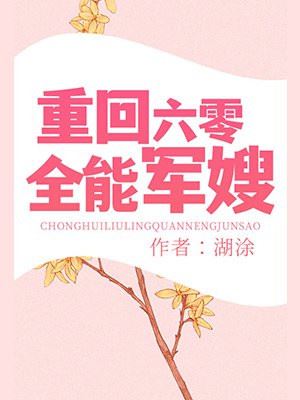
Back To Sixty: Almighty Military Wife
+Add to Custom List
Sort
Add review
... Read More
This batch does a ton in a small space. You've got Su Qinghe and her mom dealing with matchmaking on one side, the Gu family's desperate bride hunt on the other, and then Chang'an's big military reveal—all woven together. The narrative keeps pivoting between these different rooms and tensions, and honestly it works because every scene pushes toward the same question: who is this guy and what will happen next? That moment when Chang'an hears his name NOT called at first—"his tanned face paled a bit"—and you can feel the dread. He thinks he failed. He thinks something beautiful is slipping away. Then BAM, first place. Gu Chang'an. The entire room shifts. The author really knows how to keep you on the edge here. And the Shelley quote at the end, "Beware; for I am fearless, and therefore powerful," is such a perfect thematic button on the whole thing. It's almost like the novel is winking at us about Chang'an's nature. I do have questions though—what's the deal with the system Su Qinghe has? Why can't it detect people who are far away? And what does the future hold for Chang'an once he goes to the Sharp Soldier Battalion? Those loose ends are keeping me hooked.
... Read More
This passage is basically a masterclass in using food as the primary symbol for everything that matters. Let me unpack this because the layers are real. The soybeans. Three liang of soybeans from the hospital — that's the medical treatment. In a world where this is both the best care available AND a precious gift, food and survival and love are the same thing. Gao Xiulan bringing back those soybeans 'happily' while crying moments before shows how small victories look in a world of scarcity. The ten sparrow eggs hidden in the mother's room. These aren't just food — they're SECRET food. Preserved. Saved. The fact that the mother has a private stash of eggs that she's keeping for her daughter speaks volumes about maternal love operating outside the official family economy. While everyone else gets chaff and thinner, Qinghe gets eggs. This is love as defiance. The brown sugar water and eggs that Ding Guihua brings — and immediately wants to eat herself. Hunger strips away pretense. Even the sister-in-law who's trying to curry favor can't help but stare at the food. The bowl becomes a test of character. And Su Qinghe's refusal — 'Mom, should we eat together?' — this is the core moral question of the entire passage. If she eats the eggs while her family starves, is she betraying something? The narration says 'what she ate was her only remaining integrity.' That line hit me hard. Food isn't just nutrition here, it's the last line of defense against becoming someone you don't recognize. Then there's the system itself as a symbol. It represents Su Qinghe's modern conscience — the part of her that still believes in sharing, in fairness, in not taking more than her share. But it also constrains her, telling her she can't change too much or reality will push back. It's almost like a supernatural id preventing her from acting on her modern moral compass in a world that punishes moral behavior. The system is both her guide and her cage.
... Read More
The worldbuilding in this novel doesn't announce itself with exposition dumps. It sneaks up on you through the details, and that's what makes it so oppressive. Let me start with the food scenes—because everything revolves around food in this era, and the author knows it. The sorghum porridge, the wild vegetables, the sparrow eggs that Qinghe carries in her pocket like precious gems. When the three nieces and nephews eat and "look like eating the delicacies of the mountains and the sea," that contrast between their ravenous hunger and the meager portions is brutal. The author doesn't need to describe starvation; she shows us children drooling at door frames. And then Gao Xiulan drops this line about the canteen system: "It's not like two years ago when we had a big canteen... The bark is not enough to eat, so what do you give them to eat?" This single sentence does massive worldbuilding work. We now know there was a famine period recent enough that tree bark is a memory. We know about the production team canteens. We know children were abandoned on Ox-Head Mountain—a real detail that grounds this in Chinese history without lecturing us. The domestic spaces feel suffocating in their accuracy. The kitchen where Qinghe cooks, the doorway where the kids gather, the bed where she lies awake strategizing with her system. These aren't romanticized rural scenes; they're cramped, hungry, exhausting environments where every calorie matters and every bowl of porridge is a political act. There's a moment where Su Zhengyue brings a basin of foot-soaking water and Qinghe feels like "a black-hearted boss oppressing child laborers." That image—the child serving the adult, the role reversal of care—captures the entire moral inversion of this world in one glance. The children are the ones working; the adults are the ones being served. It's exactly backwards from how it should be, and that wrongness permeates every scene.
... Read More
I need to talk about Chang'an blushing. 'Gu Changan blushed guiltily. Fortunately, it was dark, and so was his face, so he couldn't tell.' That single line does so much emotional labor. He's not blushing from embarrassment; he's blushing from the visceral shame of a soldier who knows his existence is funded by starving people. Old Gazi's speech about the famine, about the common people saving food for them, cracks something open. And Chang'an can't even show it. The darkness is both literal and metaphorical. Later, he stares at the military uniform hanging by his bed. That uniform isn't just clothing; it's a skin he hasn't earned the right to wear if he's prioritizing promotion over frontline duty. The Chesterton quote that follows is the emotional payoff: 'The true soldier fights not because he hates what is in front of him, but because he loves what is behind him.' Love. Not duty. Not hatred of the enemy. Love for the villagers who gave their last grains. That's the emotional core the author is digging at. It's tender and brutal. And then we cut to Su Qinghe, who is also carrying a different kind of love—love for her family, for her husband, for the idea of doing things right. But her love is expressed through braised pork recipes and verbal sparring, not through philosophical crises. The emotional lines aren't parallel; they're interwoven. One is heavy with existential guilt, the other is practical, resilient, quietly proud. When Secretary Sun's wife tries to provoke Su Qinghe, there's a flash of defensive anger, but it's immediately channeled into principled argument. That's emotional discipline. It's what happens when you care enough to fight within the rules rather than break them. Both characters are learning, in their own ways, what 'being worthy' actually costs.
... Read More
Let me tell you about mother Gu. This woman is a force. She's been in a bad mood because her son isn't home for New Year's Eve. She starts crying during breakfast - the text says she was dropping golden beans. That's vivid. But then Su Qinghe shows up with this blue padded jacket she made, and suddenly mother Gu is smiling wide. She's impressed. The text literally says mother Gu looked at the jacket and smiled so wide it was beautiful. This relationship shift is everything. Mother Gu went from tears to admiration in seconds. And Su Qinghe - she's smart. She knows how to handle this. She doesn't try to compete with the sisters-in-law. Instead she plays nice, lets them handle the cooking while she focuses on being filial. The second sister-in-law even tells her to stay with mom, saying it's the most important task. There's this whole hierarchy at play - who serves whom, who gets praised, who holds power. But the real emotional core is between Su Qinghe and Gu Changan. Even though he's not physically there, he's everywhere. She lies in his bed, looks at his childhood photos, talks to this system about sending him things. The text describes his photos - he was white and tender as a baby, looked like a girl almost. She's missing him. And he's out there in the cold, smelling barbecue from somewhere nearby, wondering if they saved dumplings for him. The cycling scene with Gu Changzheng is interesting too. He's clearly smitten with Su Qinghe's skills. There's this admiration in his eyes. But it's complicated - she's his sister-in-law now, right? The text mentions Tian Xiaomei's scheme about Aidang, which suggests there are romantic entanglements being plotted. What I love is how the relationships shift based on utility and skill. Su Qinghe gains favor through her craftsmanship. The sisters-in-law gain status through their domestic roles. Mother Gu holds the power of approval. Everyone's performing some version of themselves to maintain their position in this family structure.
... Read More
There's this one line that kept playing in my head after I finished reading. 'You can support the translator by donating $1.' It's so oddly placed right after the Jane Austen quote, like the novel isaware it's being consumed in a very different world than when it was written. But anyway, the emotional core of this chapter is just... warmth. Real, unforced warmth. Gu Changan rides home with Su Qinghe and gets hungry, and instead of ignoring it or pushing through, he just says 'Let's go home' and pulls her up. That's the whole relationship in one gesture. He notices when she's uncomfortable. He protects her space. She brings him fish soup. She brings his mother expensive gifts. They're building something together and it shows in the small things—the way Mother Gu clears out Chang'an's room for Qinghe to stay in, the way she makes up for lost time with food and attention. And Su Qinghe's reaction to all of it isn't naive acceptance, it's genuine delight mixed with awareness. She knows the second sister-in-law is sour. She knows the family politics. But she chooses to be kind anyway. 'As long as Mom doesn't dislike it, I will definitely come here often.' That's not weakness, that's strategic warmth. The chapter ends with this little moment where Gu Changan confirms the fish soup was delicious, and it's just... perfect. Two people who chose each other, surrounded by a messy, partial, loving family. No grand gestures needed.
... Read More
Okay can we talk about Father Gu giving Su Qinghe a red envelope when literally only three people got them? Her, the two grandkids. That's it. Think about the symbolism here—she's the youngest daughter-in-law, still being treated like a kid who hasn't settled down, and he's making sure she knows it. But also—and this is the beautiful part—Mother Gu immediately tells her to take it, and Su Qinghe's internal monologue is just pure awkward appreciation. She already got a hundred star coins from Comrade Chang'an the night before. She doesn't need the money. But she smiles and says thank you because elder intentions are hard to refuse. That's such a specific Chinese family dynamic that hits different. And then the whole scene flips when she goes back to her natal home and her mother is basically scolding her for letting the sisters-in-law take grain. Su Qinghe's move to drag her mom into the room and reveal everything the Old Gu family gave her? Chef's kiss. She's not just passively receiving kindness—she's actively using it to protect the weaker people in her extended family. The Lin and Ding girls haven't even been back to their own homes all year. Su Qinghe sees that and it hurts her. That's the kind of sister-in-law energy that makes you want to hug the character through the page.
... Read More
This chapter does something I really appreciate—it takes a massive political crisis (county-wide famine, bureaucratic failure, grain shortages) and filters it through INTIMATE domestic spaces. The father comes home exhausted after arguing, the family gathers around a kitchen table, the mother gently follows him to massage his shoulders. THEN it cuts to Su Qinghe in bed at night talking to a system, then to Gu Chang'an on a sandbag under moonlight eating jerky. The pacing breathes. It doesn't rush from crisis to crisis—it lets us sit in the aftermath, in the small moments where people process what they can't control. The transition between Su Qinghe's scene and Gu Chang'an's scene is especially well done. Both are alone at night, both are thinking about each other, both are trying to figure out how to be useful. The chapter structure mirrors the emotional structure: external chaos → private reflection → connection across distance. And ending on Old Gazi's quiet departure news? Chef's kiss. It's a low-key cliffhanger that makes you want to keep reading.
... Read More
"I'm full, I'm going to take a nap." That's it. That's the entire emotional earthquake of this chapter captured in three words. Su Qinghe says this and walks away, and you can feel everything she's NOT saying. She heard her mother-in-law yelling about her. She saw the tension at the table. She knows Tian Xiaomei is resentful. And her response is to disappear. This girl has been entangled in family drama since chapter one and she's developed this incredible skill of absorbing chaos without exploding. But it's not peace—it's exhaustion. The mutton soup moment is what really gut-punched me though. Gao Xiulan offering to make stewed mutton soup for Qinghe specifically, while the kids get excited about drinking soup even if they can't eat the meat... it's this small, domestic gesture that carries so much weight. It shows love without words. And Tian Xiaomei notices it and it literally hurts her. Not because she's jealous of the soup—but because she realizes this family has a warmth she doesn't have access to. She's the outsider now, and no amount of complaint will change that. The sibling relationship between Qinghe and Aidang also tugged at me. He comes home happy, sees his sister eating with her head down, and something in him recognizes she's hurting. But he doesn't push it. He just... lets it be. That restraint says everything about their bond.
... Read More
This chapter does something I really appreciate: it starts with military action and slowly, naturally drifts into domestic warmth. No jarring transition, just a smooth pivot. We open with Gu Changan's unit capturing enemies, then the boss patting his shoulder and saying "become a good soldier who can kill the enemy." And Gu Changan's internal response? "It's better not to say such unlucky words when it's Chinese New Year." Immediately you're smiling. The pacing here is deliberately loose after the action — almost like the characters themselves are exhaling. The mission is over, they're going home, the tension dissipates. Then we get this whole extended scene at the Su household that could have felt too slow if the author had padded it. But it doesn't. Every beat serves something: the package arrives, the family reacts, the meat gets divided, Su Aidang expresses regret about not joining the army, Gao Xiulan shuts him down with brutal honesty. The chapter ends on this lighter, almost comedic note — "Mom, I know you love me and don't want to part with me" — and then cuts off mid-thought. Perfect cliffhanger energy without being dramatic about it. The pacing mirrors the emotional journey: tension → relief → warmth → anticipation.
... Read More
Can we talk about how the real romance here isn't between the two leads at all — it's between Su Qinghe and her FAMILY? Like, the level of care this household puts into one blind date is absurd and beautiful. Gao Xiulan showing off the fatty fish and meat like she's displaying trophies. Making everyone bathe because 'you can't wear new clothes dirty.' Buying snacks 'better than Chinese New Year.' Telling the kids not to touch their clothes so they don't wrinkle. This isn't just a family — it's a SWAT team deploying for love. And then Gu Chang'an's mom is out HERE playing matchmaker with the intensity of a military general. She's not asking her son if he likes the girl — she's already sold him on the whole fantasy. 'Where can you find such a good girl?' Like she's done the scouting report and the intel is airtight. The most telling character moment for me was Su Qinghe in her room, alone, checking her skill points. While her whole household is in chaos around her, she's quietly doing her own thing — upgrading sewing to level B, ignoring the system's 'brainwashing,' making dry jokes about spaceships. She's not swept up in the family drama the way everyone else is. She's observant, detached, running her own parallel track. That contrast between the noisy family exterior and her quiet internal world says everything about who she is.
... Read More
There's a moment in this chapter that stopped me cold — when they return home and the narrator tells us: 'Some people's homes lit up cooking smoke, and some people's homes could not eat at noon and were deserted.' That's it. Two sentences and I'm suddenly standing in this village, breathing air thick with the smell of someone else's cooking while my own stomach empties. No exposition needed. The world just... opens up. The hospital scene is equally haunting. Gao Xiulan walking into that place knowing the nurses remember her — not as a patient but as an enemy — speaks volumes about how deeply this community is fractured by hunger. People who should be helping each other are treating each other like threats. The nurse gritting her teeth and saying 'Many malnourished patients don't have enough food to eat' isn't just dialogue — it's the entire setting compressed into one bitter line. But what really makes this world feel alive is the domestic choreography. You can see the kitchen, the bamboo basket covered with broken cotton wool, Daya washing clothes outside while secretly hoping her grandmother and aunt won't be around to boss her. Every object has weight. Every room has history. Even the empty house — 'Because Gao Xiulan is not at home and the kitchen is locked, no one in the family can cook' — tells you everything about how this family operates on the mother's authority alone. And the meat reveal. Oh my god, the meat reveal. 'Seeing the meat and white noodles Gao Xiulan brought out, the whole family was stunned. Their throat moved and couldn't help swallowing.' That's sensory writing at its finest. You don't need to describe the smell or the color — the swallowing tells the whole story. In a world where 'there is not even a single pig hair' to be found, meat isn't food, it's miracles. The author never tells us directly that this is a famine. We figure it out ourselves through details: the hospital refusing soybeans, the deserted homes, the throats moving, the dream about the dead father. That's worldbuilding through omission, and it's devastating.

Leave a comment

You must be logged in to leave comments. or
