Back To Sixty: Almighty Military Wife - Reviews

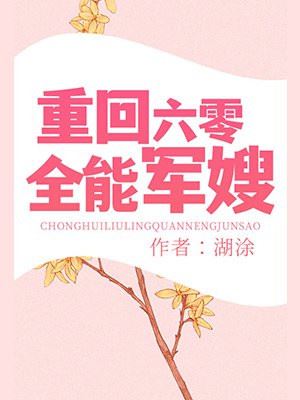
Back To Sixty: Almighty Military Wife
+Add to Custom List
Sort
Add review
... Read More
Okay so this chapter is honestly genius if you think about it. On the surface it reads like a classic “underdog returns home and flexes” scene, right? The trope is everywhere. But the way the author layers it—letting Gu Changan whine and complain about his life in the army while accidentally revealing he's actually incredible at the same time—that's where it clicks. He says he can't bite flatbread, talks about how miserably bitter the food was, complains that Li Xiaohui lied to him… and all the while his family is sitting there thinking this guy is full of it. Then boom. The envelope. The medal. The certificate. The whole mood shifts from “ugh another dreamer” to stunned silence in one page turn. What I love most is the false humility as a narrative device. He genuinely wants to play the victim, and yet the reader is slowly realizing he's not lying about the achievement—he's just too lazy to frame it properly. The structure of this scene alone did what three chapters of buildup usually try to do. Also the fact that his dad immediately pivots from “prove yourself as a soldier” to “get married already” is peak comedy timing. The family doesn't even let him breathe before shoving romance into his face. Brilliant misdirection.
... Read More
The pacing here is masterful in its economy. We start with departure - Gao Xiulan's pride, the emotional goodbyes, the children salivating over promised meat - and we move quickly to arrival at the restaurant without losing any emotional weight. The transition from home to workplace happens almost seamlessly, mirroring how Su Qinghe herself is transitioning between lives. Notice how the author controls tension through scene selection. We don't get a long, drawn-out farewell. Instead, we get specific moments that carry maximum emotional density: the hand-holding, the warning about in-laws, the children's pleas. Each beat hits hard because it's given just enough space. Then the workplace arrival unfolds with a different rhythm. There's a bureaucratic warmth here - Director Liu's jokes, the introductions, the practical arrangements. The pacing shifts from intimate family drama to institutional procedure, and this shift itself tells us about Su Qinghe's world expanding beyond her family unit. The chapter structure mirrors the narrative theme: leaving behind what's comfortable for what's necessary. The quick departure mirrors how little time she has to grieve her old life, while the slower, more methodical workplace introductions suggest the gradual building of a new identity. This structural pacing also creates anticipation for what comes next. We're left with Su Qinghe meeting her colleagues, learning her role, understanding the power dynamics. The chapter ends not with resolution but with setup - exactly where you want a chapter to land if you're building toward larger conflicts.
... Read More
The dialogue in this chapter is absolutely filthy in the best way. Gu Changan's voice is so distinct it hurts. Listen to this: “I eat flatbread every day, but I can't bite the hard ones, and it doesn't taste good.” This man whines about bread. After presumably surviving military training. The contrast between what he's actually endured and what he complains about is comedy gold. The author understands something most writers miss: people don't reveal themselves through their big speeches. They reveal themselves through their petty complaints. And Changan is peaking at pettiness while being objectively amazing. Then his sister-in-law who regrets everything? Silent judgment in one line. The second sister-in-law laughing? Same. And the deputy magistrate dropping “Comrade Gu Chang'an, as a People's Liberation Army, you must be honest” with a straight face while clearly not believing a word—the timing is perfect. Every character has a completely different rhythm of speech. The dad speaks in authority and policy. The mom speaks in food and tears. The brothers-in-law speak in sarcasm. And Changan speaks in chaos that accidentally sounds like competence.
... Read More
Okay so I just finished reading this chapter and wow. The plot has this really interesting structure where Su Qinghe gets dumped into the early 1960s with a system that basically runs on cooking tasks, and the whole thing is built around this one central tension: how do you survive when everything is scarce? The plot twist here isn't some massive revelation — it's actually in the details. Like when she realizes the system provides live raw ingredients. I literally gasped. Because suddenly the old hen that hasn't laid eggs in days becomes this massive moral and practical dilemma. And the narrative arc around it is genius because the author makes you feel every layer of the conflict. There's a subplot thread with Gao Xiulan that works really well — the old lady raising this hen specifically to lay eggs for her daughter, who is now back from the future. That's emotional storytelling without being heavy-handed. And then when Su Qinghe figures out that cooking with system ingredients gives proportional rewards? The stakes immediately spike because she can now stew the hen and feed everyone properly. I had to stop and process that logic. It makes sense within the world. But honestly what I loved most was how the author doesn't pull punches with the hunger. White noodles and egg custards are delicious, sure, but they don't fill you up when you're used to real food. That one line about someone in the 21st century not having had a proper meal in a long time hit differently. The plot is basically a series of small victories and near-misses, and it keeps you hooked because every decision matters. Eat the hen and lose future eggs, or starve and wait? Su Qinghe solves it pragmatically, which feels true to her character. I read the whole section in one sitting because the plot doesn't waste time.
... Read More
Can we talk about how Gao Xiulan speaks? Because her lines are so layered I had to re-read them twice every time. "Our Qing'er have a good heart, and these rascals have no conscience. You give them food to eat but they don't know to feel sorry for their aunt." — On the surface she's praising her daughter, but read it properly and she's basically saying: my daughter is saintly and ungrateful street kids are draining her. It's moral positioning disguised as maternal concern. Then immediately after, the kids chant "Love aunt! Auntie is good!" and she's somehow satisfied? Like she orchestrated this entire performance and won. Her dialogue about Su Aidang is even richer. "This is saved from your big sister's mouth. She couldn't eat it herself, so she left it for you, her brother to eat. The whole family only cares about themselves, but she's the only one that thinks about you as a brother." She's weaponizing guilt in real-time. Turning a tender sibling moment into a moral lecture. And Su Aidang's response — broken, tearful, immediately self-flagellating — shows exactly how effective she is at controlling the emotional atmosphere of this household. Meanwhile Qinghe's lines are so grounded. "Brother, let's go into the kitchen. I have left food for you." Short. Direct. No performance. She doesn't need an audience for her kindness. That contrast between her quiet sincerity and her mother's theatrical moralizing is honestly the dialogue highlight of this whole section. The narration itself has this funny little voice too — like "Su Qinghe: ……" when she's speechless at her brother crying. The punctuation as emotion. I love that.
... Read More
I need to talk about Ding Guihua because she had the funniest internal monologue in the entire chapter and I was wheezing. So her husband Su Aihua literally threatens to fight anyone who says bad things about his sister, and she's just over there thinking about how her own grandson doesn't even get to cook every day while Qinghe does?? Like the specificity of that jealousy hit me in the stomach. She's not evil, she's just human and hungry and watching her sister-in-law get treated like royalty while she's raising kids on less. And then the line where she says her man is "foolish when he should be smart, and smart when he should be foolish"—THAT is a marriage observation so sharp I actually said no. That's the whole relationship right there. He's loyal to the point of self-destruction but probably can't navigate basic social situations. She protects him from the fallout. The child dynamic though... the kids refusing to let Qinghe help because "people who don't work have no food to eat"—that's some next-level trauma bonding. These kids have already internalized the entire socioeconomic ideology of their world before they can even properly chew a sweet potato. And Qinghe's attempt to reframe herself as 'sick but kind' to the kids? The sugarcoating failed SO hard. Da Ya just looked at her like you're clearly eating three meals a day witch. I loved it.
... Read More
I need to talk about the SECOND sister-in-law. The one who whispered to the eldest: "Sister-in-law, the third daughter-in-law is coming to live at home. Do you have any ideas? She can't do anything at home when she comes here. We have to serve her to eat and drink in the future. I guess we even have to wash her clothes… I don't think this is okay, we have to find a way to let the third sister-in-law work with us…" STOP. This woman is plotting. She is actively, deliberately scheming. And the worst part? The ELDEST sister-in-law just smiled and walked away. Just SMILED and left her to stew in her own conspiracy. That is either wisdom or complicity, and I can't tell which. But here's what's really terrifying me: the stakes aren't just about who does the laundry. This is about power in a household where every relationship is a negotiation. Su Qinghe arrives with a state job, welfare supplies, and her husband's favor. She moves into GU CHANGAN's room—the dead son's room, which carries its own weight. And now these sisters-in-law are trying to figure out how to contain her, how to make her useful, how to prevent her from becoming another problem like Tian Xiaomei. Meanwhile, Su Aidang is caught in the middle. His wife is gone, his mother is furious, his brothers are working, and his new sister-in-law is arriving tomorrow with easy money and no obligation to cook or clean. The question hanging over all of this is: what happens when Tian Xiaomei finally comes back? What happens when the sisters-in-law execute their plan? What happens when Su Qinghe realizes she's not just moving in—she's moving INTO a war? "She just counts on her sister-in-law to take care of her." — Gao Xiulan, presumably about Tian Xiaomei, but honestly this could apply to the entire household dynamic right now.
... Read More
'When the whole team was eating, the smoke had just started to light up in the kitchen of Old Tian's house.' That opening line hit me differently this time. Two houses, two different family dynamics, both connected by this simple image of smoke rising from cooking fires. The detail work on Mrs. Tian's kitchen—pouring cornmeal into the pot, mixing with water, deliberately shouting loud enough for everyone to hear—is painting such a vivid picture of rural domestic life. And then the contrast: Su Qinghe's house where Lin Shuhong and Ding Guihua are just naturally helping Tian Xiaomei cook without being asked, where Gao Xiulan watches her daughter-in-law leave and doesn't say a thing because she's actually relieved. Different family cultures, different approaches to motherhood and marriage. But the scene that stays with me is Tian Xiaomei coming back in the afternoon. The whole family is eating, the third brother Su Aidang is happy-faced because his wife returned from work with the rest of the old Su family, and Tian Xiaomei is suddenly confronted with what she'd been missing. The physical setting mirrors her emotional state—she's come home but she's also come to a realization. 'Being a daughter-in-law means she has to work, or she will make trouble at home like her two sisters-in-law.' That moment of clarity hits harder than any dramatic revelation could because it's earned through the accumulation of watching those sisters-in-law manipulate their way out of responsibility.
... Read More
There is this one image that won't leave my head. All these important adults have been sitting around a table having what could be a life-changing negotiation, and the children who couldn't even fit at the table went off to the kitchen to eat with their 'mouths full of grease.' Su Qinghe left vegetables and soup in the pot for them and they 'ate vigorously.' Meanwhile the adults are still discussing dowries and bride prices like nothing else matters. Then once the negotiations end, 'the two quickly started to move their chopsticks. They were hungry a long time ago!' This mundane detail - hungry people finally eating - grounds the entire scene in such a specific, warm reality. You can picture the steam rising from the dishes, the clatter of chopsticks, the relief on everyone's faces. The setting feels lived-in. You have the county magistrate personally visiting, Secretary Hao involved, relief supplies being distributed - this isn't just some vague historical backdrop, it's a working society with hierarchies and obligations. The production team system, the village dynamics, the way news spreads from household to household across different teams - all of it feels tangible. And Gao Xiulan fixing her collar and cuffs before going out to share the news? That's such a specific character detail that tells you everything about how she sees herself in this community. She's performing her happiness as much as celebrating it.
... Read More
I need to talk about this one scene because it's painted like a film. The Yellow River production team—three small villages fused together, Sujia, Tianjia, Sunjia—and the meeting happens in Sujia because it's closest to the commune and has the most people. You can feel the geography of power just from that detail. Then Guo Changsheng climbs onto that mound of earth in the square. Just a pile of dirt, elevated so everyone can look up at him. He's fifty-something, not tall, but carries himself like a soldier because he IS one. Discharged, settled, made captain by the people who took him in. The image of him standing there, looking out at a sea of hungry faces, and finding himself unable to speak for a few seconds—that silence says everything. "Today, we call everyone over is to also let everyone have a mental preparation." Mental preparation. For what? For the word that follows: starvation. The setting does so much heavy lifting here. No lavish descriptions needed. Just a dirt mound, a gong, a crowd of people whose bellies are already hollow. The fact that cripple Su's wife died days ago and this is common knowledge—"there are not many things like this, but it's not unusual in the past two years" Actually, I want to focus on something else too. Gao Xiulan whispering to her daughter about the dead woman, turning tragedy into a parenting moment. "If you don't eat, you'll starve to death." She says this while standing in the same square where the captain just confirmed they might not eat either. The intimacy of that whisper against the backdrop of collective dread—perfectly captured. And then the return journey: Gao Xiulan discussing with her two sons how the family will eat fewer meals, already calculating rations like accountants at the edge of bankruptcy. The scene dissolves from public spectacle into private arithmetic, and somehow that's even more haunting.
... Read More
This chapter really exposes how toxic family dynamics work when power is unevenly distributed. Gu Changzheng's declaration about the two living arrangements is such a cold, calculated move - he's basically saying 'live with us and be controlled, or live apart and get nothing.' It's classic economic coercion wrapped in false logic. But what strikes me most is Mother Gu's complete lack of self-awareness. She's counting her private property, making sure everything goes to her favorite son, and genuinely can't understand why anyone would question this. When she thinks about Su Qinghe, it's not with warmth - it's strategic. How to make sure her son's wife doesn't distract him from the army. The line about soldiers and guns is chilling when you realize she means it literally. Su Qinghe is fascinating because she's playing a completely different game. While everyone else is scheming about housing and money, she's thinking about skill points and system upgrades. Her internal monologue about wanting to sell the bicycle and cash out is so modern, so pragmatic. There's this disconnect between her and the traditional family values everyone around her represents. The relationship between Su Qinghe and her mother Gao Xiulan is sweet but frustrating. Gao Xiulan immediately assumes Su Qinghe shouldn't need to work because she's married well. When Su Qinghe tries to explain she needs independence to hide her connection to her godfather, Gao Xiulan's first reaction is confusion, not protection. It shows how out of touch these family matriarchs are with what young women actually need. I also noticed how the author uses physical spaces to show power. The housing debate isn't just about comfort - it's about who controls resources. Mother Gu's room where she counts cash represents her private sphere of influence, while Su Qinghe's bedroom with the taskbar represents her hidden digital life. These spaces tell the story without any dialogue.
... Read More
Let's just talk about Gu Changan for a second because this guy had me genuinely invested. He's out there on some dangerous mission and all we get is this one scene where he's covered by a quilt, crying, missing his mom and Qing'er and even the old hen at his mother-in-law's house. The transition from 'I know it's hard work, can't eat good food' to 'oh fuck he's actually going to die sometimes' hits so hard. The old squad leader's line about soldiers being ready to sacrifice—before this chapter he probably heard it as some platitude, and now he KNOWS what sacrifice means. That's not exposition, that's earned character growth. And then we cut to Su Qinghe making five catties of dried meat and five catties of dried fish because apparently love languages in this world involve aggressively preparing preserves. The emotional logic is perfect though—she can't be there, so she packs care into food. The letter she writes is everything. 'All in all, the body is the capital of the revolution.' BRO. She's writing to her husband on a dangerous military mission and drops a political slogan like it's nothing. And the system asking whether he's back yet? That cold 'No, he is still on mission' with the return tentatively scheduled for March? I felt that in my chest. The separation stretches on and she's left counting star coins like they're something to hold onto while he's out there.

Leave a comment

You must be logged in to leave comments. or
