Am I a Saint? No, I’m the Villainess! - Reviews

Am I a Saint? No, I’m the Villainess!
+Add to Custom List
Sort
Add review
... Read More
Okay so let's talk about the plot mechanics here because this whole vaccine arc is surprisingly well-constructed. You've got multiple layers of conflict running simultaneously—the scientific problem (replicating the magic), the social problem (getting people to actually take it), AND the political problem (the king rejecting it as forbidden magic). That's three separate obstacles for one goal, and the story handles all of them without any feeling rushed or neglected. The smartest plot move? Rezeda inhaling the vaccine himself. Yes, it's reckless, yes it's impulsive, but from a storytelling standpoint, it's genius. It raises the stakes immediately. The prince is now infected, trapped at Iris's house, and the king still won't cooperate. The plot has nowhere to go but up from here. And then Serj shows up and resolves the political deadlock effortlessly—which, honestly, is a bit of a deus ex machina, but it works because the emotional beat lands first. The subplot about vaccine distribution through the underworld is also clever. Iris reaches out to the scar-faced man from the cave, and suddenly the people who would be most marginalized in noble society become the heroes of this crisis. It's a nice reversal. The text says: "His word carried weight, unlike in the noble society where the opposite was true." That single line does a lot of narrative heavy lifting—it tells us everything we need to know about this world's social structure without an info-dump. One thing that bothered me slightly: the king's rejection feels a bit convenient as an obstacle. Forbidden magic is such a broad category that any concern could be dismissed under that label. But then again, maybe that's the point—bureaucratic inertia disguised as caution is a very real-world kind of villainy. The plot keeps moving. Every scene generates a new complication or resolves an old one. No filler episodes. That's rare.
... Read More
The scabs are both burden and remedy. Iris scrapes them from infected children and adults, turning what should be waste into a potential vaccine. That's alchemy—not of gold, but of survival. The disease represents decay, isolation, death. The cave is a microcosm of a society left behind, people who've lost jobs, families, hope. Yet Iris offers something fragile: prevention, not cure. She admits she hasn't tried this before. She's experimenting with their lives. And the water—from a seeping rock face to a flowing faucet via a golden sheath—symbolizes more than hydration. It's life, accessibility, community. Serj laughs when Iris wraps the strap too long; it cuts itself. Even magic has practical limits. The deeper theme here is about agency. Iris's wish makes the vaccine possible. Serj's power is a tool, not a savior. The fairies don't act without human intent. That's a subtle commentary on charity, aid, intervention: magic won't fix things unless someone asks, someone risks, someone *wishes*. The scar-faced man becomes a leader not because he's chosen, but because Iris's example inspires him. Hope spreads through action, not miracles. What's the story really saying about salvation? That it's collective, incremental, and deeply personal.
... Read More
I cannot stop thinking about Nigel. The guy sees his sister happily telling everyone she's glad to be free from a literal collar, and his immediate response is to confess he was ENvious of the chain her father gave her. Envious. Not protective, not concerned—envious. Like a rom-com villain who hasn't read the script yet. And then when she offers to ask the prince to return the choker so Nigel can have it?? I nearly fell out of my chair. The story even references 'Love's Chain' Nigel like this is a known character archetype. 'Already harboring a desire to be bound.' Author, are you okay?? But then there's Rezeda, who's genuinely trying to connect with Iris here. He notices she twitches when he touches her neck, he senses the ribbon symbolizes her father's control over her, and he intentionally takes it off—not as a grand romantic gesture but almost as an act of solidarity. 'I freed my captive princess, a small sense of accomplishment.' That line is so self-aware and weirdly wholesome for a prince. And Citis playing mediator, telling Rezeda to slow down because Iris is 'a lady of noble descent'—the contrast between Citis's political awareness and Rezeda's genuine impulse is everything.
... Read More
Honestly, the dynamic between Iris and Serj is what keeps this whole arc grounded. Iris isn't some passive heroine waiting to be saved; she's kneeling in a cave full of dying people, scraping scabs off a child's arm with her bare hands after Serj assures her the disease won't transmit. That trust is huge. She's risking herself for strangers, and Serj is watching, amused but clearly invested. When she asks for the vaccine, he doesn't just hand it over—he makes her wish for it, make it clear, make it *hers*. That's not generosity; that's a transaction of intent. And the scar-faced man? He steps out of the shadows after seeing Iris expose her own arm, revealing the fairies dancing around it. He says, “If mine are okay, then you can have them.” That's not just cooperation; that's leadership born from witnessing sacrifice. Iris's dedication—even if she doesn't know she's inspiring them—ripples outward. She's building something, not just curing people. And Serj? He refuses to keep making the vaccine later, saying fairies only lend power to those they've blessed. So why did he help Iris? Because her wish was specific, her action deliberate. It's a relationship defined by boundaries and choices, not blind loyalty. What does that say about the nature of their bond? Is it partnership, or is it something more conditional?
... Read More
Can we talk about Camille for a second though? Because this girl walked into a church surrounded by white lilacs like she stepped out of a watercolor painting and I'm already devastated for her. The scene where she appears and says "There are five petals!" with such untroubled laughter — I wanted to shake her. Don't you DARE find a five-petaled flower, Camille, because you know what happens when you swallow it. Eternal love with the person who's also your half-brother. The universe is literally foreshadowing their tragedy through a flower and Iris hears it and nearly short-circuits. And Iris! Oh my god Iris. She keeps these thoughts completely internal while maintaining this perfectly composed exterior. When she finds out Citis has a lover (or at least doesn't deny it), she does an internal cheer but bows to Citis like nothing happened. The contrast between her racing mind and her calm face — that's the emotional tightrope she walks every single day. She's trying to save everyone without anyone knowing she's playing a different game than them. The Camille and Citis dynamic is quietly heartbreaking even before we get the full picture. Camille grew up without a father, and Citis lost his mother early and his surrogate mother vanished and his lover was taken by illness. Two people who've never been properly held, finding each other. Iris knows exactly where this goes and she's standing right in the middle of it trying to redirect the current. When Camille smiles and says "if it's real, maybe I'll find another" — she means another five-petaled lilac, but she might as well mean another chance at a love that won't destroy everything. And Rezeda! The prince is so genuinely kind it hurts. He wants to help Iris with her scars, he's thinking about her reputation, he's making these careful offers. He doesn't know any of this. He's just a good person in a story that keeps trying to break good people.
... Read More
Okay so let's talk about how the plot just absolutely SLAPS us in chapter 47 because I genuinely did not see that ending coming and now I'm having a full existential crisis. The whole arc of the princes returning to the palace is wrapped up so neatly — Rezeda comes back hailed as a hero, the government gets involved in vaccination, Nigel leads by example, everything is moving forward in this satisfying political way. But then BAMB. We get hit with the Holy Maiden candidacy AND a marriage proposal in the SAME scene?! From Iris's perspective this is clearly hell. She literally screams "I DON'T WANT TO DIE" and the Marquis just laughs it off like it's the best news ever. The dissonance is hilarious but also deeply tragic for our girl. She's been so carefully trying to avoid every route, and the game itself is actively forcing her into one. What really got me though is that earlier in this batch, Rezeda says "The day you got angry for me, I was really happy" and Iris immediately starts sweating about flags. Well... she wasn't wrong. That line wasn't foreshadowing, it was PREMONITION. The author planted that seed and we all watched it grow into a full-blown proposal arc. This is exactly the kind of plot convergence that makes isekai rom-coms so addictive — every small choice Iris makes keeps pulling her closer to the very fate she's running from, and I am HERE for it.
... Read More
I need to talk about Iris first. Like... who IS this girl? She just woke up from a dream where she got stabbed by her own love interest after setting the royal city on fire, right? And then she realizes she's IRIS from that otome game. The VILLAINESS. The one who gets marked with soil pox and lives in constant shame. But here's what got me — when she looked in the mirror and saw thirteen-year-old Iris with mint green hair and cloudy Midora eyes, she didn't scream. She didn't even cry. She just... acknowledged it. She checked the back of her hand, felt those ugly pockmarks, and went, "Oh. I'm the villainess. This is real now." That kind of acceptance? I felt that in my bones. She's been through something — a previous life, gaming marathons, dieing and waking up as the girl who STABBED the heroine to death in every route. The game literally says: "In the bad end, she was responsible for stabbing the heroine, the saint Camille, to death." And now SHE is that person. What struck me most was how she remembered her past self — "a normal and generous Alaskan girl, though a bit of a geek." There's this moment where she's pulling at her nightgown in the mirror, testing if the reflection bounces back with elasticity, and she realizes the girl staring back is genuinely her. The line that killed me: "Of all people, I had to be Iris! The villainess!" She's not some chosen hero. She's the villain. The one everyone hated. And she knows it. That's the kind of character setup that makes you want to read more — not because she'll become popular, but because she already LOVED this broken game anyway. She said it herself: "No, I like Meriva, okay? I like it, but that's because it's fiction, right?" And now she's IN the fiction. The question is — can she survive being the villain? I'm obsessed with her already. She's scared, she's confused, she's got physical scars to deal with, but there's this fire in her. She cleared the Thousand Year Sleep route in her past life — the TRUE END — and she REMEMBERED it. That means she knows something about this world that nobody else does. What is she going to do with that knowledge? And that ending she had before waking up... the one where the city burns and two people embrace in a cocoon of light, choosing to sleep for a thousand years rather than face a world that won't accept them. "If it is not allowed in this world, let us go together to the world a thousand years from now." That line followed her into consciousness. Is THAT who she's thinking about? Is she wondering if she can avoid that fate? Or is she dreading it? Iris is my favorite character now. She's complicated, she's broken in places, and she's already proven she's willing to feel things deeply — even painful things. That's rare in fiction. Most reincarnation stories give you a Mary Sue who adapts instantly. Not her. She's terrified. She just... rolls with it.
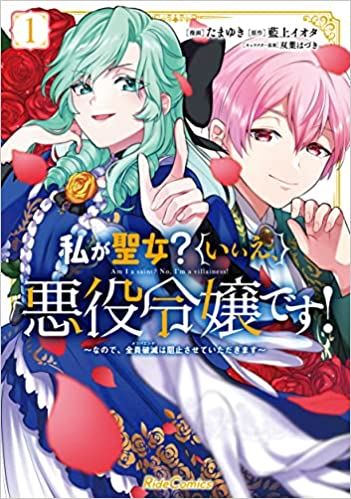
... Read More
The pacing in these chapters is wildly effective, and I want to highlight why. The transition from the scientific discussion to the vaccine distribution to Rezeda showing up with bok choy is not gradual—it's abrupt, almost jarring, and that's exactly what makes it work. Think about it: you've just been reading about magic circles and detoxification processes and economic models for vaccine distribution. Very methodical, very controlled prose. And then—bam. A prince with vegetables at your door. The tonal whiplash mirrors what's happening in the story. Iris is thrown into chaos, and the reader experiences that same whiplash. That's skilled structural writing. Within each section, the pacing is similarly sharp. The Rezeda arrival scene opens with humor (bok choy, the distress, the formal explanation), shifts suddenly into emotional intensity (Iris crying, the name-calling moment), and then deflates back into comedy (Serj appearing, Nigel's interruption). Three emotional movements in the span of a few paragraphs, and none of them feel forced because the author trusts the reader to keep up. What's interesting is how the author handles information density. Citis's magic analysis gets a brief summary—"complex combinations of spells, theoretically reproducible"—and we move on. We don't need a full lecture. The story knows when to skim and when to linger. The vaccination rollout gets more space because it's about social dynamics, not technical details. Rezeda's sacrifice gets the most words because it's the emotional core. The chapter ends on a clipped note—Nigel's interrupted line—leaving us wanting more without a traditional cliffhanger. It's subtle but effective. The story doesn't need to shout to keep you turning pages.
... Read More
The pox scars operate on multiple levels here and the author keeps returning to them like a motif that won't let go. Initially they're shame—something unladylike that could destroy her chances. Then Nigel reframes them as insect repellent, and suddenly they're practical, even protective. Iris herself notes 'These scars on my hands are nothing; they're even convenient.' The physical mark becomes a metaphor for her entire approach to life: what looks like damage is actually information, a filter, a defense mechanism. 'I'm alive, after all' is the thematic anchor of this entire chapter. It's朴素 but radical in a story full of political maneuvering and marriage markets. The scars prove she survived something. Everything else is negotiable. Then there's Bruet—ethereally beautiful, coughing, dying. The white flowers in the greenhouse feel symbolic too: purity, fragility, seasonal beauty that won't last. Bruet is essentially another kind of scarred person, carrying invisible damage while appearing flawless. His death before the game starts in the original storyline adds tragic irony; we see him alive and breathing and coughing and know exactly how this ends. The ribbon woven from Iris's discarded lace gloves is another symbol worth noting. Something thrown away, something associated with scandal and rejection, repurposed into something beautiful by a servant who noticed Iris's kindness. Circular symbolism: waste becomes treasure, scandal becomes connection.
... Read More
Okay can we just talk about this ONE moment where Citis literally smells Iris's arm because a fairy whispered "holy scent"?? I am not okay. I am still processing this. The girl is sitting there red-faced while this guy rolls up her sleeve and presses his nose to her skin, completely justified by "it's a clinical observation" energy, and Rezeda is OFF to the side looking deeply uncomfortable but also maybe a little jealous?? The power dynamics here are WILD. Iris is trapped in this absurd social spiderweb where everyone has reasons to watch her and she has no escape. And THEN on top of that, watch how Iris IMMEDIATELY pivots into manipulating the conversation to steer Citis toward Camille. She basically weaponizes her own vulnerability — the scars, the oil, the "commoner girl who makes it" — as a strategic move to save herself. That is not a naive girl. That is someone playing 4D chess while everyone else thinks they're a pawn. The fact that she was internally screaming "Delicacy! Do your job!" while physically sitting there being sniffed by a suspicious aristocrat?? Iconic. What really got me though is the fairy hiding inside her hair bun. "A Fairy that had snuck into her chestnut roll." Iris doesn't even fully control this thing. She's surrounded by fairies blessing her, a fairy hiding in her HAIR, people sniffing her for holy scents — she has zero privacy from the supernatural forces orbiting her. Meanwhile Rezeda just sits there unable to see ANY of it. The tragedy of that girl is so real.
... Read More
This batch is doing something really interesting with stakes escalation. In the beginning, the conflict is external and concrete — poison/illness is threatening the population, fairies hold the solution, the princes need to survive, and Iris is actively working to prevent future deaths by vaccinating Brule and then racing to find out who Citis's lover is so she can get them protected too. The tension is real and physical. But then the author shifts the entire battlefield. By chapter 47, the external threat is basically solved — the vaccine is working, the government is onboard, people are alive. So what does the story do? It raises the STAKES by making Iris's personal survival the conflict. She's not fighting a disease anymore, she's fighting the NARRATIVE ITSELF. The game is correcting her, trying to force her onto a route she never wanted. And the stakes just got infinitely more personal because now it's not just about dying — it's about losing agency, about becoming a pawn in someone else's story. The fact that she's terrified of the proposal rather than excited tells you everything about how much she values her freedom. Meanwhile, Citis's lover subplot adds another layer — Iris genuinely cares about preventing trauma for people she barely knows, and that selflessness raises the emotional stakes without undermining the tension. Every character wants something, everyone's fighting something, and the reader is fully invested in whether Iris can outsmart the very story she's trapped inside.
... Read More
"This is a crucial moment, a life-or-death decision!" Iris says this internally while discussing SCAR OIL with two suspicious noblemen and I nearly fell out of my chair. The stakes are so disproportionately huge for what looks like a casual greenhouse tea party. On the surface it's flirtation and small talk. Underneath, Iris is maneuvering to redirect Citis's obsession away from her and toward Camille, knowing that if he finds out Camille might be his sister AND a Holy Maiden candidate, the whole engagement plot unravels. One wrong word and she's trapped. What makes the tension so good is that multiple threats are converging simultaneously. There's the smallpox looming in the background — the prophecy about deaths within two years, the dwindling power of the Holy Maiden, the unexplained silence despite disasters. There's Citis sniffing her arm like a detective and she's lying through her teeth about the oil. There's Rezeda sitting there beautiful and confused and possibly the enemy. And underneath ALL of it, Iris has to keep her fairy-whispering head down while her neck bell keeps betraying her emotional state. The author never lets us forget that Iris is constantly one slip-up away from catastrophe. She's a commoner pretending to be something she's not, surrounded by people who can detect magic, surrounded by fairies she can barely control, trying to prevent a plague that everyone else has already accepted. Every conversation is a minefield. Every smile could be her last. And she keeps going anyway.

Leave a comment

You must be logged in to leave comments. or
