Summary

... Read More

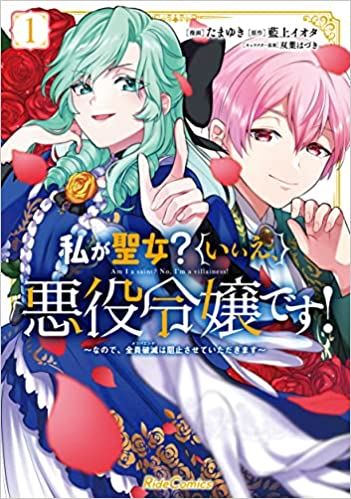
Iris de Chevalley, a twenty-eight-year-old woman from modern-day Alaska who was an avid player of the otome game "When White Flowers Bloom," wakes up inside the body of the game's villainess. The game is known for its tragic endings, where no character achieves true happiness, and the villainess inevitably meets a gruesome death. Iris remembers her past life and realizes she has been reincarnated into the world of the game just before the events begin. She is currently thirteen years old, recovering from "Soil Pox," a deadly epidemic that leaves ugly scars on survivors. In the game, these scars lead to her social ostracization and contribute to her downfall.

Iris's primary goal is to alter the course of the story to prevent the catastrophic endings she witnessed in her previous life. She knows that in the original timeline, her twin brother Nigel becomes obsessed with the holy maiden Camille, eventually chaining her and committing atrocities. Another route involves Prince Rezeda, who forces Iris into a silent, lonely role as queen while he loves Camille. The worst ending, known as the "Thousand-Year Sleep" route, involves the court magician Citis setting the royal city on fire after discovering he and Camille are half-siblings, leading to mass destruction and their eternal sleep. Iris is determined to stop this fate by changing her interactions with the key characters and preventing the tragedies associated with them.

The first major turning point occurs at a royal tea party hosted by Prince Rezeda. Iris confronts discrimination from noble ladies regarding her pox scars. Instead of hiding them as the original villainess would have, she boldly reveals her scars and hands her expensive gloves to a young maid, defying societal expectations. This act earns her unexpected attention from Rezeda and introduces her to Citis, the court magician. Although Iris fears this might lead to the dangerous "Thousand-Year Sleep" route, she manages to decline Citis's offer to use magic to hide her scars, explaining that reliance on spells is unsustainable and inappropriate.

Instead, Iris accepts Citis's invitation to visit the Magic Palace, where she begins studying smallpox history and fairies. She discovers that fairies can bless her despite her lack of magical power, allowing her to see and interact with them. Through her research, Iris learns about the cyclical nature of smallpox outbreaks and resolves to create a vaccine. She encounters Serj, a leader of the fairies, who agrees to help her if she can secure the necessary materials. Iris risks her life by entering the Cave of the Dying, where smallpox victims are isolated, and collects scabs from patients. With Serj's magic, she successfully creates a detoxified vaccine from the scabs, administering it to the patients to prevent severe illness and save lives.

Simultaneously, Iris seeks to protect Camille, the holy maiden. She visits Camille’s shop and later meets her at the church, where she subtly hints at Camille’s connection to Citis by mentioning her blue-haired relative. This is intended to make Camille aware of their potential familial bond before romantic feelings can develop. Iris also works to distance herself from Prince Rezeda, hoping to avoid the engagement that leads to her suffering in other routes. However, Rezeda becomes increasingly interested in her, removing the restrictive choker her father made her wear and treating her with a familiarity that unsettles her.

As Iris continues her work in the Magic Palace, she forms a bond with Citis, who is impressed by her intelligence and compassion. She uses this relationship to keep him away from the path that leads to madness in the original game. Meanwhile, she maintains a close relationship with her brother Nigel, trying to guide him toward a healthier perspective on love and independence. The story follows Iris as she navigates the complex social hierarchy of the kingdom, using her knowledge of the game's future to prevent disasters while establishing her own purpose beyond merely avoiding death.

Latest Release
DateGroupRelease
2026-09-26knoxt c20
2026-09-26knoxt c19
2026-09-26knoxt c18
2026-09-26knoxt c17
2026-09-26knoxt c16
2026-09-26knoxt c15
2026-09-26knoxt c14
2026-09-26knoxt c13
2026-09-26knoxt c12
2026-09-26knoxt c11
2026-09-26knoxt c10
2026-09-26knoxt c9

Community Reviews

Rating(4.1 / 5.0, 66votes)
5 stars
23(35%)
4 stars
25(38%)
3 stars
18(27%)
2 stars
0(0%)
1 stars
0(0%)

Popular reviews

... Read More
Okay so let's talk about the plot mechanics here because this whole vaccine arc is surprisingly well-constructed. You've got multiple layers of conflict running simultaneously—the scientific problem (replicating the magic), the social problem (getting people to actually take it), AND the political problem (the king rejecting it as forbidden magic). That's three separate obstacles for one goal, and the story handles all of them without any feeling rushed or neglected. The smartest plot move? Rezeda inhaling the vaccine himself. Yes, it's reckless, yes it's impulsive, but from a storytelling standpoint, it's genius. It raises the stakes immediately. The prince is now infected, trapped at Iris's house, and the king still won't cooperate. The plot has nowhere to go but up from here. And then Serj shows up and resolves the political deadlock effortlessly—which, honestly, is a bit of a deus ex machina, but it works because the emotional beat lands first. The subplot about vaccine distribution through the underworld is also clever. Iris reaches out to the scar-faced man from the cave, and suddenly the people who would be most marginalized in noble society become the heroes of this crisis. It's a nice reversal. The text says: "His word carried weight, unlike in the noble society where the opposite was true." That single line does a lot of narrative heavy lifting—it tells us everything we need to know about this world's social structure without an info-dump. One thing that bothered me slightly: the king's rejection feels a bit convenient as an obstacle. Forbidden magic is such a broad category that any concern could be dismissed under that label. But then again, maybe that's the point—bureaucratic inertia disguised as caution is a very real-world kind of villainy. The plot keeps moving. Every scene generates a new complication or resolves an old one. No filler episodes. That's rare.
... Read More
The scabs are both burden and remedy. Iris scrapes them from infected children and adults, turning what should be waste into a potential vaccine. That's alchemy—not of gold, but of survival. The disease represents decay, isolation, death. The cave is a microcosm of a society left behind, people who've lost jobs, families, hope. Yet Iris offers something fragile: prevention, not cure. She admits she hasn't tried this before. She's experimenting with their lives. And the water—from a seeping rock face to a flowing faucet via a golden sheath—symbolizes more than hydration. It's life, accessibility, community. Serj laughs when Iris wraps the strap too long; it cuts itself. Even magic has practical limits. The deeper theme here is about agency. Iris's wish makes the vaccine possible. Serj's power is a tool, not a savior. The fairies don't act without human intent. That's a subtle commentary on charity, aid, intervention: magic won't fix things unless someone asks, someone risks, someone *wishes*. The scar-faced man becomes a leader not because he's chosen, but because Iris's example inspires him. Hope spreads through action, not miracles. What's the story really saying about salvation? That it's collective, incremental, and deeply personal.
... Read More
I cannot stop thinking about Nigel. The guy sees his sister happily telling everyone she's glad to be free from a literal collar, and his immediate response is to confess he was ENvious of the chain her father gave her. Envious. Not protective, not concerned—envious. Like a rom-com villain who hasn't read the script yet. And then when she offers to ask the prince to return the choker so Nigel can have it?? I nearly fell out of my chair. The story even references 'Love's Chain' Nigel like this is a known character archetype. 'Already harboring a desire to be bound.' Author, are you okay?? But then there's Rezeda, who's genuinely trying to connect with Iris here. He notices she twitches when he touches her neck, he senses the ribbon symbolizes her father's control over her, and he intentionally takes it off—not as a grand romantic gesture but almost as an act of solidarity. 'I freed my captive princess, a small sense of accomplishment.' That line is so self-aware and weirdly wholesome for a prince. And Citis playing mediator, telling Rezeda to slow down because Iris is 'a lady of noble descent'—the contrast between Citis's political awareness and Rezeda's genuine impulse is everything.
... Read More
Honestly, the dynamic between Iris and Serj is what keeps this whole arc grounded. Iris isn't some passive heroine waiting to be saved; she's kneeling in a cave full of dying people, scraping scabs off a child's arm with her bare hands after Serj assures her the disease won't transmit. That trust is huge. She's risking herself for strangers, and Serj is watching, amused but clearly invested. When she asks for the vaccine, he doesn't just hand it over—he makes her wish for it, make it clear, make it *hers*. That's not generosity; that's a transaction of intent. And the scar-faced man? He steps out of the shadows after seeing Iris expose her own arm, revealing the fairies dancing around it. He says, “If mine are okay, then you can have them.” That's not just cooperation; that's leadership born from witnessing sacrifice. Iris's dedication—even if she doesn't know she's inspiring them—ripples outward. She's building something, not just curing people. And Serj? He refuses to keep making the vaccine later, saying fairies only lend power to those they've blessed. So why did he help Iris? Because her wish was specific, her action deliberate. It's a relationship defined by boundaries and choices, not blind loyalty. What does that say about the nature of their bond? Is it partnership, or is it something more conditional?
... Read More
Can we talk about Camille for a second though? Because this girl walked into a church surrounded by white lilacs like she stepped out of a watercolor painting and I'm already devastated for her. The scene where she appears and says "There are five petals!" with such untroubled laughter — I wanted to shake her. Don't you DARE find a five-petaled flower, Camille, because you know what happens when you swallow it. Eternal love with the person who's also your half-brother. The universe is literally foreshadowing their tragedy through a flower and Iris hears it and nearly short-circuits. And Iris! Oh my god Iris. She keeps these thoughts completely internal while maintaining this perfectly composed exterior. When she finds out Citis has a lover (or at least doesn't deny it), she does an internal cheer but bows to Citis like nothing happened. The contrast between her racing mind and her calm face — that's the emotional tightrope she walks every single day. She's trying to save everyone without anyone knowing she's playing a different game than them. The Camille and Citis dynamic is quietly heartbreaking even before we get the full picture. Camille grew up without a father, and Citis lost his mother early and his surrogate mother vanished and his lover was taken by illness. Two people who've never been properly held, finding each other. Iris knows exactly where this goes and she's standing right in the middle of it trying to redirect the current. When Camille smiles and says "if it's real, maybe I'll find another" — she means another five-petaled lilac, but she might as well mean another chance at a love that won't destroy everything. And Rezeda! The prince is so genuinely kind it hurts. He wants to help Iris with her scars, he's thinking about her reputation, he's making these careful offers. He doesn't know any of this. He's just a good person in a story that keeps trying to break good people.
... Read More
Okay so let's talk about how the plot just absolutely SLAPS us in chapter 47 because I genuinely did not see that ending coming and now I'm having a full existential crisis. The whole arc of the princes returning to the palace is wrapped up so neatly — Rezeda comes back hailed as a hero, the government gets involved in vaccination, Nigel leads by example, everything is moving forward in this satisfying political way. But then BAMB. We get hit with the Holy Maiden candidacy AND a marriage proposal in the SAME scene?! From Iris's perspective this is clearly hell. She literally screams "I DON'T WANT TO DIE" and the Marquis just laughs it off like it's the best news ever. The dissonance is hilarious but also deeply tragic for our girl. She's been so carefully trying to avoid every route, and the game itself is actively forcing her into one. What really got me though is that earlier in this batch, Rezeda says "The day you got angry for me, I was really happy" and Iris immediately starts sweating about flags. Well... she wasn't wrong. That line wasn't foreshadowing, it was PREMONITION. The author planted that seed and we all watched it grow into a full-blown proposal arc. This is exactly the kind of plot convergence that makes isekai rom-coms so addictive — every small choice Iris makes keeps pulling her closer to the very fate she's running from, and I am HERE for it.
See all reviews

Custom lists

See all custom Lists