After I Posed as the Grand Tutor’s Widowed Sister-in-law, He Insisted on Shouldering the Succession of Two Branches - Reviews

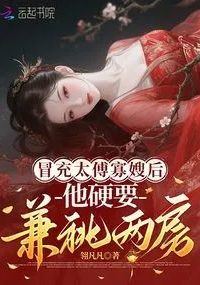
After I Posed as the Grand Tutor’s Widowed Sister-in-law, He Insisted on Shouldering the Succession of Two Branches
+Add to Custom List
Sort
Add review
... Read More
The dialogue in this scene is absolutely delicious. Let me just quote this line because it's everything: 'Aunt, Huan'er knows you haven't treated me well in the past. Even if you regret it now, kneeling to me over and over again—my late parents would blame me for this.' She says this while literally orchestrating the aunt's physical humiliation. The gap between what she's saying and what she's doing is where the genius lives. She's using the language of filial piety and respect to justify absolutely destroying someone. And the aunt—what can she even say? She's pinned to the wall, dropped to her knees, finger trembling, unable to utter a single word. The silence is the most powerful dialogue in the whole scene. Then there's Yuzhi whispering to Su Tanghuan about the military families, and Su Tanghuan's internal reaction: 'Why did she feel a little happy about that?' That's such a natural, almost childish thought that makes her feel so real. She doesn't even try to hide her satisfaction. And the opening exchange with her mother—'Mother, she is, after all, my aunt. As a junior, if I neglect etiquette...'—she's performing propriety so perfectly that even her angry mother has to back down and tell her to eat slowly. The dialogue here isn't just words; it's a battlefield.
... Read More
The pacing here is absolutely ruthless and I mean that as a compliment. Chapter 7 starts with Su Tanghuan literally mid-step, trying to escape, and within pages she's kneeling, confessing, sobbing, and then suddenly commanding. The emotional whiplash is intentional—I think the author wants us to feel as disoriented as Ji Yan. One moment she's the wronged girl clutching Lady Ji's hand, the next she's strutting into Zheng Fu's reception room like she owns the place. And then Chapter 8 pivots hard into her threatening Zheng Butler while simultaneously performing weakness for Yuzhi outside. The transitions are sharp—no soft landings, just cut to the next beat. What I love is that the tension never actually drops. Even when she 'wins' the confrontation with Zheng Butler, we immediately cut to her looking at Ji Yan's eavesdropping room. There's always another layer, another threat, another door she hasn't checked. The cliffhanger energy is real.
... Read More
There's a symbolic richness to these chapters that I didn't expect going in, and it's been building quietly beneath the surface. Let me start with the color imagery, because it's everywhere. The wedding is awash in red—the bright red wedding gown, the red curtains, the mandarin duck brocade quilt. Red in Chinese culture is supposed to mean joy, celebration, good fortune. But in this story, red is the color of entrapment. It's the color of a trap dressed up as a celebration. And then when Su Tanghuan escapes, she changes into moon-white cotton. White is the color of mourning, of death, of the funeral that's already begun at the Ji residence. She's literally wearing the color of grief as she flees toward it. The transformation from red to white is a visual metaphor for her transition from a bride to a widow—to a ghost in her own life. The dream itself is a powerful symbol of predestination versus free will. Su Tanghuan has been seeing her future for seven months, and the question the story seems to be asking is: can she change it, or is she fated to repeat it? When she wakes up and decides to run, she's exercising agency for the first time. But here's the thing—her plan at the Ji residence is itself a kind of performance of fate. She's pretending to be a ghost's widow, stepping into a role written by someone else's death. Is she escaping her destiny, or is she just choosing a different script? And then there's the seal. The seal that Su Tanghuan found on the injured man, that her aunt took and never returned. A seal is a symbol of identity, of authority, of who you are and who you belong to. Her aunt confiscated it the same way she confiscated Su Tanghuan's household registration, her inheritance, her autonomy. The seal represents the one thread of connection to someone who might actually help her—and it's been stolen. That's not just plot convenience; it's thematic. The people who are supposed to protect her are the ones taking everything away. The only person she can turn to is dead. And yet she finds a way. That's the real theme here, I think: survival as an act of creation. She doesn't have a household registration, so she invents one. She doesn't have a protector, so she becomes her own protector. She doesn't have a future, so she writes herself into one. The story is about a girl who refuses to be a character in someone else's tragedy.
... Read More
Let me just say it: the pacing in these first seven chapters is absolutely relentless and I have zero complaints. The author opens with a dream that functions as both a romantic scene and a horror sequence, then snaps us into reality with Su Tanghuan waking up on her wedding night. That transition alone is a masterstroke—readers who recognized the dream as a premonition would have been screaming at the page. And then the escape sequence? Pure adrenaline. She's changing clothes, gathering what little she has, climbing out a window, landing hard, running through the rain, hiding behind rockeries, and all the while we're getting information about her past through efficiently woven flashbacks. No info-dumps. No slowing down. Just survival. The structure of the chapter is basically a countdown. We know her aunt is coming. We know the cousin will die. We know the pursuers are closing in. Every paragraph adds a new obstacle or raises the stakes. When Su Tanghuan hears "The Second Young Master has passed away!" that's the moment the ground shifts beneath her. She thought she was escaping one fate, and now she's running from a completely different set of consequences. The timing of that revelation is perfect—it happens right as she's about to escape through the doggy door, which means she can't just go back to the safety she briefly considered. And then Chapter 2 takes us to the Ji residence, and the pacing doesn't let up. She's soaked, she's exhausted, she's being chased, and she makes the decision to fake an entire identity in seconds. The scene where she kneels and delivers her performance is both hilarious and heartbreaking, and the way the author handles the crowd's reaction—the guests' curiosity, the servants' alarm, the unspoken drama of a potential scandal at a funeral—creates this incredible layering of tension. The chapter ends with her weeping in front of the portrait, and I need to know what happens next immediately. This author knows exactly how to keep a reader hooked. No filler. No breathing room. Just forward momentum.
... Read More
Okay so let me just say this plot is absolutely WILD and I cannot stop thinking about it. Su Tanghuan walks into that room and basically decides to tell the whole truth? Like, she just starts spilling about being a replacement wife and having Ji Yan's baby and I was sitting there like WHAT. But then she pivots so hard it made my head spin—suddenly she's not the scared girl, she's the one holding all the cards. The scene where she corners Zheng Butler and threatens him while simultaneously offering to set him up with Grand Tutor Ji? Chef's kiss. The way she plays both sides—pretending to be weak in front of Lady Ji while actually orchestrating everything from behind the scenes—that is some next-level plotting. And Ji Yan? He's eavesdropping in the next room the whole time, thumb ring rubbing, completely convinced he's the smart one in the room. Meanwhile she's looking at those closed doors like 'did you really just hide and listen?' The plot keeps flipping on its head and I love it.
... Read More
I need to talk about Su Tanghuan because honestly, she might be one of the most compelling young female leads I've encountered in a while. Let me back up to why. She's sixteen. Sixteen. She's been orphaned, robbed of her inheritance, forced into a ghost marriage, and every adult around her is either exploiting her or powerless to help. And yet—watch what she does. She doesn't break down. She doesn't wait to be rescued. She methodically strips off her wedding dress, bends gold hairpins to create a makeshift tool, climbs out a window, and runs through a storm. That is not a girl who is going to be anyone's victim for long. But here's what I find even more interesting: her relationship with her maid Huan'er. Huan'er is kind, she's worried, she offers to make noodles for her mistress. And Su Tanghuan—she says thank you, she holds her hand, but she doesn't tell her anything. She sends Huan'er away with a lie. That moment hit me hard. It shows that Su Tanghuan understands the world well enough to know that involving someone else in her escape could get them both killed. She protects Huan'er by keeping her in the dark, even though it means facing everything alone. That's not coldness—that's a very specific kind of love born from necessity. Then there's the Ji family dynamic that's being set up. Two brothers: Ji Yuan, the warrior who died, and Ji Yan, the scholar-strategist who's now Grand Tutor. The text tells us they were "one a scholar and the other a warrior" and that they led the Ji Family Army together after their father's death. That's a bond that goes beyond blood. And now Su Tanghuan is walking into their home, claiming to be the widow of the dead brother, with a fake child. How is Ji Yan going to react to this? Is he the type who would see through her immediately, or is he the kind of person who might actually believe her? I'm genuinely curious about how this relationship is going to evolve. Because let me tell you, a girl who lies to survive and a man who reads people for a living? That's not a setup for easy deception. That's a setup for something much more complicated.
... Read More
"Her small hand would, from time to time, touch a crescent scar below his lower abdomen." That line. That single line in the opening dream sequence. I need to sit with that for a moment. Because on the surface, it's just a physical detail—a scar she notices during an intimate encounter. But when you recontextualize it after learning what the dream actually predicts, it becomes something else entirely. It's the one moment of tenderness in an otherwise horrifying vision. The Nobleman says "Who would dare say anything? I'll cut out his tongue!" and yet she notices a scar on his body like he's a person she might actually care about. That dissonance is devastating. And then the dream ends and she wakes up drenched in cold sweat, and the reader realizes: this girl has been living with this nightmare for seven months. Seven months of waking up terrified, knowing exactly how her life is supposed to unfold, and being powerless to stop it. The emotional weight of that is enormous. She's not just afraid of the present moment—she's carrying the memory of a future that hasn't happened yet but feels more real than anything else in her life. What strikes me most emotionally is how lonely she is. Her parents are dead. Her uncles stole everything. Her aunt is a monster. Her only connection to the outside world is a maid who can't help her and a man she saved six months ago who may already be dead. When she kneels at the Ji residence and starts crying—real tears, not just performed ones—the grief that pours out isn't just about the lie she's telling. It's about everything. The loss of her family, the loss of her home, the loss of any sense that her life belongs to her. And yet, even in that breakdown, she keeps going. She lies prostrate on the ground and weeps, and then she gets up and continues her performance. That resilience—raw, messy, unglamorous resilience—is what makes me care about her so deeply. I want her to win. Not because she deserves a happy ending, but because she's fighting for every single breath and I can't look away.
... Read More
Can we just talk about the way Ji Yan looks at Su Tanghuan throughout these chapters? Like, it's not hatred exactly, it's this whole complicated mess of suspicion and fascination and something else he probably won't admit to. Every time he looks at her, the text says he's 'scrutinizing' her or giving her an 'icy' gaze, but he never looks away. He's hooked. And Su Tanghuan—god, she's terrified of him. Her palms are sweaty, her back is drenched in cold sweat, she takes a step back when he looks at her. But she keeps going anyway. That's the thing that got me. She's scared out of her mind but she walks into that room and plays this whole performance like her life depends on it, which honestly it does. The moment where she calls him 'Lord Ji' instead of 'brother-in-law' because she's afraid he'll explode? That's not just fear of getting caught—that's fear of HIM specifically. And the ending where she looks at those closed windows and thinks about how eavesdropping isn't gentlemanly behavior? She's still standing there, still performing, even when she thinks no one's watching. This dynamic is so tense I can't.
... Read More
The spatial choreography in these chapters is honestly fascinating. Everything happens around doors and windows and partitions—Su Tanghuan frozen mid-step, the neighboring room where Ji Yan hides to listen, the closed doors she glances at when she thinks she's alone. The author really uses architecture as a kind of emotional barometer. When Su Tanghuan enters Zheng Fu's space, the text describes her 'assuming an imposing air' and the Ji Residence maids 'swarming forward' to drive the Zheng servants aside like quails. There's this whole visual of power shifting through physical space. And the scene where she leans in to whisper threats to Zheng Butler—'in a low voice only the two of them could hear'—that intimacy of a secret shared in a doorway, with the whole house potentially listening... it's so cinematic. I could literally see this as a drama. The farmstead thirty li from the capital, the villa, the main residence—all these spaces matter because they're where identities can be performed differently.
... Read More
Okay so I need to talk about this moment where Su Tanghuan finds out her household staff are from military families and she just feels a little happy about it. A LITTLE HAPPY. That is such a perfect character beat because it tells us SO much about her. She's not some delicate flower who's shocked by violence—she's like, oh good, my people can throw hands. And honestly? I love her for it. It shows she's been through enough in her life that she appreciates having muscle on her side. She doesn't gloat overtantly, she just sways her delicate frame and says 'put my aunt down, don't hurt her' with the most innocent tone possible while her maids are literally pinning someone to a wall. The contrast is everything. And then there's the relationship between Su Tanghuan and her mother Lady Ji—Lady Ji is clearly furious on her daughter's behalf, telling her to just eat slowly and deal with the aunt later. That's protective mother energy right there. But Su Tanghuan insists on handling it herself because 'if I neglect etiquette, it would reflect poorly on the Ji Residence.' She's playing the long game, using propriety as her weapon. The aunt is left trembling on the floor, unable to even stand, and Su Tanghuan's response is this fake-sorrowful performance about her late parents. She's dismantling this woman who probably made her life miserable, and she's doing it with a smile. I'm obsessed.
... Read More
I have to talk about the dialogue because it's doing a lot of heavy lifting here. First, let's address the Nobleman's line in the dream: "Who would dare say anything? I'll cut out his tongue!" That's such a specific kind of threat—it's not just violent, it's performative. He's not just saying he'll silence someone; he's announcing it like a boast. And Su Tanghuan's response, "Please be gentle. My summer clothes are thin. If someone sees, I'll be ruined..." is devastating in its quietness. She's not begging for her life; she's begging for discretion. That contrast between his loud cruelty and her whispered fear tells us everything we need to know about their power dynamic without any narration needed. Then there's the aunt. "She's truly nothing but trouble." "If anything happens to Second Young Master, and something goes wrong with the ghost marriage bride, you can just hang yourself and accompany him!" These lines are so efficiently cruel. The aunt doesn't need to raise her voice or use elaborate threats—her casual brutality is what makes her terrifying. And Huan'er's defense of Su Tanghuan, "Second Young Mistress has been taking good care of him, but she hasn't eaten all day either, so she's hungry," is such a simple, human line. It's the kind of thing a loyal servant would say, and it grounds the whole scene in something real. But the dialogue that really stands out is Su Tanghuan's performance at the Ji residence. "Eldest Young Master, how could you be so heartless as to abandon me and our unborn child? You promised to marry me with an eight-carrier sedan chair." This is improvised fiction, and it's brilliant. She's inventing a romance on the spot, and the details she chooses—an eight-carrier sedan chair, a promise of marriage—these are the kinds of specifics that make a lie believable. She's not just saying "we were in love"; she's giving the mourners something concrete to gossip about. The narrative voice around this scene is also worth noting. The author describes the guests' reactions with this almost theatrical awareness: "Naturally, those who loved drama were eager to see how he would handle this spectacle." That line has a wry, knowing quality that suggests the narrator is in on the joke with the reader. It's a voice that doesn't take itself too seriously, and that tonal balance—serious situations handled with narrative wit—is exactly what makes this read so smoothly.
... Read More
Let's talk about the tension building in this scene because it starts so quietly and then EXPLODES. The aunt is left waiting in a side room for a FULL HALF HOUR without even a cup of cold tea. Half an hour! That's not neglect, that's psychological warfare. And you can feel her anger mounting with every passing minute. She's seething, she's furious, she's never been treated like this—and that's exactly why she loses control when she hears the announcement. She springs to her feet and rushes in to slap Su Tanghuan. That's the moment the conflict peaks. But here's what makes it so satisfying: the author doesn't let Su Tanghuan lift a single finger herself. She just watches. She lets her household handle it. The two maids crossing their arms under the aunt's and slamming her against the wall—that's the action climax, and it's over in seconds. Then the real conflict shifts to a different level. It's no longer about physical violence; it's about power. The aunt is on her knees, unable to move, and Su Tanghuan is standing above her playing the gracious junior. What does the aunt stand to lose here? Her dignity, her position, her sense of control. And what does Su Tanghuan gain? Not just revenge, but a demonstration of exactly who holds power now. The stakes were never about a slap—they were about who gets to define the rules of this relationship going forward.

Leave a comment

You must be logged in to leave comments. or
